Chart your course
How to Tow a Dinghy Safely
Quick answer
The short version
How to Tow a Dinghy Safely is easiest to handle when you make the decision from the boat in front of you. For this How to tow a dinghy safely question, start with its manuals, records, access, and the job you need it to do. Discover Boating notes that a frequent tow benefits from a strong bow attachment point and that towing affects the larger boat's handling and fuel use. That gives how to tow a dinghy safely a useful boundary: observe carefully, follow the relevant maker or operator instructions, and do not turn a generic checklist into permission to dismantle something you do not understand. In a how to tow a dinghy safely record, keep photographs where access will change later. If how to tow a dinghy safely points to a fault you cannot explain, leave the system in a safe state and ask the right yard, technician, rigger, or charter operator for the next step.
This guide is for the person trying to make a calm, informed decision about how to tow a dinghy safely. How to Tow a Dinghy Safely does not offer a universal price, service interval, product choice, or local rule. Boats in this How to tow a dinghy safely situation vary by age, layout, installation, waters, and previous work. A better how to tow a dinghy safely approach is to use a repeatable order: identify the system, observe its present condition, check the documentation that applies to that exact boat, then decide whether the next action is owner work, a professional inspection, or a conversation with a provider. The five how to tow a dinghy safely sections below keep that order practical.
Decide whether towing fits today
Decide whether towing fits today is the part of how to tow a dinghy safely where a small amount of structure saves time. For this how to tow a dinghy safely step, the relevant source says discover Boating notes that a frequent tow benefits from a strong bow attachment point and that towing affects the larger boat's handling and fuel use.
For this step, write down what you can actually see or confirm about how to tow a dinghy safely: the location, condition, operating state, relevant manual page, and anything that changed since the last normal use. During this stage, a how to tow a dinghy safely photograph taken in good light is often more useful later than a memory of "looked fine." Keep that observation separate from its diagnosis. At this check, for this How to tow a dinghy safely decision, a clean how to tow a dinghy safely description gives a yard or supplier a better question to answer and prevents one new part from hiding the original problem. If this point in how to tow a dinghy safely requires access beyond your skills or changes a safety-related system, arrange qualified help before putting the boat back into normal use.
Use this record to choose one clear next action for how to tow a dinghy safely: monitor a known normal condition, complete the maker's stated task, obtain a quote with scope, or stop and investigate. When local rules, marina policy, disposal arrangements, charter terms, or provider coverage affect this part in how to tow a dinghy safely, verify the current requirement with the responsible local authority or operator. A connected how to tow a dinghy safely planning question appears in this SailStarter guide.
Prepare the tender and attachment
Prepare the tender and attachment is the part of how to tow a dinghy safely where a small amount of structure saves time. For this how to tow a dinghy safely stage, the relevant source says how to Tow a Dinghy Safely decisions should begin with the installed equipment manual, the boat's record, and direct observation rather than a generic replacement calendar.
For this stage, write down what you can actually see or confirm about how to tow a dinghy safely: the location, condition, operating state, relevant manual page, and anything that changed since the last normal use. During this check, a how to tow a dinghy safely photograph taken in good light is often more useful later than a memory of "looked fine." Keep that observation separate from its diagnosis. At this point, for this How to tow a dinghy safely decision, a clean how to tow a dinghy safely description gives a yard or supplier a better question to answer and prevents one new part from hiding the original problem. If this part in how to tow a dinghy safely requires access beyond your skills or changes a safety-related system, arrange qualified help before putting the boat back into normal use.
Use that record to choose one clear next action for how to tow a dinghy safely: monitor a known normal condition, complete the maker's stated task, obtain a quote with scope, or stop and investigate. When local rules, marina policy, disposal arrangements, charter terms, or provider coverage affect this step in how to tow a dinghy safely, verify the current requirement with the responsible local authority or operator. For related how to tow a dinghy safely preparation, see the sailboat maintenance checklist.
Manage the tow line
Manage the tow line is the part of how to tow a dinghy safely where a small amount of structure saves time. For this how to tow a dinghy safely check, the relevant source says a visible change, unexplained leak, unusual movement, or uncertain service history is a reason to pause the job and obtain qualified, boat-specific advice.
For this check, write down what you can actually see or confirm about how to tow a dinghy safely: the location, condition, operating state, relevant manual page, and anything that changed since the last normal use. During this point, a how to tow a dinghy safely photograph taken in good light is often more useful later than a memory of "looked fine." Keep that observation separate from its diagnosis. At this part, for this How to tow a dinghy safely decision, a clean how to tow a dinghy safely description gives a yard or supplier a better question to answer and prevents one new part from hiding the original problem. If this step in how to tow a dinghy safely requires access beyond your skills or changes a safety-related system, arrange qualified help before putting the boat back into normal use.
Use the record to choose one clear next action for how to tow a dinghy safely: monitor a known normal condition, complete the maker's stated task, obtain a quote with scope, or stop and investigate. When local rules, marina policy, disposal arrangements, charter terms, or provider coverage affect this stage in how to tow a dinghy safely, verify the current requirement with the responsible local authority or operator. You will find a follow-on how to tow a dinghy safely planning question in this SailStarter guide.
Watch the dinghy underway
Watch the dinghy underway is the part of how to tow a dinghy safely where a small amount of structure saves time. For this how to tow a dinghy safely point, the relevant source says costs, availability, compatibility, and operator requirements vary with boat, location, provider, and season and should be confirmed before a purchase or booking.
For this point, write down what you can actually see or confirm about how to tow a dinghy safely: the location, condition, operating state, relevant manual page, and anything that changed since the last normal use. During this part, a how to tow a dinghy safely photograph taken in good light is often more useful later than a memory of "looked fine." Keep that observation separate from its diagnosis. At this step, for this How to tow a dinghy safely decision, a clean how to tow a dinghy safely description gives a yard or supplier a better question to answer and prevents one new part from hiding the original problem. If this stage in how to tow a dinghy safely requires access beyond your skills or changes a safety-related system, arrange qualified help before putting the boat back into normal use.
Use this note to choose one clear next action for how to tow a dinghy safely: monitor a known normal condition, complete the maker's stated task, obtain a quote with scope, or stop and investigate. When local rules, marina policy, disposal arrangements, charter terms, or provider coverage affect this check in how to tow a dinghy safely, verify the current requirement with the responsible local authority or operator. The engine checks guide shows an evidence-first habit that supports this step in how to tow a dinghy safely.
Recover before conditions build
Recover before conditions build is the part of how to tow a dinghy safely where a small amount of structure saves time. For this how to tow a dinghy safely part, the relevant source says this article teaches a universal planning method and does not set local disposal, harbour, charter, or equipment rules.
For this part, write down what you can actually see or confirm about how to tow a dinghy safely: the location, condition, operating state, relevant manual page, and anything that changed since the last normal use. During this step, a how to tow a dinghy safely photograph taken in good light is often more useful later than a memory of "looked fine." Keep that observation separate from its diagnosis. At this stage, for this How to tow a dinghy safely decision, a clean how to tow a dinghy safely description gives a yard or supplier a better question to answer and prevents one new part from hiding the original problem. If this check in how to tow a dinghy safely requires access beyond your skills or changes a safety-related system, arrange qualified help before putting the boat back into normal use.
Use this log to choose one clear next action for how to tow a dinghy safely: monitor a known normal condition, complete the maker's stated task, obtain a quote with scope, or stop and investigate. When local rules, marina policy, disposal arrangements, charter terms, or provider coverage affect this point in how to tow a dinghy safely, verify the current requirement with the responsible local authority or operator. A related how to tow a dinghy safely planning question appears in this SailStarter guide.
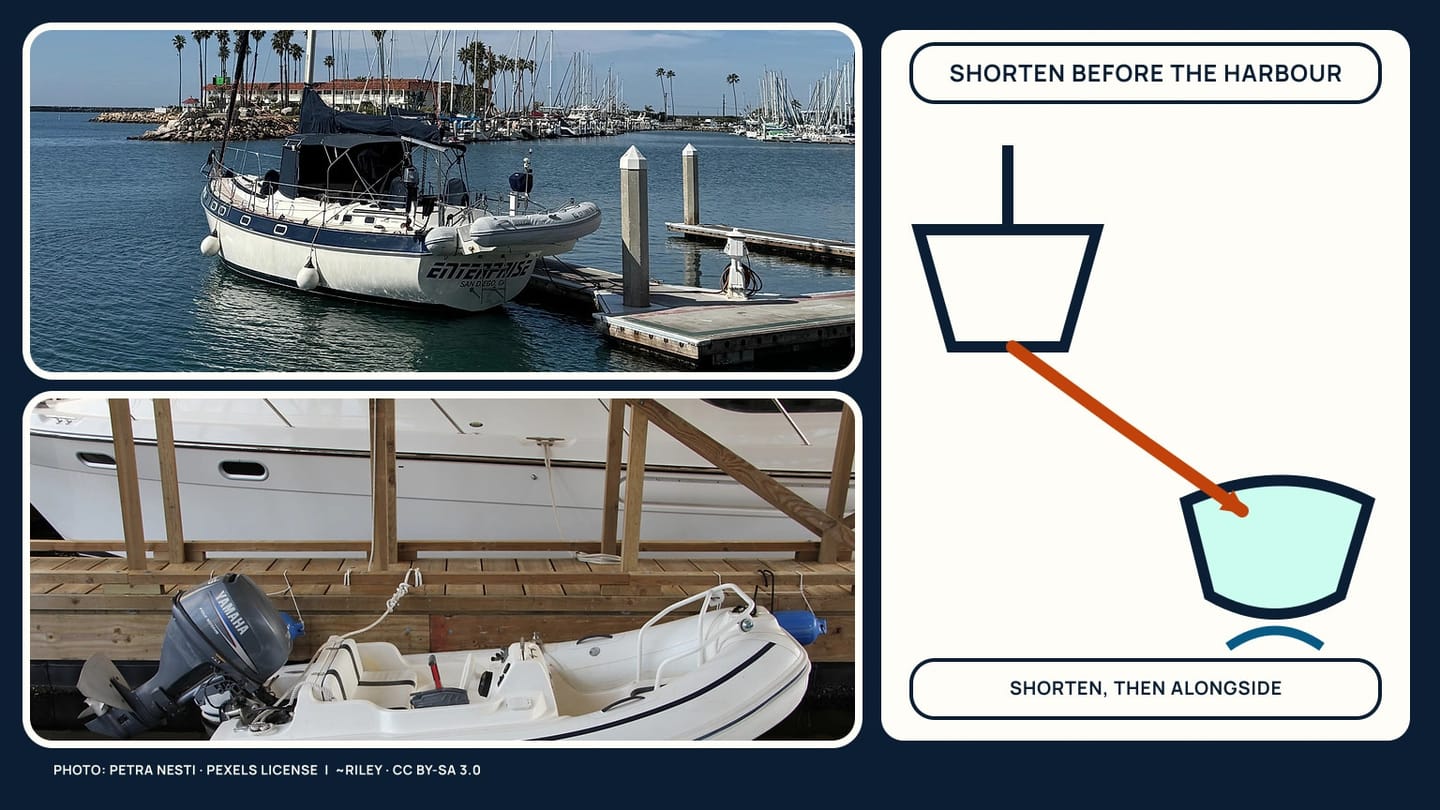
A how to tow a dinghy safely decision gets easier when the routine is familiar. For how to tow a dinghy safely, SailStarter's short lessons help you practise the foundations behind calm preparation: reading the boat, using a consistent routine, and knowing when to pause for more information. Start with the lesson closest to this How to tow a dinghy safely job, then take that habit back to your own boat or charter briefing.
Try it from the lesson
Can you spot the next move?
What cushions the gap between the boat and dock before they touch?
Why you can trust this guide
. We build each guide from public seamanship and safety sources, then teach the universal principle before any local difference.