Chart your course
Osmotic Blisters on Sailboats: What to Check

Quick answer
The short version
Osmotic blisters are raised bubbles in the underwater finish of a fiberglass boat. They form when water moves through gelcoat and reacts with material in or near the laminate. A few small marks do not tell you the whole repair scope, while a large field of blisters deserves a careful haul-out inspection. Start by recording what you can see, then let the condition beneath an opened blister and the hull's moisture condition guide the repair plan.
The word "osmosis" can make a routine haul-out feel alarming. Keep the job in proportion. A blister is a condition to investigate, not a verdict on the whole boat. Your aim is to separate surface evidence from the work needed below it, get a written repair proposal that describes the preparation and coating system, and avoid painting over a problem that needs drying time.
Know what you are looking at
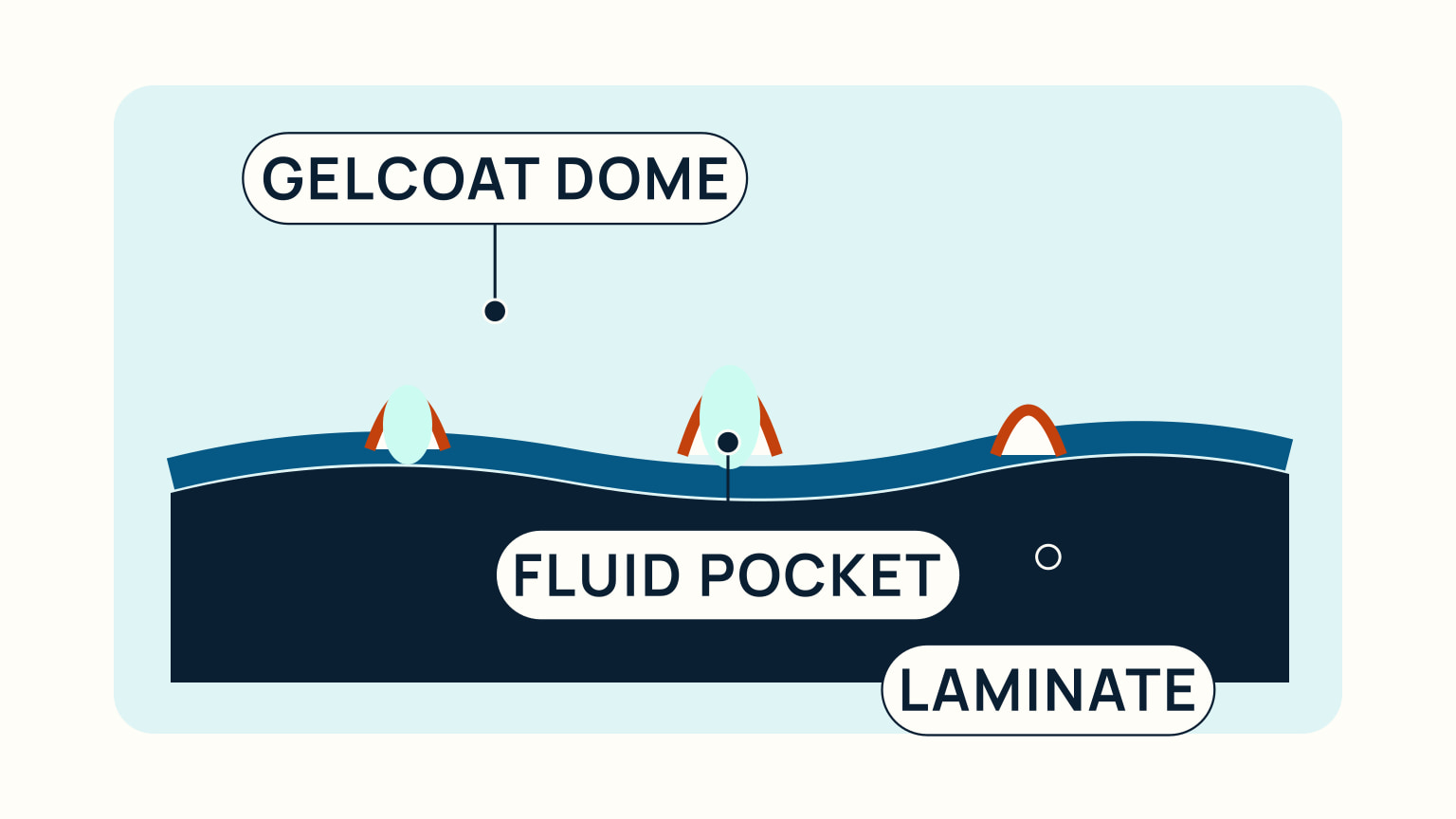
On a fiberglass boat, gelcoat is the smooth pigmented outer finish. Beneath it is the laminate, made from fiberglass reinforcement and resin. Gelcoat helps protect that laminate, yet it is not an absolute water barrier. Over time, water can move through it. Where that water meets soluble material in small voids, the difference in concentration can draw in more water and make a dome push outward.
That is why an osmotic blister may look like a small pimple, a larger raised patch, or a broad scatter of bubbles after haul-out. The visible skin is useful evidence, but it cannot reveal every detail of the laminate underneath. Do not assume a hard-looking bubble is harmless, and do not assume one photograph tells you how deep it goes.
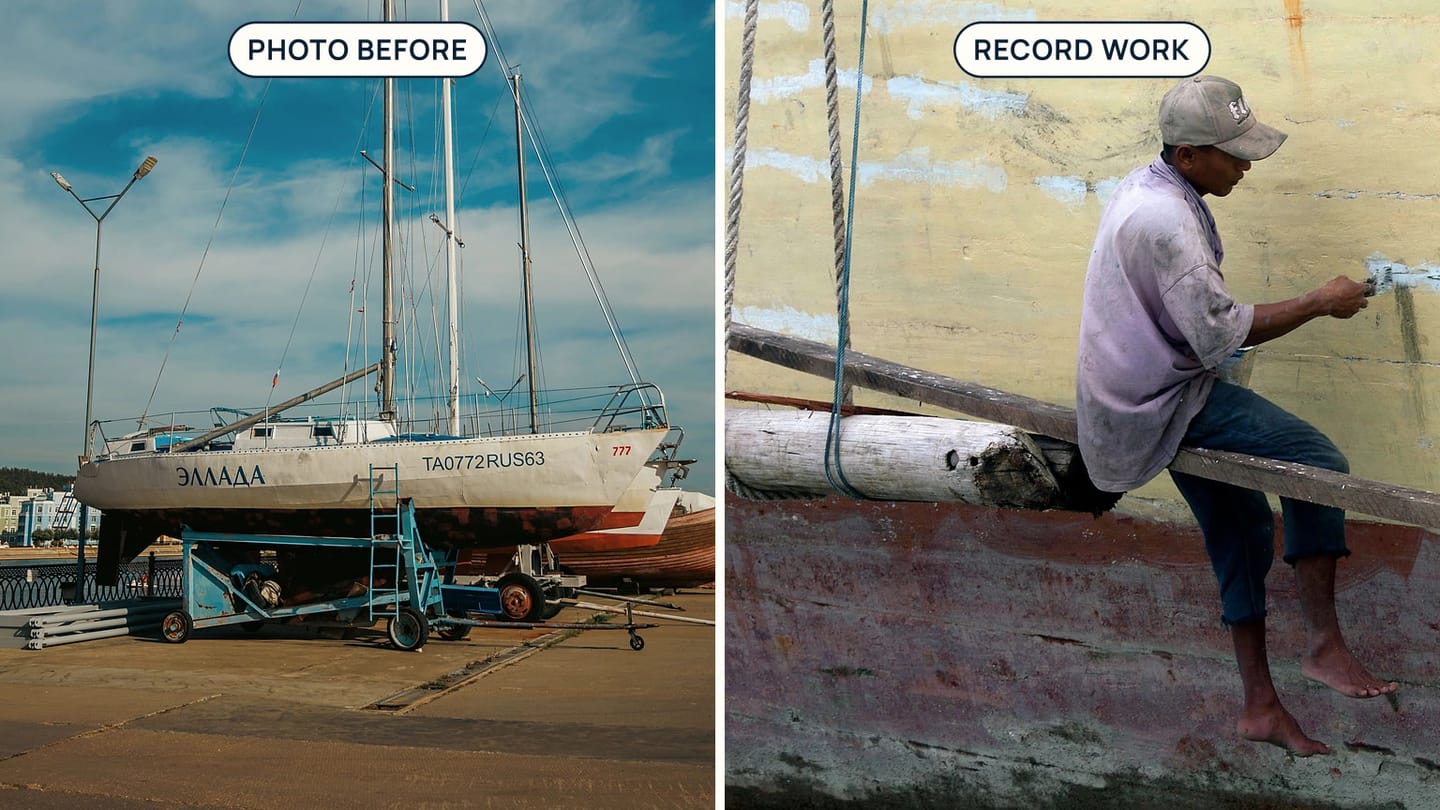
Look for patterns. Are the marks below the waterline? Are they isolated around damage, or spread over a wider area? Is the surface intact, crazed, or broken? Take clear photos with a scale reference, note when the boat was lifted, and keep any previous yard records. That record is more useful than trying to remember the number and size of bubbles next season.
This is one part of a wider sailboat maintenance checklist. Treat it as a hull-condition observation. It sits beside checks for coating wear, impact damage, through-hulls, and evidence of water where it should not be.
Inspect at haul-out, not from a guess
The most useful time to inspect is when the bottom is accessible and clean enough to see. Walk it in good light. Look across the hull at a shallow angle, then close up. Mark suspect areas without puncturing them yourself unless the boatyard or surveyor has agreed on that step. Blisters, cracks, coating loss, and impact marks can overlap, yet they do not all have the same cause or repair.
If you are buying a boat, a haul-out gives the surveyor access to the underwater hull as well as the running gear. Ask what the inspection can and cannot establish. A professional may recommend opening a representative area, checking moisture, or reviewing the boat's repair history. Those findings are more informative than a rule such as "all blisters are cosmetic" or "every blister means the laminate is ruined."
Keep the inspection separate from an urge to start sanding. Hull condition, the paint system already on the boat, and the season all affect what makes sense next. A boat that must go back in the water tomorrow may need a different decision from one that can remain ashore long enough for a proper repair cycle.
You can use the same calm method for other concerns below the waterline. Our guide to why there is water in the bilge helps with a different symptom: finding the path water takes into a boat. It does not diagnose hull blisters, but it reinforces the same habit of looking for evidence before choosing a fix.

Let the repair scope follow the findings
Repair work is not simply popping each bubble and adding paint. Supplier guidance describes opening affected blisters, removing unsound gelcoat or laminate where necessary, washing out contamination, allowing the hull to dry, and then rebuilding the selected coating system. The exact materials, preparation, film thickness, and cure windows belong to that product system and the boatyard's written plan.
Drying matters because trapped moisture can lead to renewed blistering after a cosmetic-looking refinish. That does not mean every owner needs the same stripping or drying programme. It means a quote should explain what has been found, how the area will be prepared, how dryness will be assessed, and what will go back on the hull in what order.
Ask direct questions. Which areas are being opened? Has the laminate itself been found unsound? Is this a local repair or a wider treatment? What coating system is specified, and whose instructions control it? What work is excluded if more damage appears? A yard that can answer those questions gives you a decision you can compare, rather than a vague promise to "fix the pox."
Avoid turning a repair article into a chemical recipe. Product instructions include preparation, protective equipment, ventilation, compatibility, and cure conditions for a reason. If you plan to do work yourself, follow the exact current instructions for every product. If the scope reaches laminate repair, a marine surveyor or experienced boatyard can help you decide where a cosmetic job stops and structural assessment begins.

Reduce uncertainty before the next season
Once the condition is understood, keep the records with the boat. Save the survey report, yard estimate, photos before and after, product names, and invoices. A future buyer or surveyor can then see what was observed and what was actually done. Good records also stop an old repair from becoming a new mystery at the next haul-out.
Prevention is a system choice rather than a magic coating. Barrier-coat systems are intended to reduce water movement into a fiberglass bottom, but they only work as part of suitable preparation and application. They belong underneath the compatible underwater coatings, not as a quick finish over an unknown damp surface. Your hull's build, existing coatings, use, and storage conditions all matter.
Keep ordinary maintenance ordinary. Inspect the bottom at haul-out, repair fresh gelcoat damage promptly, and ask about changes rather than comparing this year's surface with a half-remembered view. The goal is not to chase a perfectly featureless hull at any cost. It is to notice a real change early enough to choose a sensible response.
If you are considering a used boat, pair this with a broader used sailboat inspection checklist. The hull is only one system. Rig, sails, engine, onboard water, records, and the way the boat has been kept all belong in the same decision.
Blisters deserve attention because they can point to moisture and laminate condition that a shiny paint job hides. A patient inspection, a clear scope, and records of the chosen system give you a much better basis for action than an online diagnosis from a single close-up.
One final boundary is worth keeping. A blister can sit beside impact damage, old repairs, cracked hardware bedding, or worn bottom coating. Do not bundle those conditions into one diagnosis because they happen to appear below the waterline. Ask the yard to identify which observation supports each recommendation. That makes the estimate easier to compare and lets you decide whether a repair is urgent, seasonal, or best handled as part of a larger refit. It also protects a buyer from spending on a surface treatment when the more important question is hull history and survey evidence.
Before accepting a repair recommendation, ask what result will be inspected when the work is complete. A clear handover can include photographs of opened areas, the product system used, any moisture or condition observations made during preparation, and the dates work was done. It should also distinguish work performed from advice about future monitoring. That matters if the boat changes hands or if a similar mark appears later. You are then comparing evidence with evidence, rather than trying to decide whether a new bubble is part of an old story.
Do not let a cosmetic deadline overrule the preparation the hull needs. Launch dates, weather, and yard schedules are real constraints, but a coating system only performs as well as the condition it is applied over. If the plan changes, ask what that means for the next step and record it. A sensible delay can be easier to manage than paying twice for work that was not ready.
Try it from the lesson
Can you spot the next move?
What cushions the gap between the boat and dock before they touch?
Why you can trust this guide
. We build each guide from public seamanship and safety sources, then teach the universal principle before any local difference.