Chart your course
Mediterranean Mooring for Beginners
Quick answer
The short version
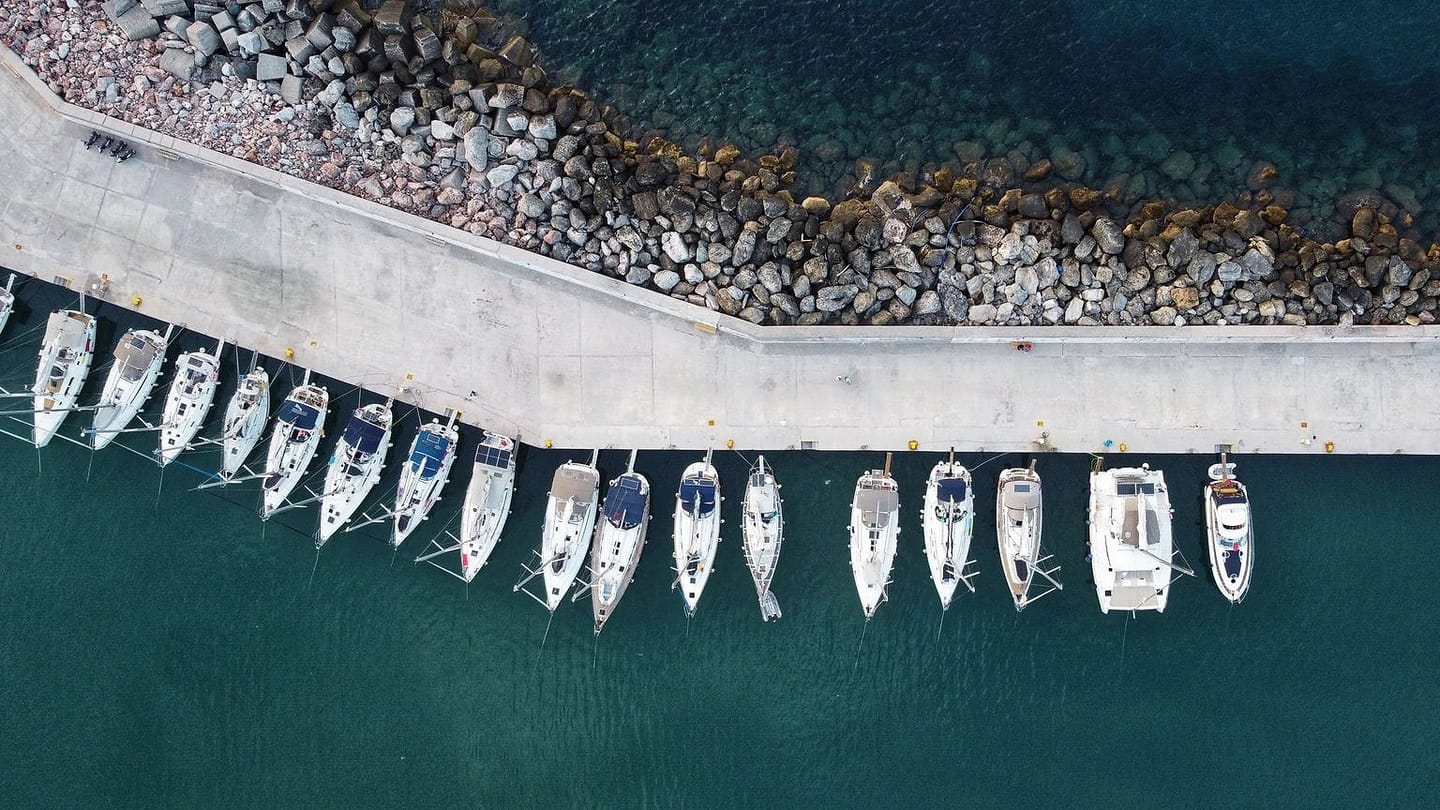
Mediterranean mooring normally places a boat stern-to a quay. Two stern lines keep the stern near the wall, while a laid bow mooring or the boat's anchor holds the bow away. Before reversing, confirm which system the berth uses, check depth and wind, rig fenders on both sides and the stern, prepare two long stern lines, assign one job to each crew member, and agree on stop and abort calls. With a lazy line, keep the light pickup line away from the propeller and carry it forward to the bow. With an anchor, prepare the chain to run freely and avoid crossing neighbouring chains. A poor approach should end with a controlled exit and another try.
The finished berth looks compact, but the forces are spread across the whole boat. The bow restraint prevents the stern from reaching the quay. The stern lines control distance and sideways movement. Fenders protect during setup, not as a substitute for correct tension. Local arrangements differ, so the marina's directions and the charter briefing decide whether you go stern-to or bow-to, use a lazy line or anchor, and receive help ashore. The basic control skills in how to dock a sailboat still apply: plan first, move slowly enough to think, and preserve an escape route.
Read the Berth Before You Commit
Pause outside the tight water and identify the exact gap. Ask the marina or base whether the bow is secured by a laid mooring or your own anchor. Look for staff or neighbouring crews who will take stern lines. Check how nearby boats are aligned and where their anchor chains or laid moorings appear to run. Never assume that a light line lying on the quay is safe to put near a propeller.
Read the wind across the harbour. A crosswind can slide the boat toward the downwind neighbour before the first line is secure. An onshore wind can push the stern toward the quay. Put more fender protection on the likely contact side, but keep full coverage elsewhere. Note open water for an aborted approach and decide how far you can reverse before the gap becomes too narrow to leave cleanly.
Check the quay itself. Depth near the wall, underwater blocks, steps, projections, swell, and passing traffic can change the safe distance. The RYA notes that bow-to can keep stern gear in deeper water when quay depth is uncertain. That choice also changes boarding and line handling, so follow local advice rather than changing the plan halfway through.
Finally, picture the finished geometry. The bow restraint pulls away from the quay, and the two stern lines lead aft to shore. If you cannot describe where all three will run without crossing a propeller, tender, neighbour, or walkway, ask for help or choose another berth. A quick sketch on paper is more useful than a shouted explanation after reverse gear is engaged.
Prepare Before You Start Reversing
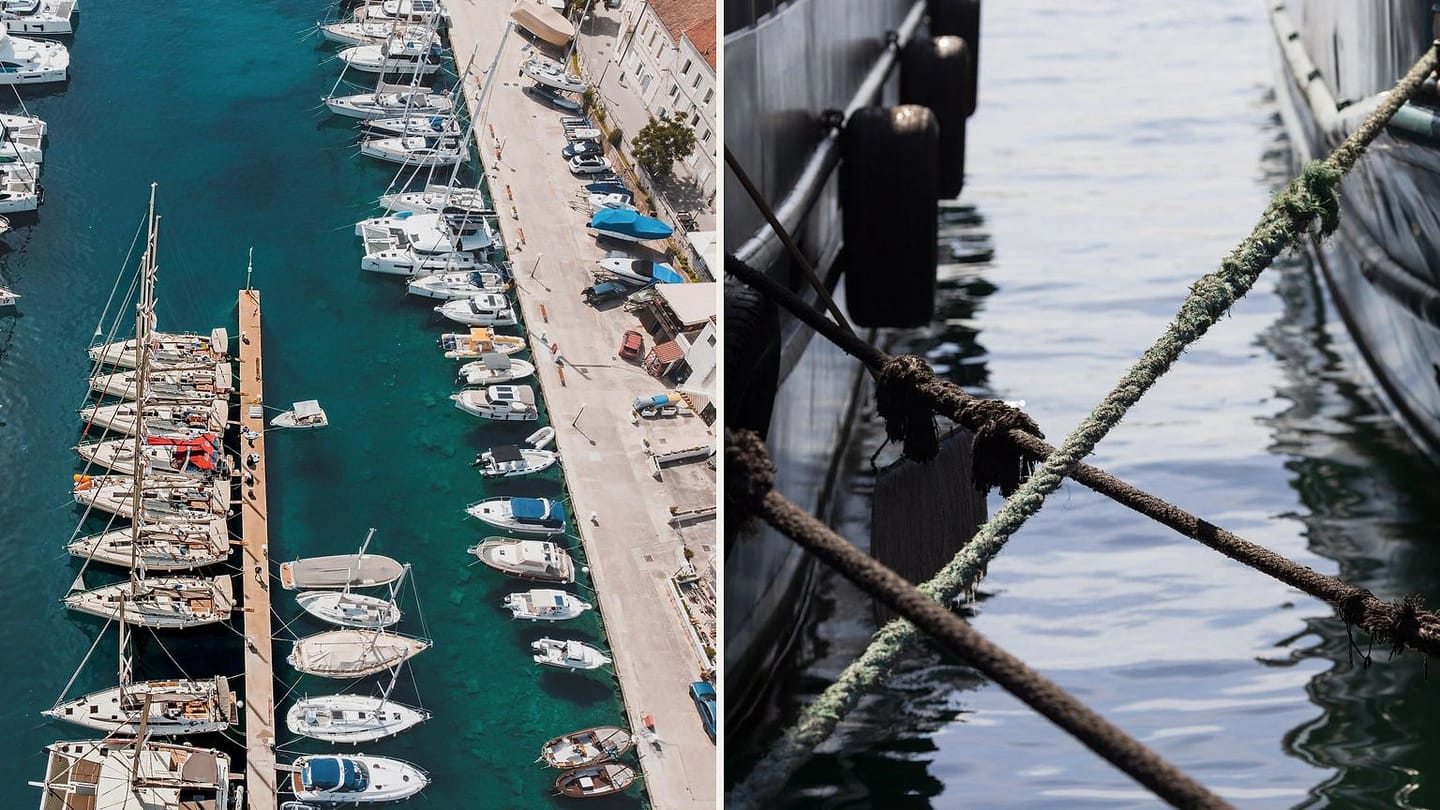
Rig fenders along both sides and place strong protection at the stern corners. Set their height for the quay and neighbouring topsides you can actually see. Prepare one stern line from each quarter. They should be clear to run, long enough for the expected handoff, and free of knots that can snag at the worst moment. If the base expects a line to go ashore and return to the boat, rig for that method before moving.
Assign clear roles. The helm controls the boat and decides whether to abort. One person handles the first stern line. Another handles the second line or the lazy line. The bow person should know where the heavy mooring will be secured and how to avoid wrapping the light pickup line around hands, feet, or hardware. Agree on plain calls such as "line ashore," "line secured," "stop," and "go out." Hand signals help when engine noise makes speech unreliable.
Remove hazards before the approach. Shorten a tender painter so it cannot reach the propeller. Keep loose warps, the lazy line, and clothing away from moving gear. If using the anchor, open the locker, confirm that chain can leave freely, and identify who controls the windlass. Nobody should stand in a bight of line or over the chain path.
Use an open patch of water to feel reverse response on an unfamiliar charter boat before entering the row. Decide the slowest speed that still gives steering control in the present wind. Too little flow may let the bow blow away, while excess speed leaves less room to stop. The boat, conditions, and berth decide the balance. Review how dock lines and spring lines work so every crew member knows which line is controlling what.
Work Through a Lazy-Line Berth
Begin slightly upwind when a crosswind requires it, then reverse toward the gap under control. Watch both stern quarters and keep the bow picture in mind. If the boat is no longer aligned while plenty of water remains, go ahead, clear the row, and reset. Waiting until fenders touch a neighbour leaves fewer choices.
When practical, send the windward stern line first because it helps resist the first sideways drift. A shore helper may place it over a bollard or cleat. The line handler takes in only enough to control the stern while the helm keeps command. A line that is made too short too early can pin one quarter and swing the other toward the quay.
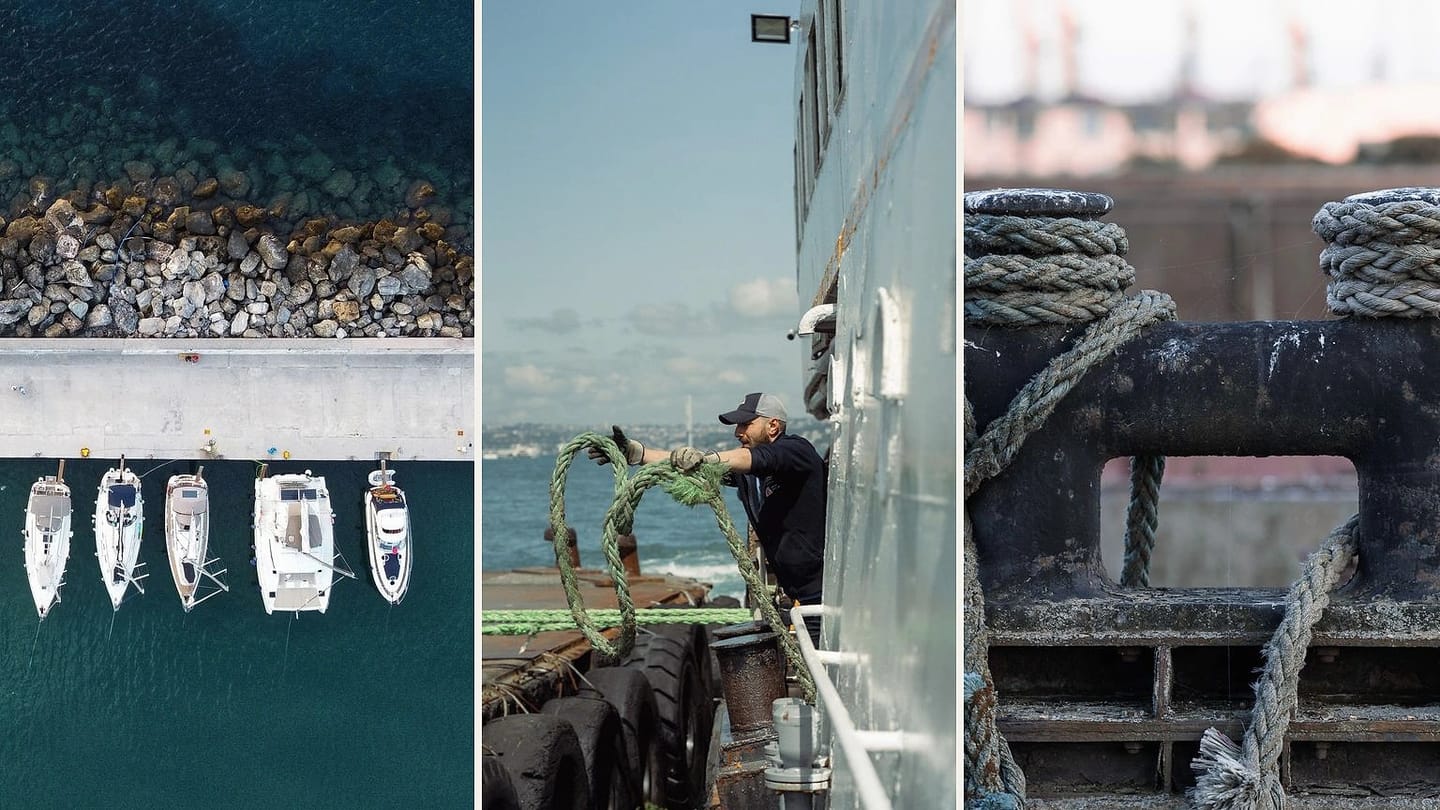
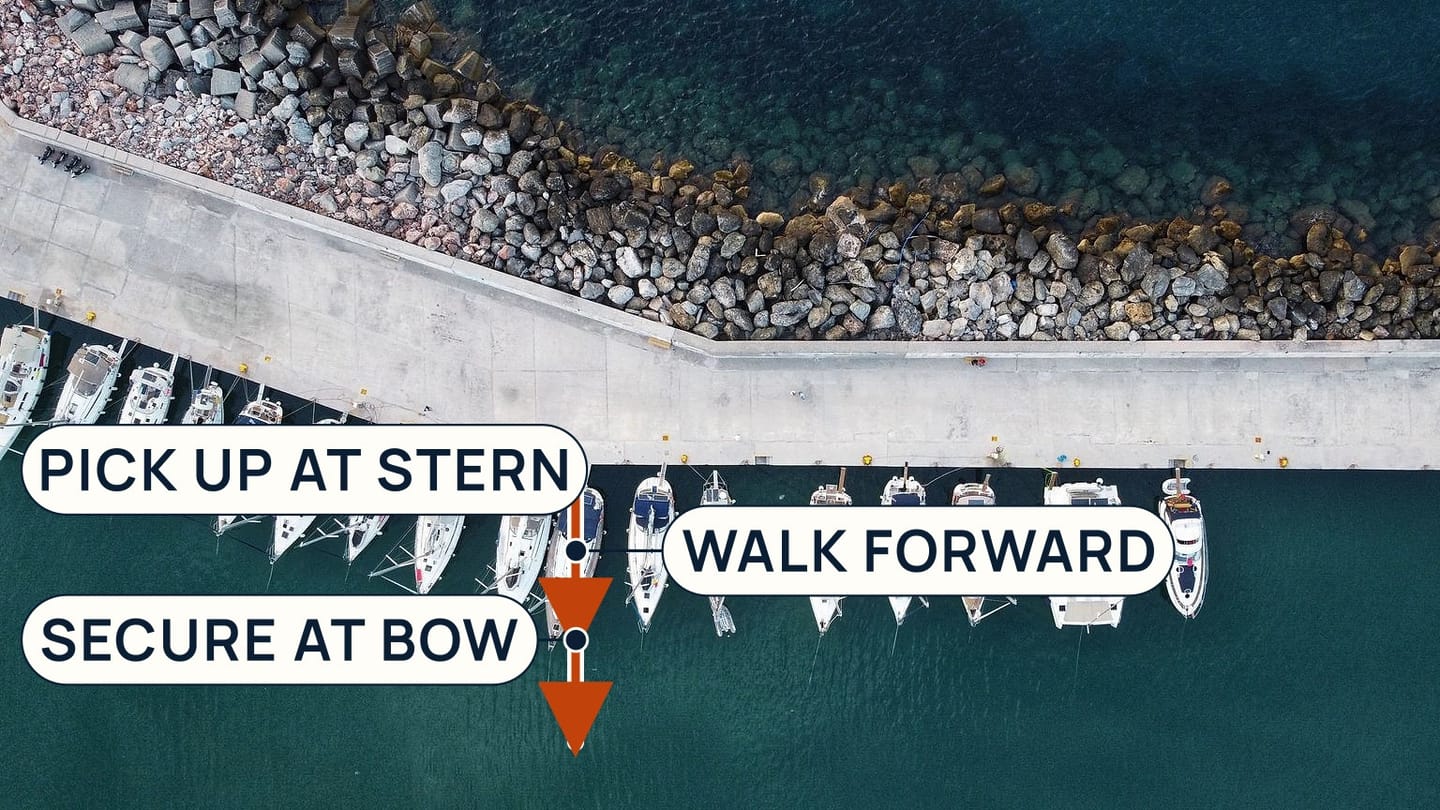
Receive the light lazy line without pulling it across the propeller area. Keep it outside the hull and walk it forward along the side deck. It is only the messenger. Haul until the heavier laid mooring reaches the bow, then secure that heavy line at the strong point shown in the briefing. Do not treat the dirty, light pickup line as the permanent bow restraint.
Add the second stern line and adjust the whole system in small steps. Tightening only the stern lines pulls the boat toward the wall. Tightening only the bow line moves it away and can make boarding awkward. Ease and take in until the stern remains clear through normal movement and the boat sits between its neighbours. If the berth permits diagonal springs, they can reduce sideways stern travel.
Set the passerelle or other shore access only after the boat is secure. Recheck the lines after wind, wash, or a neighbouring boat changes the load. A real mooring is a moving balance, not a one-time knot.
Use an Anchor Carefully, or Leave Early
Without laid moorings, the boat's anchor supplies the forward restraint. Prepare it to lower cleanly and study the direction of neighbouring chains. Start far enough from the quay to lower the anchor before the final reverse. The exact distance depends on depth, berth, chain, holding ground, and local direction. A copied number cannot replace the base briefing.
Lower the anchor and ease chain while reversing toward the gap. Keep modest control on the payout so piles and kinks do not form, but do not snub the bow abruptly while the boat is still misaligned. As the stern nears its working position, set the anchor, send the stern lines, then adjust chain and lines together. Make small adjustments and watch both ends of the boat instead of trying to correct the whole berth with one hard pull.
Crossing another boat's chain can make departure difficult for both crews. If the approach would lay yours across a visible neighbour, stop and reset. If a crosswind has carried the boat out of the intended lane, or the chain snubs and turns the bow, use the open-water exit you chose earlier. Protecting pride is never a reason to force the stern into a shrinking gap.
After securing, check that the stern cannot reach the quay and that the anchor appears to hold under the present load. Monitor changes in wind and traffic. When leaving, plan how lines and chain will be recovered without passing them near the propeller. The anchor sequence in how to anchor a sailboat explains the broader set, holding, and recovery checks. Med mooring adds a quay to that system, but it does not remove the need to understand the anchor.
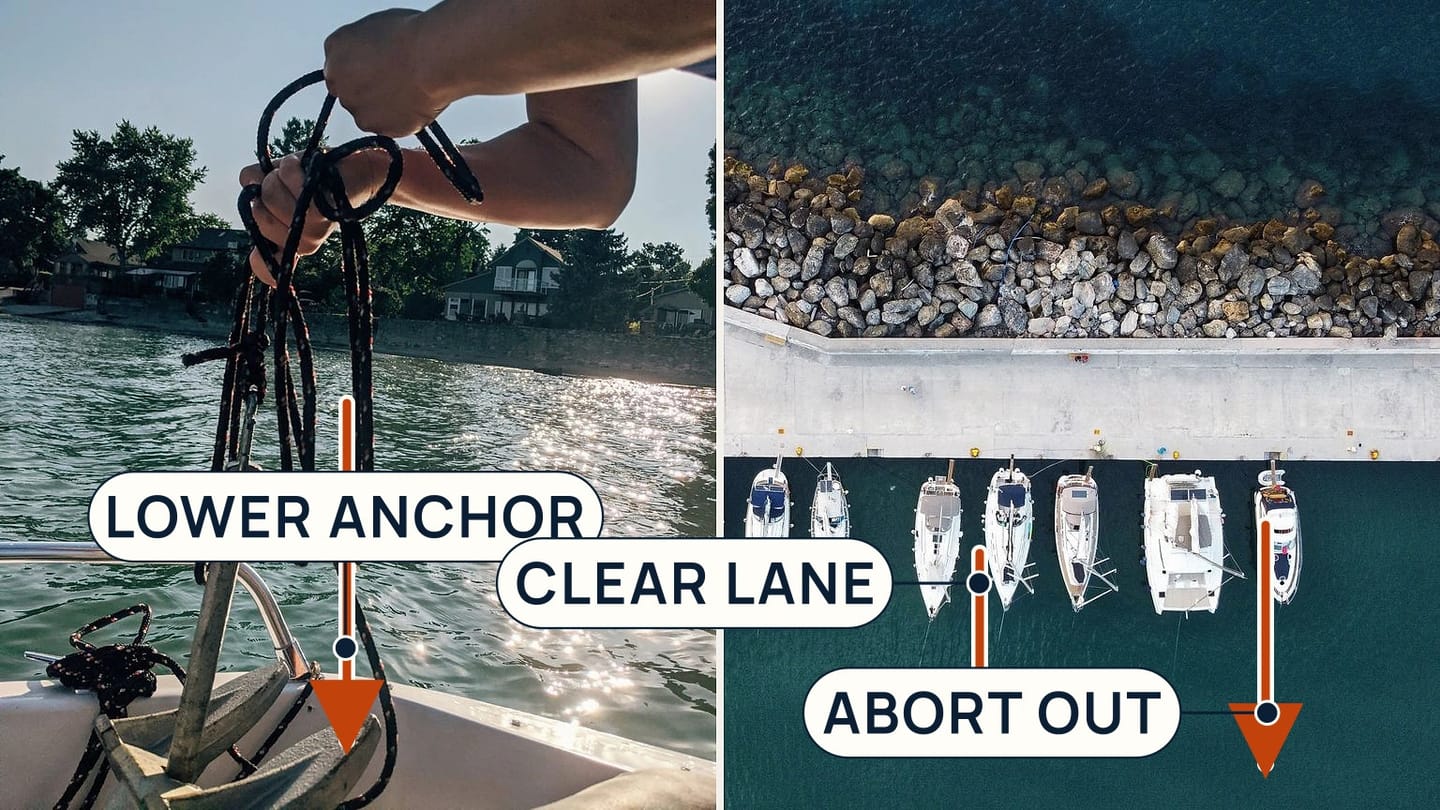
Use SailStarter's coming-alongside lesson to rehearse the control decisions behind this manoeuvre. Before your first stern-to approach, brief the crew with the berth type, wind, first line, bow restraint, propeller hazards, and abort route. Then ask the charter base to demonstrate the local method on the actual boat. This article gives you the sequence and vocabulary so that demonstration makes sense. It cannot predict the installed controls, quay depth, assistance, or harbour directions. If the berth still feels too tight, request dock help or choose a simpler option. A successful beginner approach is the one that stays slow enough to stop and leaves early enough to try again.
Try it from the lesson
Can you spot the next move?
You're heading into a berth you've never used before. What's worth doing before you commit to the approach?
Why you can trust this guide
. We build each guide from public seamanship and safety sources, then teach the universal principle before any local difference.