Chart your course
Lightning Safety While Sailing
Quick answer
The short version
The safest lightning plan is to avoid being on the water when thunderstorms threaten. Check a current marine forecast, watch conditions, and postpone departure or return to substantial shelter before the storm arrives. A sailboat mast does not create safety, and a lightning protection system cannot prevent a strike.
If you are caught afloat and cannot reach shelter, follow the boat's emergency plan. Keep people low, remain inside a substantial cabin when available, and avoid unnecessary contact with metal, wiring, and electrical equipment. Do not enter the water. After a suspected strike, check people first, then fire, flooding, hull or rig damage, and failed navigation or communication equipment.
Lightning advice sometimes gets reduced to one object: lower an antenna, stand under the mast, disconnect a radio, or trust a grounding wire. No single action makes an exposed boat safe. The useful plan has three stages. Avoid the storm when you can. Reduce exposure if avoidance fails. Inspect the boat and its systems afterward.
Forecasts and local emergency instructions vary, so verify current local guidance. The principles here come from NOAA and National Weather Service material and should sit beside the boat builder's information and any professionally installed protection system documentation.
Make the go or no-go decision ashore
Read the marine forecast for the whole planned period, including the return, not only the moment of departure. Learning to read a marine forecast properly is worth doing before you rely on one for a go or no-go call. Look for thunderstorm wording, squall lines, rapid wind changes, and the timing of fronts. Check updated observations rather than treating a morning forecast as fixed, since a forecast issued at dawn can be overtaken by afternoon convection.
If thunderstorms are forecast for the sailing area, remaining ashore removes the exposure that onboard tactics cannot. A short lesson, race, or delivery can wait. When already out, turn the forecast into a decision early enough to reach substantial shelter before the storm closes the margin. Watching the sky matters alongside the forecast text: towering, dark-based cloud that builds quickly is worth treating as an active warning, and knowing which storm clouds to watch for helps you recognize that build before the forecast catches up with it.
Brief the crew on the alternate harbor or return point before you leave the dock. A plan made in calm weather is easier to follow than a discussion under a darkening cloud, and everyone aboard should know it, not only the skipper.
Set a decision point that comes before the first visible lightning. Waiting for certainty consumes travel time and may put the boat at an entrance during the gust front, when wind and sea state change fastest and close quarters become more dangerous. A conservative trigger is useful only if the skipper acts on it without renegotiating the decision once the sky has already darkened.
Reduce exposure if you are caught afloat
If safe shore shelter remains reachable, follow the skipper's plan without delay. Do not create a new hazard through a rushed entrance, collision, or grounding just to beat the storm in by a few minutes. If a small boat cannot reach shelter, keep people low and avoid unnecessary contact with metal and electrical equipment. A plan that already covers this scenario, briefed before departure, means nobody is improvising for the first time under a darkening sky.
On a larger boat with a substantial cabin, remain inside and away from metal surfaces. A cabin offers relative protection, not certainty, so treat it as reducing risk, not removing it. Keep everyone out of the water. Use the radio for an emergency when needed; preserving equipment never outranks a distress call.
Secure loose gear before the strongest wind reaches you, provided doing so does not expose a person on deck to greater risk. A common mistake is trying to finish a deck task after the wind has already shifted and the first rain has started, when the safer move is to abandon the task and get everyone inside. Once the storm is close, minimize movement and follow the established onboard plan.
Keep crew together enough to communicate without crowding one conductive area. Explain any planned engine, radio, or anchoring action before people move. Confusion sends hands toward metal fittings at exactly the wrong time, which is another reason the plan you briefed ashore matters more than an improvised decision made once the boat is already rolling.
Understand what protection systems actually do
A lightning protection system is intended to provide a preferred conductive path for current and reduce side flashes or damage to the boat and the people aboard. It does not repel lightning, attract it away from the vessel, or make a boat strike-proof. Design details involve mast conductors, bonding, and grounding, engineered together with the boat's construction so current has one intended route from the highest point to the water rather than several unintended ones through wiring or fittings. A side flash happens when current jumps from that intended path to a nearby object, such as wiring or a person standing too close, so a working system is also about keeping that jump path clear, not only about carrying current down to the water.
Do not improvise a system from a short checklist, and do not assume a length of wire clipped to a shroud does the same job. Poor routing can introduce new paths through the hull or near people instead of away from them. Installation and inspection belong with qualified marine professionals using current standards applicable to the boat.
Know whether your boat has a documented system and where its main components are. That knowledge supports maintenance and post-strike inspection, and it gives you something concrete to hand a surveyor after a suspected strike. It does not change a prudent decision to stay ashore when thunderstorms threaten; a well-designed system changes the odds of damage, not the odds of a strike.
Include the system in regular professional inspection. Corrosion, removed equipment, and later electrical work can alter a path that once matched the design. A mast-to-water connection is not a fit-and-forget promise, and a boat that has changed hands, been rewired, or had new electronics added is a reasonable candidate for a fresh check even without a recent strike.
Inspect carefully after a suspected strike
Account for the crew first and check for injury before you look at anything else aboard. Look and smell for fire or heat, then check the bilge and hull for water ingress. A strike can damage components that are not obvious from the deck, so a boat that looks unchanged is not the same as a boat confirmed undamaged.
Treat electrical, navigation, and communication equipment as unproven until checked. Compare independent position or compass information where available, and do not rely on one display merely because it powers on; a screen that lights up is not the same as a screen giving correct information. Inspect the rig and mast fittings from a safe position rather than climbing immediately, since a strike can weaken a fitting in a way you cannot see from a quick glance.
Report the event and seek professional survey or repair advice even if nothing seems obviously wrong. A boat that appears normal may have hidden damage to wiring, through-hull fittings, or electronics that surfaces later, away from any dock. If essential systems are lost, water is entering, fire is present, or anyone is injured, call for assistance promptly; knowing how to make that call before you need it is worth more than remembering the right words under stress.
Write down what still works before continuing. Separate battery-powered communication, a handheld compass, and a paper position record can help when fixed electronics disagree, and that written note becomes useful evidence for whoever surveys the boat afterward. Move toward shelter only with a plan that matches the remaining capability, not the plan you would have used with every instrument working.
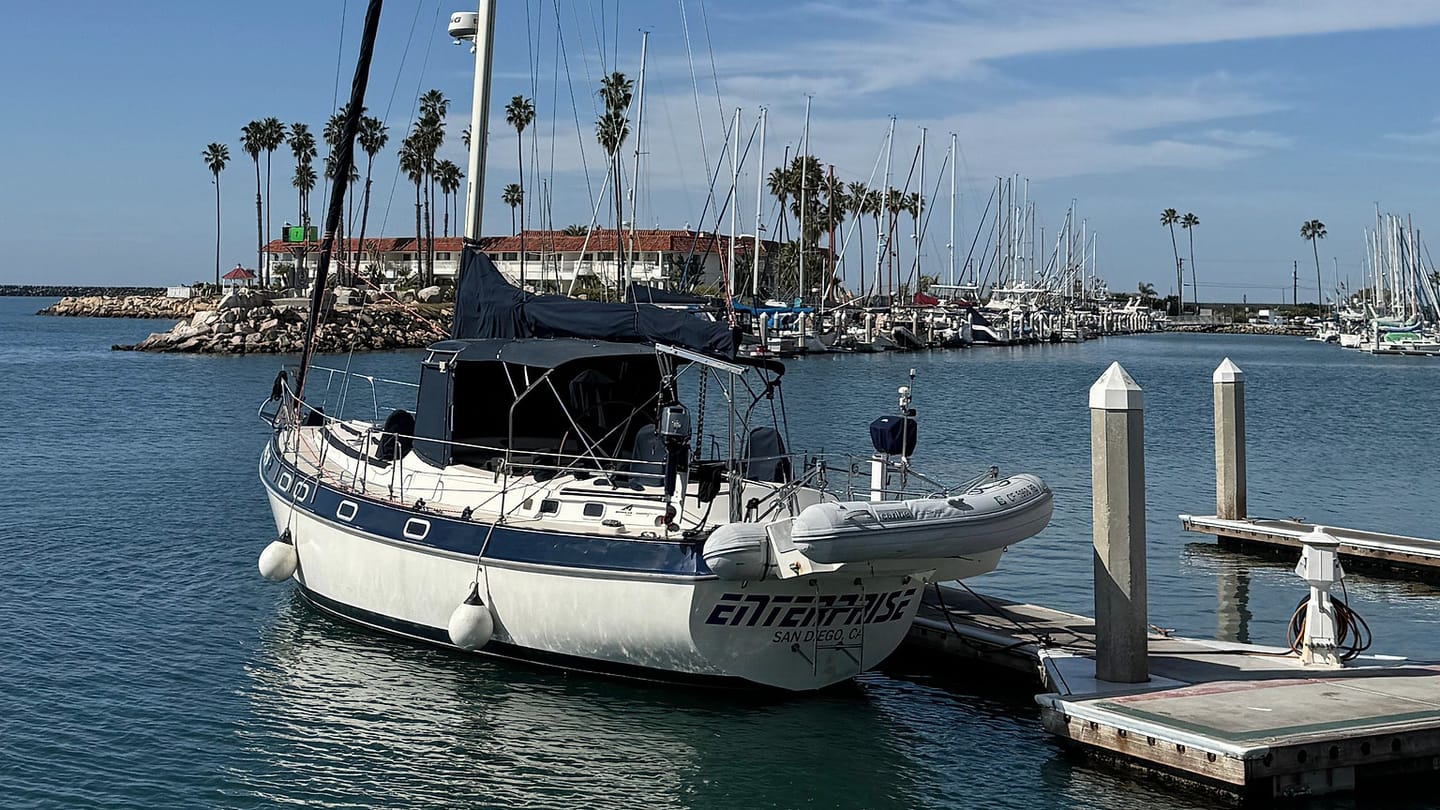
SailStarter's squall lesson helps you read a fast-changing weather problem before it becomes an onboard emergency. Use it to build a departure routine around forecast, observation, escape options, and early sail reduction; a simple weather check and float plan gives that routine a repeatable shape before every trip. Add your boat's lightning documentation and local forecast sources to that routine. The strongest habit is an ordinary one: make the conservative decision while shelter is still easy to reach. If the boat is ever exposed, protect people first and assume that systems need checking afterward instead of trusting a quick glance at the panel.
Try it from the lesson
Can you spot the next move?
You spot a dark line on the horizon, moving toward you. What's the first move?
Why you can trust this guide
. We build each guide from public seamanship and safety sources, then teach the universal principle before any local difference.