Chart your course
Thunderstorm Avoidance for Sailboats
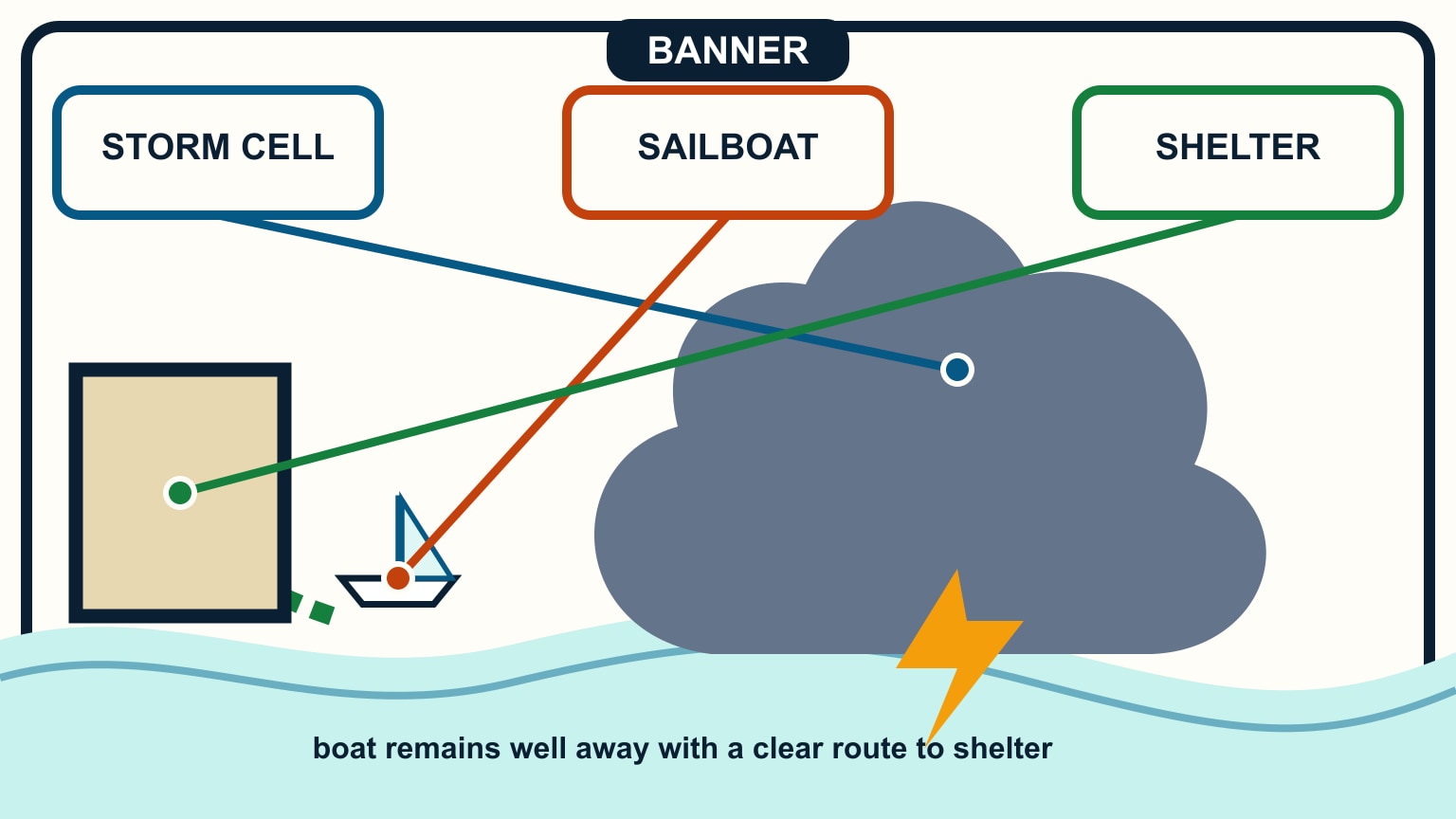
Quick answer
The short version
Thunderstorm seamanship begins before the boat leaves shelter. The safest plan is to avoid being exposed when a storm arrives, not to improvise beneath it. Check current official forecasts, watches, warnings, and local radar or nowcasting products where available. Choose a route with reachable shelter and a clear cancellation point. Keep watching the sky because a forecast is not an all-clear.
Thunderstorms can bring lightning, abrupt wind shifts, strong gusts, heavy rain, poor visibility, and steep short-lived seas. The exact combination varies, so a single wind number is a poor trigger. Treat evidence of a developing or approaching storm as a reason to create distance and reduce commitments early.
This is an avoidance guide, not a promise that any boat can be made safe in lightning. Follow local authorities, the boat's operating guidance, and the skipper's conservative limits. Build the wider forecast routine with how to read a marine forecast.
Decide ashore whether exposure is necessary
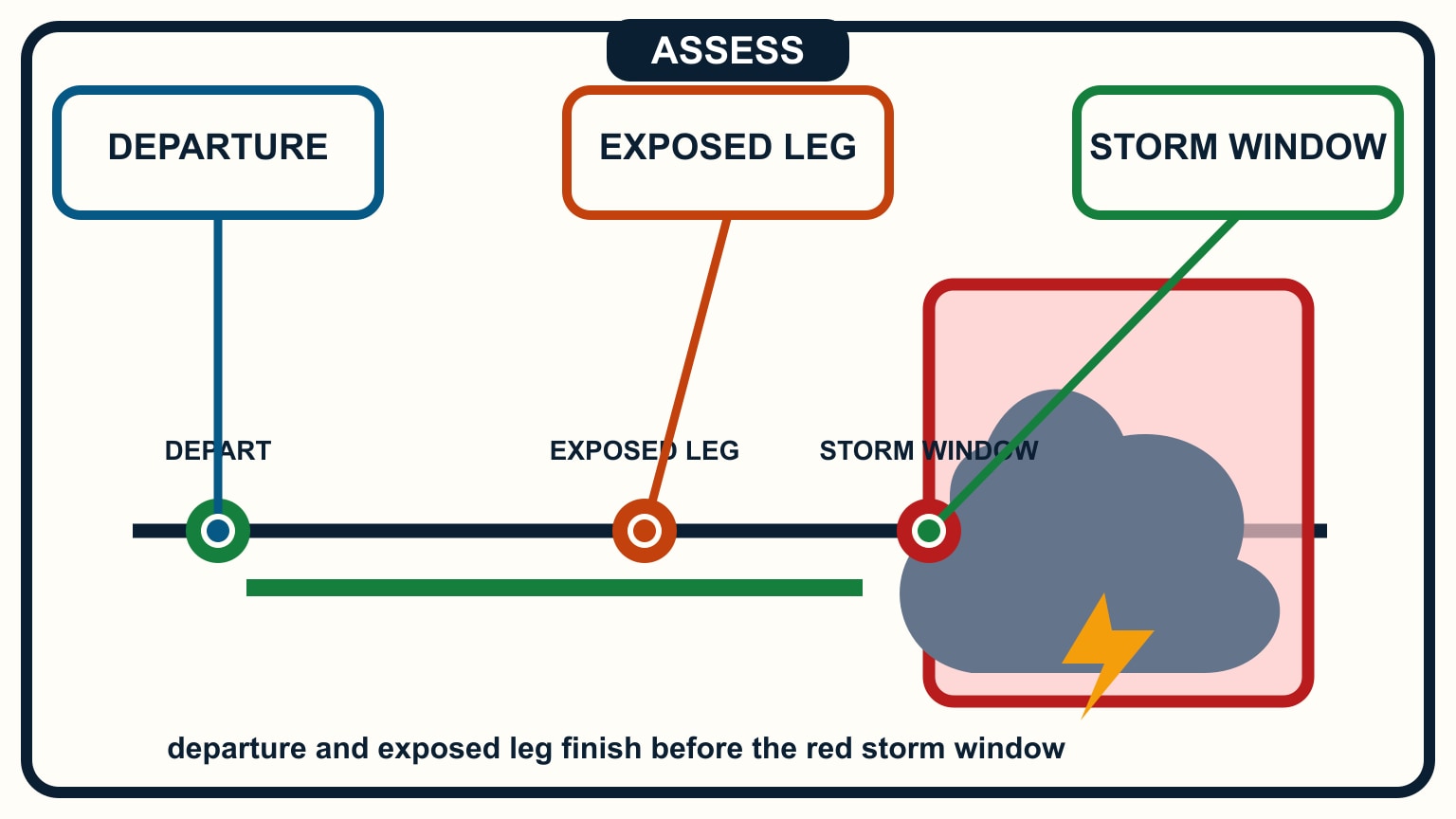
Read the official marine forecast and all active thunderstorm, severe-weather, and lightning information for the route. Note the issue time, valid period, geographical coverage, expected movement, and next update. A low percentage or conditional phrase still needs interpretation against the consequences of being caught on open water.
Plot the vulnerable parts of the day: long crossings, lee shores, narrow entrances, busy channels, and stretches without dependable shelter. Ask how long it takes to reach protection from each point, including time to secure the boat. A harbour that is difficult in a squall is not a useful last-minute escape.
Set a cancellation rule before social and schedule pressure builds. It might be an active warning covering the route, storms already developing upstream, a forecast window that overlaps the exposed leg, or insufficient margin to return before convection is expected. Local services and operators may prescribe stricter rules; use them.
Check the crew as carefully as the forecast. A novice crew may need more time to reef, start the engine, put on lifejackets, and clear the deck. A tired or seasick crew has less capacity for a rapid change. If the margin depends on a flawless drill, the margin is too small.
File or share a float plan, tell the shore contact what weather would cause an early return, and preserve alternatives. A delayed lunch or missed destination is cheaper than trying to outrun a storm whose speed and outflow are uncertain.
Watch for a sky that is changing character
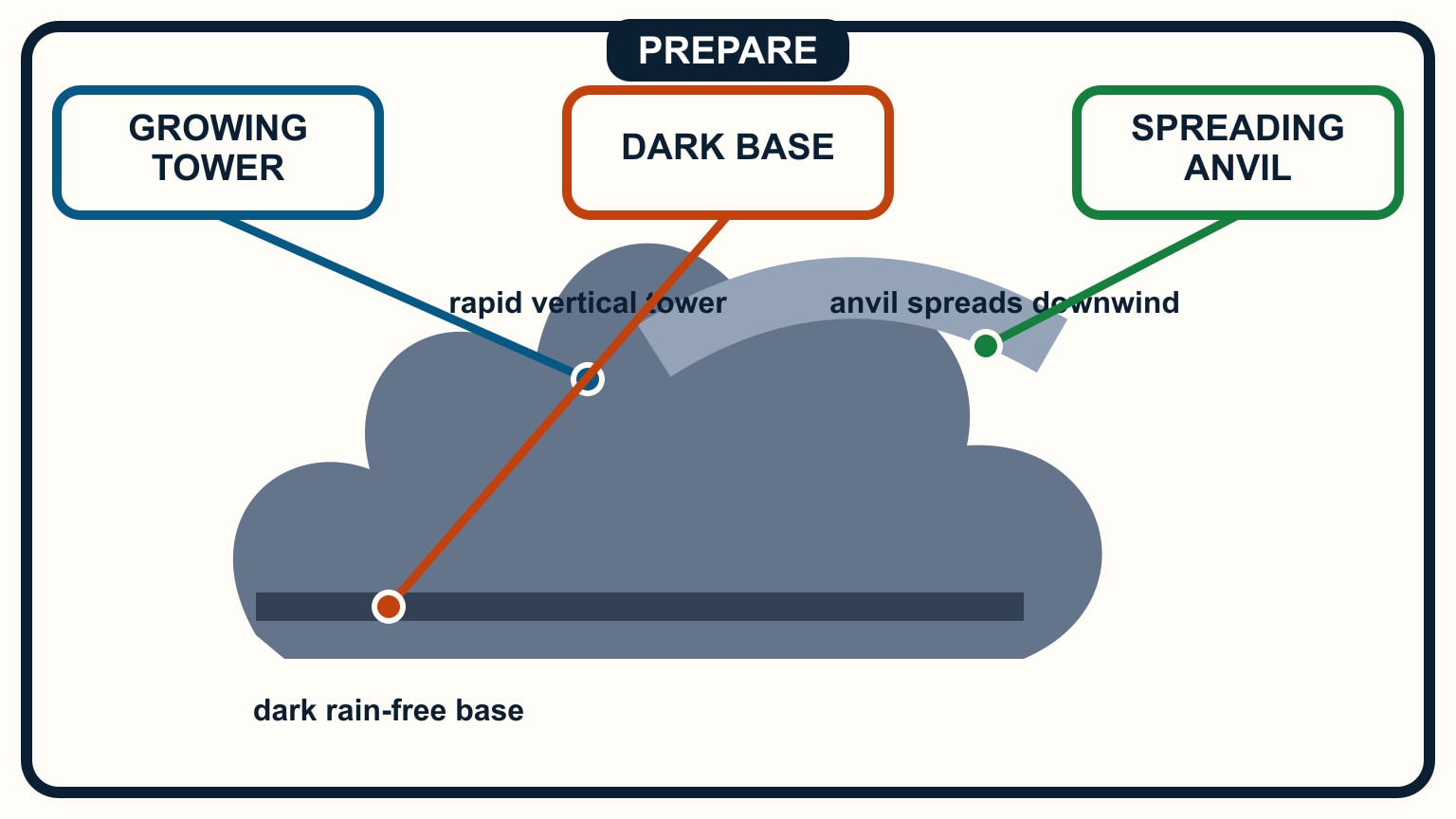
Keep a person looking outside even when radar is available. Mobile data can fail, radar can be delayed, and a display may not represent the wind at water level. Compare the view ahead, abeam, and behind with each scheduled forecast check.
Warning signs include rapidly building cauliflower-shaped cloud, a darkening or lowering base, an anvil spreading aloft, a rain shaft, lightning, thunder, and a low shelf or arc cloud on the leading edge. A sudden cool wind, an abrupt direction change, dust or spray lifting ahead, or a fast pressure change may mark an outflow boundary. Learn the fuller visual sequence in how to recognise storm clouds at sea.
Do not judge only by whether the cloud is directly upwind. Storm cells and their outflow can move differently from the surface wind the boat currently feels. Look at successive observations or radar frames to understand motion, while remembering that the next development may not follow the same track.
Thunder is evidence that lightning is close enough to matter. Do not use a visual guess at distance as permission to continue an exposed manoeuvre. Follow the official lightning-safety advice for your location and seek substantial shelter when it is available.
Agree on plain crew calls. “Dark base on starboard quarter, growing” is more useful than “weather looks odd.” Record the time and recheck after a few minutes. Rapid growth is itself information, even before an app refreshes.
Create sea room and prepare before the gust front
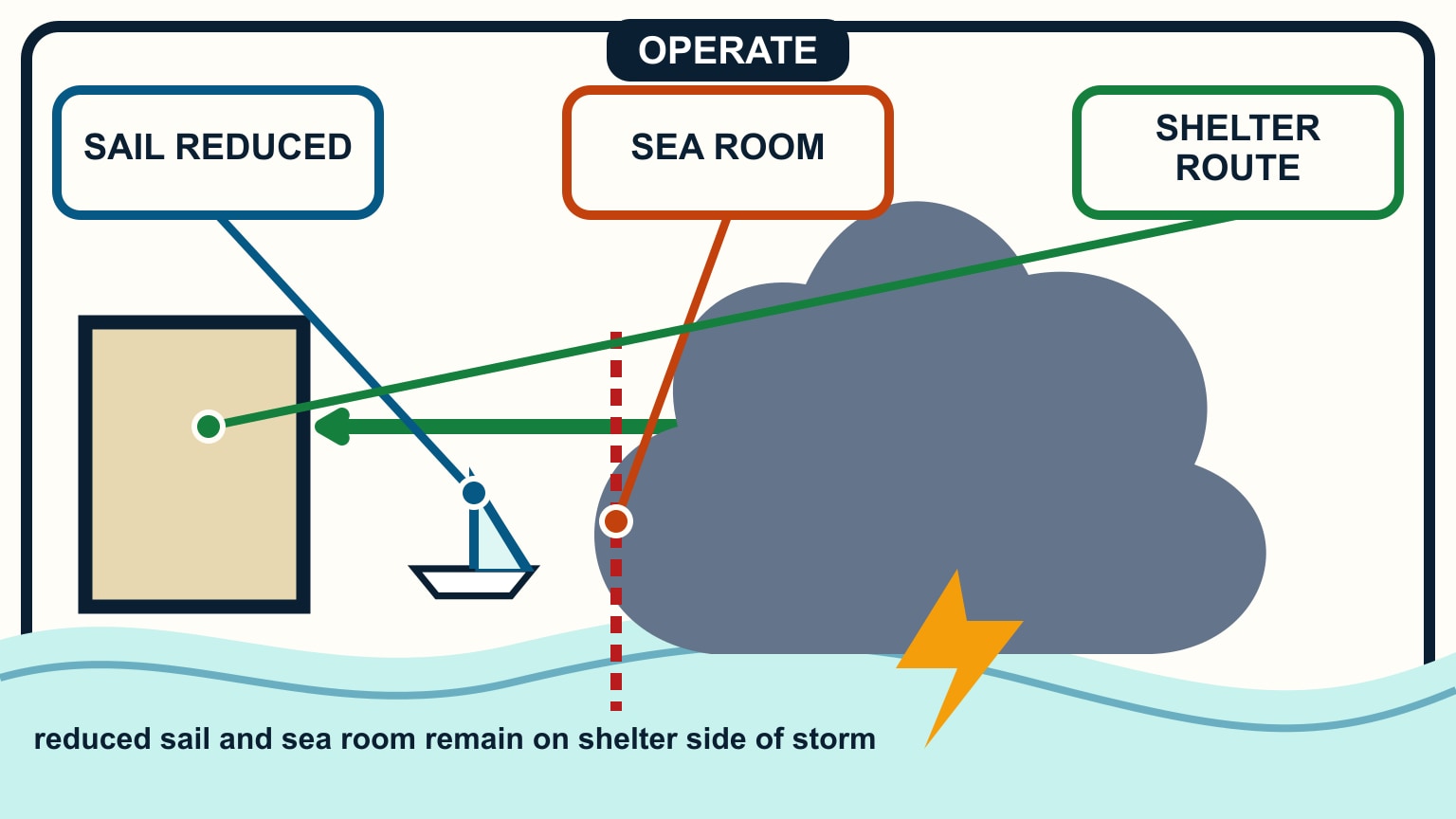
Act while the deck is dry and the boat is controllable. Turn toward the chosen shelter if it remains safe and reachable. If entering would put the boat into a congested or dangerous approach during the storm, use the preplanned offshore alternative instead. Local knowledge and harbour instructions matter.
Reduce sail early according to the boat's procedures. Start and check the engine if it may be needed, but do not assume propulsion cancels wind, visibility, or debris hazards. Secure loose gear, close openings as appropriate, clear unnecessary people from the foredeck, and have everyone wear correctly fitted lifejackets and suitable clothing.
Prepare navigation for a visibility loss. Mark hazards, traffic routes, safe depths, and the nearest alternatives before rain hides visual references. Radar and AIS can support the lookout where fitted, but neither replaces a proper lookout or guarantees that every small vessel and object will be detected.
Keep hands and bodies away from loaded sheets, travellers, booms, and other gear that could move violently in a wind shift. Use the boat's strong-wind procedures and maintain a deliberate command structure. One person conning and one person monitoring the storm is clearer than several people changing the plan at once.
Do not make speed toward a destination the goal. The goal is to reduce exposure without trading it for grounding, collision, or a lee-shore problem. If the route to shelter has already closed, use the safest sea room and configuration available for that boat and request assistance early when needed. Review strong-wind sailing preparation before the season, not during the squall.
Reduce lightning exposure without making guarantees
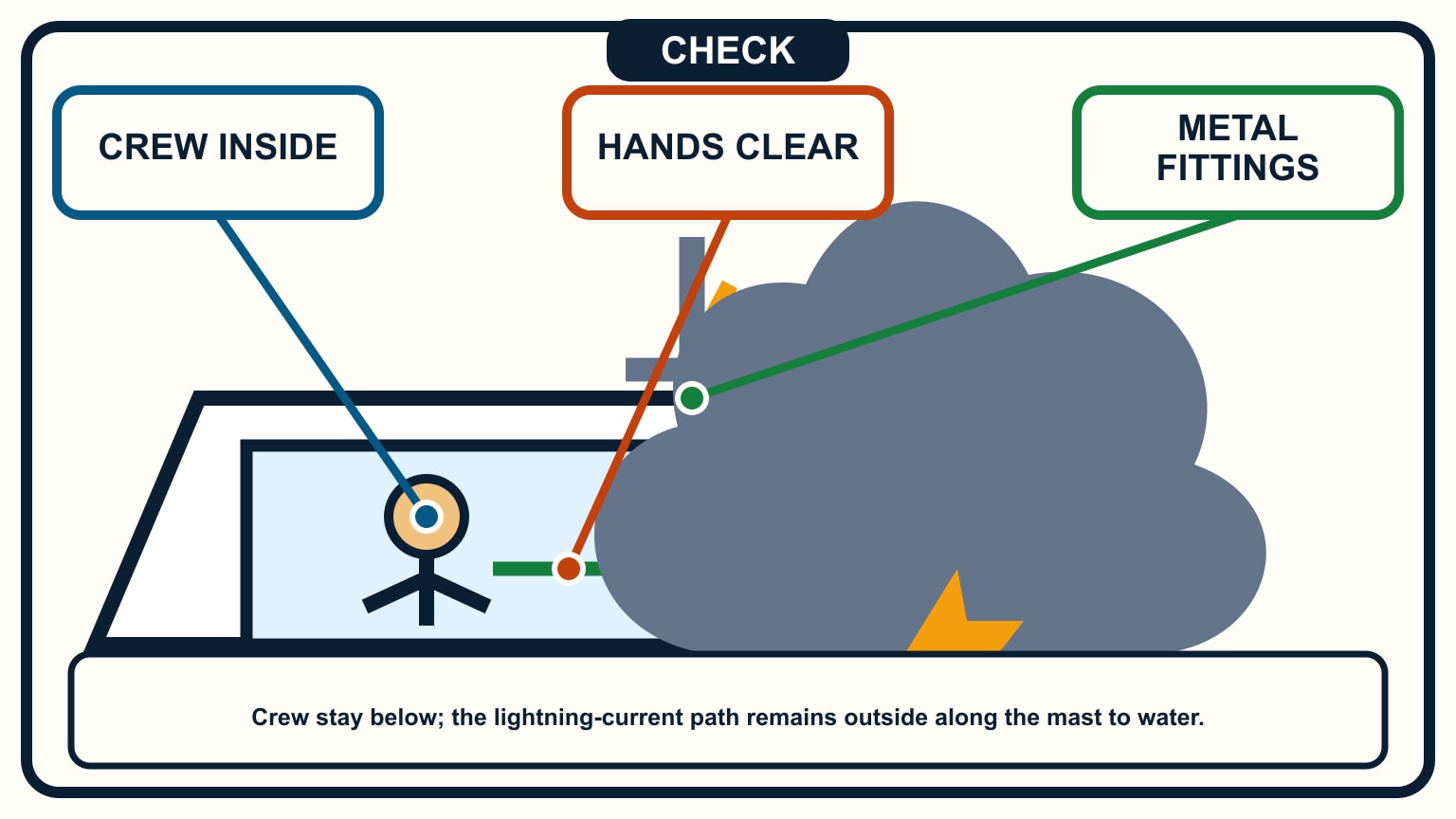
No simple onboard action makes a sailboat lightning-proof. The National Weather Service advises getting off the water and into substantial shelter when thunderstorms threaten. That is the planning standard to work toward.
If the boat is already exposed, follow its manufacturer guidance and the skipper's emergency procedure. Keep people away from the mast, shrouds, metal rails, electrical equipment, and wet conductive paths as far as the boat permits. Avoid holding a VHF microphone connected to a fixed antenna during nearby lightning unless it is needed for an emergency call. A handheld unit kept available for distress communication can provide a separate option.
Move crew away from exposed deck positions when doing so does not create another hazard. Do not bunch everyone against one fitting or require a person to cross a dangerous deck solely to reach a theoretically better place. Lifejackets remain important because a strike, gust, or visibility loss can lead to secondary emergencies.
After suspected lightning, account for everyone and check for fire, smoke, flooding, steering or propulsion loss, rig damage, and failed electronics. Navigation lights, radios, instruments, and bilge systems may be affected even when damage is not obvious. Make a distress or urgency call as circumstances require and head for the safest suitable port.
Arrange a professional inspection before trusting the rig, electrical system, and underwater fittings after a strike. Hidden damage is beyond a cockpit visual check. Record what stopped working and when, but do not delay urgent safety action to build a perfect list.
Wait for verified improvement, then reassess the boat
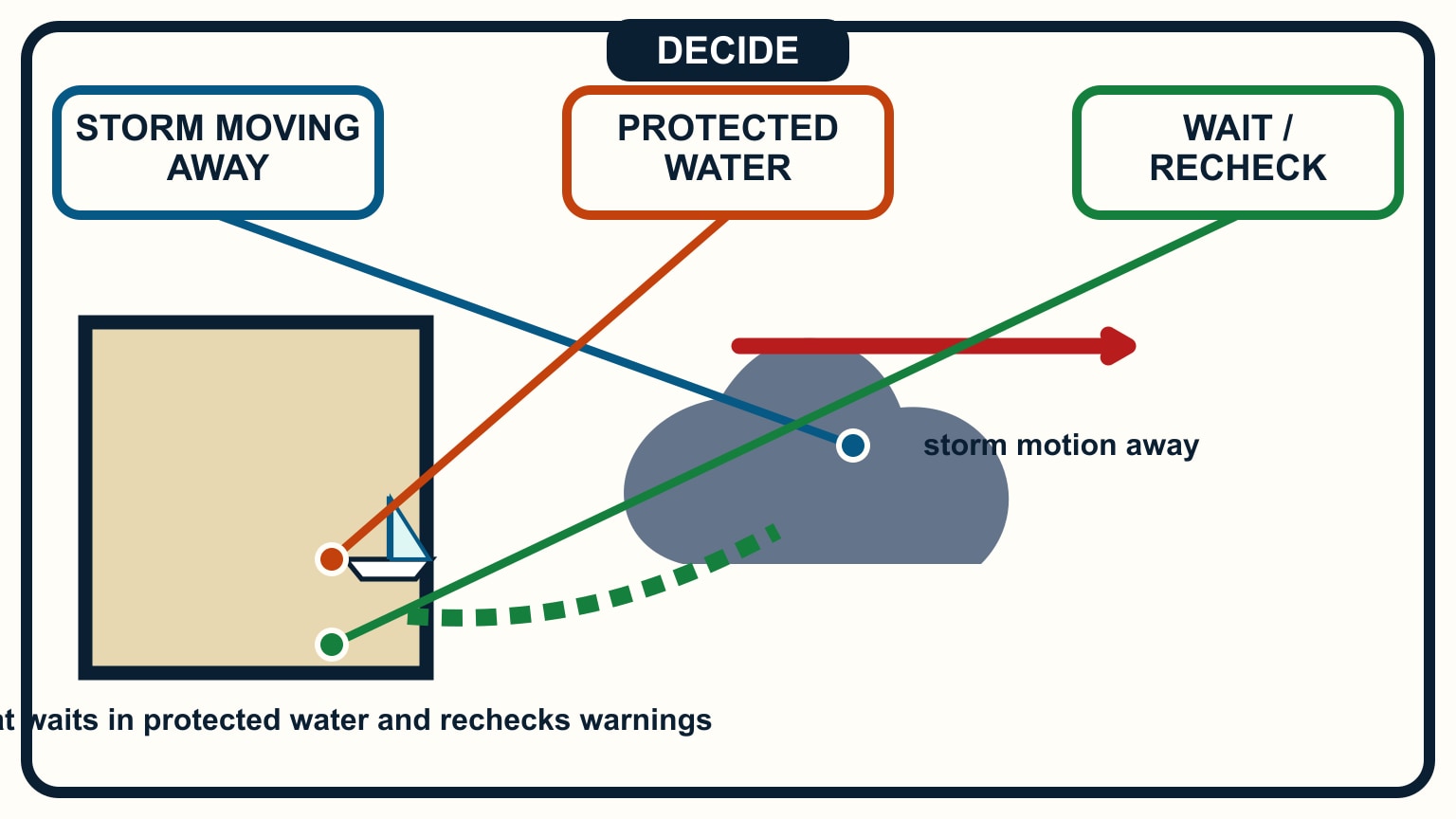
A brighter patch is not enough to resume. Storms can arrive in lines or redevelop nearby, and hazardous outflow can persist away from the rain core. Continue monitoring official warnings, radar or nowcasts where available, and the actual wind, visibility, sea, and lightning.
Follow local lightning guidance for how long to remain in shelter after the last thunder. Do not invent a shorter interval because the holiday schedule is slipping. Confirm that the warning area and period have changed or expired and that the route itself is clear, not merely the patch overhead.
Before moving again, inspect the boat. Check rig, sails, steering, engine, bilges, electronics, deck gear, and crew condition. Confirm that no line has washed overboard and that visibility is good enough for the next leg. A frightened or exhausted crew may make waiting the right decision even after the weather improves.
Update the float-plan contact and abandon the destination if the remaining daylight or shelter margin is poor. A storm delay often consumes the slack that made the original route acceptable. Starting late with the old timetable simply creates a new problem.
Practise the preparation on a fair-weather day: reef, secure the cockpit, identify safe crew positions, set up navigation for rain, and state the divert point. Then use how to handle sudden squalls to connect the avoidance plan with the immediate onboard response. The best thunderstorm outcome is the unremarkable one: the boat is secured or back in shelter before the first gust arrives.
Try it from the lesson
Can you spot the next move?
You spot a dark line on the horizon, moving toward you. What's the first move?
Why you can trust this guide
. We build each guide from public seamanship and safety sources, then teach the universal principle before any local difference.