Chart your course
Sailing in Fog: What to Do When Visibility Drops
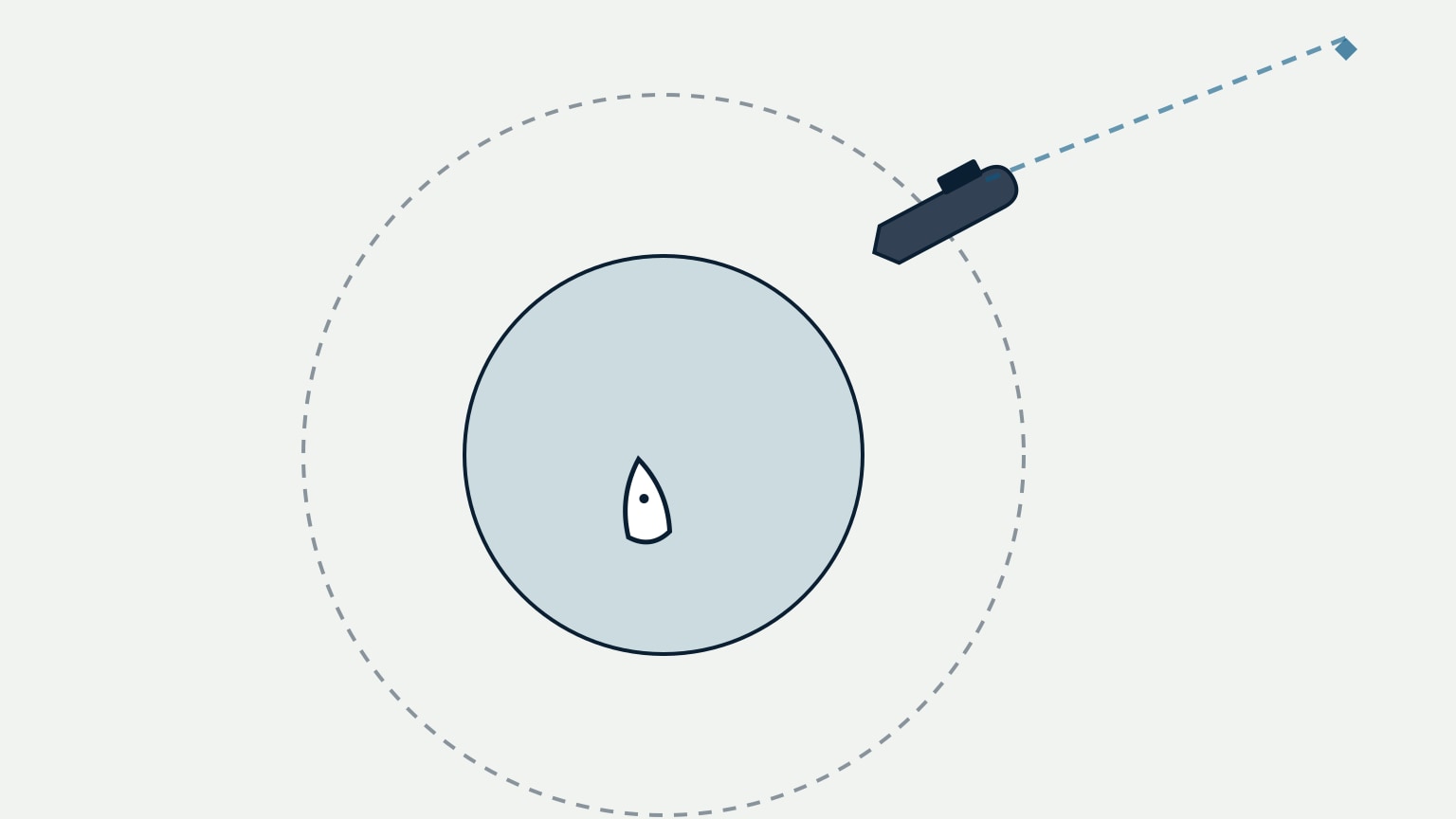
Quick answer
The short version
If fog closes in around your boat, start by slowing down: every vessel is required to hold a safe speed for the conditions of restricted visibility, not just the cruising speed you had set a moment ago. Alongside that: get everyone into a PFD, switch your navigation lights on (required in restricted visibility at any time of day, not only after dark), post extra lookouts who watch AND listen, and know that restricted visibility also requires its own sound signal. If you can still fix your position, do it now, then head for open water clear of any shipping channel. A vessel following one may be navigating by radar alone. Fog itself forms when warm, moist air moves over colder water and cools to saturation; checking a forecast's visibility outlook before you leave the dock is what keeps most encounters from happening at all.
A clear day can close down to almost nothing once fog rolls in. The shoreline you were steering by simply isn't there anymore, and neither is much of anything else past a small circle of grey water around your boat. Fog isn't rare or exotic. It has a routine physical cause, and once you understand that cause, checking for it becomes part of reading a marine forecast before you leave the dock, not an afterthought once you're already on the water. The harder problem is what to do if it catches you out anyway, with the shore gone, other traffic somewhere out there, and nothing certain except the deck under your feet. Ahead: why fog forms in the first place, the drill for getting caught in it, why a radar reflector helps but doesn't solve the problem, and what's left to steer by once every landmark has disappeared.
How Fog Actually Forms
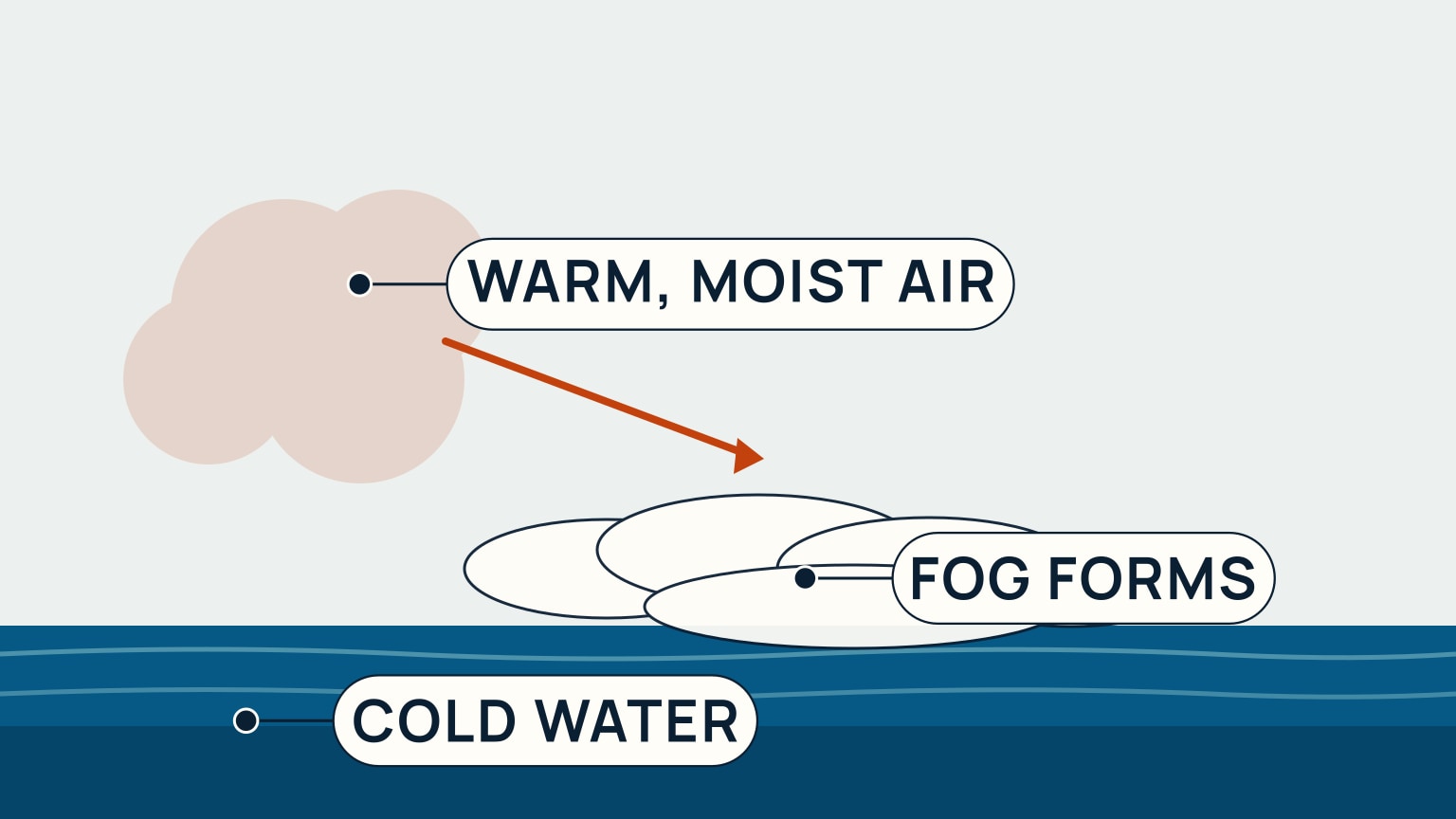
Fog at sea almost always comes down to one mechanism: warm, moist air moving over water that's cold enough to cool it down to saturation. Two independent national meteorological services describe it the same way. The UK Met Office explains that fog happens when moist, warm air passes over a colder surface and is cooled until it can no longer hold its moisture, forcing it to condense into the tiny water droplets you see as fog. Canada's own aviation meteorology reference describes the identical process (warm, moist air moving over a colder surface, cooling to full humidity) and notes that coastal areas see more of it than inland ones for exactly this reason. This is advection fog, the kind a sailor runs into most, and it's not unpredictable: it shows up in a marine forecast's visibility outlook before it shows up on the water. Checking that field before you leave the dock, alongside the wind and sea-state fields you already check, is the single move that keeps most fog encounters from happening in the first place.
When to Postpone Instead of Sail
Fog does not always creep in slowly. It can close a clear morning down within minutes of forming. If the forecast already flags fog for your planned window, the practical move is to consider postponing the passage rather than heading out and hoping to manage it once conditions have already turned. That's a genuinely different decision from slowing down after fog has closed in around you: one happens at the dock with every option still open, and the other happens on the water with your options already narrowed. Reading the visibility outlook alongside the wind and sea-state fields you're likely already checking costs you nothing extra, and it's the point in the whole process where a fog encounter is still fully avoidable rather than merely something to manage well.
Caught in Fog: The Response Drill
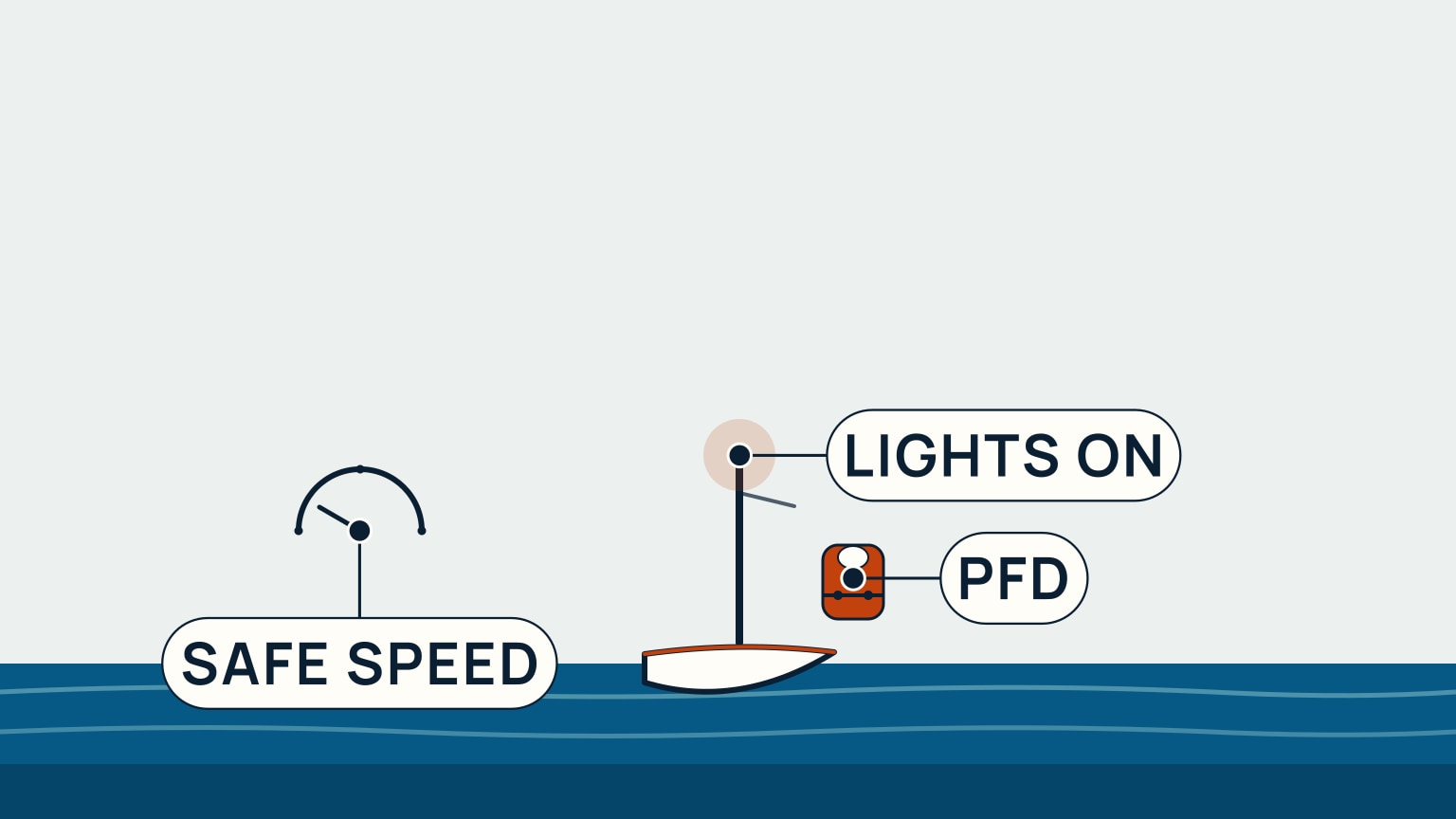
If fog does close in around you, there's a clear place to start: slow down. Every vessel is required to hold a safe speed for the conditions of restricted visibility, not just the cruising speed you had the throttle set to a moment ago. It's the one step here with a clear claim to coming first, since it buys you time for everything else. The rest don't have to happen in any particular order, but they all need to happen: get everyone into a PFD; switch your navigation lights on, since they're required in restricted visibility at any time of day, not only after dark; post extra lookouts who watch AND listen, not just look; and know that restricted visibility requires its own sound signal too. If you can still fix your position, do it while you still have a reference to fix it from, then head for open water clear of any shipping channel. A vessel following one may be navigating by radar alone in these conditions, so standing off matters more, not less, once you can't see who else is out there.
Engines Ready, Not Just Slow
Slowing down is the first move, but the rule behind it goes further for any vessel running under power, including a sailboat motoring or motor-sailing through fog: engines need to stay ready for immediate maneuvering, not just throttled back and forgotten. That means keeping the engine warm and in gear or ready to engage, rather than idling down and mentally checking out of engine management until something goes wrong. Picture motor-sailing along the coast when a fog bank rolls over the boat quickly. The instinct is to focus entirely on the compass and the lookout. Do that, but also confirm the engine can respond the moment you need to stop or turn away from something you didn't see coming.
Carry a Working Horn, Even Without Every Signal Memorized
Restricted visibility carries its own required sound signal, separate from the ones you would use to communicate with another vessel in clear conditions. The exact signal patterns for different vessel types are worth learning in their own right, but the more basic point for a beginner is simpler: know before you leave the dock that your horn works and that you can reach it quickly. A sound signal that exists on paper does nothing for you mid-passage if the horn is buried under gear in a locker you can't get to with the tiller in one hand.
Why a Radar Reflector Isn't a Guarantee
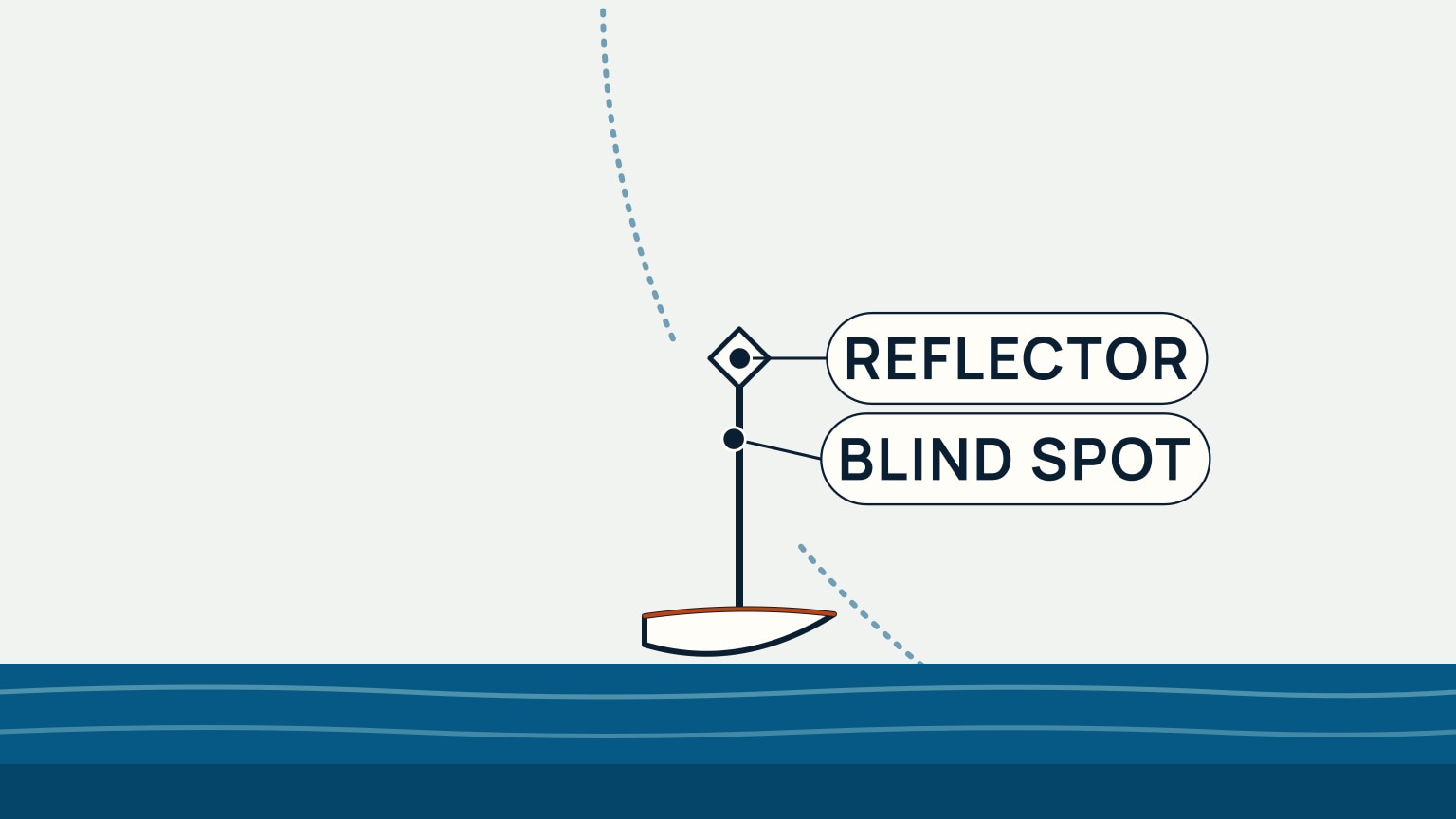
A radar reflector genuinely helps a ship's radar pick a small boat out of the clutter; and on a boat with little metal in its hull, that help matters. Most small boats, especially fibreglass ones, return a very weak echo to radar at best, which is exactly the gap a reflector is meant to close. But fitting one isn't the same as being seen. Even a well-fitted reflector can leave a boat "not readily visible" on a ship's radar in some circumstances, and reflectors carry their own blind angles (nulls) where they return almost nothing at all. How well one performs in practice also depends on how it's mounted and how far the boat happens to be heeled at the moment a ship's radar sweeps past. Carry a reflector. Mount it well. Then navigate as if a ship might still not see you, because it might not.
Getting the Most From the Reflector You Already Have
Buying a reflector is the easy part. Getting real benefit from one means paying attention to how it's mounted, because performance depends on positioning, orientation, and the boat's angle of heel at the moment a ship's radar sweeps past. A reflector mounted low, tucked behind rigging, or hung at an angle other than its rated orientation gives away exactly the protection you bought it for. Heel makes this worse on a sailboat specifically: a reflector tuned for an upright boat can present its blind angle, its null, right where a passing ship's radar beam happens to fall once the boat leans hard into a gust. None of this makes the reflector useless. It means mounting height and orientation deserve the same attention as the purchase itself, and that heeling hard in fog is one more reason speed and caution both matter.
Steering by Compass When the Shore Disappears
Once fog has closed in and the shoreline is gone, there's a real question: what do you actually steer by? Every other reference sailors normally use (a landmark ashore, a transit between two fixed points) depends on being able to see something solid, and in fog, you can't. What's left is the compass card and lubber line: the same instrument you've likely used only as an occasional check while steering to a landmark, now doing the whole job on its own. The lubber line marks your boat's own heading against the card beneath it; hold that relationship steady and you hold your course, with nothing else left to sight. This is exactly why the habit of trusting your compass has to already be built before the fog arrives, not learned for the first time in the middle of it. A sailor who's only ever steered by landmark can find the compass feels like a backup gauge, right up until it's the only reference left.
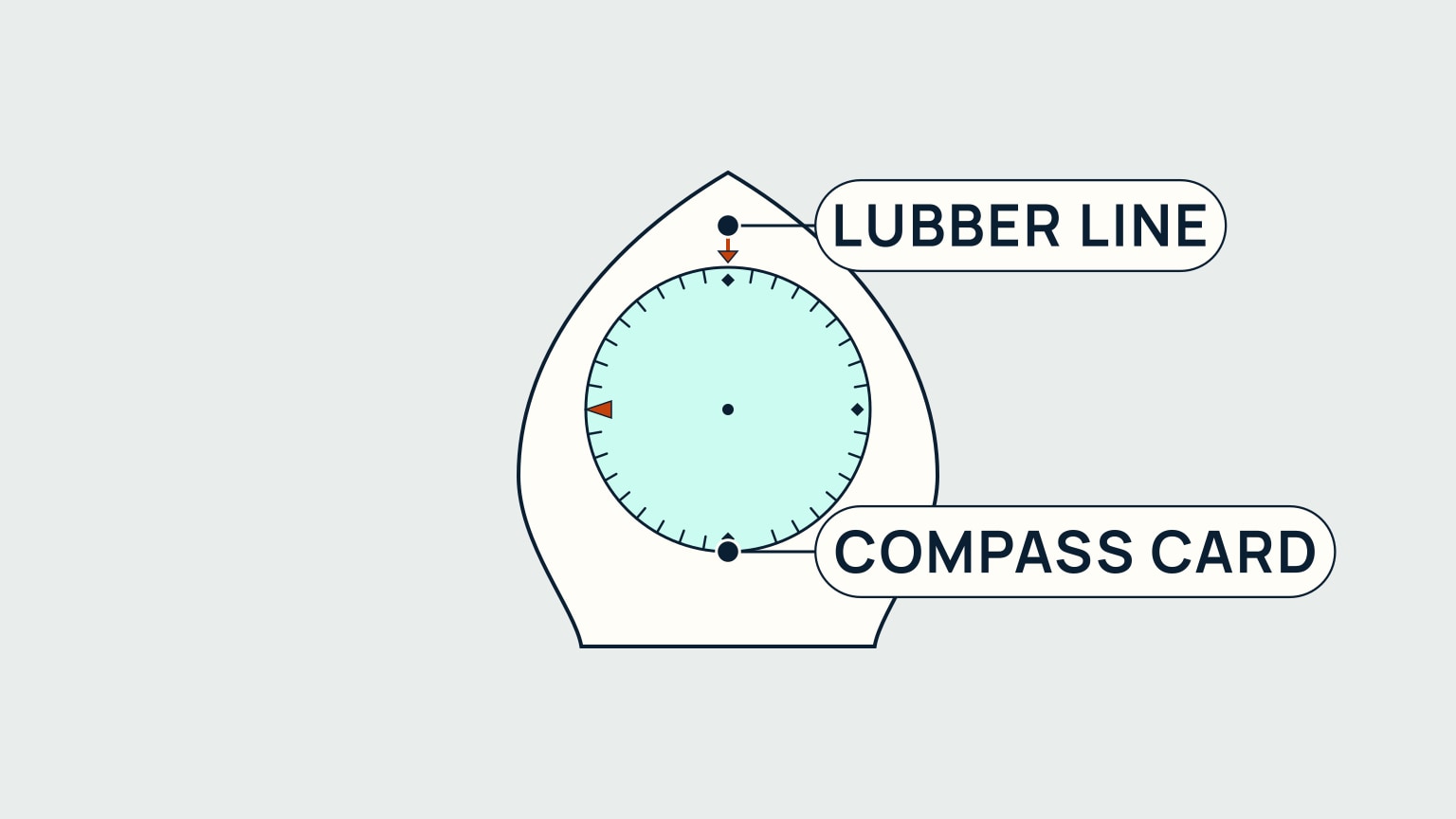
Build the Trust Before You Need It
The habit that saves you in fog gets built on clear days, not inside it. If you've only ever steered a compass course as an occasional glance while your eyes did the real work on a landmark, the first time you steer by compass alone shouldn't be the day visibility drops to a boat length. Pick a clear day and steer to a distant point using only the compass for a few minutes at a time, then check the landmark afterward to see how close you actually held the line. Do that a handful of times before you're relying on it for real, and the lubber line stops being a backup gauge you occasionally glance at. It becomes the reference you already trust the moment the horizon disappears.
Fog isn't a mystery, and once the pieces are in place, the drill for getting caught in it is short enough to run through in your head before you ever need it. What takes real preparation is having the habit already built: checking the forecast's visibility outlook before you leave the dock, trusting your compass as more than an occasional glance, and knowing what to work through if the horizon disappears anyway. SailStarter's lesson on fog and poor visibility walks through the same response drill as an interactive diagram, tied back to the forecast-reading and compass-steering skills you'd actually lean on the moment visibility drops. If you sail anywhere fog can form (which, given how ordinary its cause is, is nearly everywhere on the water), this is worth having down before conditions make you find out the hard way.
Try it from the lesson
Can you spot the next move?
You're checking today's forecast before heading out. What actually creates the fog you're checking for?
Why you can trust this guide
. We build each guide from public seamanship and safety sources, then teach the universal principle before any local difference.