Chart your course
Keeping a Proper Lookout (It's More Than Just Looking)
Quick answer
The short version
A proper lookout is Rule 5 of the international collision-avoidance rules: every vessel must keep watch by sight AND hearing, using every other means the conditions call for, at all times rather than relying on an occasional glance ahead. Holding the wheel or tiller does not automatically satisfy this duty; the helm may keep the lookout when able to scan and listen effectively, but someone still has to actively watch the water around the whole boat. That matters most when it's easiest to skip: mid-maneuver, or behind a big sail that can hide a real slice of your view. Pair a genuine lookout with a safe, controllable speed, and you have the two rules almost every collision-avoidance situation comes back to.
Search "keeping a proper lookout" and you mostly find the phrase repeated, not explained. The actual rule is more specific than "look around sometimes": it names sight AND hearing, every other available means, and all times (three separate requirements, not one vague habit), and it quietly rules out something a lot of new sailors assume, that steering the boat is itself keeping watch. This guide walks through what a real lookout looks like in practice: a genoa's own sourced blind spot, the safe-speed factors you actually control, why you look around before you turn rather than after, how to change course so another vessel can actually see you doing it, and two habits (giving divers room and helping other vessels see you) built on that same watch-and-be-watched idea.
A Lookout Is an Active Job, Not a Side Effect of Steering
Rule 5 puts it plainly: every vessel must keep a proper lookout by sight and hearing, and by every other available means suited to the conditions, so it can fully assess the situation and the risk of collision: at all times, including when nothing yet looks urgent. Three separate requirements sit inside that one sentence: sight AND hearing together, whatever other means help, and constant attention rather than an occasional check.
Steering the boat does not satisfy this automatically. The helm can keep the lookout when able to scan and listen effectively, but a gust or sail change can absorb that attention. With crew aboard, assign another set of eyes; singlehanded, slow and simplify until you can maintain the watch while steering. The steady-bearing test for collision risk only works when someone is actually watching it.
The Sail That Can Hide Half Your Own View
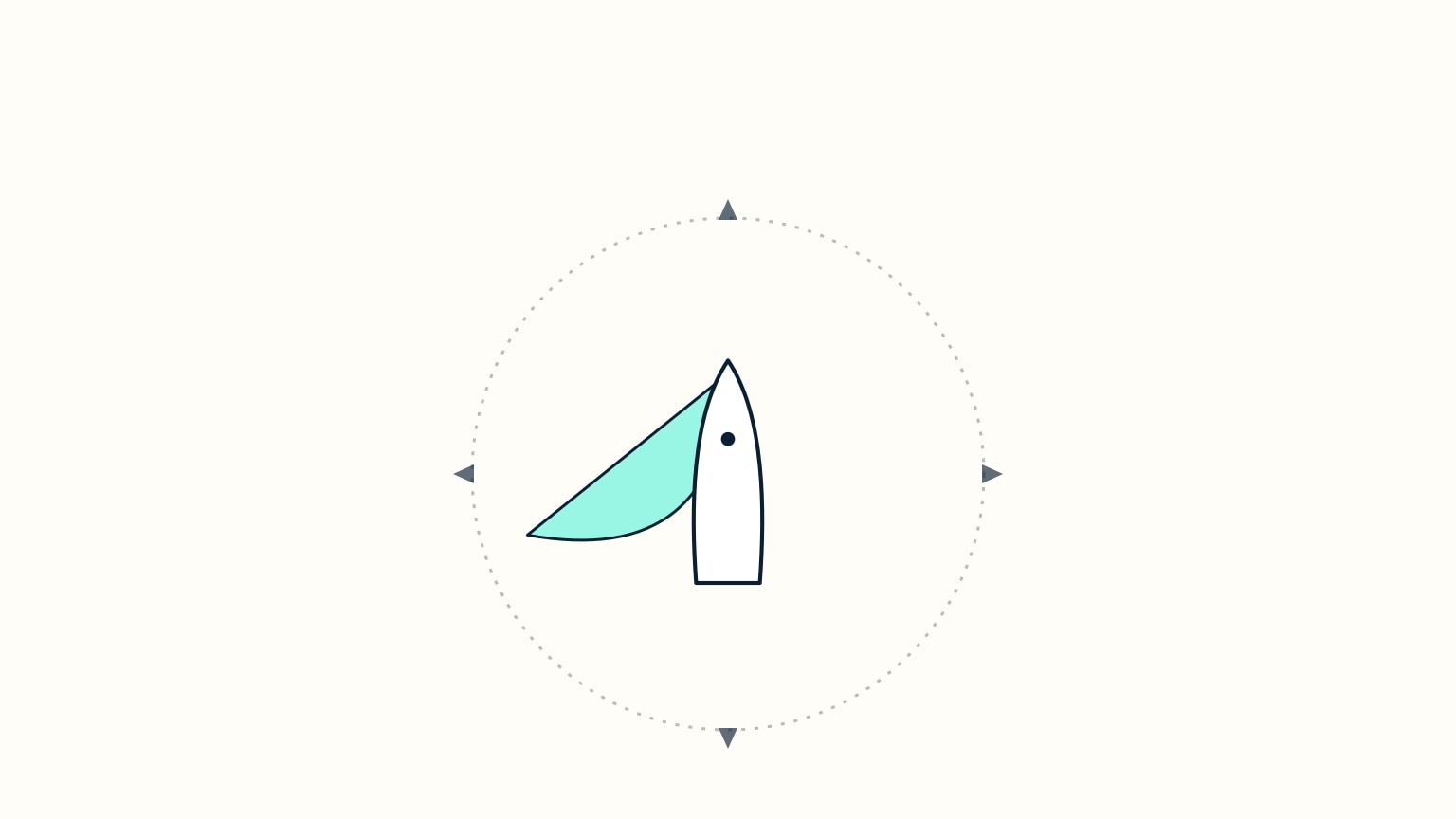
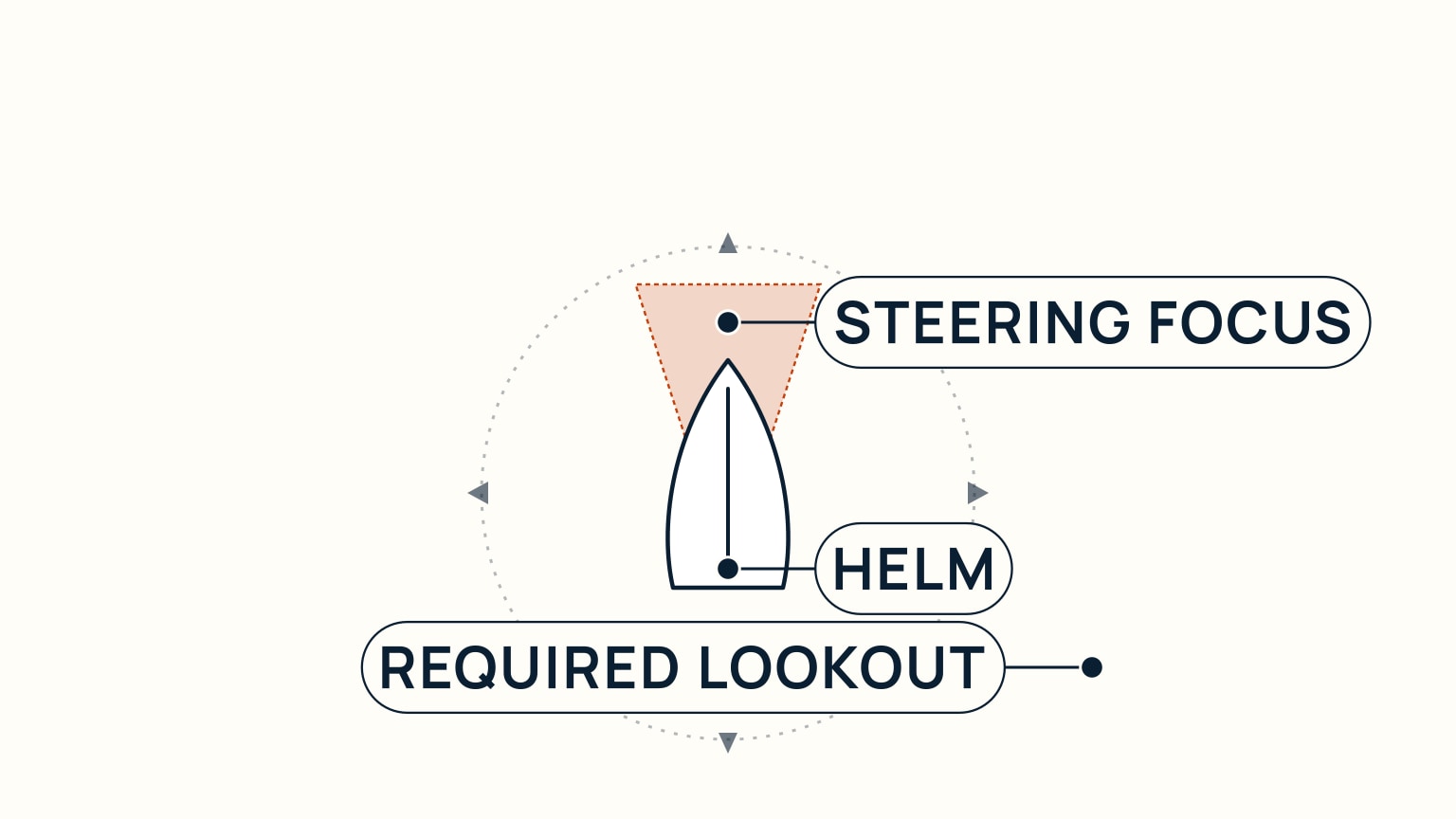
A big genoa (the large headsail set ahead of the mast) can block a real, sizeable slice of the view to leeward (the side away from the wind, where the sail is trimmed). How much varies by boat and sail: one sailing-education source puts a headsail's own blind spot at almost 60 degrees; a separate source describes yachts with big genoas as losing often half of the leeward horizon. Different boats, different sails, different numbers. Both agree the gap can be large enough to hide another vessel completely.
Because the sail itself is what's in the way, not fog or darkness, the fix is simple and physical: duck to look under its foot, shift your own position, or, with crew aboard, station someone where the sail doesn't block their sightline. Trusting that a clear look a minute ago is still clear now isn't a lookout. Being the stand-on vessel doesn't excuse a missed one, either: a collision caused by a sail-blocked view can still be judged your own fault.
Safe Speed Means Being Able to Stop in Time
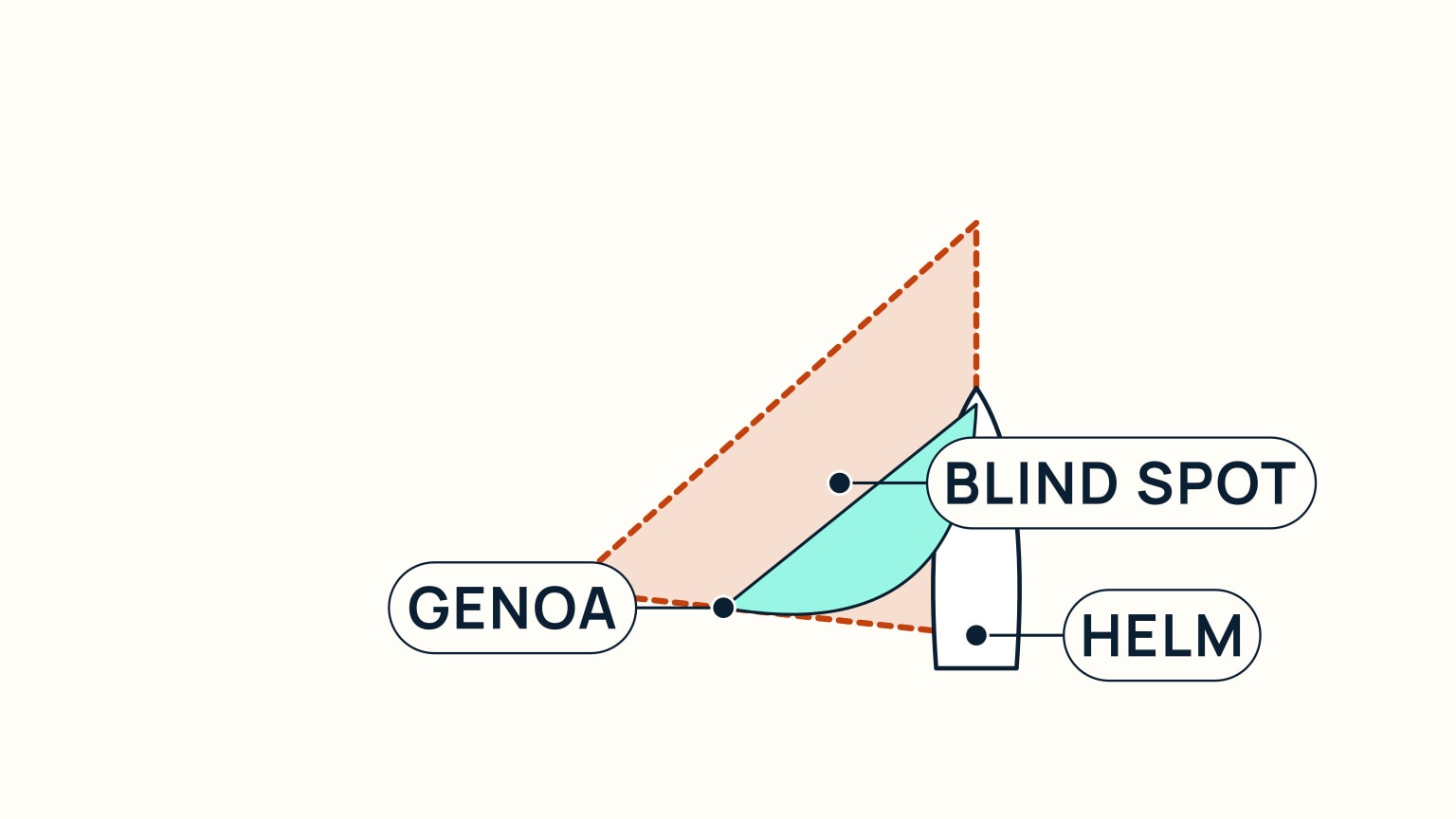
Rule 6 requires every vessel to proceed at a safe speed, one that lets you take effective action to avoid a collision and still stop within a distance that fits the conditions. The rule lists several factors to weigh, and three are the ones a beginner sailor watches moment to moment: how good visibility actually is right now, how much traffic (including fishing vessels) is around, and your own boat's maneuverability and stopping distance in the conditions you're actually in.
None of that adds up to a fixed number. A speed that's perfectly safe in open water with nothing else around can be entirely wrong approaching a crowded anchorage or in thickening haze. Safe speed is a judgment you keep making as conditions change, not a setting you pick once and leave.
Before You Turn: Look All Around, Then Move With Purpose
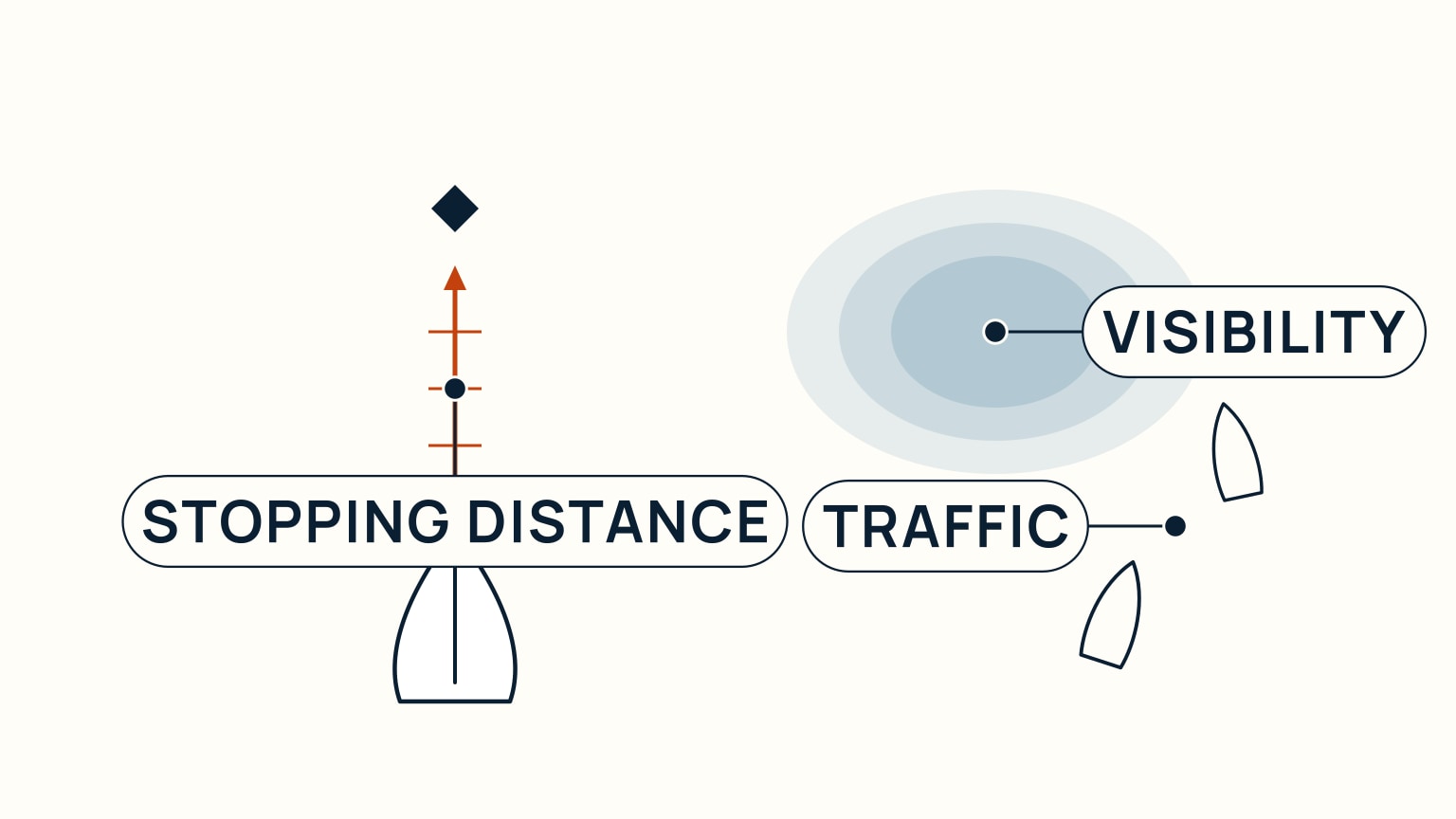
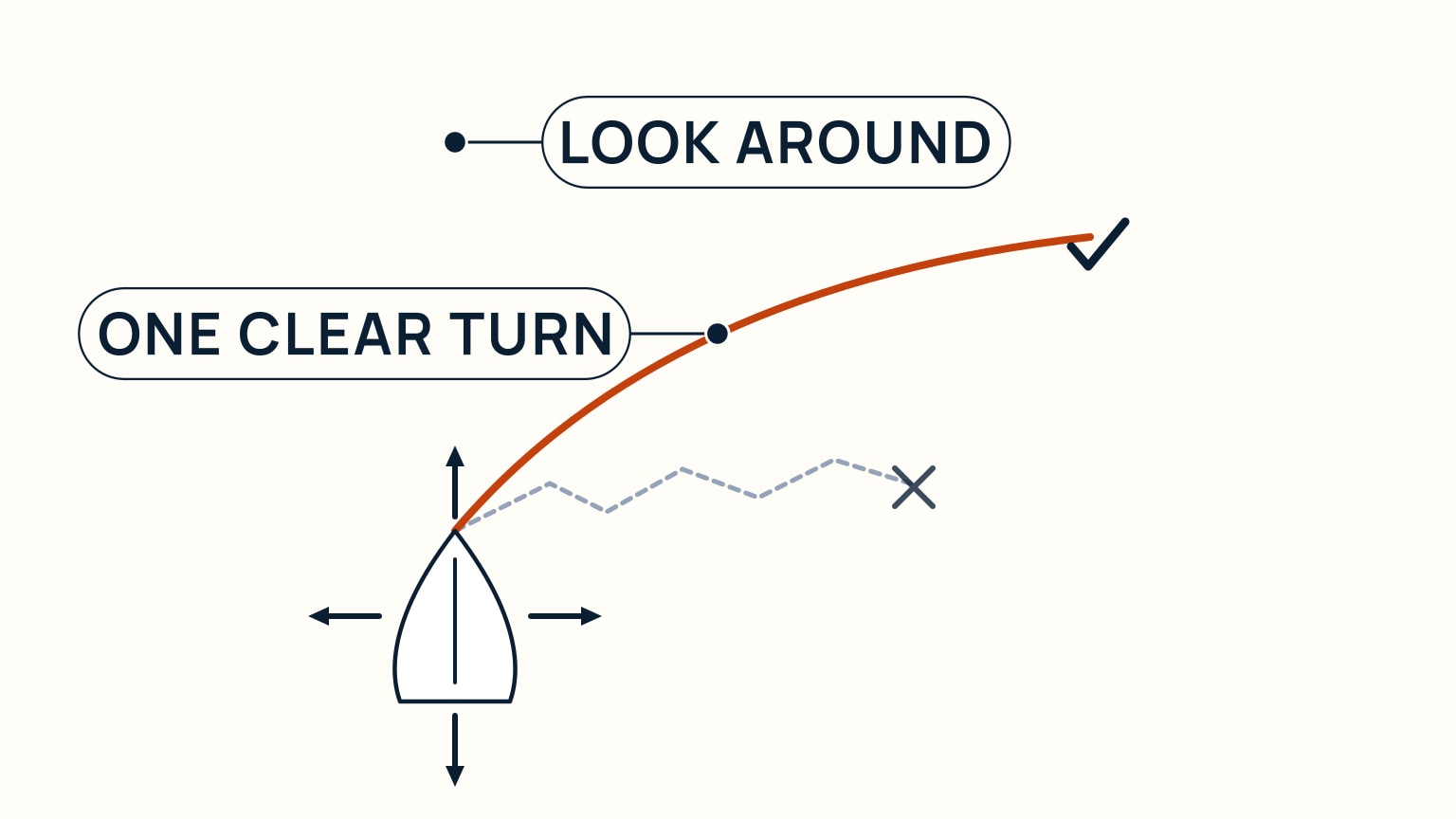
Before committing to a tack, a gybe, or any other deliberate course change, look up, down, side to side, and behind for traffic and obstructions. Scan the whole area rather than only the direction you're about to turn. It's Rule 5's own lookout duty applied at the exact moment it's most tempting to skip: mid-maneuver, with your attention on sheets and helm.
Once you do need to act to avoid another vessel, Rule 8 sets the standard: any action must be positive, taken in good time, and, if it's a course or speed change, large enough that another vessel can actually see it happening. A string of small nudges is exactly what the rule says to avoid: another vessel can't read your intent from an adjustment it can barely detect. Where there's sea room, one early, substantial course change, made and committed to, is often the clearest single move you can make.
Diver Flags, and Helping Others See You Too
Build a scanning rhythm
Divide the horizon into sectors and scan near, middle, and far distance. Pause on each contact long enough to notice its bearing and aspect. Look behind sails, sprayhoods, people, and cabin structures by moving your head or changing position. Repeat after every tack, gybe, course change, or visibility change.
Report contacts with direction, type if known, movement, and concern: “powerboat two points on the port bow, bearing nearly steady, closing.” Avoid vague calls such as “boat over there.” The helm can then identify the same contact and decide whether more observations are needed.
Use hearing and every suitable aid aboard, but do not let a screen replace looking and listening. Radar, AIS, charts, and alarms can support the lookout within their limits. Small craft, untransmitted targets, clutter, poor settings, or equipment failure can leave gaps.
Connect speed to stopping room
Safe speed is the speed that leaves time and distance to assess risk and take effective action in the current circumstances. Reduce speed before visibility, traffic, background lights, sea room, manoeuvrability, wind, waves, or current make the margin small. Waiting until a target is fully identified may use the space needed to avoid it.
Know how the boat stops under power and sail. Test response in open water and include reaction time, turning room, and current. The stopping-under-sail guide covers one side of that calculation, while right-of-way rules explains how a steady bearing signals collision risk.
Before altering course, scan the full area, including the side hidden by the headsail and the space astern. Make a clear manoeuvre and then check its result. A new course can solve one encounter while creating another.
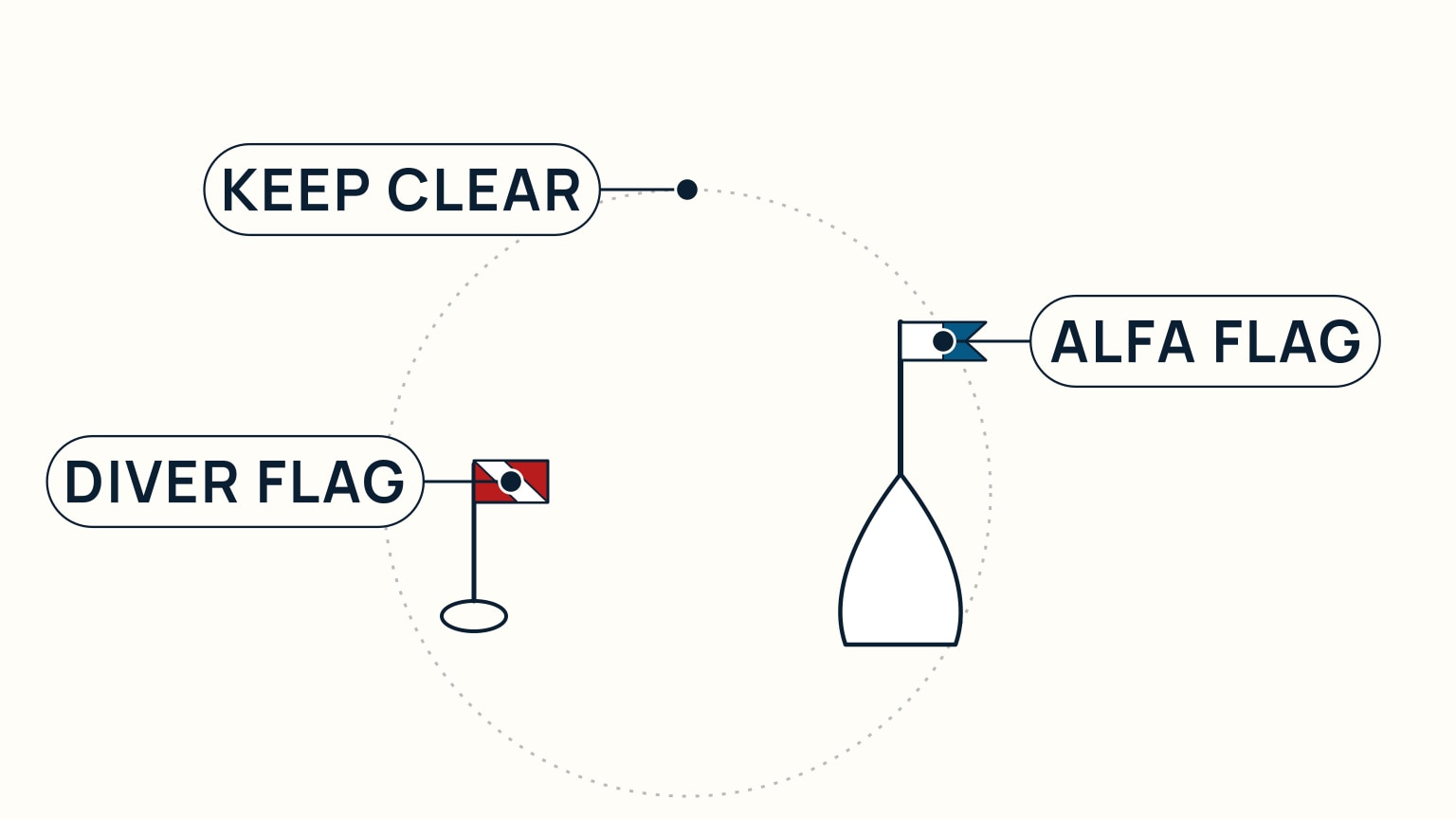
Two different flags mean the same thing: a diver is in the water nearby. The international Code Flag Alfa (a blue-and-white swallowtail) signals "keep well clear at slow speed"; a vessel actually diving often flies a rigid version of it, rather than cloth, so it stays visible even with no wind. A separate red flag with a white diagonal stripe marks a diver's position from a buoy or a boat in many places, though it isn't part of the international flag code the way Alfa is. Either flag calls for the same response: keep well clear, and slow down.
How far is genuinely local, not universal: Florida (US) law asks for at least 300 feet in open water and 100 feet in a channel, while Transport Canada's own guidance asks for at least 100 meters. Those figures don't match because the clearance distance itself isn't a worldwide rule. Check the current distance wherever you're sailing.
Being seen matters for your own boat too: a radar reflector helps a bigger, radar-watching vessel spot a small sailboat, in ordinary daytime traffic as much as in fog. It helps: it's not a guarantee.
A real lookout, an honest safe speed, a clear look before you turn, and a course change another boat can actually read: none of it is complicated, but all of it takes practice to make automatic rather than theoretical. SailStarter's lessons work through Rule 5's lookout duty and the safe-speed factors the same way this guide did, then build toward the specific give-way and stand-on situations they set up. If the rules still feel like something to memorize rather than something you'd actually do at the helm, working through them lesson by lesson is a reasonable next step.
Try it from the lesson
Can you spot the next move?
Another boat may be closing, but you have no handheld compass. How do you check?
Why you can trust this guide
. We build each guide from public seamanship and safety sources, then teach the universal principle before any local difference.