Chart your course
Sailing at Night: A Beginner's Practical Guide
Quick answer
The short version
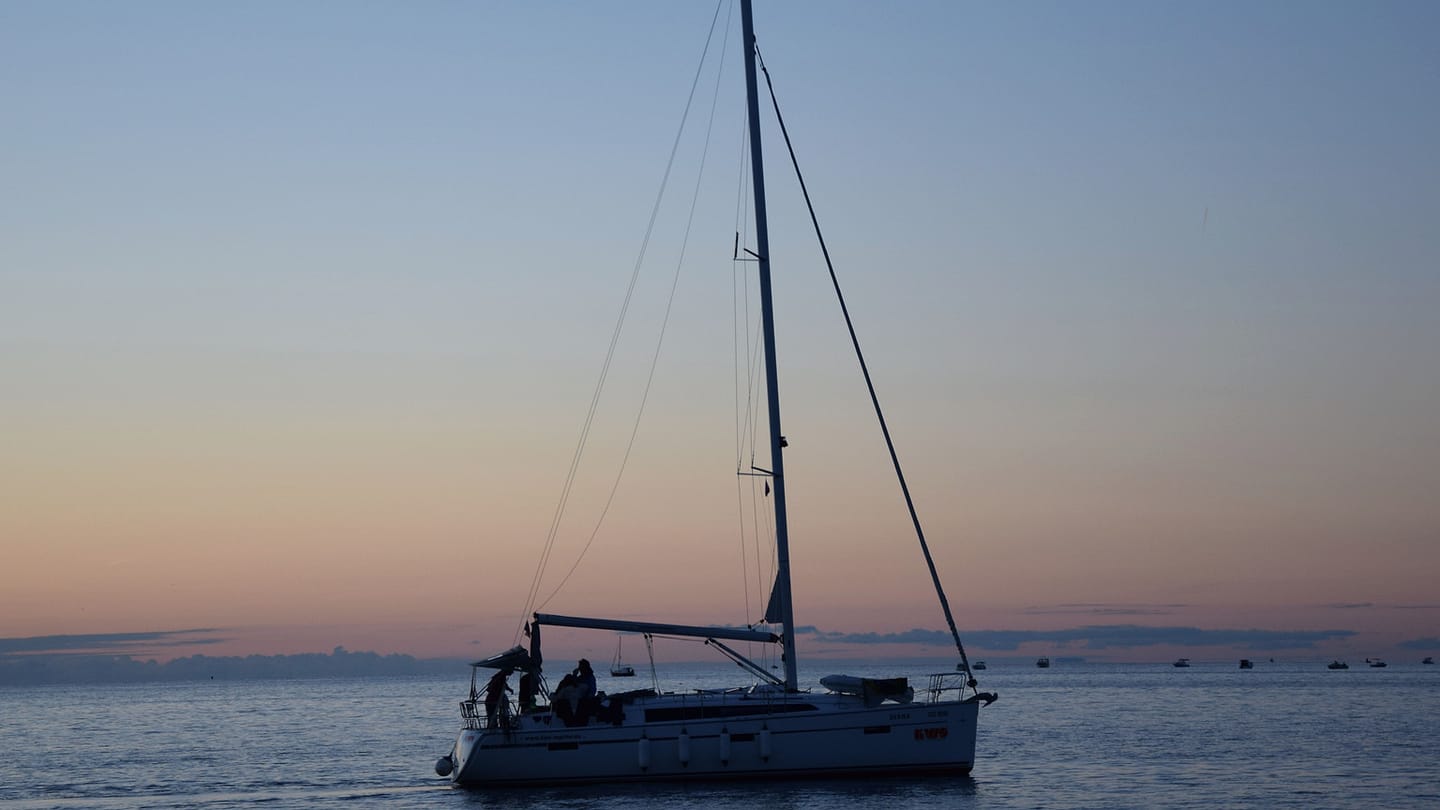
For your first night sail, go with an experienced skipper in familiar, forgiving water. Check navigation lights before departure, prepare the route and cockpit while you can still see, and agree who keeps lookout. At night, shore lighting can hide vessel lights, distance is harder to judge, and a simple deck task takes longer.
Keep the boat at a speed that leaves time to identify traffic and hazards. Preserve night vision with low, restrained lighting, keep essential equipment in fixed places, and avoid unnecessary deck movement. Learn what red, green, and white navigation lights can tell you, then confirm every interpretation with the full situation rather than one light alone.
Night sailing is not daytime sailing with the scenery removed. The boat still handles by the same wind and water, but your information arrives differently. You hear an engine before you place it, see a light before you judge its range, and lose the easy horizon cues that show heel or cloud.
That makes preparation valuable. A first trip need not be an overnight passage. A short evening sail that returns through a known entrance can teach the transition from daylight to darkness. Choose settled conditions, keep the route simple, and make sure everyone understands when the skipper wants quiet for a lookout report or manoeuvre.
Prepare the boat and route in daylight
Test the navigation lights from outside the boat rather than relying on the switch panel. Confirm the correct lamps illuminate and that sails, flags, or equipment do not obscure them. Carry the boat's required backups and verify current local rules before departure.
Set up the cockpit while objects are easy to find. Put a suitable light, warm layer, drinking water, and navigation tools where they will not roll or tangle. Dim displays enough to preserve outside vision without making information unreadable.
Review the route, hazards, depths, likely traffic, and a return plan. Mark the points where someone may need to go on deck. A familiar harbor can look unfamiliar among background lights, so identify more than one cue for the entrance.
Prepare paper or independent navigation backup in a form the crew can use. A bright display, lost power, or an accidental setting change should not erase the route from everyone's understanding. Brief the next safe place as well as the final destination.
Keep a deliberate lookout and safe speed
The international collision rules require a proper lookout by sight, hearing, and all available means. Darkness does not lower that duty. It changes how you meet it. Scan slowly, listen between conversations, and report a new light with its direction and whether its bearing appears to change.
Safe speed is the speed that leaves enough time and distance for the conditions. Visibility, traffic, background lighting, manoeuvrability, wind, sea, current, nearby hazards, and draft all matter. A speed that feels modest offshore may be excessive near an entrance full of fishing gear and shore lights.
Avoid fixing your eyes on one bright object. Keep returning to the whole horizon and to the water immediately around the boat.
Give reports in a repeatable format: direction, colour, movement, and time first seen. The skipper can ask for more. A short factual report is easier to combine with other information than a confident guess about vessel type or distance.
Read lights as clues, then verify
A sailing vessel underway normally shows red and green sidelights plus a white sternlight. From roughly ahead you may see both sidelights. Seeing only green suggests you are viewing its starboard side; only red suggests its port side. A white light may be a sternlight, an anchor light, or another permitted pattern.
The pattern changes when machinery propels the boat. A sailboat motoring is treated as power-driven for the navigation-light rules, even if sails are still set. Vessel size and activity create further patterns.
Use lights to form a working picture, then test it through repeated bearings, motion, radar or AIS when fitted, and the collision rules. Never decide that a single white light “must” be harmless.
Know your own light pattern before interpreting somebody else's. If a lamp fails or becomes obscured, other crews receive a false picture of you. Include the lights in routine rounds, especially after a sail change.
Make movement and handovers unhurried
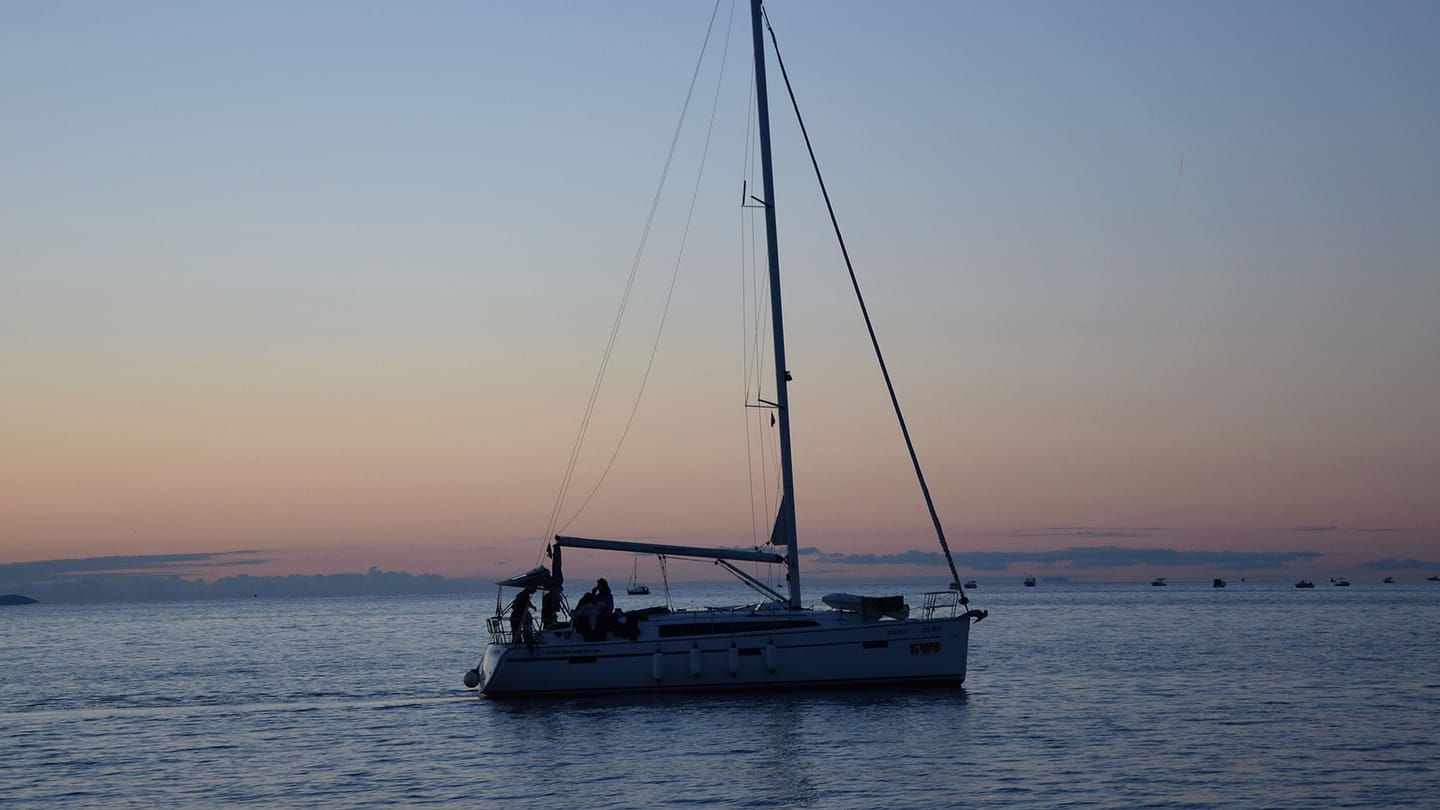
Keep people in the cockpit unless a task requires otherwise. Before anyone moves, name the job, route, handholds, and return. Use the boat's harness and tether system when the skipper's plan or conditions call for it, especially at night or when short-handed. Avoid stepping on hatches and loose gear.
At a watch handover, pass the course, sail plan, traffic, lights under observation, weather changes, and next waypoint. Point at each object rather than relying on a vague description. The new lookout should have time for their eyes to adjust.
Fatigue makes small errors easier. Shorten a first trip, add crew, or return early instead of treating the original timetable as fixed.
Keep food and warm layers easy to reach so ordinary needs do not trigger unnecessary movement. A cold or hungry lookout misses information sooner, and a simple cockpit routine protects attention for the horizon.
Build a daylight route picture
Before dark, identify the route, depths, hazards, traffic areas, lights, safe waiting water, and alternatives. Mark the points where the plan becomes harder to change. Check the latest official forecast for the whole period and confirm that the return, berth, and crew remain suitable.
Walk the deck while you can see every line and obstruction. Secure loose gear, prepare clothing and flotation, test required lights and instruments, and place torches where they can be reached without searching. The marine forecast guide and weather and float-plan guide support this departure work.
Protect night vision and lookout
Use only the light needed for the task and keep bright screens from dominating the cockpit. Give your eyes time to adapt after any bright light. Continue looking and listening across the whole horizon. Instruments support lookout but do not replace it.
Describe contacts in plain language: colour, relative direction, whether the bearing changes, and what remains uncertain. The navigation-lights guide helps you identify red, green, white, and common vessel aspects. Keep observing before deciding what the pattern means for the wider situation.
Make handovers explicit
The outgoing helm or lookout should state course, sail plan, nearby traffic, hazards, weather trend, position, next decision point, and anything that is not working normally. The incoming person repeats the important parts and takes time to form the same picture before the other crew member leaves.
Use shorter watches or more support when fatigue reduces attention. If the crew cannot maintain lookout, navigation, and control, shorten the trip or seek a safer plan. A timetable does not make an overtired crew ready.
Slow every movement down
Tell the helm before leaving the cockpit or changing a line. Keep one hand for the boat and follow the boat's clipping and deck-movement plan. Avoid standing in loops or moving through the boom, sheet, and traveller paths. Prepare the next task in the cockpit where possible.
Practise the route in daylight first. A first night session should add darkness to familiar water, not combine darkness with a new boat, new berth, poor forecast, and complex passage. Review the log afterward and record which light, control, or landmark was hard to identify. Fix that specific gap before extending the next trip.
SailStarter's navigation-lights lesson gives you the visual vocabulary to interpret the first patterns you see after sunset. Study it before the trip, then use a short, supervised sail to connect diagrams with real lights. Ask the skipper to talk through uncertain contacts and show how background lighting changes the picture. The goal of a first night sail is not distance. It is learning to prepare early, keep a patient lookout, move carefully, and say what you see without guessing beyond the evidence.
Set up a simple lost-reference response. If the helm cannot identify the intended light or shoreline feature, they maintain a safe controlled course and tell the navigator instead of turning toward a guess. The navigator returns to verified position, charted hazards, compass, and other suitable information.
Keep a paper or independent backup appropriate to the trip and know how to use it. A bright chartplotter may fail, dim unexpectedly, or show a display the incoming watch does not understand. The backup is useful only when it is prepared and familiar before dark.
On the first night outing, return before fatigue becomes the main challenge. Extend later sessions one variable at a time.
Try it from the lesson
Can you spot the next move?
Another boat may be closing, but you have no handheld compass. How do you check?
Why you can trust this guide
. We build each guide from public seamanship and safety sources, then teach the universal principle before any local difference.