Chart your course
Man Overboard: What To Do In The First Ten Seconds
Quick answer
The short version
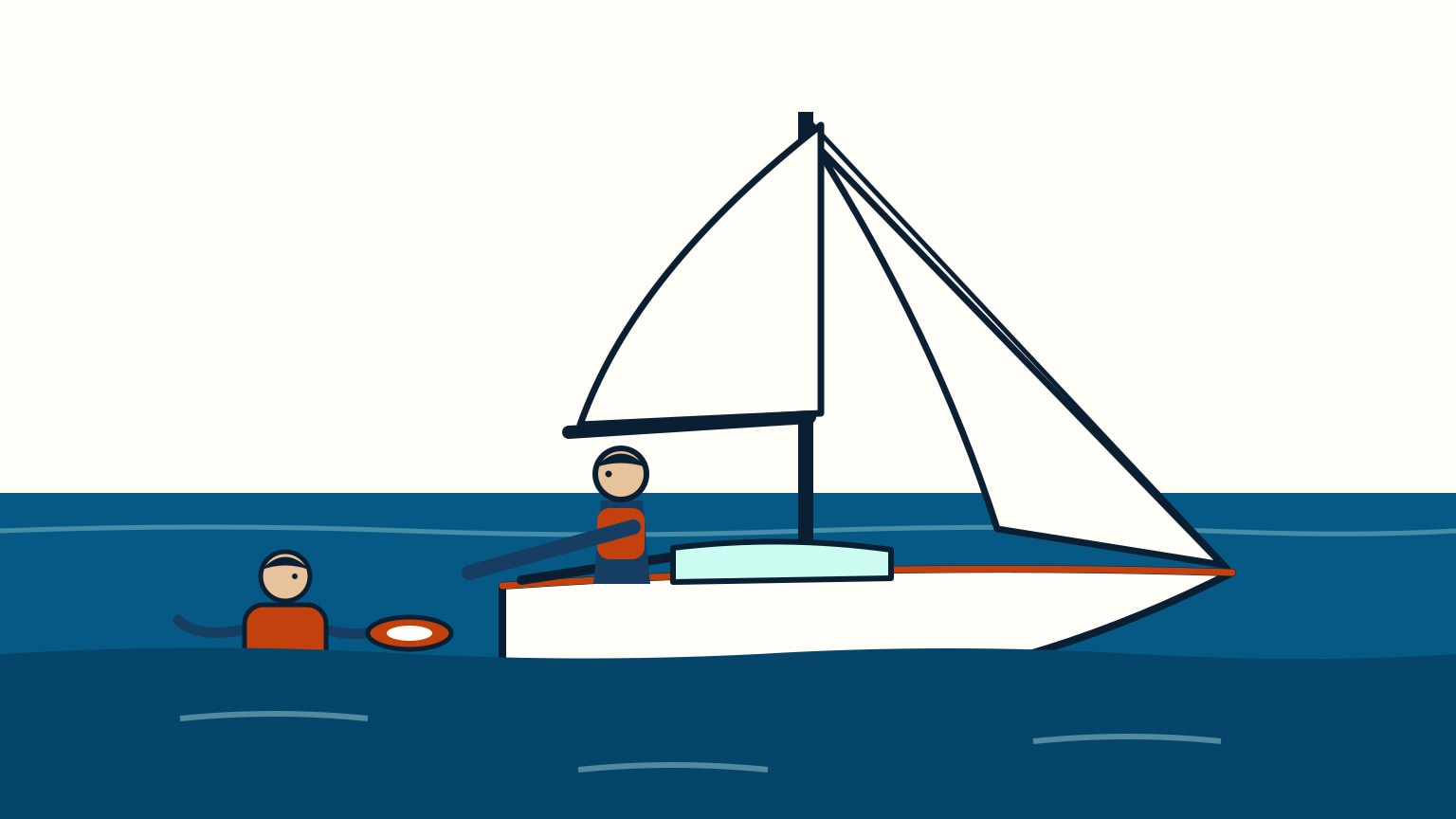
The moment someone goes overboard, three things happen at once, done by different people. Someone shouts to alert the whole crew. Someone else throws the nearest buoyant object (a horseshoe buoy, life ring, or even a cockpit cushion) toward the person in the water. And one crew member does nothing else but point at them, arm out, eyes locked on, until someone tells them to stop. If the boat has a chartplotter with a man-overboard button, press it. The person on the helm eases the sails and slows the boat so the gap between the boat and the person stops growing. None of this is the recovery itself: it buys the time to do the recovery properly.
The best response to a man overboard emergency is never needing one. A lifejacket worn the whole time underway, an engine cut-off lanyard clipped on so the motor stops the moment you leave the helm, and simply staying aboard, moving deliberately with a hand free, prevent almost every situation this article describes. But people still go over the side, on calm days as often as rough ones, and the first ten seconds after it happens matter more than anything that follows. This isn't a guide to the recovery itself: turning the boat around, approaching, and hauling someone back aboard is its own skill, worth practicing on the water rather than reading about. This is the shorter, more urgent question: what does everyone aboard do in the moment it happens, before the boat has even started to turn?
Shout, Throw, Point; All at Once
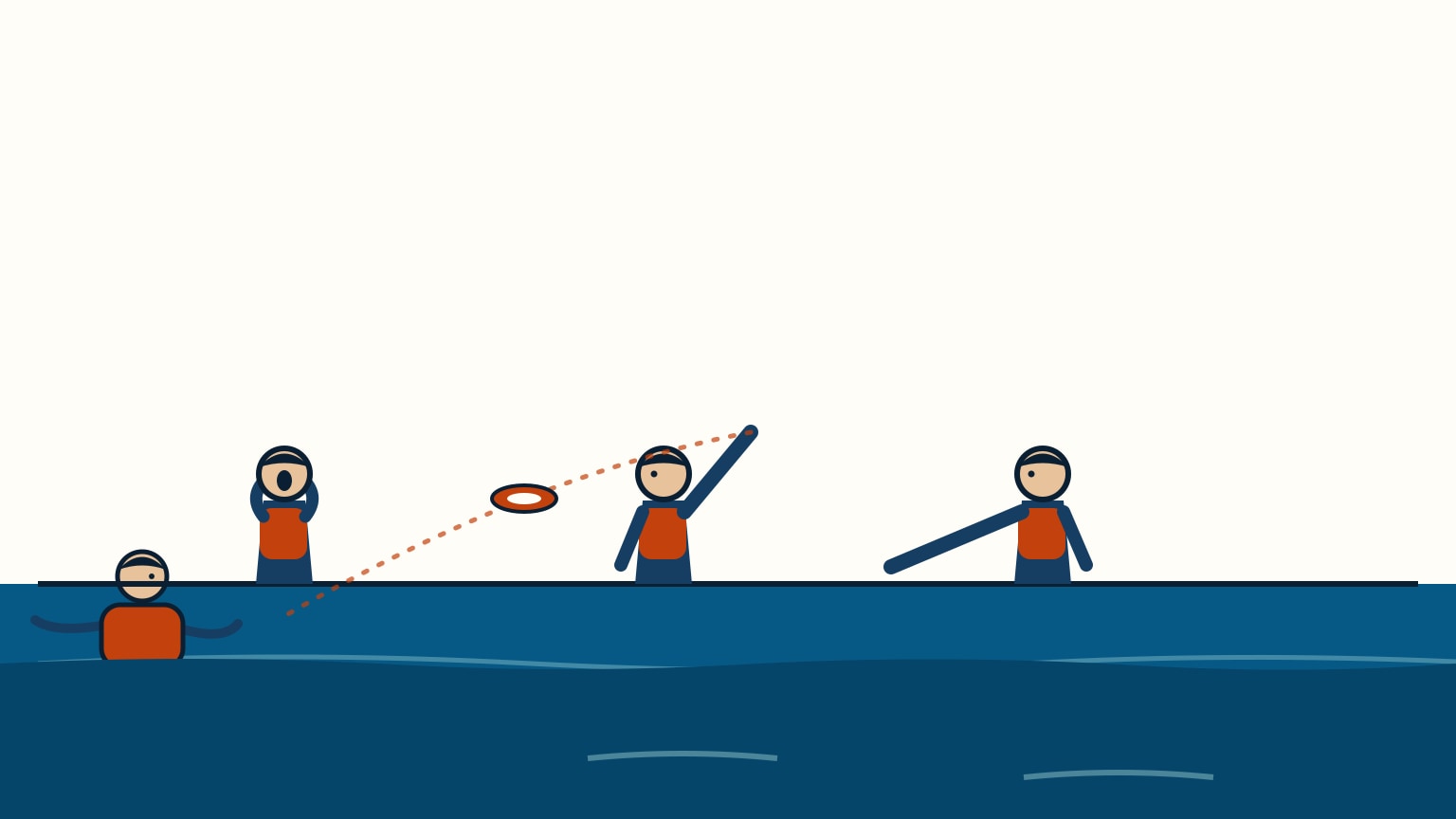
These three actions happen together, not in sequence: different crew members doing each one at the same moment. Shout the instant you see it happen, loud enough that nobody aboard can miss it; that shout is what turns one person's private emergency into the whole crew's job. At the same time, whoever is closest throws the nearest buoyant object toward the person in the water (a horseshoe buoy, a ring, even a cockpit cushion, whatever is within reach).
Throw it even if the person is a strong swimmer. Sudden cold water raises the risk of drowning for confident swimmers in calm conditions, and that risk only grows in any chop or waves. A thrown float buys time and saves energy while the rest of the response happens, which matters more the longer that response takes.
Cold water works against a person faster than most people expect, and swimming skill alone doesn't cancel that out. The first minutes in cold water can affect someone's ability to think clearly and swim effectively, and a cold water shock response can set in before the crew has even finished turning the boat around. That's the real reason the float goes in immediately instead of after someone judges whether the person actually needs it: once cold or fatigue starts to blunt a person's judgment and coordination, flotation already in their hands is what buys the rest of the crew the time to finish the job.
Why the Pointer Never Looks Away
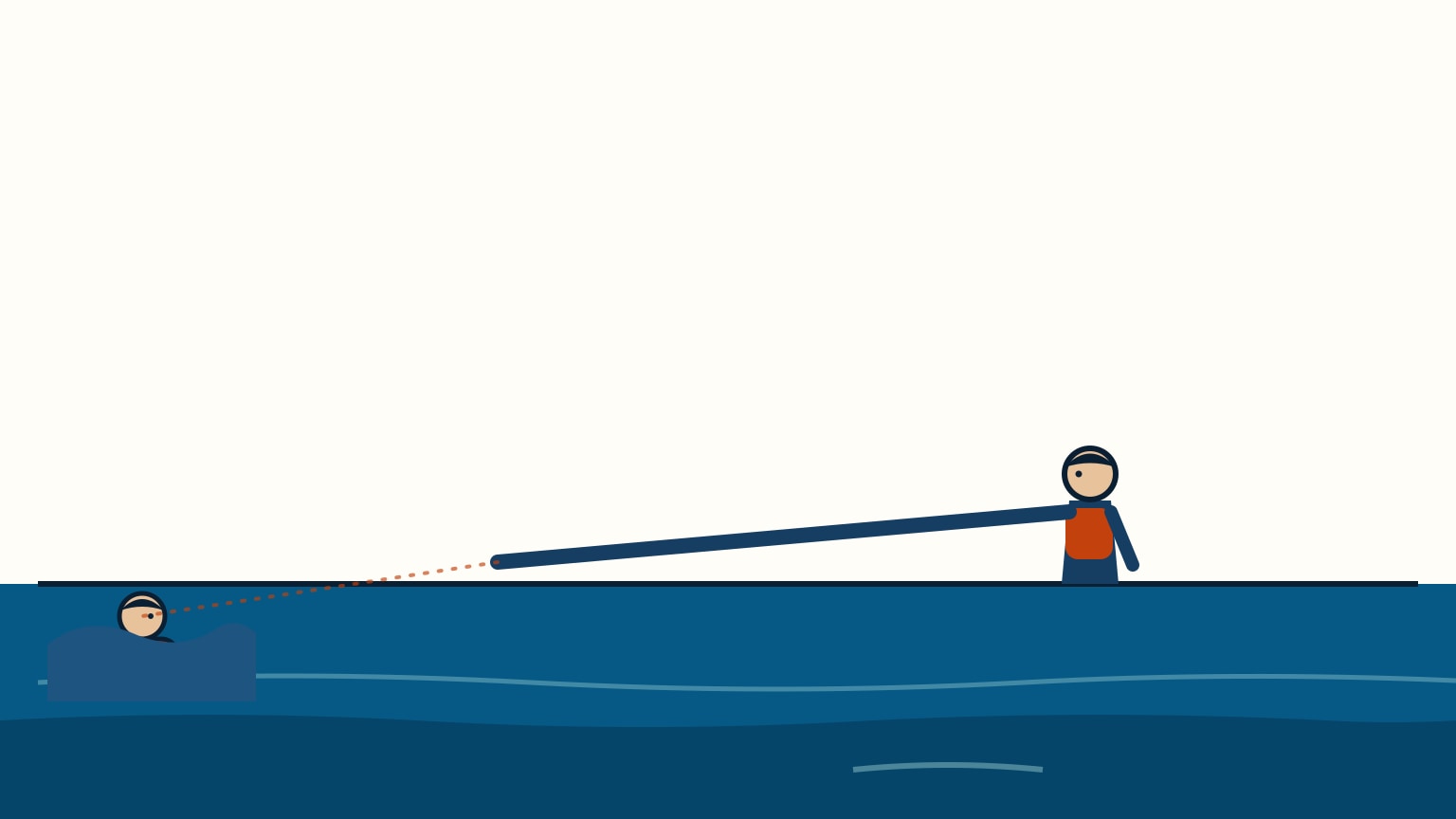
One person's entire job is to point at the person in the water and keep pointing, nothing else, from the first shout until someone else takes over that job. Not helping throw the float, not calling out directions, not glancing toward the helm. Just watching, arm extended, eyes locked on one spot. It sounds like an easy job to double up with something else, but the instant that person's attention splits, even for a glance at the GPS or a shout toward the bow, the one fixed reference the rest of the crew is relying on disappears with it.
Here's why it matters this much: a person's head is a small, low target, and once the boat starts to turn and maneuver, everyone else aboard loses their own sense of exactly where that person is relative to the boat. A dedicated pointer is the one fixed reference the rest of the crew can follow back. Whoever first spotted the person going in is often the best choice for this job, simply because they already have that reference point fixed in mind before anyone else does.
Training programs on both sides of the Atlantic teach this the same way, which is worth noticing given how little else about a man overboard response is universal: appoint a spotter to maintain visual contact, and that person keeps doing only that until the skipper explicitly relieves them of the job, even if the moment feels resolved or the boat seems back under control. The pointer's job ends when someone in charge says so out loud, because a role nobody formally hands off is a role nobody remembers to end safely.
Slow the Boat and Mark the Spot
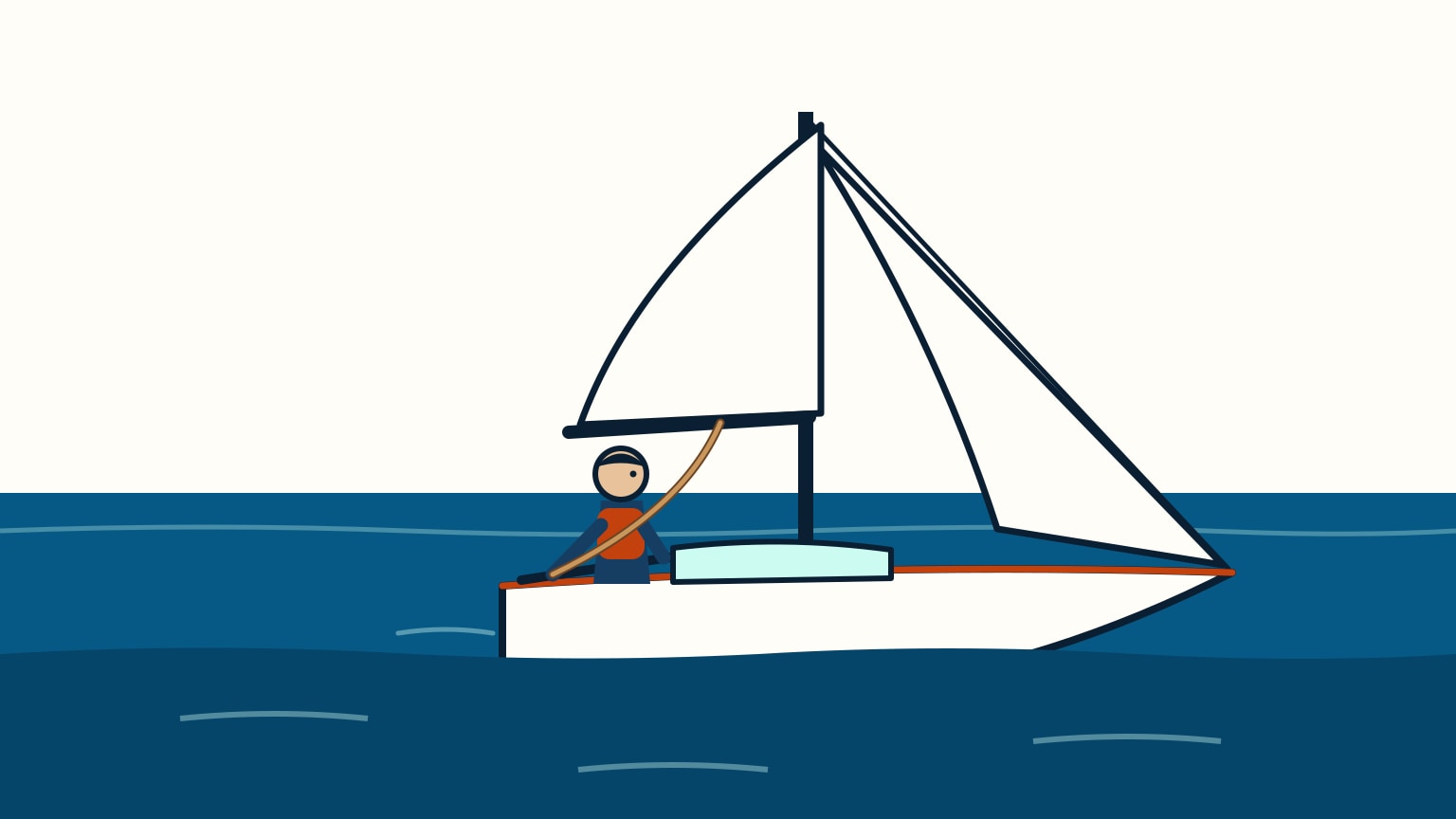
While the shout, throw, and point happen, the person on the helm has one job: stop the boat from carrying everyone further away from the person in the water. On a sailboat that means easing the sails, not just cutting power at the throttle: ease the jib sheet and let the mainsail luff until the boat slows to a crawl. Every second spent still moving away adds a second to the trip back. The same instruction applies on a powerboat, just by a different mechanism: reduce speed immediately and safely, whatever "reducing speed" means for the boat you're actually on. The principle carries across every kind of boat even though the exact motion doesn't.
If the boat has a chartplotter or GPS with a man-overboard button, press it as soon as you can reach it. Treat it as a backup to the thrown float and the pointer's eyes, not a replacement for either: it gives a bearing and distance to return to, but only if the boat still has power and a working position fix. The shout, the throw, and the pointer work regardless of what's fitted below decks, which is exactly why they come first and the button comes second.
Assign Roles, and Call for Help If You Need To
Once there are enough hands aboard, the response stops being everyone doing everything and becomes a short list of named jobs: one person points, one stays on the helm, one keeps flotation ready, one stands by the radio. A job with nobody's name attached to it is a job that quietly doesn't get done. Naming it out loud, even just calling out who's doing what, is what keeps it from being missed.
One more named job belongs on that list even though the recovery itself is out of scope here: someone ready with whatever gear the boat carries for getting a person back aboard, so the crew isn't scrambling for it after they've already found their way back to the person in the water.
Whether the radio call happens right away is a judgment weighed against how many hands the crew has free to make it while still maneuvering the boat. But some situations make the call mandatory rather than a judgment call at all: if nobody actually witnessed the person go in, or if the search fails to find them quickly, a distress call has to go out. That's the moment to make a Mayday call on the VHF radio, the internationally recognized way to summon urgent help from any boat in range. Getting someone out of the water (turning the boat back, approaching, and hauling them aboard) is its own skill worth practicing separately, and SailStarter covers that recovery maneuver as the natural next step; this response is what keeps them found and floating until that happens.
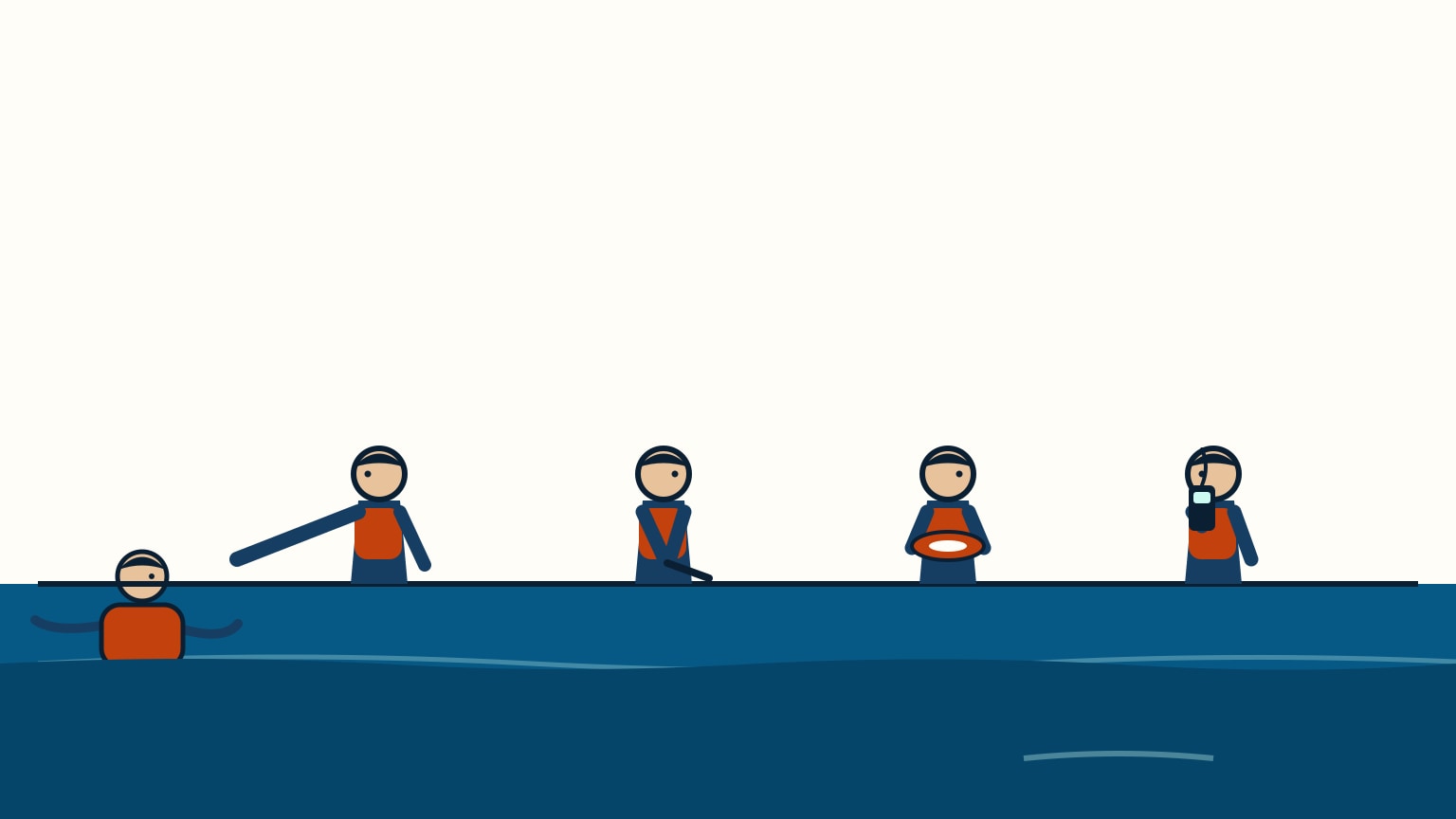
Shout, throw, point: three simple actions, done at once, turn the first ten seconds of a man overboard emergency into something manageable instead of something lost. None of it depends on fancy equipment; a working voice, something that floats, and one person willing to do nothing but watch and point cover the essentials on the plainest boat afloat. The confidence to do this without hesitating comes from having practiced it, not from reading about it once. SailStarter's crew-overboard lessons let you walk through this exact sequence (who shouts, who throws, who points, and what the helm does) until it's second nature rather than something you're improvising for the first time with someone actually in the water. Practicing it on a calm afternoon, with nobody actually in danger, is what makes those same four actions available without hesitation on the day conditions are worse and a real person is waiting for the boat to come back.
Try it from the lesson
Can you spot the next move?
Must flotation wait until a separate spotter has been assigned?
Why you can trust this guide
. We build each guide from public seamanship and safety sources, then teach the universal principle before any local difference.