Chart your course
Man Overboard: Turning Back and Getting Them Aboard
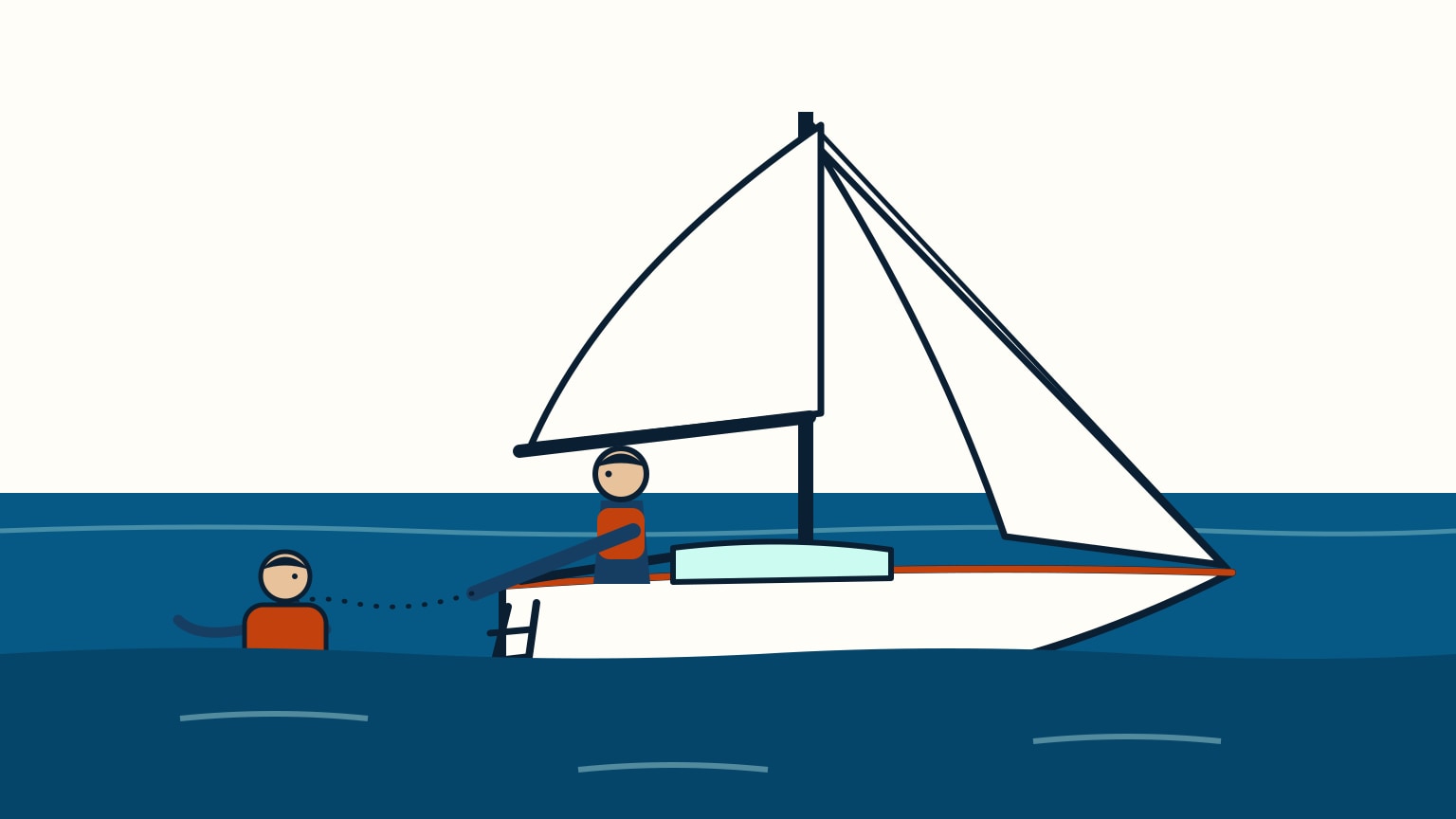
Quick answer
The short version
Getting back to someone in the water is a maneuver, not a scramble. Under sail, two return patterns cover most situations: the quick-stop, which turns the boat almost onto the spot and holds it close the whole time, and the figure-eight (also called reach-and-return), which sails away on a beam reach before turning back on a broad reach and then a close reach for a slow, controlled final approach. Under power, one rule overrides everything else: stop the propeller, neutral or engine off, before the person is alongside. Once the boat is stopped beside them, a thrown line or a horseshoe-and-tether device makes contact; a boarding ladder, swim step, or halyard-to-winch hoist gets them from the water onto the deck.
If your crew has already shouted, thrown flotation, and kept someone pointing (the first-ten-seconds response covered in Man Overboard: What To Do In The First Ten Seconds), the next job is turning the boat around and actually bringing that person home. That's a different skill, with its own shape: a return maneuver that closes the distance without overshooting, a controlled final approach, a way to make contact, and the often-underestimated problem of getting a wet, possibly exhausted person back over the side. None of it is complicated once you've seen it done. But every source below treats it as something worth practicing, not reading about once.
Turn Back: Quick-Stop or Figure-Eight
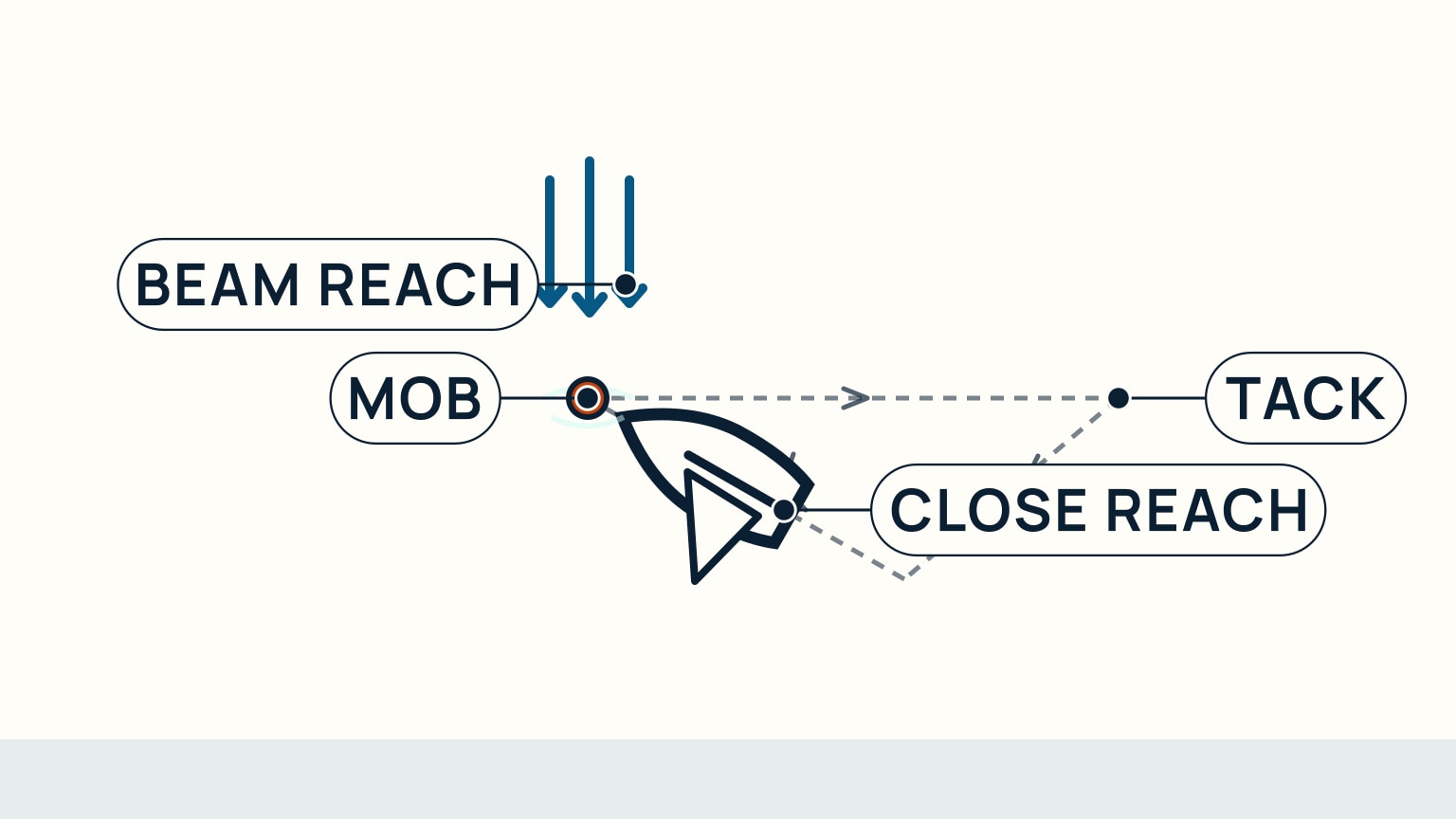
Two named maneuvers cover most sailboats, and both start with the same idea: come back close, not fast. The quick-stop keeps the boat almost on the spot. From close-hauled, you keep turning up through the wind and past it (without releasing the jib sheet) until the wind is nearly astern, then hold that heading until the person is aft of the beam before jibing back to approach them "as if you were going to pick up a mooring," in US Sailing's description of the maneuver. The figure-eight trades that tight circle for a wider, more forgiving loop: you deliberately sail away from the person on a beam reach for four to six boat lengths (American Sailing Association materials note this "may feel wrong," but the crew needs the time to ready the boat), then tack, run a broad reach back toward a point downwind of them with the jib sheet eased, and finish by heading up onto a close reach. That close reach is the real approach: it lets you speed up or slow down with the sheet alone, without changing course, so you arrive at a crawl rather than a stop-on-a-dime.
Under Power? Put the Engine in Neutral First
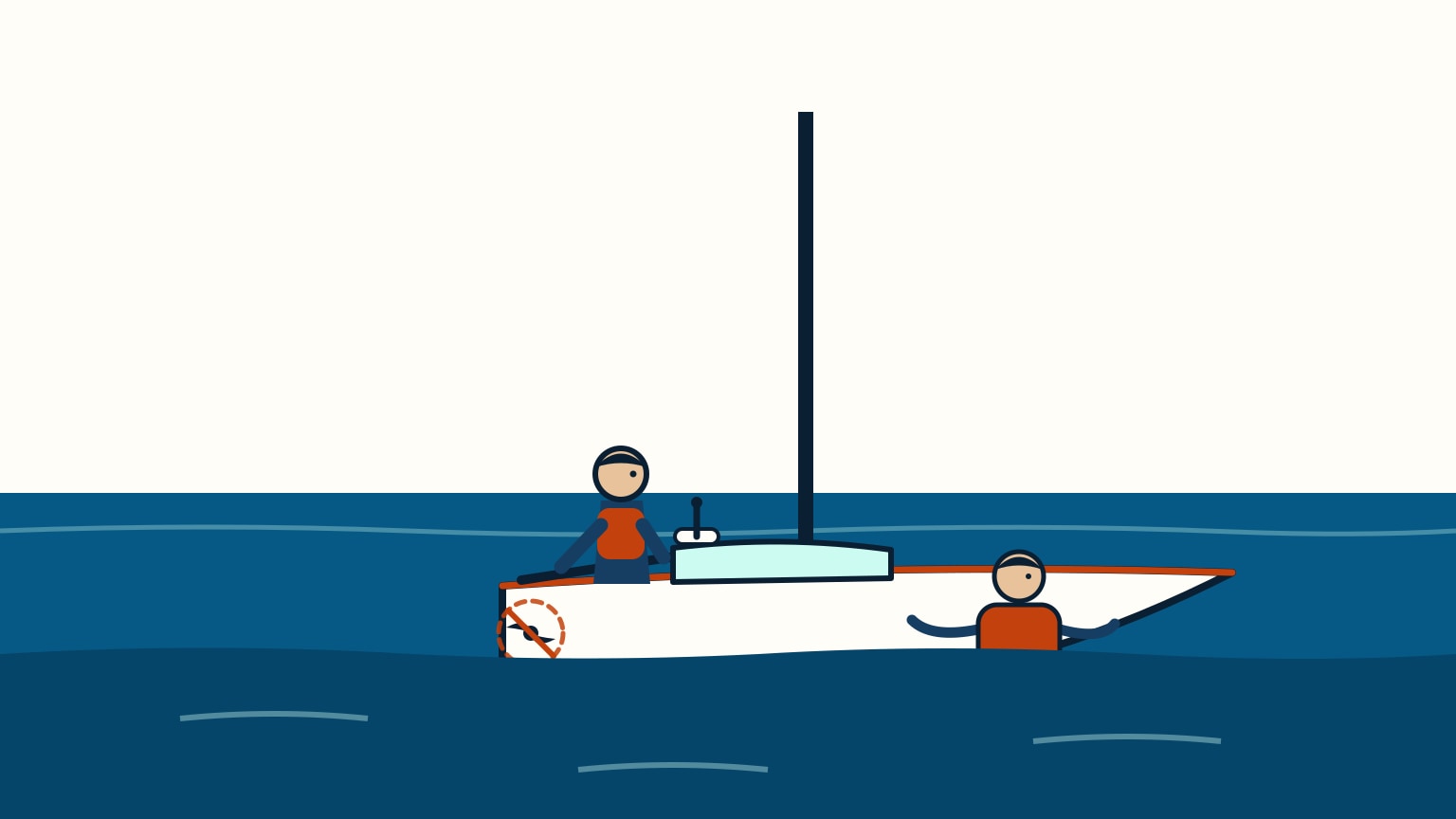
If you are motoring back rather than sailing, the propeller must stop turning before it is anywhere near the person in the water. RYA guidance calls for the engine to be left in neutral or switched off to avoid propeller injury. Slow well before you are close, shift to neutral or stop the engine during the final approach, and keep the stern well away from the person. This removes the propeller hazard from final contact.
Stop Alongside and Make Contact
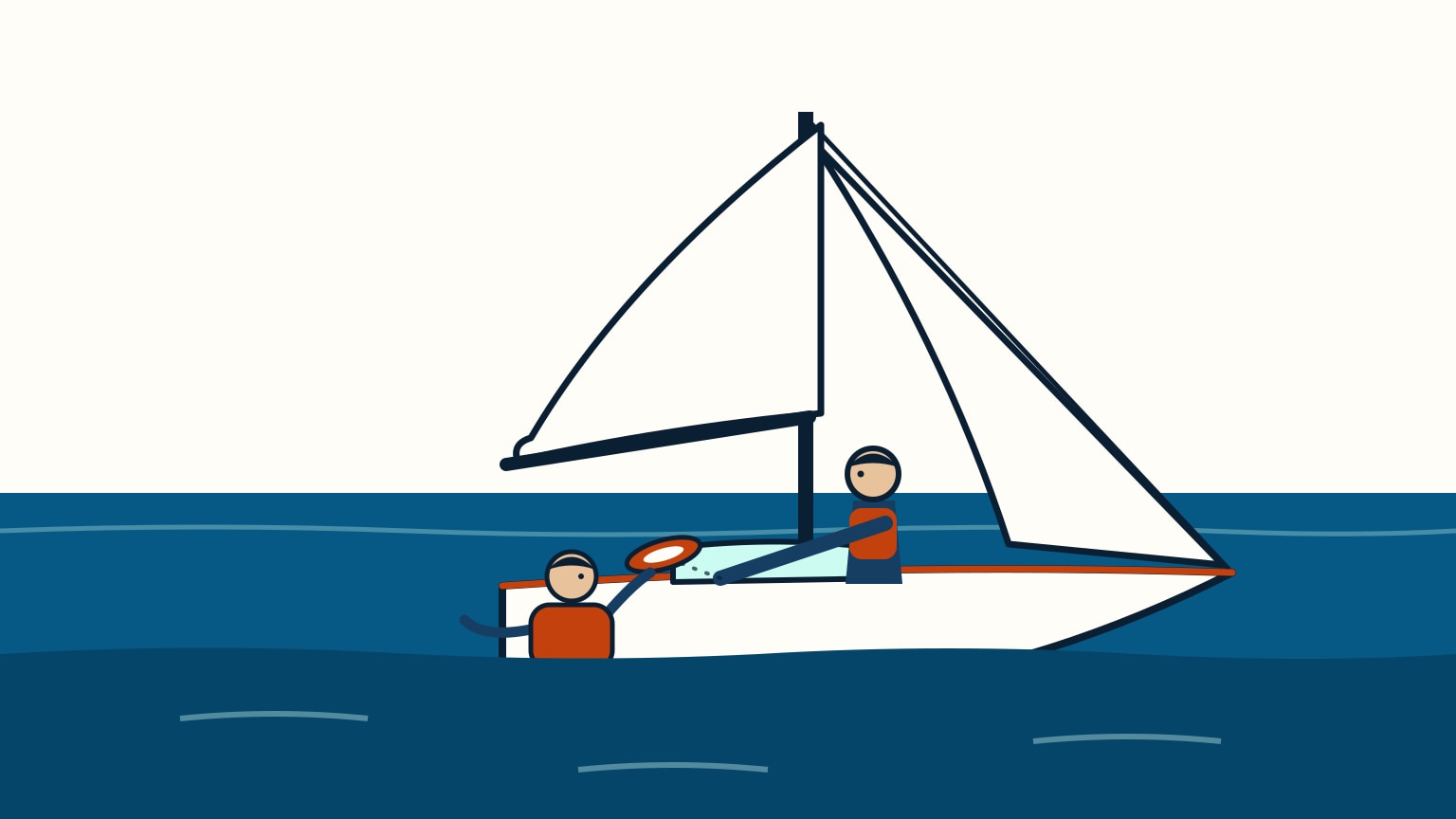
Where exactly the boat stops depends on which technique you use. Reach-and-return guidance typically brings the person alongside to leeward, so the hull blocks the wind and the boat drifts gently down onto them instead of away. Quick-stop guidance built around a jibe instead favors the windward side, keeping the boom centered through the turn to limit its movement and keep boat speed low. Either way, the boat should be under a knot by the time it is alongside. A conscious and responsive person may take a thrown heaving line. A horseshoe-and-tether device can be towed in a slow circle until the person can reach it. Getting into the harness while wearing a life jacket can be awkward, especially with an inflatable model.
The Freeboard Problem: Getting Them Back Aboard
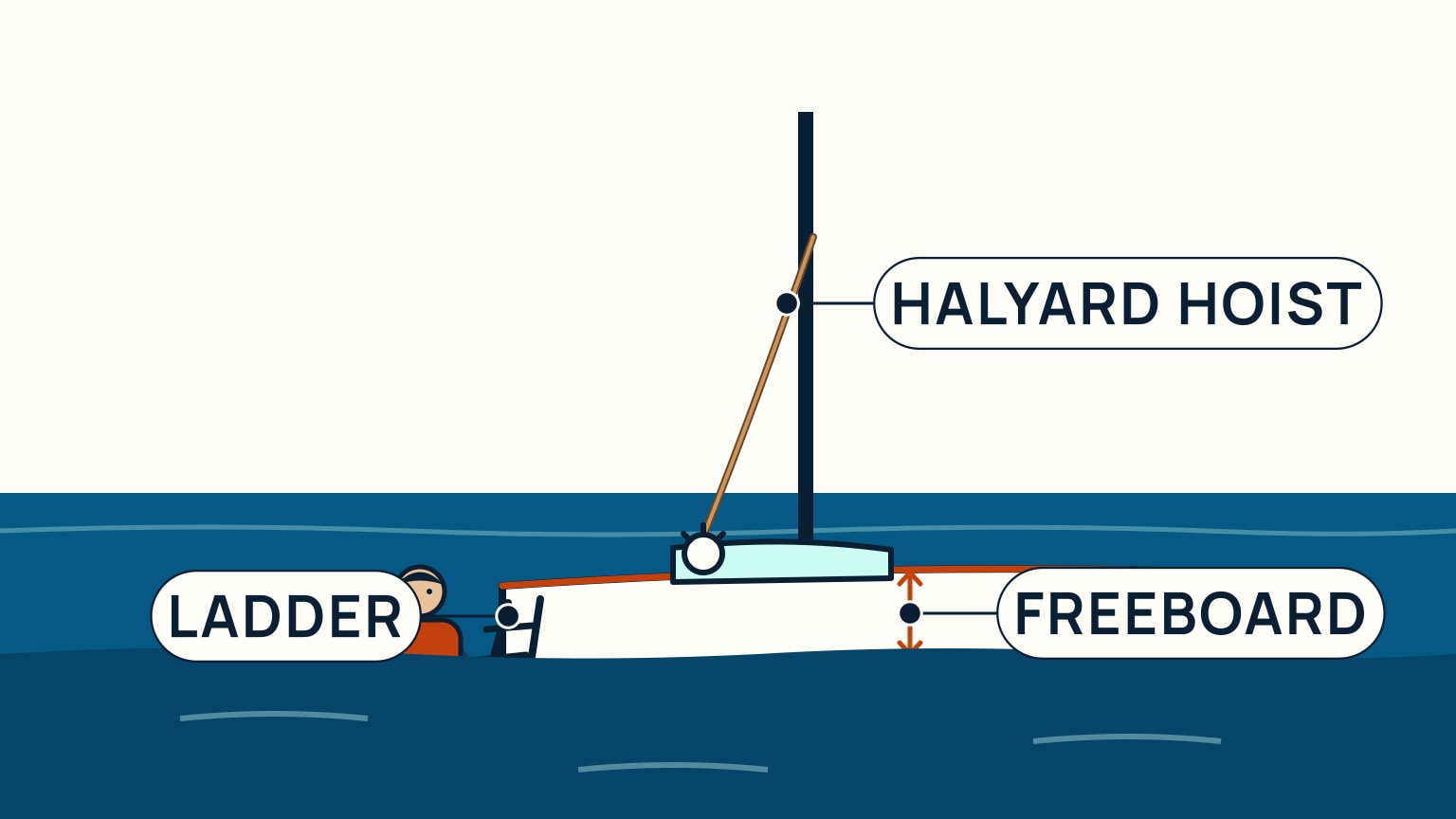
Getting someone from the water onto the deck is its own problem, separate from everything before it, and it's easy to underestimate. Even modest topsides can be too high to climb without help; one detailed account of recovery equipment put it plainly: "even 18 in (45cm) is still too far for most people to climb unaided." If the person can still climb, a boarding ladder or swim step is the direct route, though a stern swim platform is really a calm-conditions option rather than a rough-water one. If they can't (cold, exhausted, or hurt), a halyard run to a winch is a widely used hoist, sometimes with a block-and-tackle added partway along the line for more lifting power when the winch alone isn't enough. Whichever method lifts them, keeping them closer to horizontal than vertical during the hoist matters medically, not just for comfort. Once aboard, check them for injury and for hypothermia before assuming the emergency is over, and get them warm and dry. SailStarter's Cold Water Shock article covers what that cooling can look like and what to do about it.
Assign the first seconds
The person who sees the fall calls out and keeps pointing. Another crew member throws available flotation and marks the position using the boat's equipment. The helm begins the practised return while someone prepares communications and recovery gear. Keep the person in sight. Clear words prevent the whole crew from looking down at controls while the casualty disappears behind waves.
If the engine is used, keep the propeller risk central. Use neutral when close and follow the boat's practised method. A rushed powered approach can create a second injury. The goal is to return under control and stop where contact can be made.
Plan the lift before contact
Getting alongside is only part of recovery. Identify the lowest safe boarding point, ladder, lifting tackle, halyard, sling, or other boat-specific method before departure. Consider whether the person can help, is injured, or is exhausted. High freeboard can make an ordinary swim ladder unusable.
Keep lines and the casualty away from the propeller and other moving gear. Attach recovery equipment to points and systems approved for the load. If the crew cannot lift safely or the situation is worsening, call for help early and state the position and problem.
Practise with a substitute
Use a floating marker or training dummy, never a person in the water, for the approach drill. Run the quick-stop or figure-eight method used by the boat. Time the sighting, turn, stop, contact, and simulated lift preparation. Then change roles.
Practise in suitable conditions with qualified supervision and a proper lookout. The strong-wind preparation guide shows why reducing sail and briefing roles early protects the crew's capacity for any emergency. The night sailing guide adds lighting, movement, and handover considerations.
Debrief the whole recovery
Ask whether the pointer ever lost sight, whether the helm knew which return to use, whether flotation and communications were reachable, and whether the planned lift could actually be rigged. Fix stowage and roles before the next trip. A fast turn is not enough if the final metre and lift remain unsolved.
Prevention belongs in the same review. Check lifejacket use, clipping arrangements where appropriate, safe movement, and crew location under the boat's plan and current local requirements. The recovery drill prepares for a failure. Good deck habits reduce the chance that the drill becomes real.
None of this is something to improvise for the first time with someone actually in the water. Every source behind this article treats the return-and-recovery sequence the same way: as a drill worth running, not a procedure worth reading once and setting aside. Pick a calm afternoon, use a cushion or fender in place of a person, and run the turn, the approach, and the boarding decision until the timing stops feeling awkward. SailStarter's crew-overboard recovery lessons walk through the same quick-stop and figure-eight maneuvers, the engine-neutral rule, and the ladder-or-hoist choice for getting someone back aboard, so the sequence is already familiar if you ever need it for real.
Keep recovery equipment visible and ready for the conditions. A ladder secured behind gear, a halyard with no suitable attachment, or a throwing line buried below cannot perform its planned job. During the departure brief, show the crew how each item is released and who controls it.
Include communications in the drill. Practise stating the boat's position, the number of people involved, whether the person is in sight, and what assistance is needed. Do not make a false distress transmission. Use an agreed simulation and the training method suitable for the radio and area.
After a real recovery, the person may still need medical assessment for injury, cold exposure, or inhaled water. Follow current emergency guidance and the directions of rescue or medical professionals. Keep the boat controlled while care is provided.
Try it from the lesson
Can you spot the next move?
Does a downwind starting course automatically rule out a Quick Stop?
Why you can trust this guide
. We build each guide from public seamanship and safety sources, then teach the universal principle before any local difference.