Chart your course
You've Run Aground: What To Do Next
Quick answer
The short version
Running aground is common, and most of the time it's nothing more than an unplanned stop on a sandbank. The moment it happens, stop adding power (ease the sheets if you're sailing, or shift the engine to neutral if you're motoring) so the boat doesn't drive itself in any harder. Check that everyone aboard is okay, then check the bilge for water. Once you know nobody's hurt and the hull is sound, work out what's underneath you (soft mud or sand behaves very differently from rock) and what the tide is about to do, since that decides whether you get off in the next few minutes or settle in to wait. From there, reducing the boat's draft (the depth it needs to float) by heeling it or kedging an anchor out to deeper water is usually all it takes.
A grounding rarely happens dramatically. More often it's a soft bump, a slowing of speed, and the boat simply stops where the chart said there'd be water. That's the useful part: on a soft bottom, in calm conditions, this is one of the more forgiving things that can happen aboard a sailboat, and the response is a short, ordered sequence rather than anything urgent or complicated. This article walks through that sequence: the first moves, reading what's under the keel and what the tide is doing next, and the techniques sailors actually use to reduce draft and back off. There's one honest exception too, for when the smarter move is to stop forcing it, protect the hull, and let the rising water or some outside help do the work instead.
Stop the Boat, Check Crew and Hull
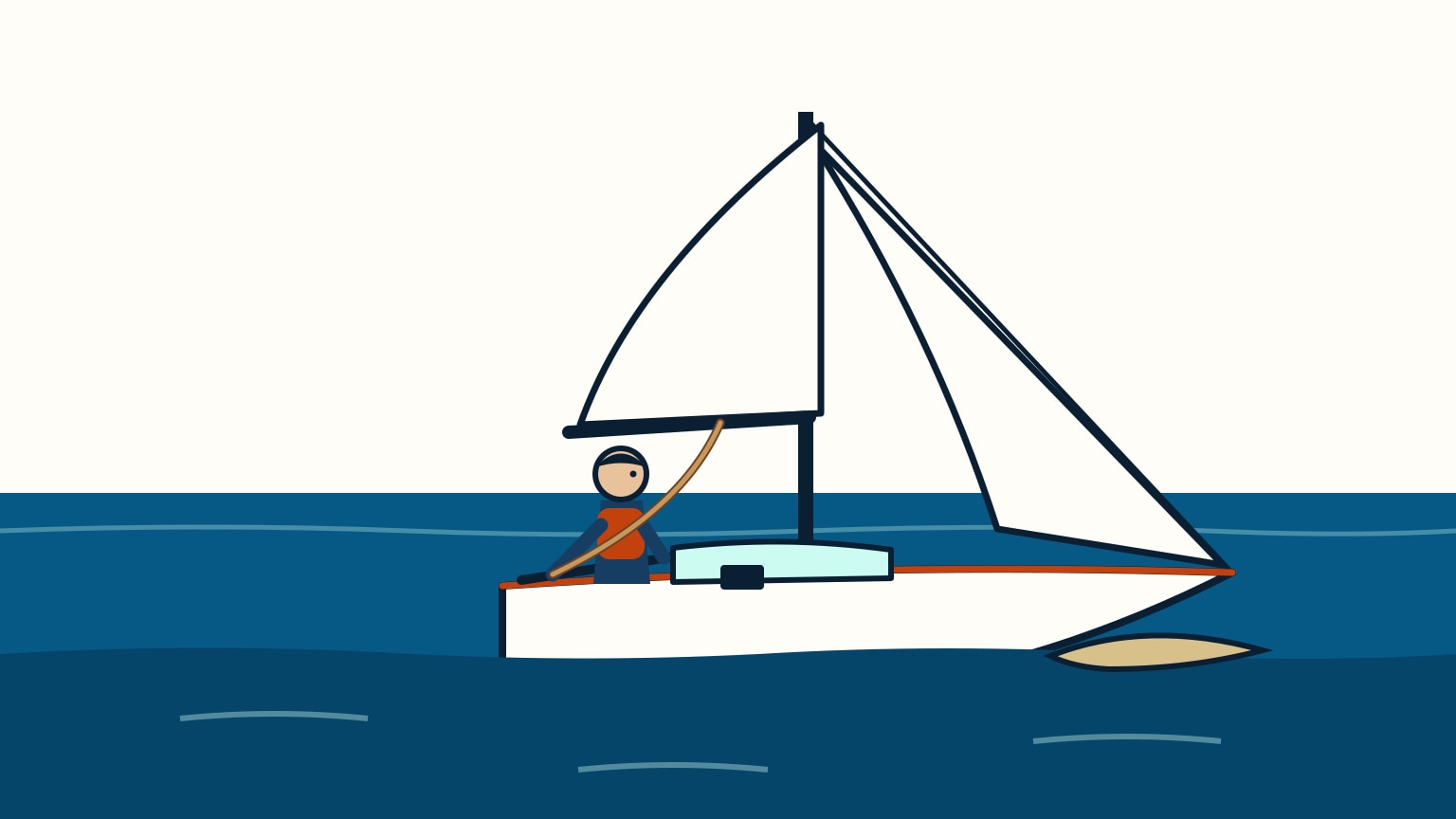
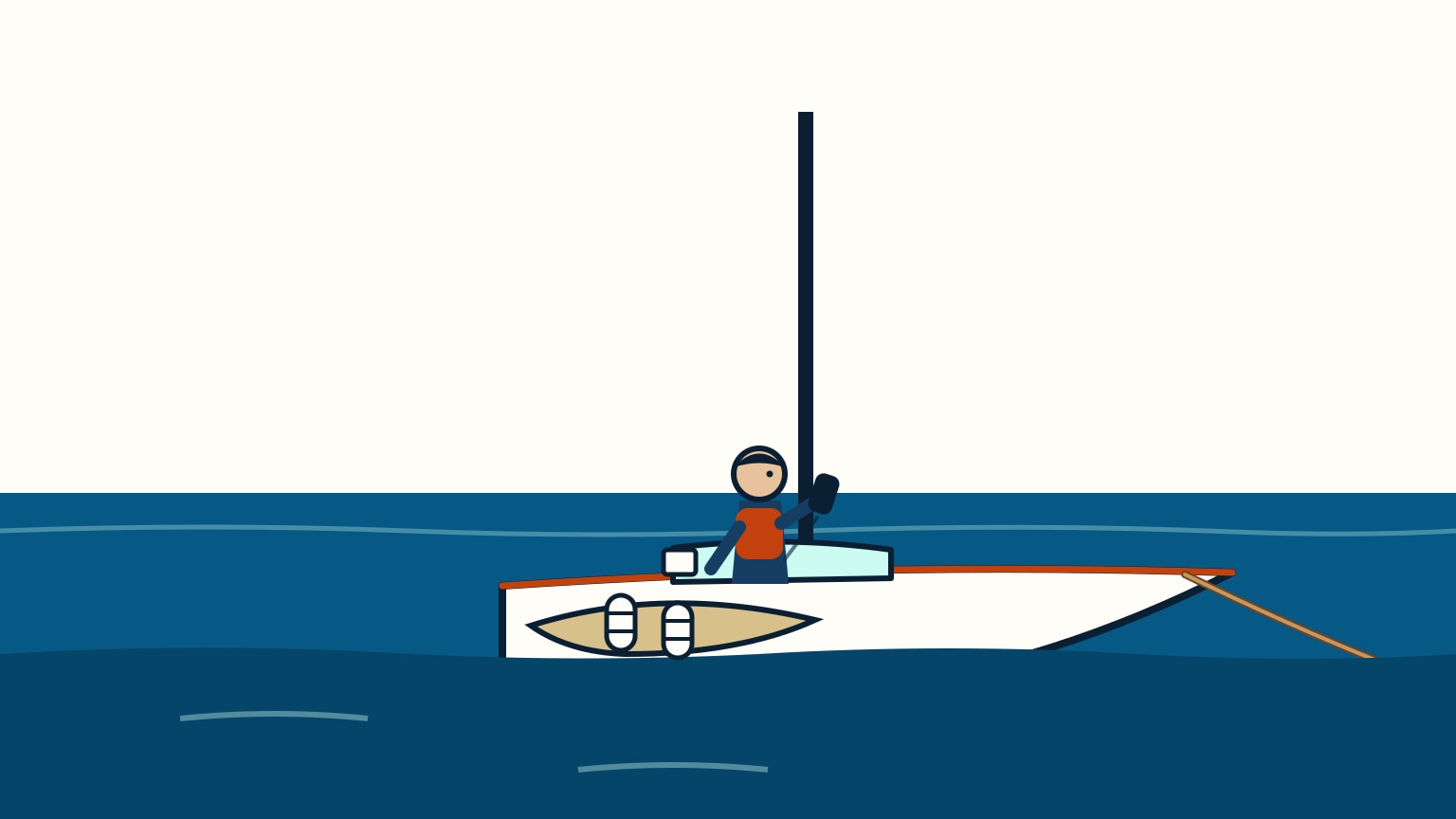
The instant you feel the boat slow and stop, take the drive off it before doing anything else. Under sail, ease the sheets. A luffing sail can't push the boat further onto the bottom. Under power, shift straight to neutral; guidance on this point is unanimous, since a spinning propeller in mud, sand, or rock is one more thing that can go wrong for no benefit. Only once the boat has stopped trying to move do you look around. Check on every person aboard first. A sudden stop can throw someone off balance or into a rail. Then go below and check the bilge: is it dry, or is water coming in? Run a hand around through-hull fittings, the shaft, and the rudder for anything obviously cracked or working loose. None of this takes long, and it answers the only question that matters before your next move: is this a boat that's simply stuck, or one that's also been hurt.
Read the Bottom, the Depth, and the Tide
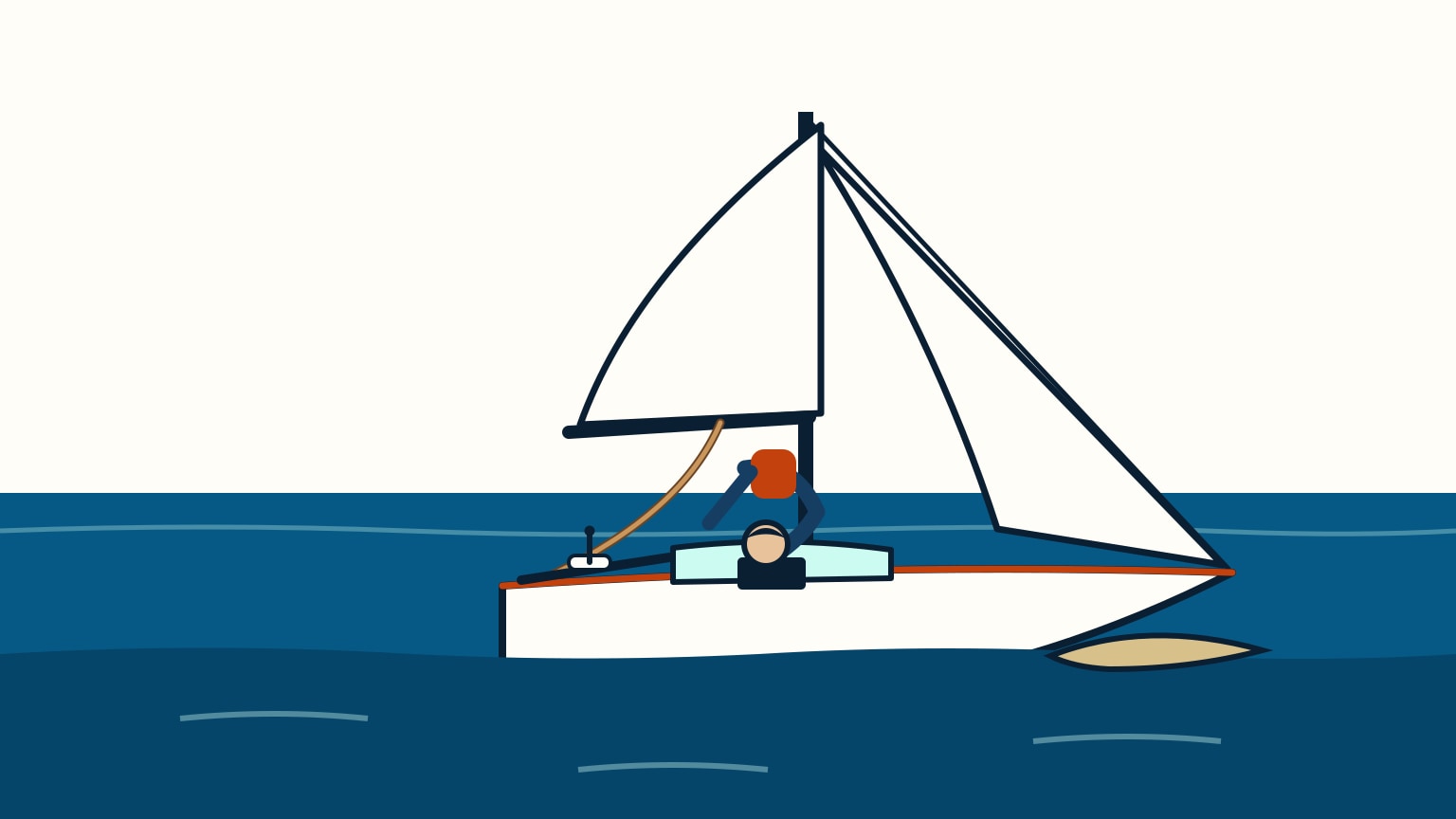
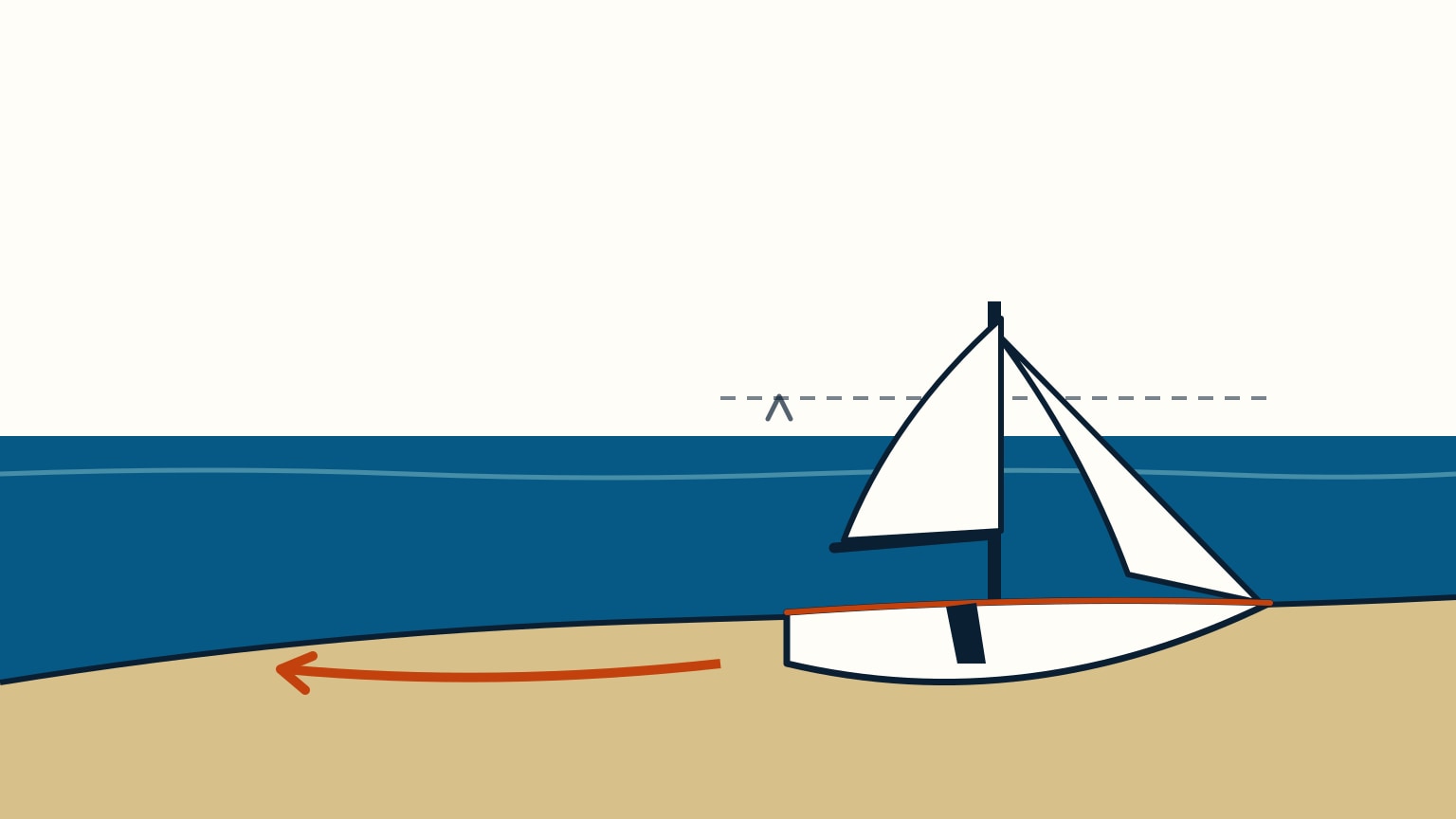
With the boat stopped and sound, spend a couple of minutes finding out what you're actually dealing with. A boathook over the side, or a quick look from the dinghy, tells you whether you've settled onto soft mud or sand (forgiving, and usually no real threat to the hull) or found rock, which changes how carefully you move next. Sound around the hull in a few directions to find where the water gets deeper again; that's usually back the way you came, but not always. Then check the tide. A rising tide is doing useful work for you without any effort on your part, lifting the boat a little more toward floating free every few minutes. A falling tide does the opposite: whatever depth you have now is the most you're going to get until it turns, so it's worth knowing early whether you're racing the clock or not.
Heel the Boat and Back Off the Way You Came
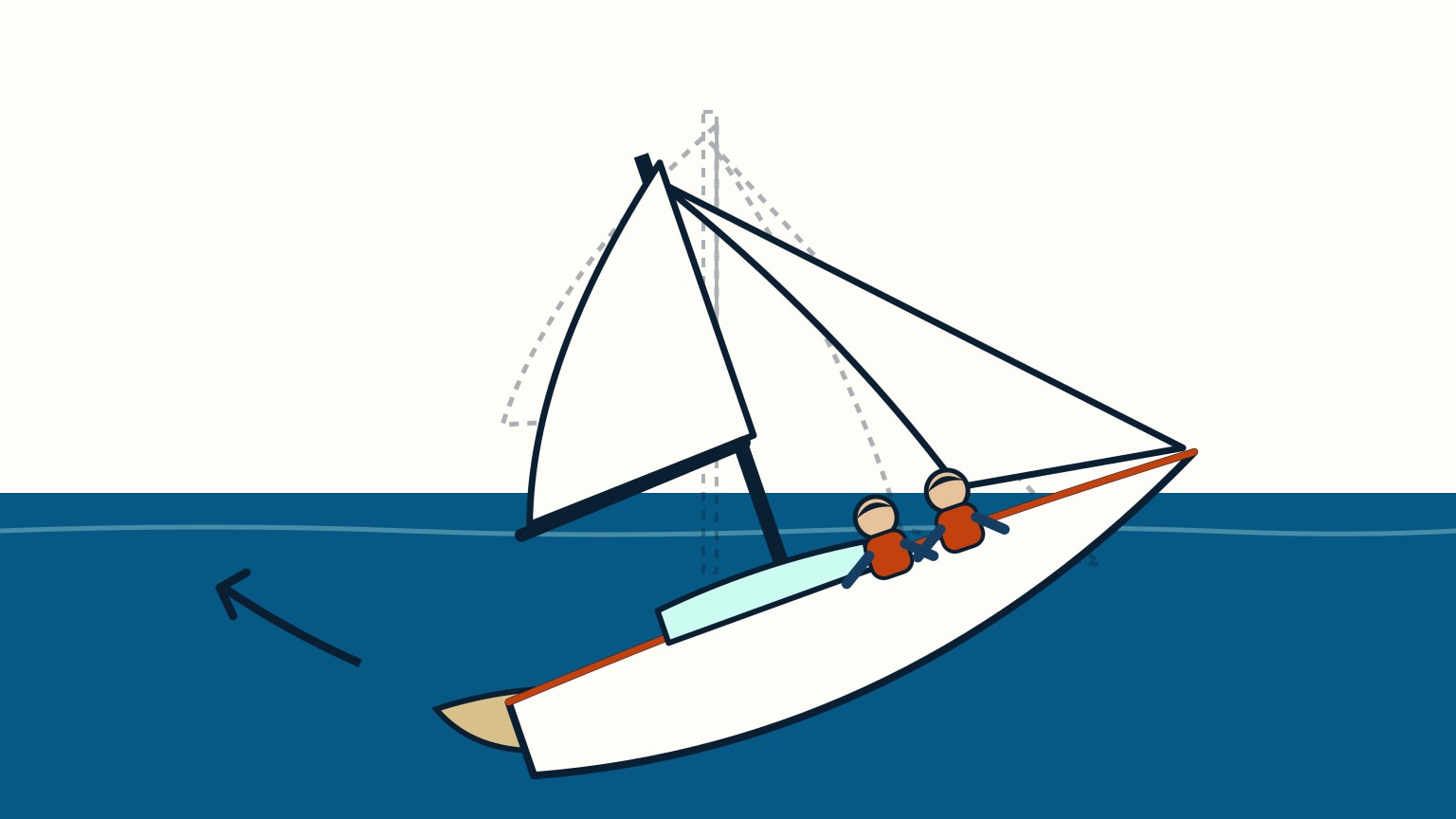
A sailboat heeled over draws less water than the same boat sitting upright, because less of the keel hangs straight down into the bottom. Moving the crew to one rail, or hanging weight from the boom, is usually enough to tip the boat and shave real inches off its draft. One honest caveat before you lean on this: it's single-keel physics. On a bilge-keeled (twin-keel) boat, heeling pushes the leeward keel deeper into the ground instead of lifting the boat clear, so skip the heel and rely on the other techniques here. With draft reduced, work the boat back toward the deeper water you just found. Under sail, backing the jib can swing the bow around toward open water, and hauling the boom out to back the mainsail adds a real pull astern. Under engine, gentle astern power (not full throttle) is the technique most cruising sailors reach for first, since it's usually the fastest way out of a soft grounding. Go slowly either way; a boat that's merely stuck rarely needs force, and forcing it is how a soft grounding turns into a harder one.
Kedge Off: Walk an Anchor Out to Deeper Water
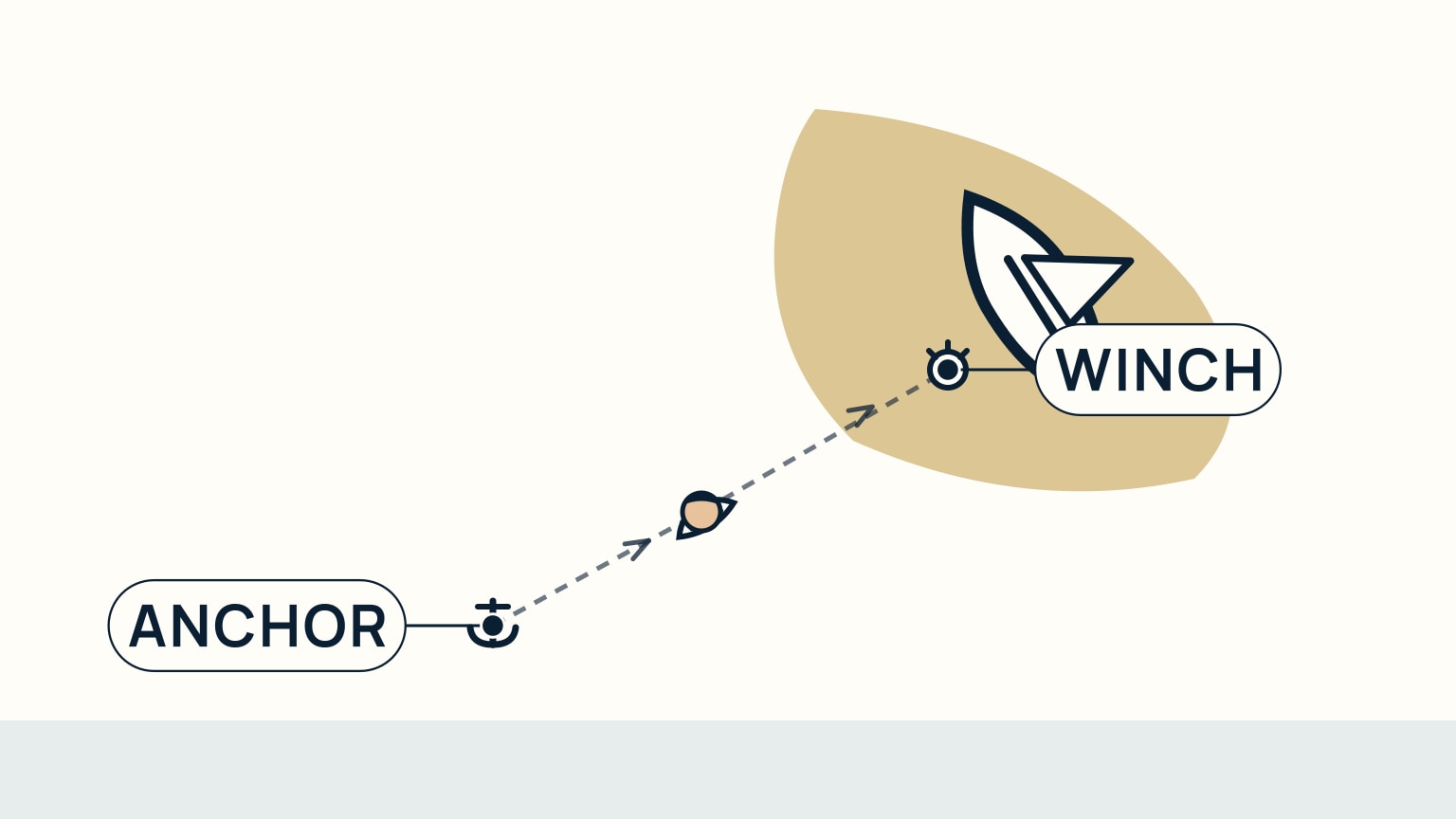
Kedging (setting an anchor away from the boat and then pulling the boat toward it) is the reliable fallback when heeling and engine power alone don't move you. Row the anchor out in the dinghy, or in calm shallow water carry or float it out, toward the deepest water you found earlier, and let it dig in properly before loading the rode. Lead the line back to a winch and take up the slack gradually rather than snatching it tight, and keep an eye on where the rode runs so it can't foul the propeller if the engine is helping too. Which direction you lead the anchor depends on which end of the boat is stuck: off to the side to swing a grounded bow clear, or from astern if you're also backing the engine. It's slower than a clean reverse off a soft bottom, but it works independent of wind and doesn't need the engine at all.
When Not to Fight It: Protect the Hull and Call Early
Two situations call for a different plan entirely: a rocky bottom, where forcing the boat can turn a scrape into a real hole, and a falling tide that's going to strand you no matter what you try in the next few minutes. In either case, stop pulling and start protecting. Set an anchor out toward deep water so the rising tide has something to lift you back onto, and pad the hull with fenders or cushions wherever it's bearing on the bottom so it isn't resting on bare gelcoat. It costs nothing to call your harbourmaster or the coastguard early and describe your situation calmly. Most groundings are routine, and a quick heads-up is very different from a distress call, which is for when there's real danger to the boat or crew. The best version of this whole sequence is one you never need: knowing the tide and reading the chart's depths before you get close to the shallows in the first place.
Record the event after the boat is safe
Note the position, tide, speed, bottom, impact, actions, and any new leakage, vibration, steering change, or visible damage. Inspect the bilge and accessible hull, keel, rudder, propeller, and steering areas according to the boat's procedure. A soft release does not prove that every loaded structure is sound.
Arrange haulout or professional inspection when the impact, bottom, or symptoms justify it. The survey red-flags guide explains why keel, structure, steering, and water paths need to be considered together.
Update the chartwork and passage plan with the cause. It may be tide timing, an incorrect position, missed depth, leeway, or a route too close to the boundary. Fixing that planning gap is part of recovery, even when the boat floated off without outside help.
Running aground is rarely the emergency it feels like in the first startled second. Stop the boat, check everyone and the hull, read the bottom and the tide, and most groundings end with the boat backing calmly into deep water under its own power or a winched-in anchor line. The exceptions (rock underneath you, or a tide that's already falling away) just call for patience and an early call for advice rather than force. None of this needs to be improvised cold the first time it happens for real. SailStarter's lessons on boat handling and ground tackle walk through this same sequence (reading the bottom and the tide, heeling to reduce draft, and setting a kedge anchor properly) so the steps are already familiar if you ever feel the keel touch.
Keep the inspection and log with the maintenance record. Future vibration, leakage, or steering change needs the grounding date and circumstances for context.
The bilge-water guide helps the crew establish a normal level before comparing the boat after impact.
Try it from the lesson
Can you spot the next move?
The keel just touched bottom and the boat is still under power. What's the very first thing to do?
Why you can trust this guide
. We build each guide from public seamanship and safety sources, then teach the universal principle before any local difference.