Chart your course
How to Sail Onto and Away From a Mooring
Quick answer
The short version
Sail onto a mooring only after you have observed the wind, tide, depth, pickup arrangement, and a route clear of the buoy if you miss. Start downwind or downtide of the buoy according to the stronger force, keep enough way to steer, and bring the pickup to a safe, visible part of the boat. To sail away, prepare the boat first, release only when the helmsman is ready to make way, and leave clear of the mooring before setting a course.
This is a handling exercise, not a shortcut around preparation. Moorings vary in hardware, ownership, depth, and local directions. Practice with an instructor or experienced crew in light conditions before relying on the manoeuvre near other boats. A controlled abort is part of the plan from the first pass.
Read the wind, tide, and mooring first
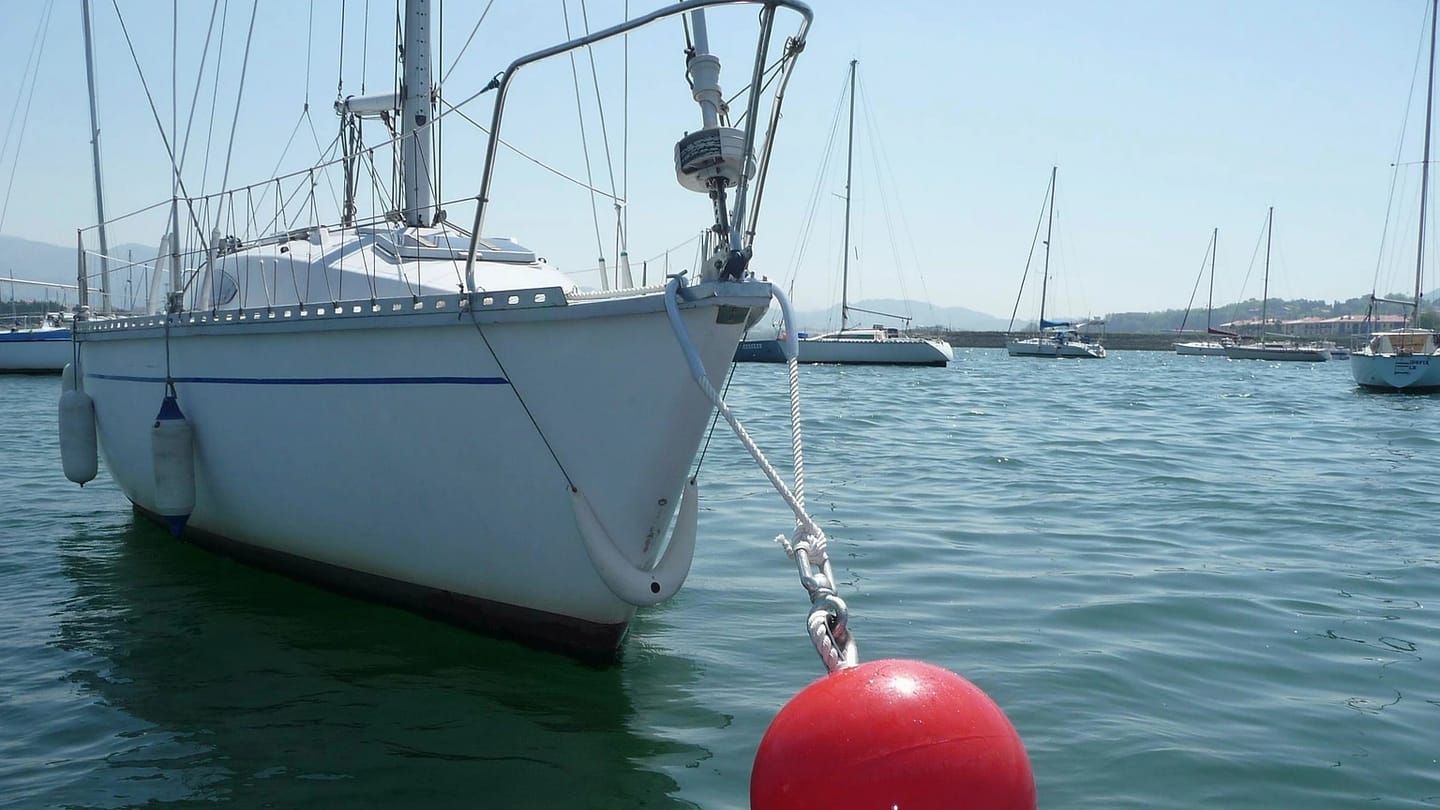
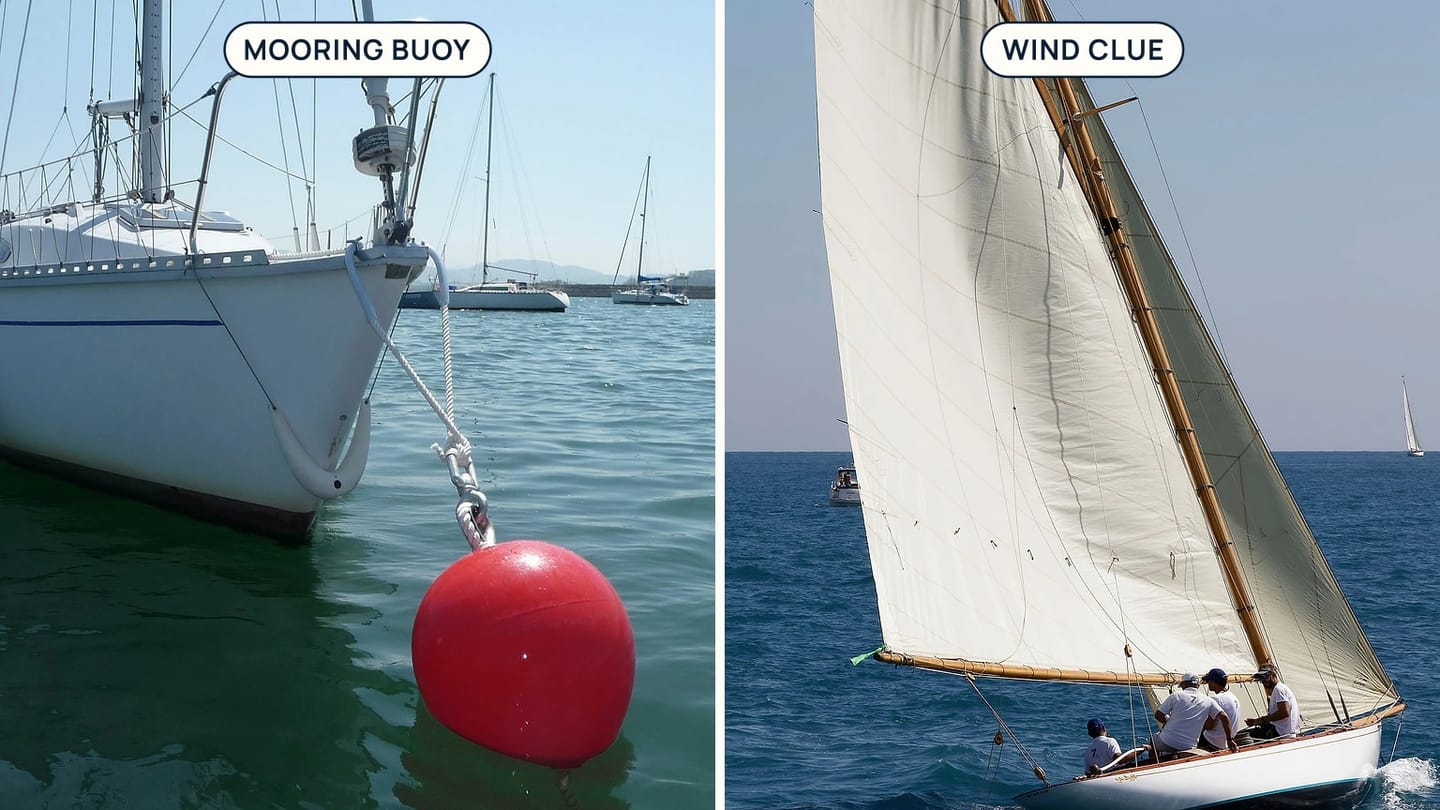
Approach from a distance and watch how nearby boats lie. They show the combined effect of wind and tide, although their different hulls and rigs can respond differently from yours. If no boats give a useful clue, make an observation pass well clear of the buoy. Note the wind direction, surface movement, depth, pickup gear, hazards, and the space you have beyond the buoy.
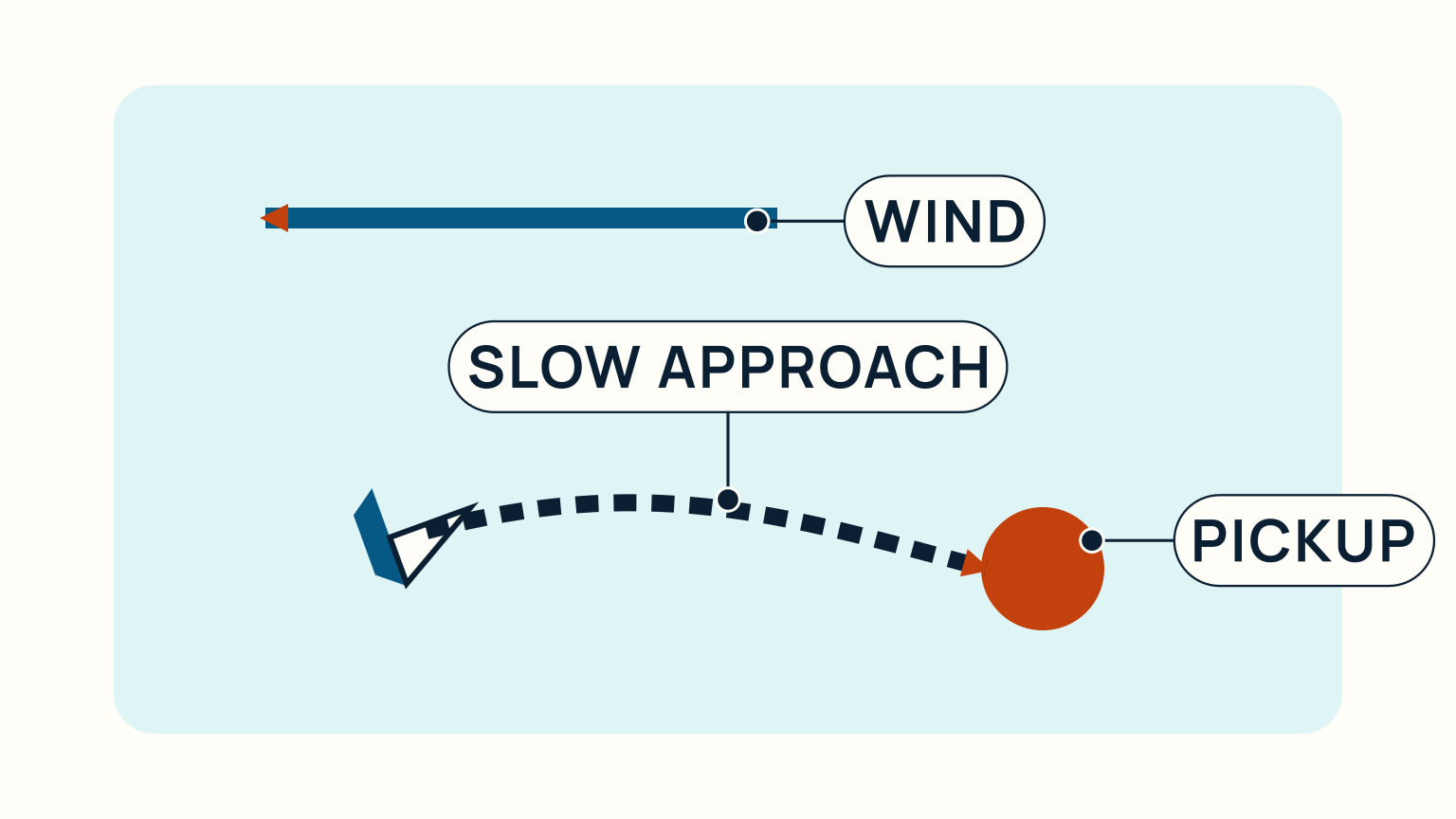
Work out the stronger force. In still water, the boat normally approaches from downwind so it can slow into wind. Where tide is stronger, down-tide may give the safer setup. In wind against tide, the choice and sail plan need extra care because the boat may respond unpredictably as the relative forces change.
Find an escape route before beginning. If you miss the pickup, the boat should be carried away from the buoy, not pressed into it. That means keeping clear water on the leeward or downtide side and avoiding an approach that leaves no room to bear away. This is close-quarters sailing, so a second pass is normal.
For help reading the moving water, set and drift explained gives the basic language. It will not choose your approach angle, but it helps you notice when the water rather than the wind is shaping the boat's path.
Prepare the boat and crew before the final run
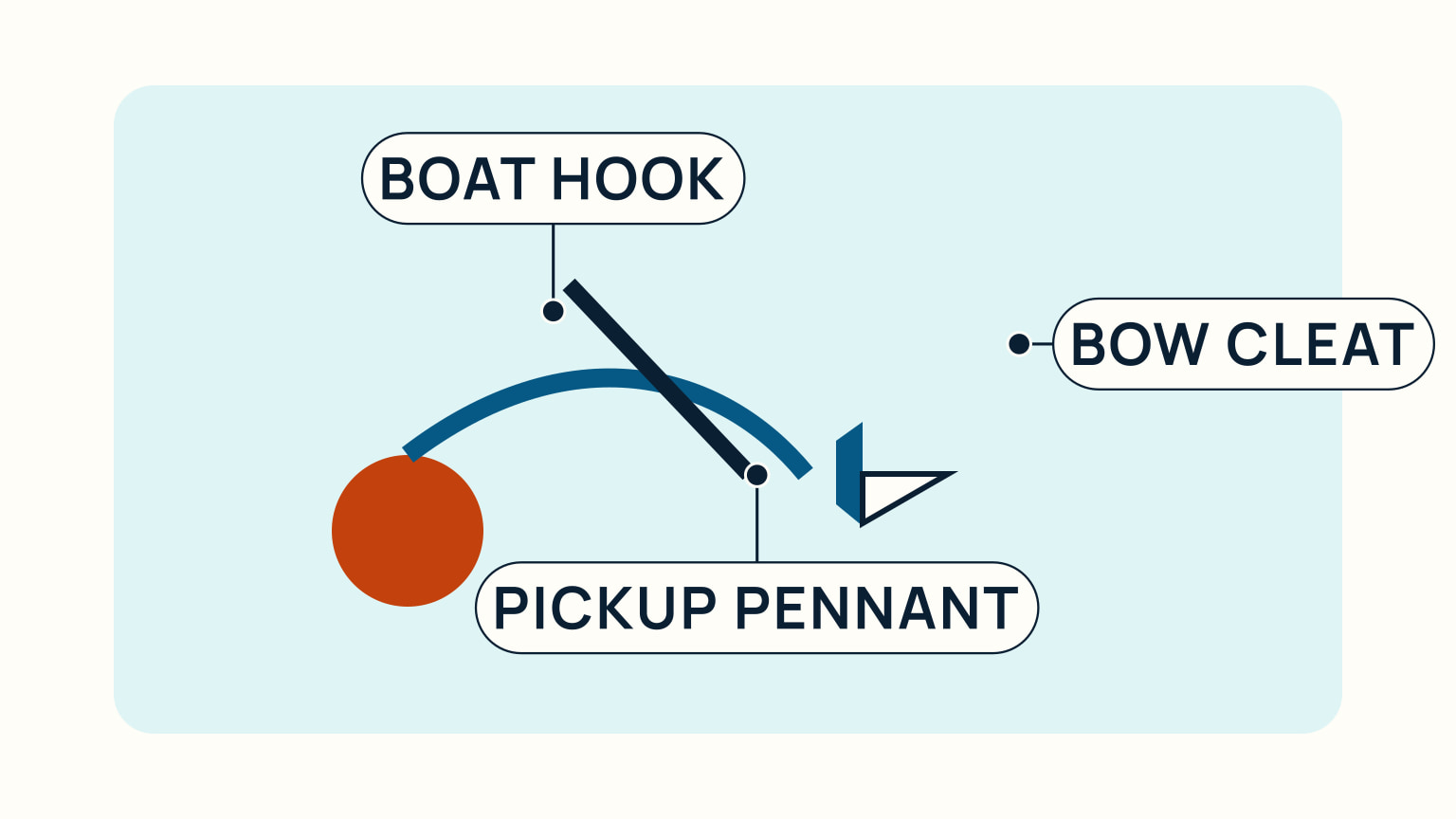
Make the pickup line ready before the boat is close. Check where it will lead, which cleat or strong point it will use, and whether it must go outside rails or lifelines. Have a boathook ready if it suits the pickup, yet keep it as a reach tool, not a way to pull a moving boat toward a person.
Choose where the pickup should arrive. The bow is common, but the buoy can disappear from view close ahead. A position near the shrouds or amidships may let the crew see and reach it more safely, depending on the boat and local setup. The point is to make one clear job possible, not to send someone scrambling along a moving deck.
Brief the sequence: who steers, who handles the pickup, which line is secured first, and what "abort" means. Keep hands, feet, and clothing out of loaded lines and away from the buoy. Do not put anyone between the boat and the mooring or ask them to jump. A missed pickup should leave everyone still aboard and the boat still steerable.
This preparation mirrors the work for docking a sailboat in wind and current. In both cases, the line is prepared early and the boat is controlled by sail and helm, not by a last-second grab.
Control speed without losing steerage
Start with room to approach on a close reach or another suitable point of sail, then reduce speed as the buoy comes nearer. The exact trim depends on the boat and the relation of wind to tide. The useful principle is to keep enough flow over the rudder to steer while making it possible to slow or depower before contact.
The mainsail can be filled and spilled to adjust drive in some conditions. A headsail may be the better tool in others. Do not treat one technique as universal. The boat, rig, current, and pickup location decide what gives a safe approach. Practise the changes away from the buoy until you know how quickly the boat responds.
Use a transit behind the buoy if you can. Keeping it aligned helps you see whether wind or tide is moving you sideways. Keep looking where the buoy will reach the side of the boat, not only at the bow. If you are too fast, too far off, or cannot safely reach it, bear away and try again.
The right moment to abort is earlier than most beginners think. You do not need to wait until the pickup is out of reach. Once the boat is no longer controllable on the planned line, leave with space and reset. It is a seamanship decision, not a failed attempt.
Pick up, secure, and sail away cleanly
When the pickup reaches the planned point, take it without hauling the boat bodily toward the buoy. Secure the boat according to the mooring's arrangement and check the line is led fairly. Once attached, reduce and secure sails in a sequence that keeps people and rope clear. Confirm that the mooring is suitable for the boat and that you have permission to use it.
For departure, reverse the preparation. Get the helm, sails, sheets, and route ready while still secure. Decide which way the boat should leave when released. Release only when the helmsman can steer immediately, then move clear of the buoy and pickup line before building speed or setting a course.
Do not let a loose pickup line trail toward the propeller or rudder. Watch the buoy until it is safely astern. If the boat lacks room to sail away without risk, use another safe method rather than forcing a sailing departure. Local conditions may make that the sensible choice.
Afterward, review the pass. Which force was stronger? Where did the buoy arrive relative to the boat? Did the line lead work? Those small notes build the judgement that makes future mooring pickups less busy. The same habit improves your anchorage selection because both jobs begin with a clear view of space, depth, and changing water.
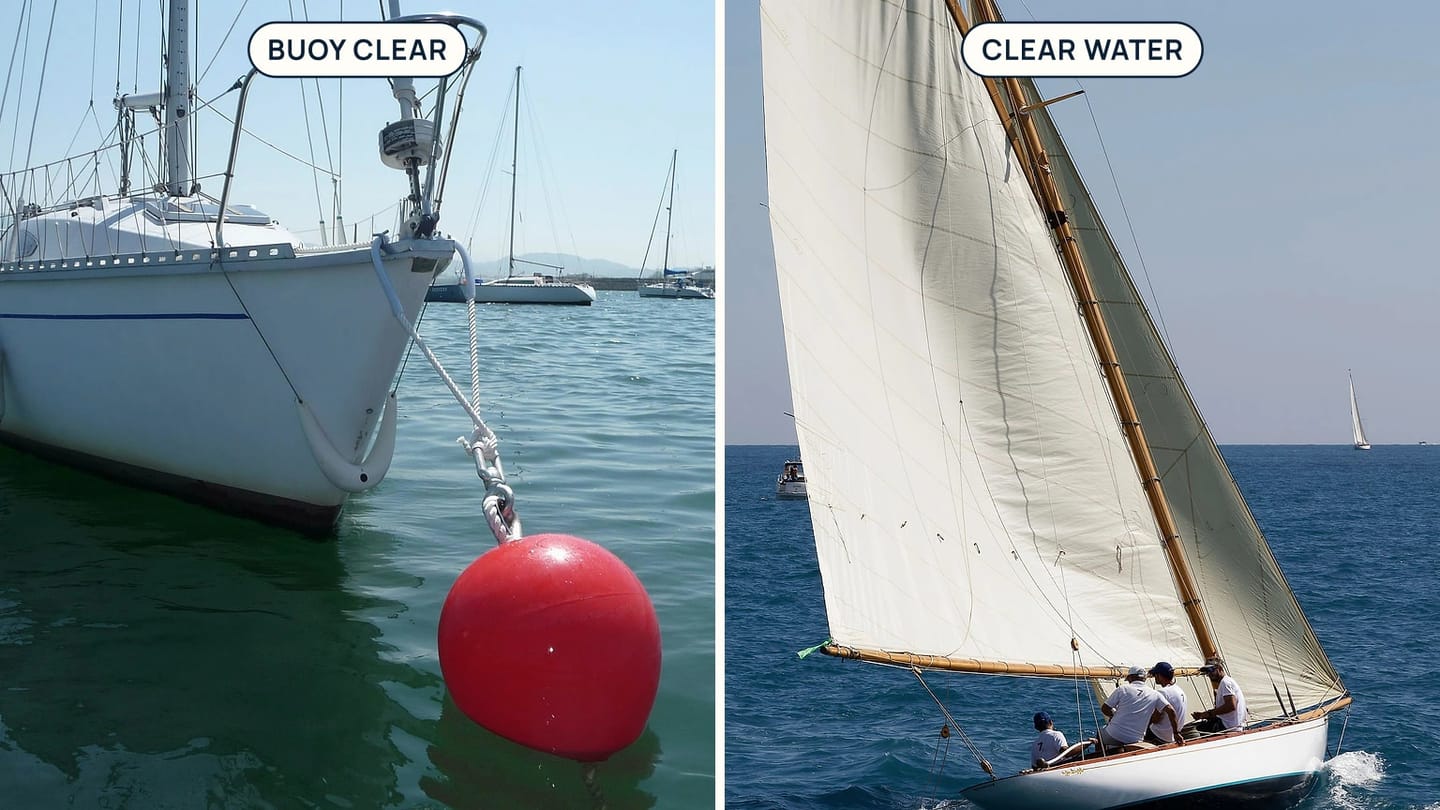
Sailing onto a mooring is a controlled approach, not a precise stunt. Observe first, prepare early, retain steerage, and leave room to try again. The boat should always have a safe way away from the buoy.
Practise the observation pass even when you intend to use the engine. It trains the eye to see force and space rather than treating the mooring as a fixed target. The same pass lets you confirm that the buoy and pickup appear serviceable from the boat. If a mooring line looks damaged, the water is too shallow, or the surrounding boats leave no clear escape, choose another plan. You do not need to prove that a difficult pickup is possible.
After each successful pickup, look at how the boat settles. Note which force has the bow and whether the line leads cleanly as the boat swings. This is useful knowledge for departure, because the first moments after release are shaped by the same wind and tide. A mooring is not a fixed berth. The boat and its line are part of a moving system throughout the stay.
Use a clear signal for the instant the pickup is secure. The helm then knows whether to hold the boat's position, reduce sail, or continue clear. Without that signal, a crew member may be working with rope while the boat is still being driven past the buoy. Rehearse the words and hand signs at a dock. A short, calm exchange is safer than two people making opposite assumptions during the final approach.
When conditions make a sailing pickup unsuitable, choose another method or another place. Strong gusts, fast current, crowded moorings, poor visibility, and unfamiliar gear all reduce the margin. The ability to identify those limits is part of the skill. It keeps a useful manoeuvre from becoming a reason to stay exposed near a buoy when the boat and crew would be safer elsewhere.
Keep the sails and sheets under control after the pickup as well. A boat stopped at a mooring can still be affected by gusts and wake while the crew is sorting the line. Secure or reduce the sail plan in an orderly way, with the helmsman watching the boat's relationship to the buoy and nearby vessels throughout.
Try it from the lesson
Can you spot the next move?
You're heading into a berth you've never used before. What's worth doing before you commit to the approach?
Why you can trust this guide
. We build each guide from public seamanship and safety sources, then teach the universal principle before any local difference.