Chart your course
How to Dock a Sailboat Without Drama
Quick answer
The short version
To dock a sailboat, read the wind and current at the berth first and plan your approach into whichever is stronger, then brief your crew on who handles which line. Come in dead slow at a shallow angle (teaching sources vary anywhere from about 20 to 45 degrees, so treat that as a range to feel out rather than one fixed number) aiming for a single point on the dock. Swing parallel a short distance off, then stop with a deliberate burst of reverse; on the common right-handed propeller, that same burst kicks the stern in toward a port-side-to landing. Keep dock lines led outside everything on deck, fenders down, and let the crew step off at deck level instead of jumping.
Nothing rattles a new boat handler quite like a dock rushing up with no brakes to lean on. But coming alongside is a sequence you can learn, not a reflex you either have or don't: read the conditions, hold a controlled approach, let the boat's own controls do the slowing, and bring the crew in on the plan before anyone touches a line. Every piece of that sequence is ordinary boat handling on its own; it's doing them in order, every time, that turns a tense moment into a routine one. This guide walks through that order: plan, approach, land, and secure, plus the two wind cases that change the details.
Plan Before You Turn In
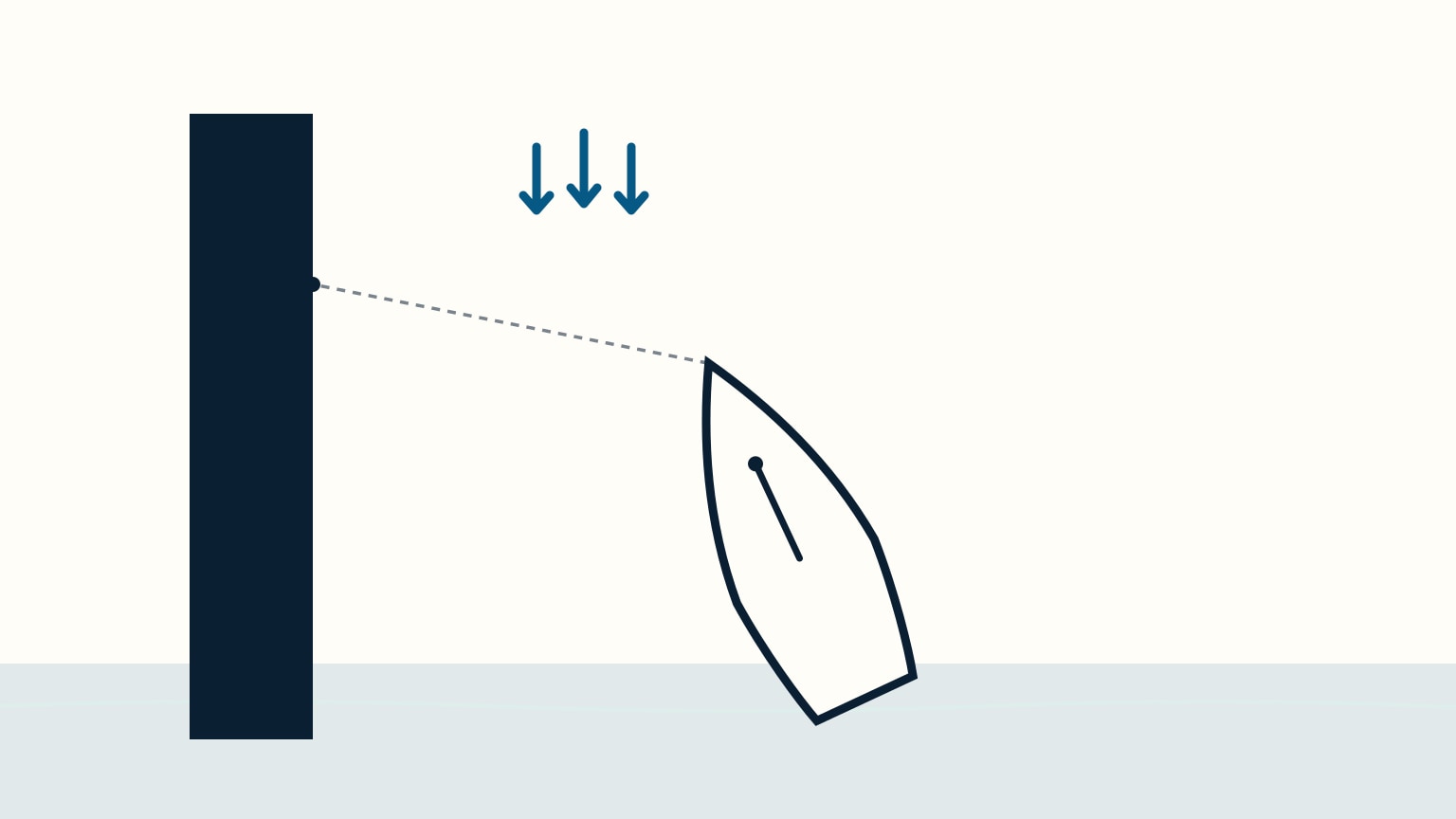
Before you turn toward the dock, read the wind and current at the berth and plan your approach into whichever one is stronger: that force does more to slow and steer the boat than anything else once your own speed comes off. Brief the crew before you start in: who steps off, which line they take, and what the plan is if the first look at the approach doesn't feel right.
Keep an escape route open the entire way in. If the approach gets crowded, the angle drifts off your aim point, or anything about it stops feeling controlled, moving clear and coming around again is the standard advice, not a sign you got it wrong. Treat a go-around as the plan working, not the plan failing.
Hold a Shallow Approach and Aim for One Point
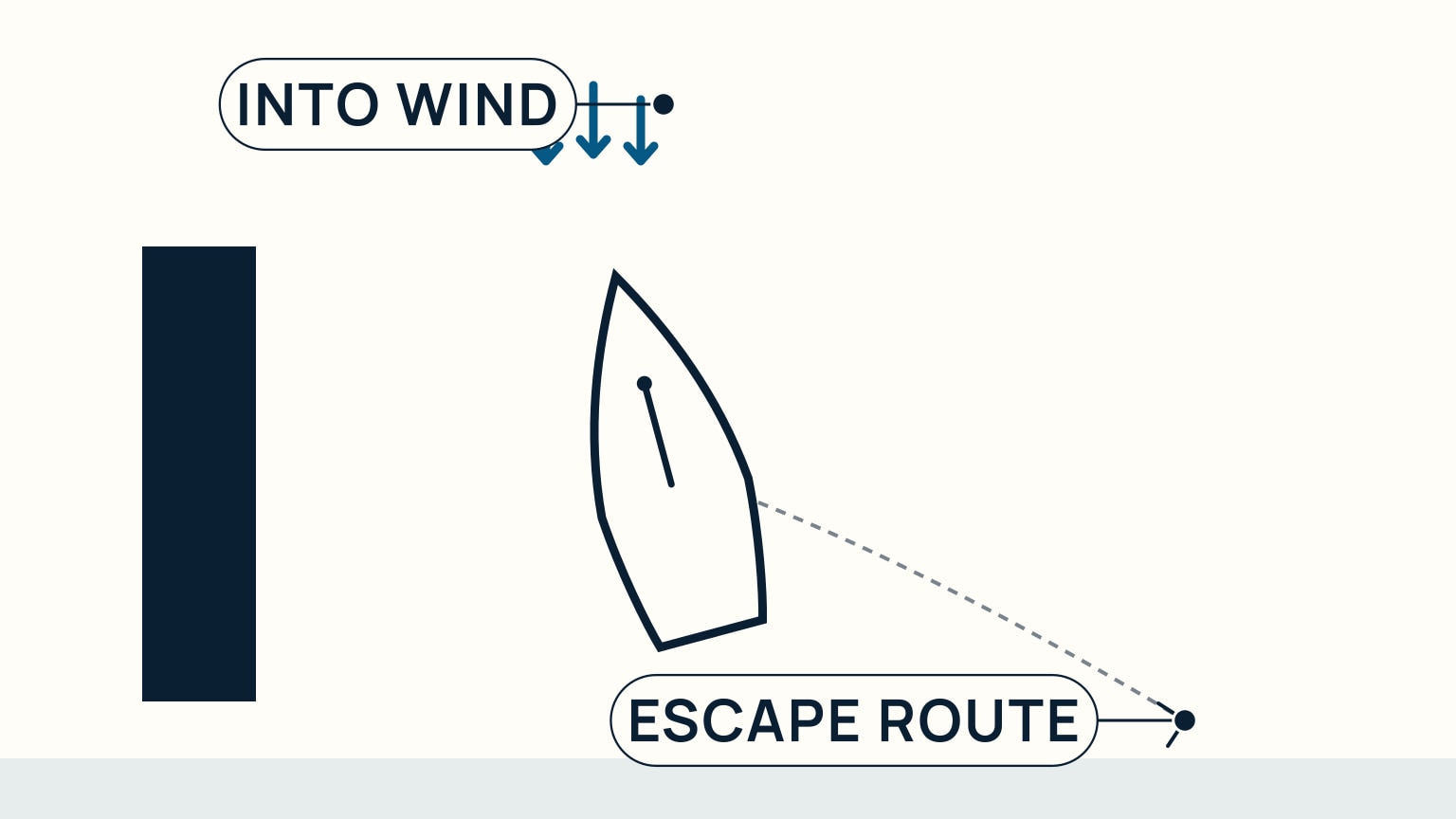
Once you're committed to the approach, keep the angle shallow. Exactly how shallow depends on who you ask: published guidance runs anywhere from about 20 degrees up to 45 in calm conditions, so a beginner is better served treating that as a band to work within than chasing one "correct" number. The shallower end is the easier starting point: it gives you more time to judge your speed and more room to bail out if something looks wrong.
Pick one specific point on the dock and aim for it, rather than steering vaguely at the dock as a whole. Holding two fixed reference points in line (a piling and a building corner, say) makes that aim point easy to hold steady even as wind or current nudges the boat around. Keep your speed dead slow the entire way in, controlled with short bursts of throttle and a return to neutral rather than one steady setting.
Swing Parallel, Then Stop With the Prop-Walk Tuck
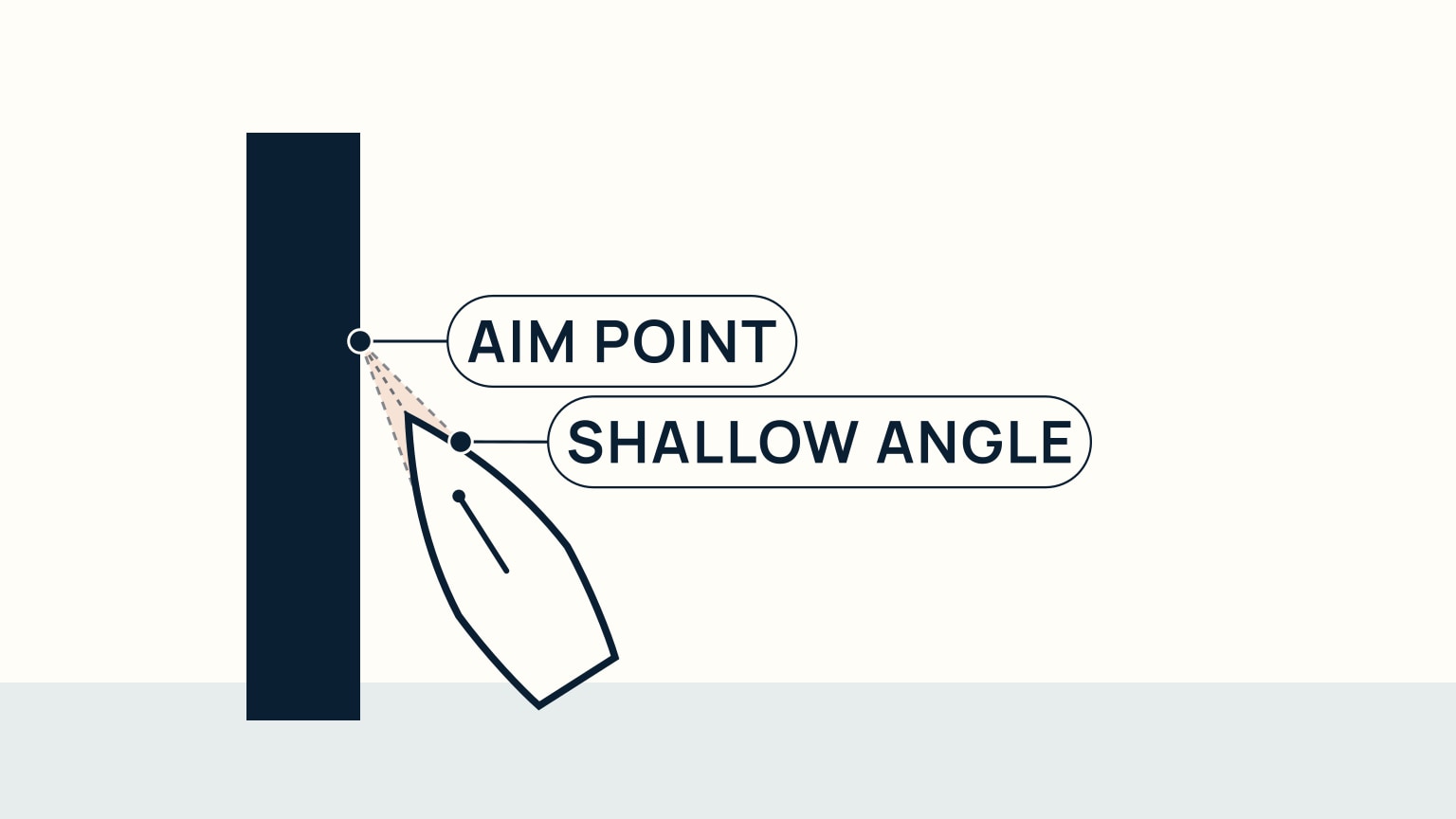
As you close the last stretch, swing the boat parallel to the dock a short distance off it, rather than trying to arrive already touching. From there, stop the boat's forward motion with one deliberate burst of reverse throttle. Coasting alone may not stop the boat at the target.
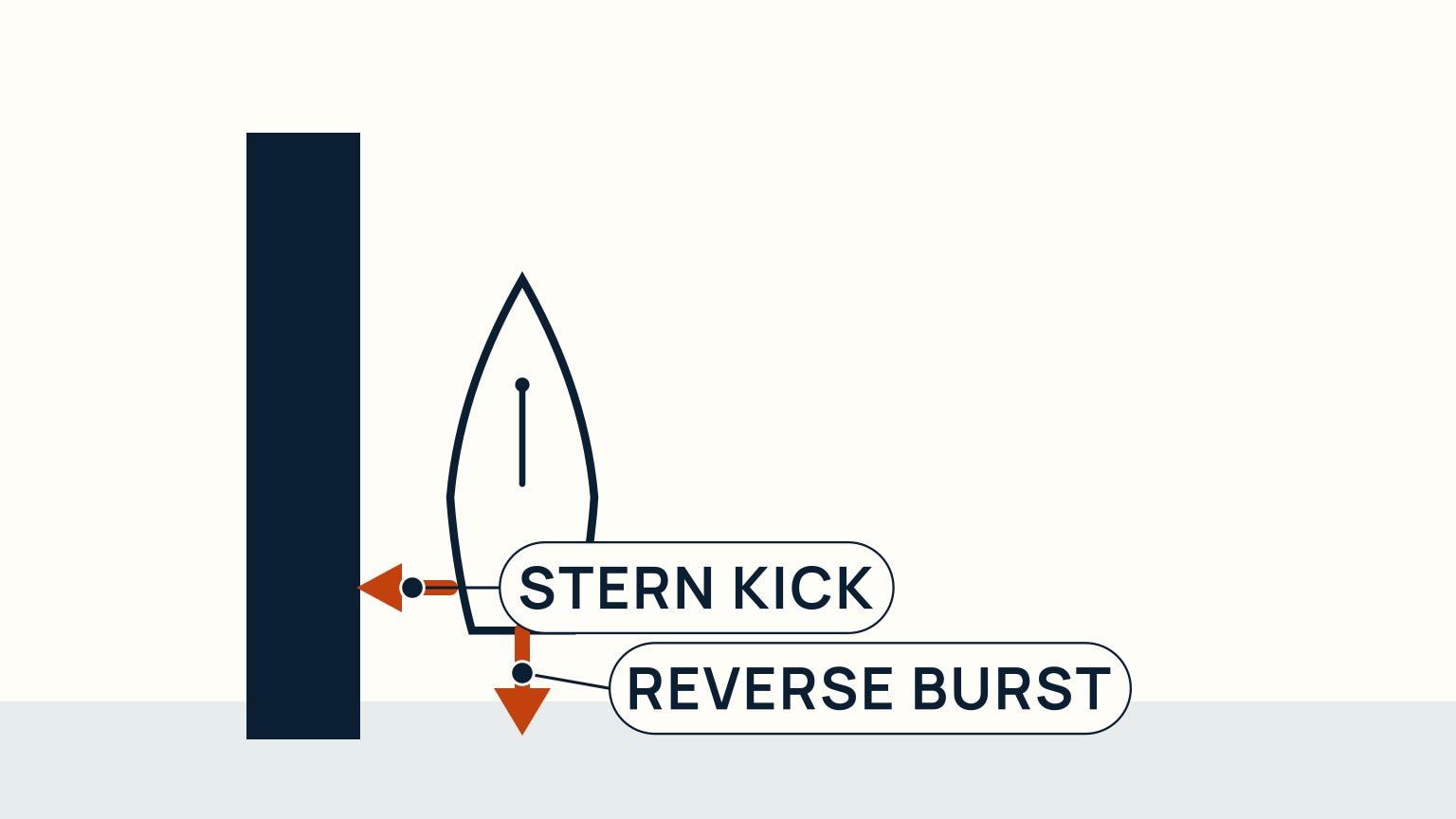
That same reverse burst does double duty on the common right-handed propeller: it also kicks the stern sideways to port, a quirk called prop walk. Land port-side-to, with the dock on your boat's left, and that kick tucks the stern in against the dock instead of fighting you. A left-handed propeller is the mirror image and favors a starboard-side-to landing instead. Either way, a predictable kick can help finish the landing.
Get Lines, Fenders, and Crew Ready
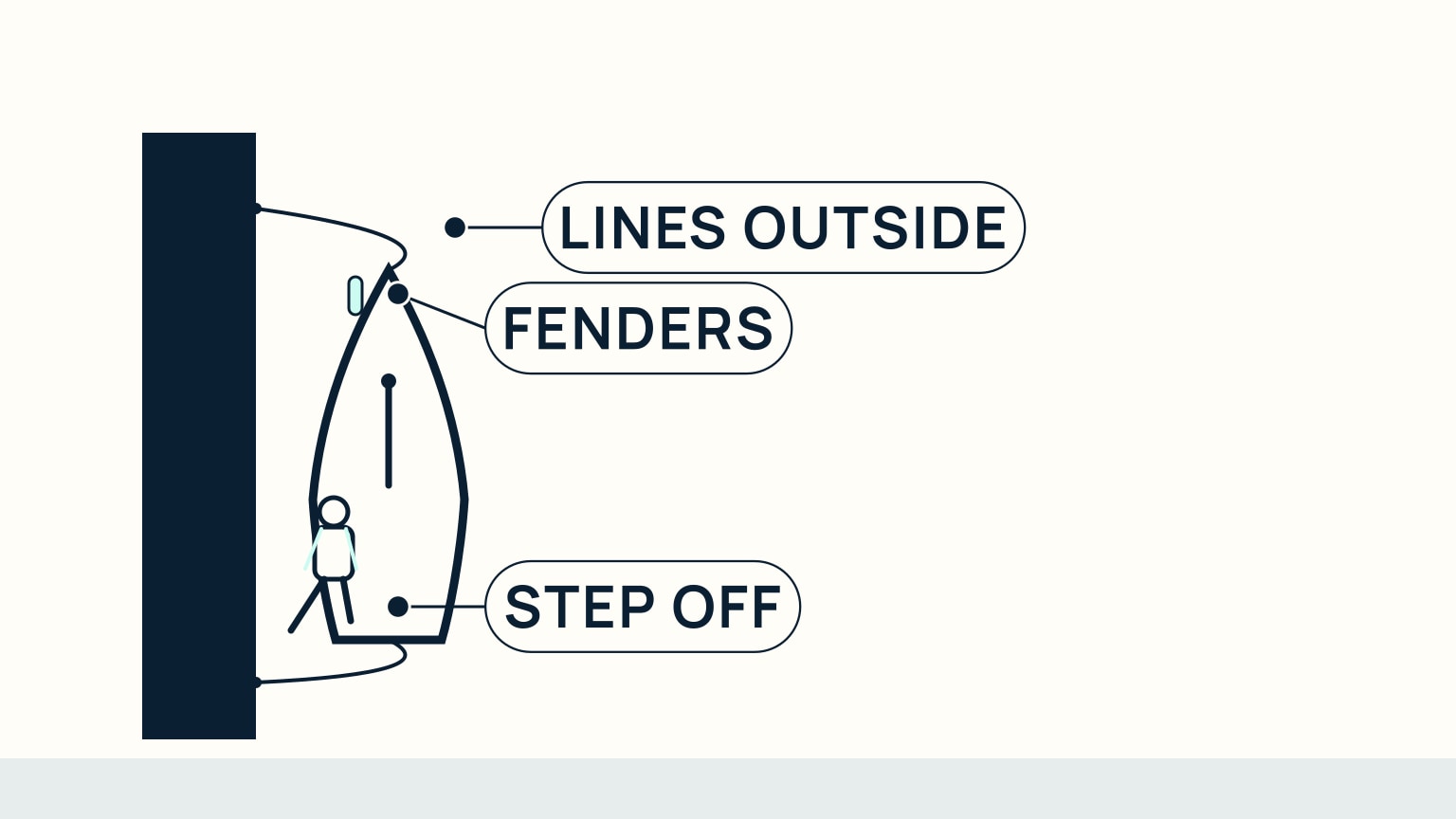
None of the boat handling above matters if the deck isn't ready before you touch the dock. Fenders go down on the way in, positioned so the hull meets them instead of the dock. Dock lines lead outside everything (outside the lifelines, stanchions, and shrouds), coiled and ready so a line can be thrown, handed across, or stepped off with the instant it's needed, without snagging on deck hardware first.
The crew member handling a line steps off at deck level once the boat is genuinely alongside and under control, or hands the line to someone already on the dock. They never jump for it. No line, hand, arm, foot, or leg should take the impact meant for a fender. A moving hull can injure a person against something solid, so let the fender take the contact.
Adjust for Wind Off the Dock or Onto It
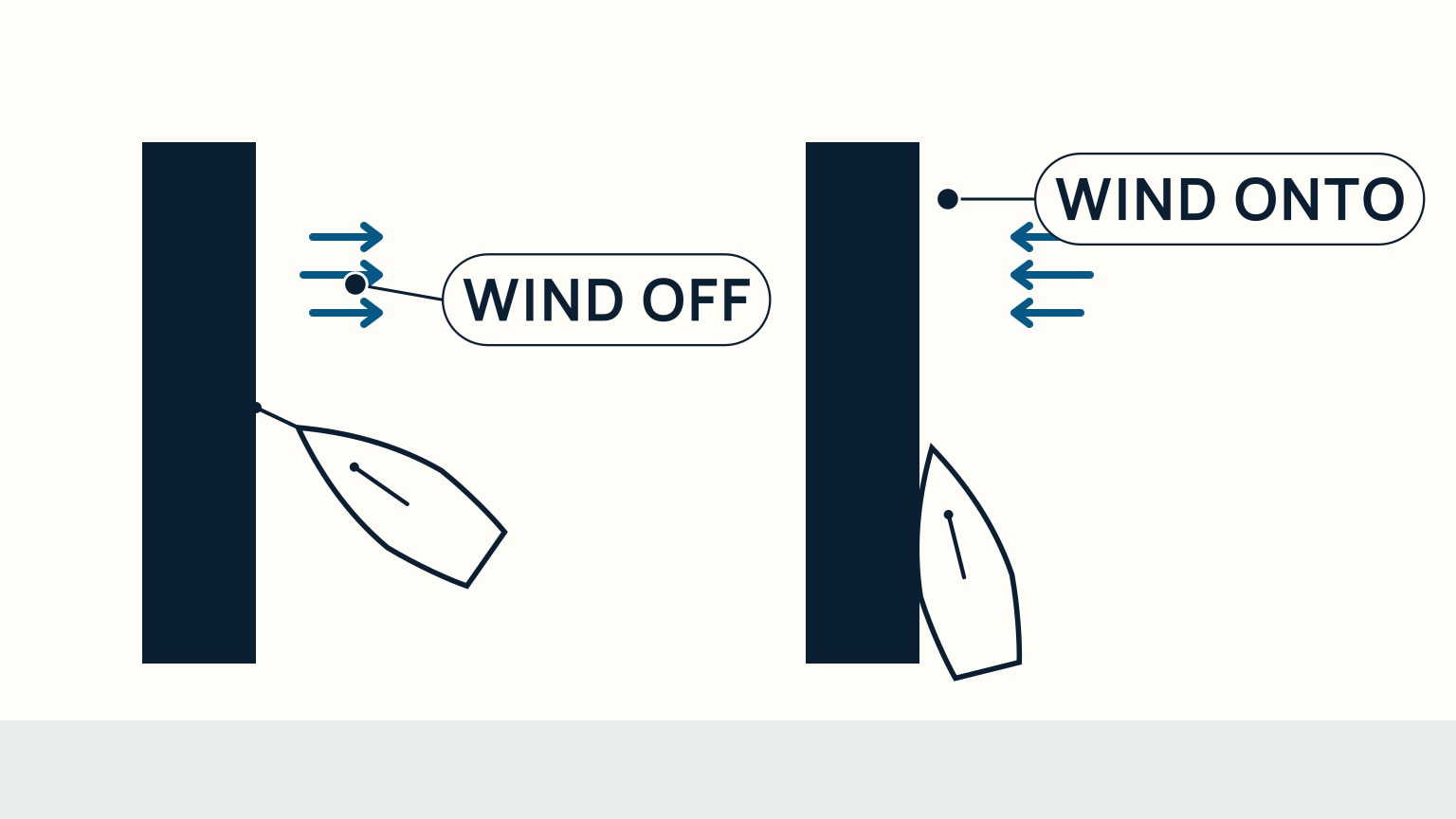
Wind or current blowing you off the dock steals your approach angle back the moment your speed drops, so come in steeper than the calm-conditions range and get a bow line onto the dock quickly once you're alongside, before the wind can walk the bow back off before the rest of the boat is secured.
Wind or current blowing you onto the dock works with you instead: come in shallower and closer, nearly parallel, and let the last short distance happen on its own as the wind or current carries you the final bit of the way, fenders already down to take that contact. Same plan either way: read which case you're in before you commit to the angle.
Rehearse the stop before the approach
In clear water, learn how the boat responds at idle, in neutral, and with a short controlled use of reverse. Note the delay between control input and boat response. Wind and current will change the result, so this is a familiarization exercise rather than a fixed stopping distance.
Then brief one normal approach and one escape. Name the target point, intended side, line that goes first, and the moment when the helm will abandon the attempt. A go-around is an ordinary manoeuvre. It becomes difficult only when the crew waits until the boat has no room left.
Give every line one job
Rig fenders for the actual height and place lines outside lifelines before entering the berth. Assign one person to each first line and state whether they should pass, hold, or make it fast. Crew should step onto the dock only from a safe position. They should never jump or use a limb to stop the boat.
If the wind pushes the boat away, a line secured early can help control the position while the remaining lines are handled. If wind pushes the boat onto the dock, a close, slow, nearly parallel approach reduces the distance it can carry the boat sideways. The spring-lines guide explains how fore-and-aft lines limit movement once contact is made.
Review the approach while it is fresh
After securing, compare the planned track with what happened. Did the boat turn sooner or later? Did prop walk move the stern? Was a fender or line out of reach? Change one part of the next brief. Avoid compensating for every error with more speed.
For a first charter or unfamiliar boat, practise the controls before the marina becomes crowded. The first charter checklist includes that handover work. Slow preparation, a shared stop point, and permission to go around remove much of the drama from docking.
Docking reads like a long list of separate things to remember the first few times you do it: read the wind, brief the crew, hold the angle, aim the bow, swing parallel, time the reverse, ready the lines, watch the crew step off. Do it enough times and it collapses into one calm motion, the same way any other maneuver does once you've felt it work a handful of times.
If you'd like to build that sequence somewhere lower-stakes than a moving dock, SailStarter's beginner lessons cover coming alongside and the close-quarters boat handling that sets it up, one short step at a time. Try a lesson and see how quickly a docking approach stops feeling like a countdown to a crash.
Make the final check at the point where a go-around is still easy: speed low, lines ready, fenders correct, berth clear, and every crew member in a safe position. If any answer is missing, leave and set up again. This is normal boat handling, not a failed approach.
Try it from the lesson
Can you spot the next move?
You're heading into a berth you've never used before. What's worth doing before you commit to the approach?
Why you can trust this guide
. We build each guide from public seamanship and safety sources, then teach the universal principle before any local difference.