Chart your course
What to Wear Sailing as a Beginner (Layers, Footwear, Sun Protection)
Quick answer
The short version
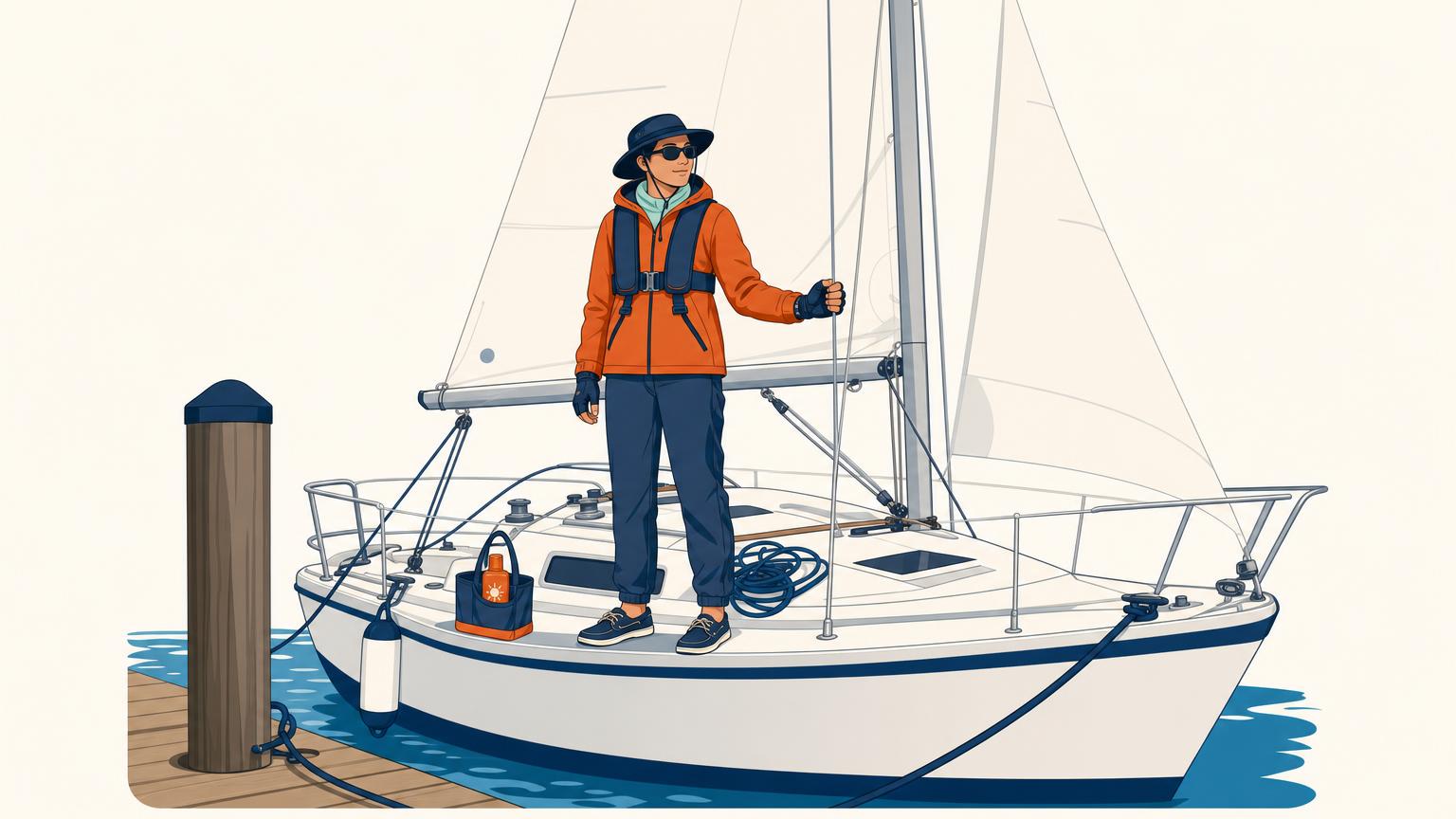
For a first sail, wear light layers you can add or remove: a synthetic or merino base layer, a fleece or sweater, and a wind- or water-resistant outer layer. Avoid cotton when you can because it holds water and dries slowly. Choose closed-toe, non-marking shoes with slip-resistant soles. Add sunscreen, sunglasses with a retainer, and a hat that will stay secure in the wind. Sailing gloves are optional, though they can improve grip and protect your hands when handling lines. Ask the skipper whether dinghy sailing or the expected weather calls for a wetsuit or other extra kit.
You do not need a sailing-specific wardrobe for your first outing. Walking, hiking, or exercise clothes can often get you started. The useful question is whether each piece will stay comfortable after breeze, spray, and movement aboard. Pack so you can change one layer at a time rather than relying on one heavy coat. Check your shoes before stepping aboard, secure anything the wind could take, and follow the skipper's advice for the boat. A small yacht and a beach-launched dinghy can call for very different clothing. The sections below turn those choices into a short head-to-toe packing routine.
What Layers Should You Wear Sailing?
Start with three light layers that you can add or remove:
- Base layer: a synthetic or merino wool top next to your skin. It moves moisture away and helps you stay comfortable.
- Mid layer: a jumper or fleece for warmth.
- Outer shell: a wind- or water-resistant jacket for breeze, rain and spray. A hood is useful.
Conditions on the water can change quickly and often feel cooler than conditions on land. Several thin, removable layers let you adjust without carrying one bulky coat.
You probably already own suitable clothing. Hiking, walking or other outdoor layers can work well for a first sail; they do not need to carry a sailing label.
What you need also depends on the boat. On a yacht, ordinary layers may be enough. Dinghy sailing brings you closer to the water, so ask the club or skipper whether they expect a wetsuit, waterproof clothing or other boat-specific kit.

Why Should You Avoid Cotton on a Boat?
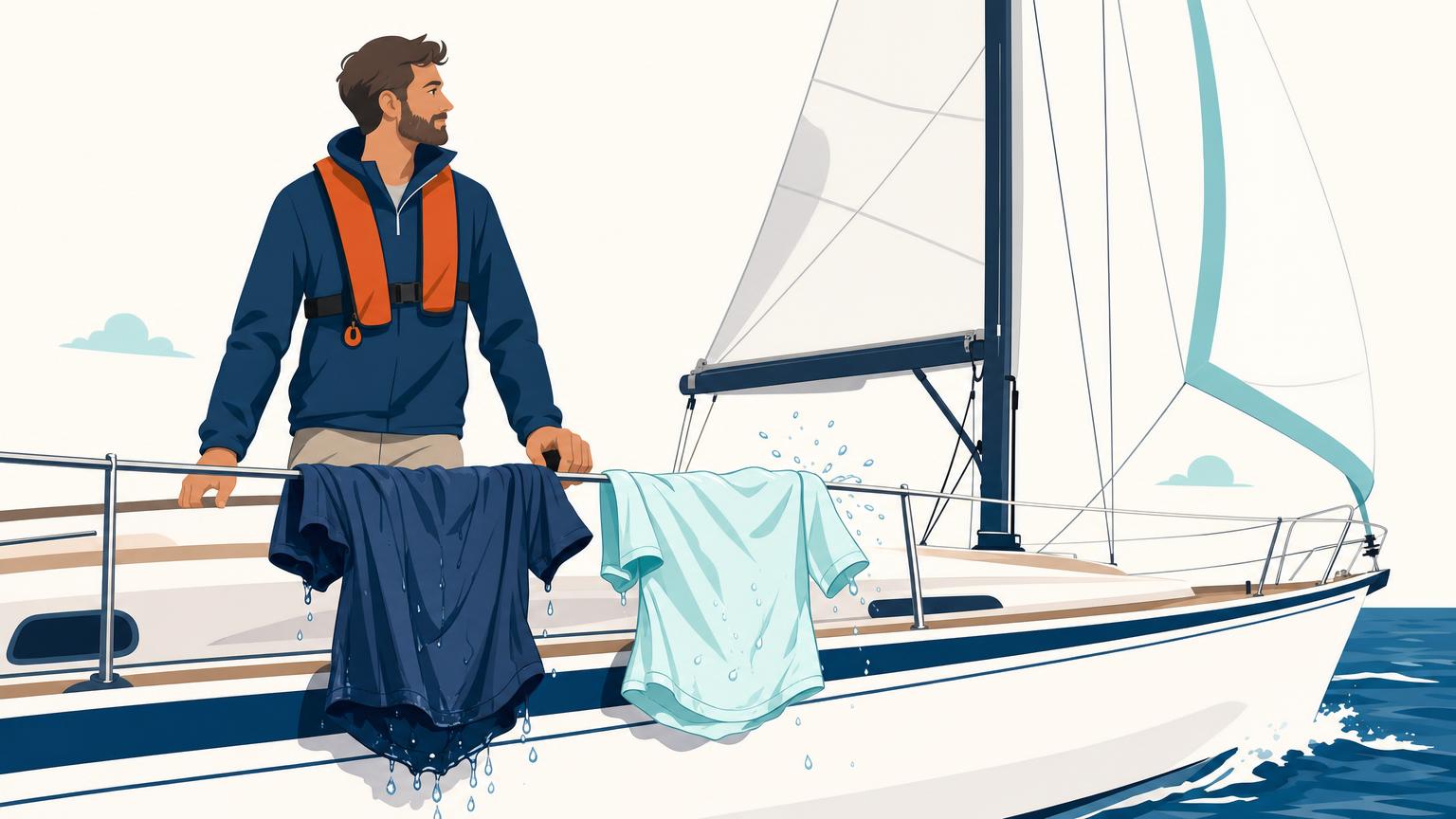
Cotton feels comfortable when it is dry. Once it absorbs sweat or spray, it holds that moisture, dries slowly and loses much of its warmth. A damp cotton shirt next to your skin can soon feel cold and uncomfortable.
For your base layer (the clothing directly against your skin), choose a quick-drying synthetic fabric such as polyester, nylon or polypropylene. These fabrics absorb less water and move moisture away from your skin. Merino wool is another good option because it manages moisture while staying comfortable.
You do not need specialist sailing clothes. A synthetic running top, hiking shirt or sports layer you already own can work well. Check the fabric label before you pack. The simple aim is to keep wet cotton away from your skin when you can.
Which Shoes Work on a Wet Deck?
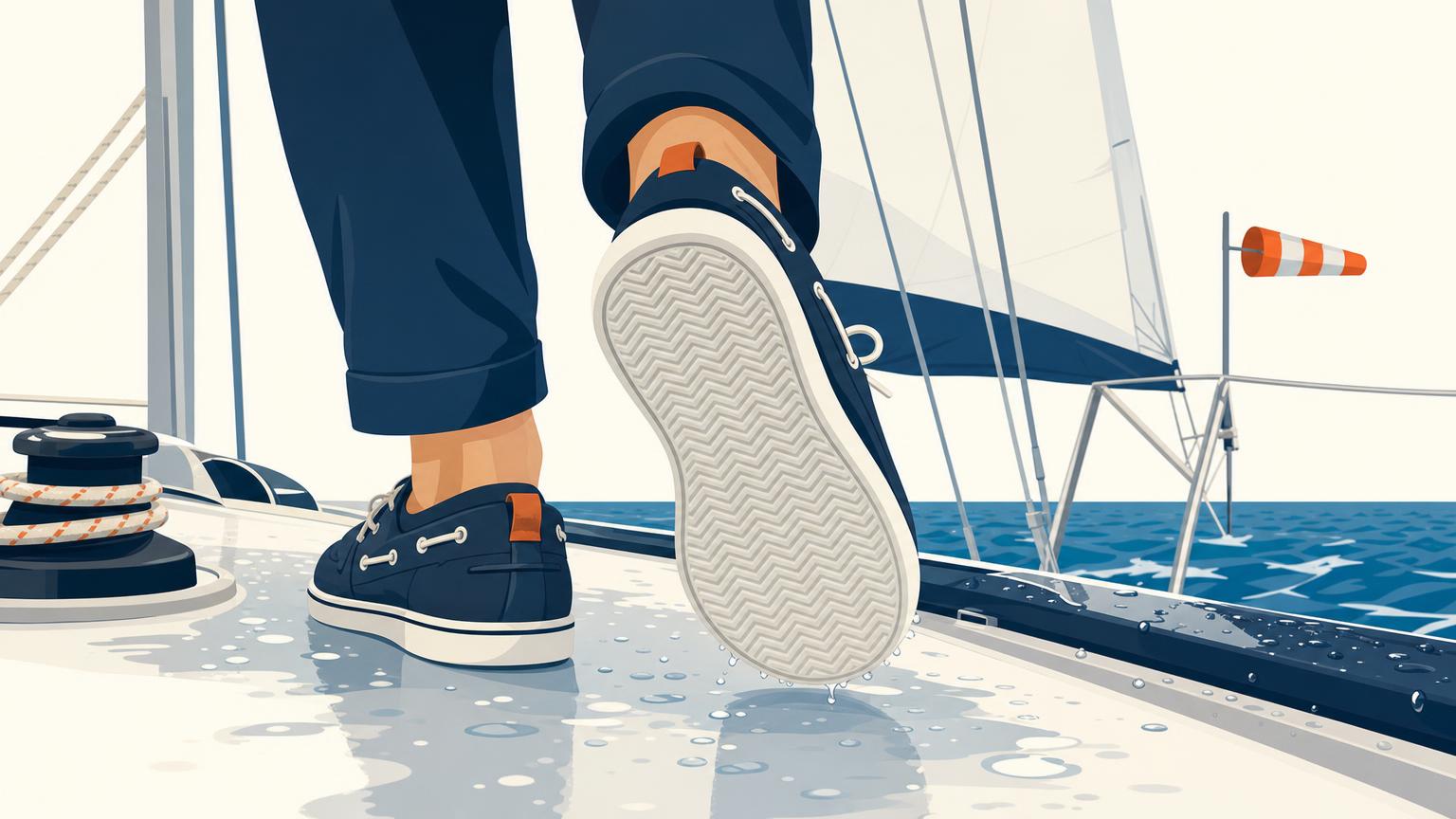
Wear secure, closed-toe shoes with slip-resistant, non-marking rubber soles. You do not need special sailing shoes for a first trip; suitable trainers can work well.
The sole needs to do two jobs: grip a wet deck and avoid leaving scuffs. If you are unsure whether your shoes are suitable, ask the boat owner or skipper before you step aboard.
How Do You Prepare for Sun, Glare, and Wind?
Water reflects ultraviolet (UV) rays, adding to the direct UV that reaches you. A cool breeze or cloudy sky does not remove that exposure, so plan sun protection even when the day does not feel hot.
Wear a hat that shades your face and stays secure in the wind. A chin strap or other secure fit can help. Cover more skin with a long-sleeved top and lightweight trousers when conditions allow.
Wear sunglasses and add a glasses retainer, a strap that keeps them attached if they slip.
Polarized lenses reduce glare reflected from the water, which can make the view more comfortable.
Finish with sunscreen on exposed skin and follow the product label.

Do You Need Sailing Gloves?
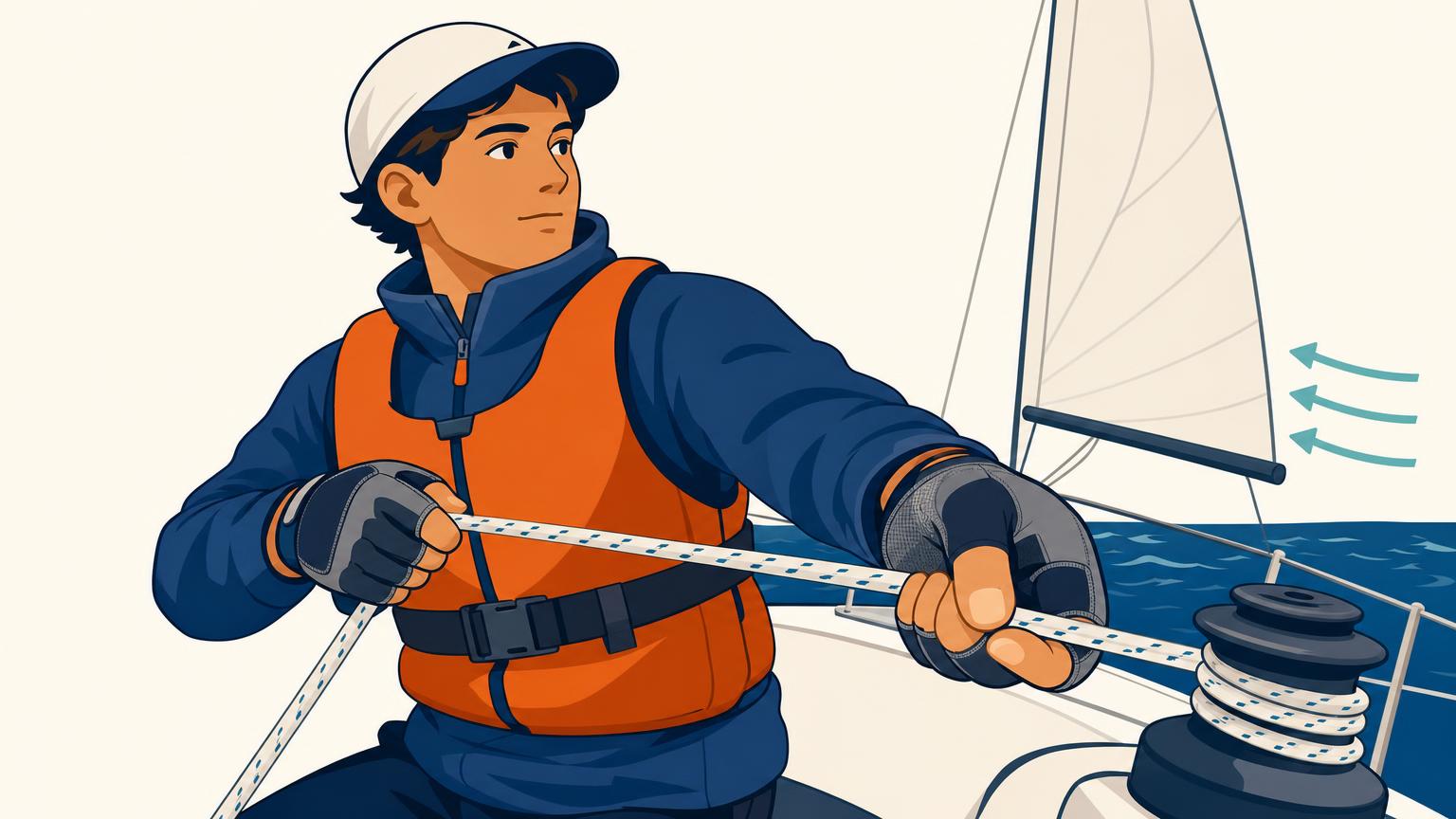
Sailing gloves are optional, but they can make line handling more comfortable.
Sailing gloves improve grip on wet lines and help protect your hands from rope burn.
You will usually see two main styles. Short-finger gloves leave your fingertips free, giving you more dexterity, the ability to make small, precise movements. That can help when you tie knots or handle small fittings. Full-finger gloves cover more of your hands, so they offer greater protection and warmth.
You do not need to buy either style before your first sail. Gloves are simply a useful option if you expect to handle lines often or want extra comfort for your hands.
Pack for the water, wind, and return
Check the official forecast for the whole outing and ask the skipper what the boat supplies. Pack thin layers that can be added or removed, a wind and rain outer layer suited to conditions, and a dry change kept in a protected bag. Avoid cotton next to the skin when getting wet or cold is possible because it holds water and loses insulating value.
Boat type matters. A dinghy session may expect clothing that can be immersed, while a yacht trip may focus on spray, wind, and standing watch. Follow the school or skipper's list and current local requirements. The dinghy versus keelboat guide explains why the first platform changes the experience.
Check footwear on the actual deck
Choose closed-toe shoes with good wet grip and non-marking soles. Make sure they fit securely and do not catch on deck gear. A dark or smooth athletic sole may mark or slip even if the shoe is comfortable ashore.
Keep a dry pair for after the sail when practical. For colder or wetter trips, use suitable sailing boots and socks as conditions require. Do not buy specialist footwear before checking what the course supplies and recommends.
Secure sun protection
Use protective clothing, a hat that will stay on, sunglasses with suitable UV protection and a retainer, and sunscreen according to its label. Water and sea foam can add reflected ultraviolet exposure, and light cloud does not remove the need for protection.
Polarized lenses can reduce glare, but polarization alone does not prove UV protection. Check the label. Reapply sunscreen as directed, especially after water or heavy sweating, and remember that no sunscreen replaces clothing, shade, and eye protection.
Decide whether gloves help
Gloves can improve grip and protect hands from friction while handling lines. Short-finger designs preserve more fingertip dexterity. Full-finger designs add coverage and can add warmth. Neither style makes it safe to wrap a loaded line around your hand or place fingers near a winch, block, or cleat.
Borrow or try a pair before buying when possible. A glove that is bulky, loose, or slippery can make small fittings harder to handle. The right choice depends on the work, weather, fit, and personal comfort.
Use a first-sail packing check
Lay out layers, outerwear, shoes, hat, sunglasses, retainer, sunscreen, water, any medicine, and a dry bag. Add only the equipment requested by the skipper or school. Ask about flotation rather than assuming your own item is suitable for the boat and activity.
You do not need a complete sailing wardrobe to begin. Suitable ordinary layers and shoes may cover a mild first outing. Buy specialist gear after you know which conditions and boat you will sail regularly. That keeps the kit tied to real use instead of a generic shopping list.
You now have a simple checklist you can use before any sail: adaptable layers, little or no cotton, grippy closed-toe shoes with non-marking soles, sun and eye protection, and optional gloves for handling lines. You do not need a new sailing wardrobe for your first outing. Start with suitable clothes you already own, then adjust for the weather, the boat, and guidance from your club or skipper. Secure your hat and sunglasses, and check that your shoes grip without scuffing the deck. With that routine in place, you can focus more on learning and enjoying your time aboard. Try SailStarter's short beginner lessons to keep building your confidence for the water.
Pack the dry change even when you do not expect to use it. Keep it sealed and accessible after the boat returns, rather than buried under wet gear. Comfort on the trip home is part of the clothing plan.
For a family outing, add the supervision and comfort checks in sailing with children.
Try it from the lesson
Can you spot the next move?
You're packing for a warm-forecast afternoon sail. Cotton T-shirt and jeans, or a synthetic/merino base layer?
Why you can trust this guide
. We build each guide from public seamanship and safety sources, then teach the universal principle before any local difference.
- rya.org.uk
- americansailing.com
- rnli.org
- nps.gov
- nrs.com
- boatus.org
- parks.wa.gov
- hellyhansen.com
- gillmarine.com
- gillmarine.com
- gillmarine.com
- en.wikipedia.org
- en.wikipedia.org
- en.wikipedia.org
- yachtingworld.com
- boatsetter.com
- who.int
- epa.gov
- epa.gov
- epa.gov
- cdc.gov
- cdc.gov
- cdc.gov
- fda.gov
- aao.org
- aao.org
- aao.org
- skincancer.org
- skincancer.org
- cancercouncil.com.au
- fisheriessupply.com
- lansingsailing.org
- walmart.com
- yachtingworld.com
- commodore-yachting.com
- yorviksailing.com