Chart your course
Pan-Pan vs. Mayday — When to Use Each Call
Quick answer
The short version
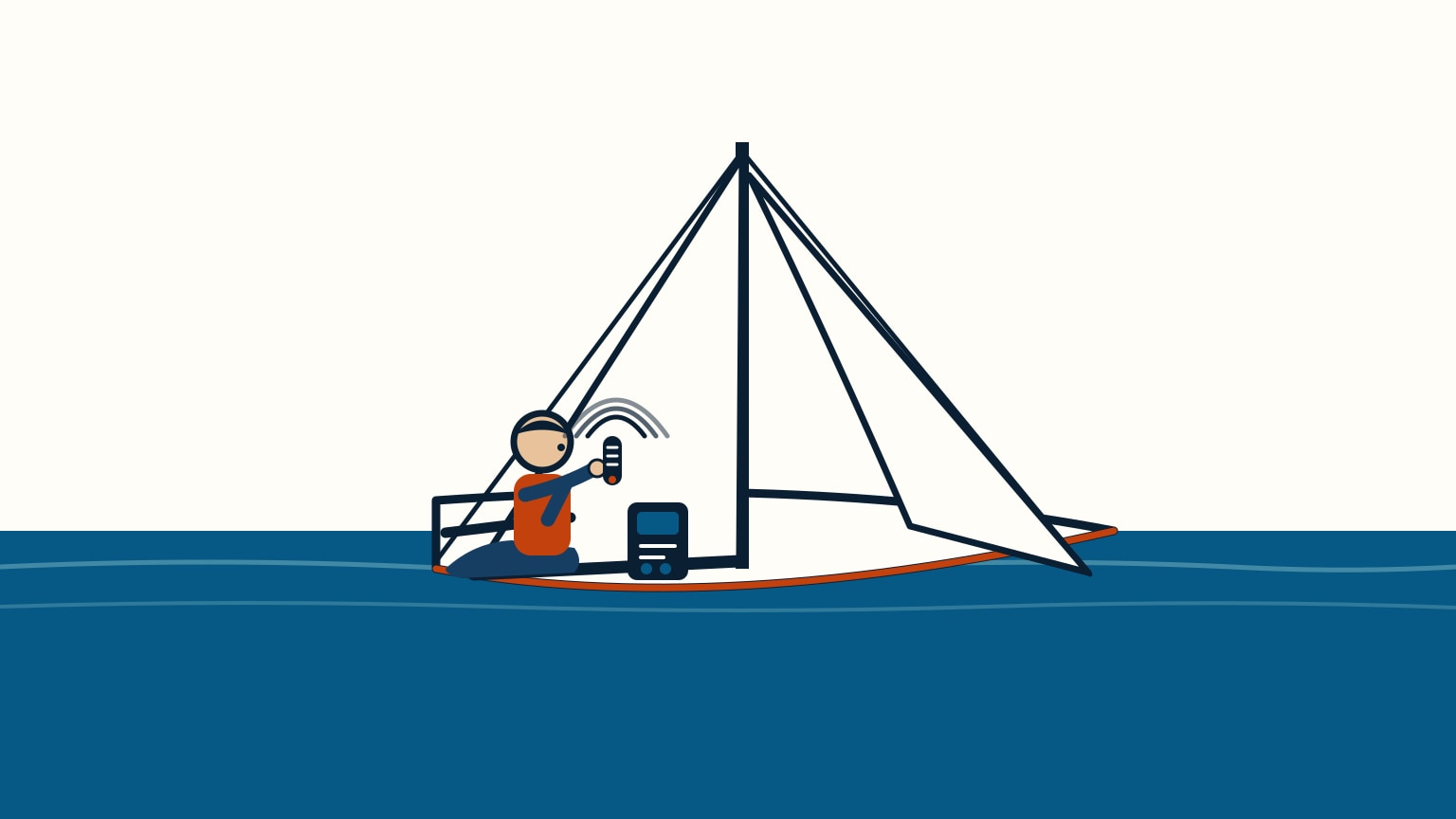
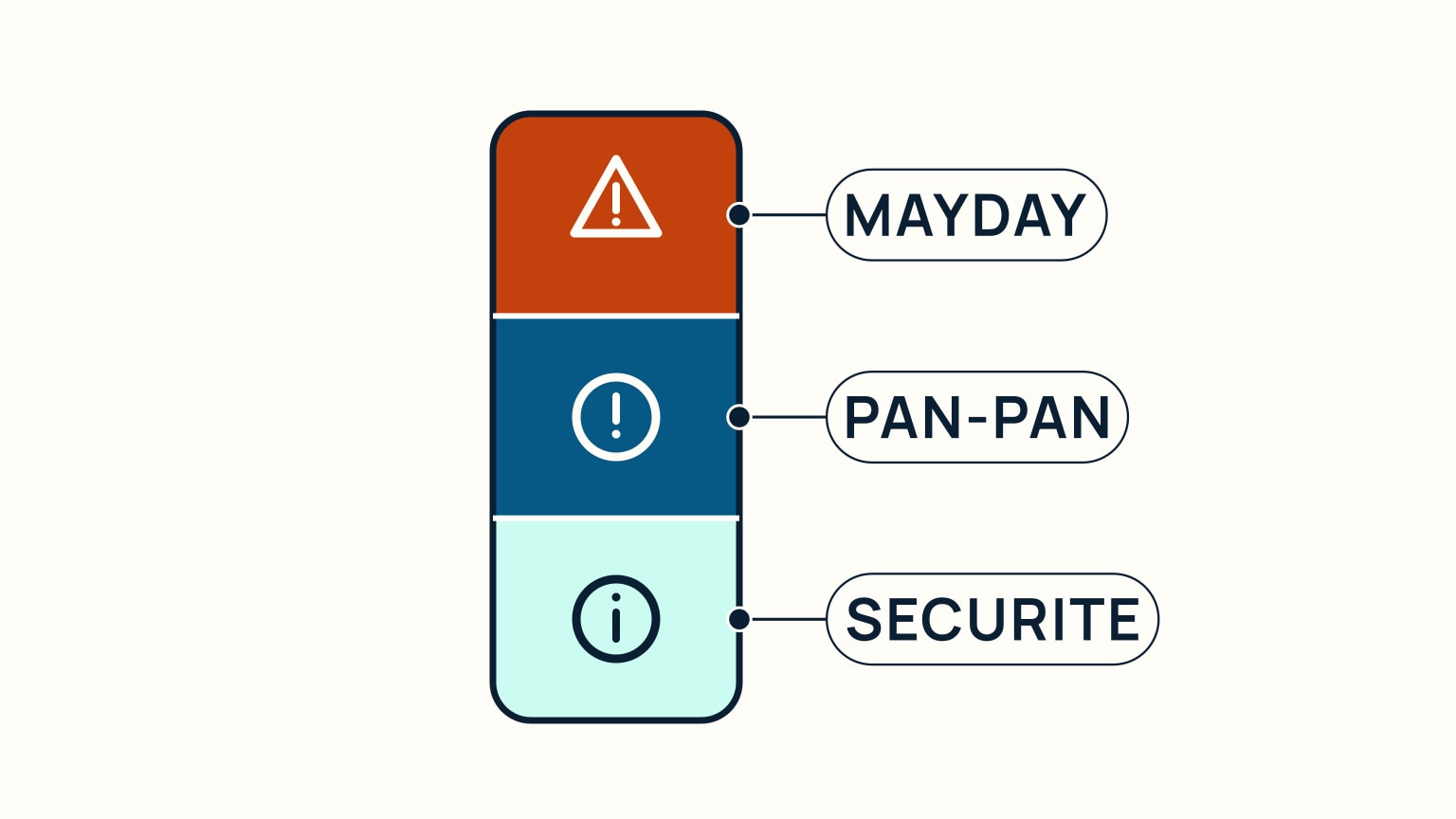
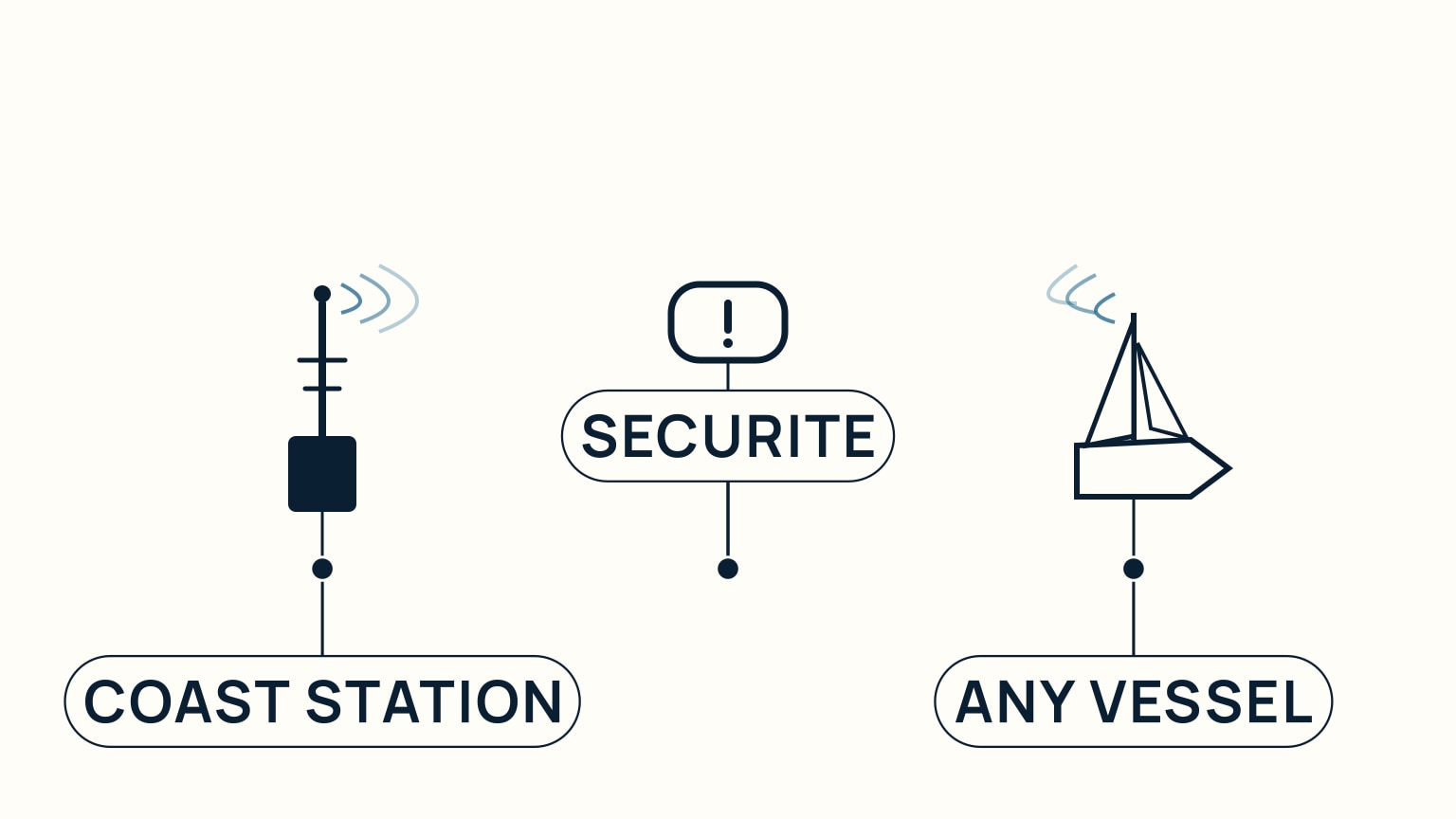
Pan-Pan and Mayday sit on different rungs of a three-level priority ladder, and they are not interchangeable. MAYDAY is for grave and imminent danger to a vessel or the people aboard it. PAN-PAN, spoken three times ("pahn-pahn"), is one level down. Something is genuinely wrong, but the danger is not immediate: a breakdown you are safe to sit with, an injury that needs advice rather than rescue, navigation equipment that has failed and left you unsure where you are. SÉCURITÉ, spoken three times ("say-cure-ee-tay"), sits a level below that again. It is an important safety-of-navigation or weather message rather than a call for help, usually sent by a coast station but sendable by any vessel. If a Pan-Pan situation turns grave and imminent, the move is to upgrade to Mayday and say so.
Every VHF call for help starts the same way in your head: something is wrong, so you reach for the radio. What is less obvious is which word to open with. Mayday gets taught first because it is the one call nobody can afford to hesitate over, but most real situations do not clear that bar. They are serious, maybe even worth interrupting your afternoon for, without being a life-and-vessel emergency in progress. That gap is where PAN-PAN lives, and knowing it exists changes how you react: instead of choosing between overreacting and staying silent, there is a call built for this middle ground. SÉCURITÉ, one rung further down, carries the safety information that keeps everyone else's afternoon from turning into one. This guide covers when each word applies, what a Pan-Pan call sounds like, and the one moment worth remembering: when to trade Pan-Pan for Mayday.
The three calls sit on a fixed priority ladder, each with its own trigger, ask, and closing word.
| Dimension | Mayday | Pan-Pan | Sécurité |
|---|---|---|---|
| Priority tier | Distress (top) | Urgency (one below) | Safety (one below that) |
| Used when | Grave and imminent danger to the vessel or people aboard | Something is genuinely wrong, but the danger isn't immediate | A safety-of-navigation or weather message, not a call for help |
| What you ask for | Immediate assistance | Your own intended action, or the kind of help you'd like | Nothing — it's informational |
| Closing word | OVER, expecting a reply | OVER, expecting a reply | OUT, no reply expected |
| DSC distress button | Yes | No — a separate menu | Not applicable |
Three Tiers, One Radio
Marine radio distress and safety traffic runs on three priority levels, not two. MAYDAY marks Distress, the top tier: grave and imminent danger to a vessel or the people on it. PAN-PAN marks Urgency, one level down, used by definition when there is no immediate danger and immediate assistance is not required or fully justified. It still means something is genuinely wrong; it just means the danger has not crossed into grave-and-imminent territory. SÉCURITÉ marks Safety, one level down again: an important navigational or weather message rather than a request for help. The same situation can sit at different tiers depending on how much time you actually have. A boat drifting toward rocks might be Distress if it will strike them in twenty minutes, but Urgency if that is closer to four hours. Each tier opens with its own word, spoken three times (MAYDAY, PAN-PAN, or SÉCURITÉ), so whoever is listening knows immediately which kind of message is coming, before you have said anything else.
When is Pan-Pan the right call?
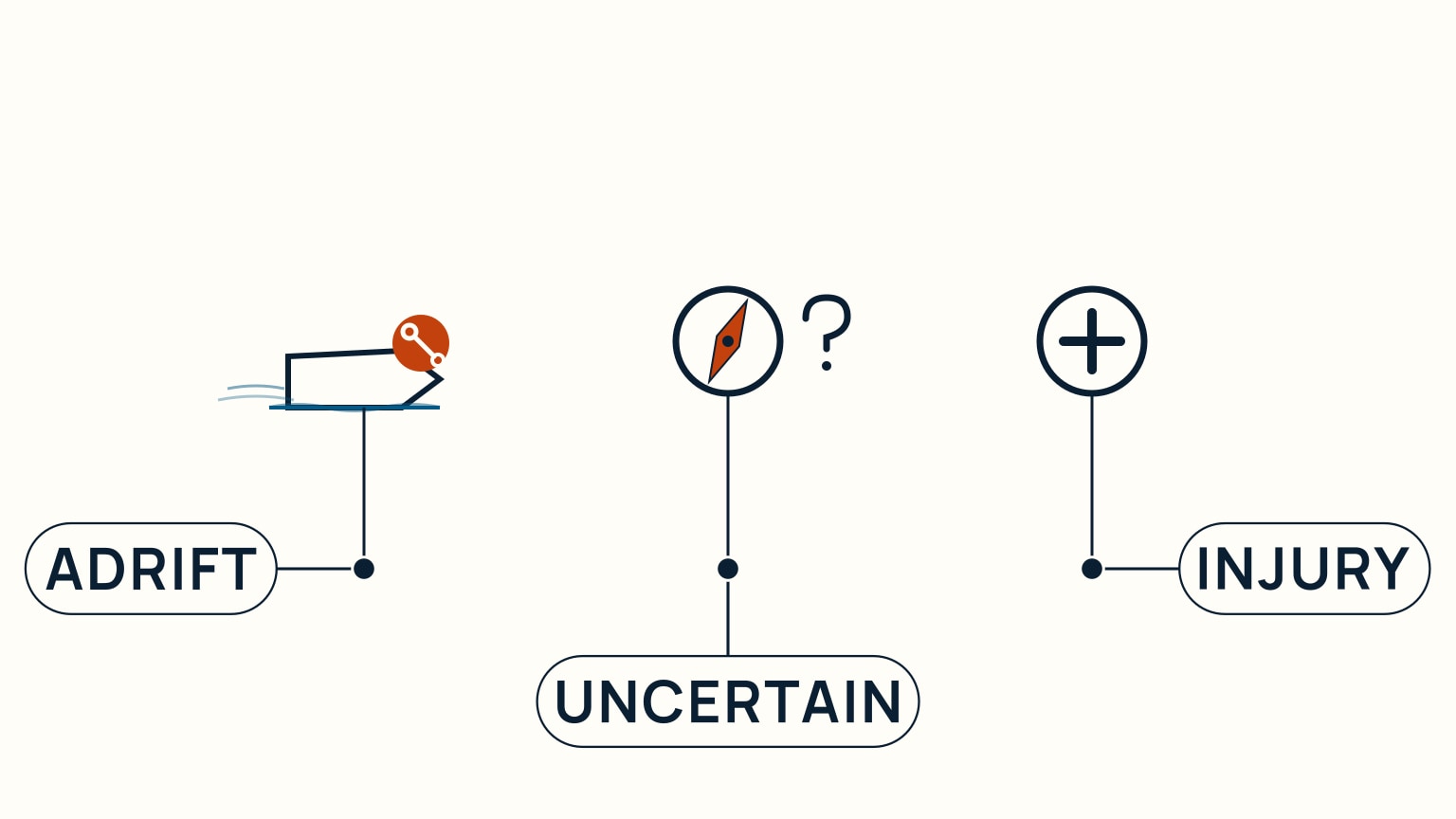
Three situations cover most of what Pan-Pan is actually for. First, a boat that has broken down, is taking a controllable leak, or is otherwise safe for now but drifting toward a hazard (a shoreline, a busy shipping channel) where the problem could still get worse before it gets better. Second, losing your navigational equipment: your GPS or chartplotter fails and you are genuinely not sure where you are, especially with a hazard somewhere nearby you cannot yet pin down. Third, a non-life-threatening injury or illness aboard, something that needs a professional opinion rather than a rescue. Training material for radio operators gives this last case its own name. A request for medical advice is a "Medico"; if someone actually needs to be taken off the boat, it is a "Medevac." The distinction matters for what you ask for in the call: a Medico only needs someone qualified listening and talking you through care aboard, while a Medevac needs a vessel or aircraft to actually come and collect the casualty. None of these situations demand the word MAYDAY, and none of them deserve silence either, because staying quiet just means nobody knows you might need a hand. Pan-Pan is the call built for exactly this stretch of ground.
What a Pan-Pan Call Sounds Like
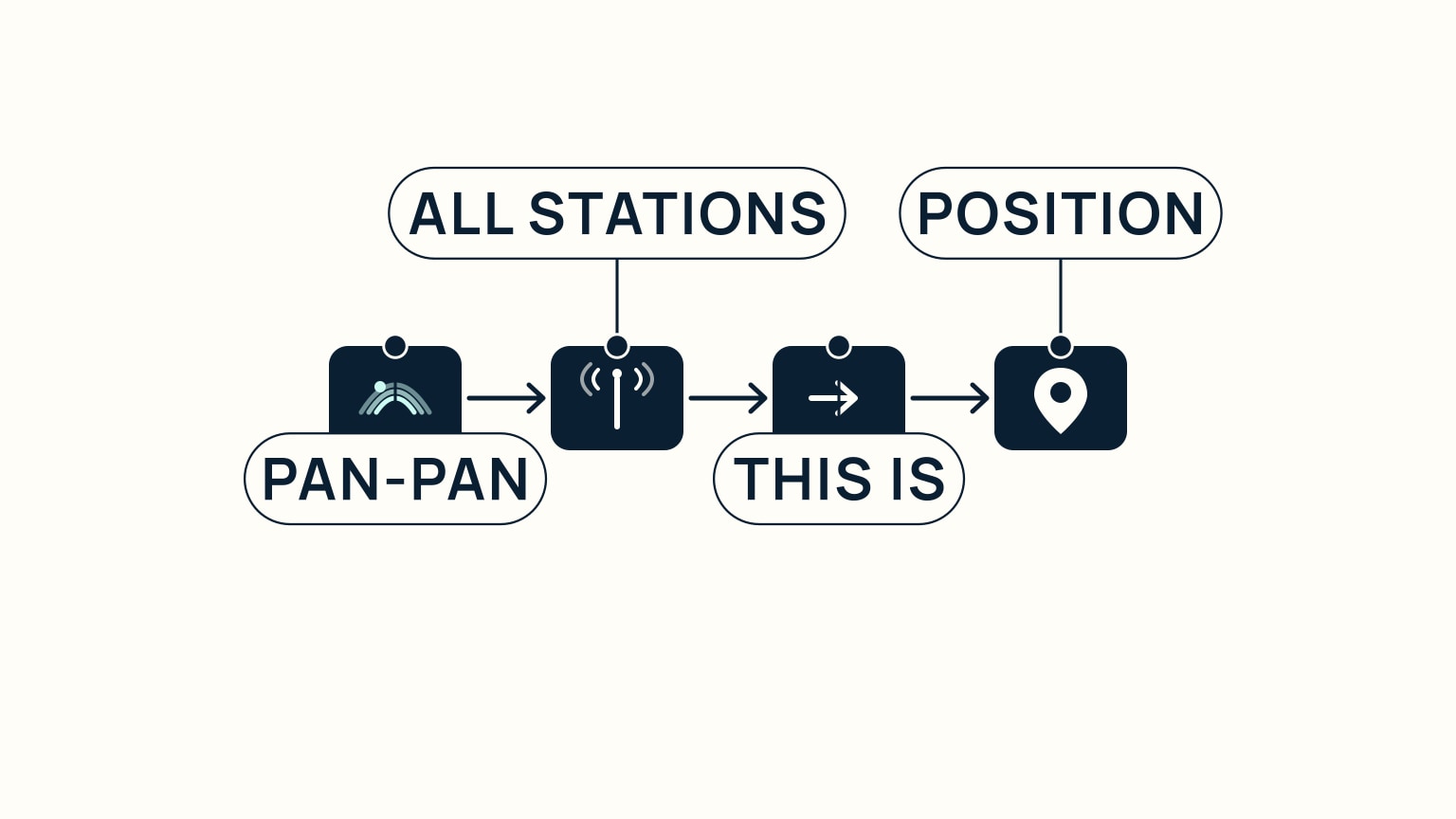
A Pan-Pan call follows almost the same shape as a distress call (SailStarter's Mayday guide walks through that structure in detail), just with a different opening word and a different closing ask. Start with PAN-PAN spoken three times, then ALL STATIONS spoken three times, or a specific station's name if you are calling one directly. Say THIS IS, then your vessel's name and any call sign or MMSI you carry, the same identification a distress call opens with. Then give your position, the number of people aboard, and what is actually wrong. What you want is where a Pan-Pan really differs from a Mayday: a Mayday call asks for immediate assistance, while a Pan-Pan states your own intended action or the kind of help you would like, which might be nothing more than someone standing by. Add any further detail that helps a listener understand the situation, then close with OVER, since you are expecting a reply from whoever picks up the call.
One more difference worth knowing before you ever need it: a Pan-Pan does not use a radio's red DSC distress button, which is reserved for Distress. A Pan-Pan's DSC step, if your set has one, lives in a separate menu, and the voice call on channel 16 is what actually carries the message. Every vessel required to carry a radio, and most coast stations, keep a listening watch on that channel, which is exactly why Pan-Pan, Mayday, and Sécurité all open there before any of them moves to a working channel.
Sécurité; A Safety Message, Not a Rescue Request
SÉCURITÉ is not a call for help. It is information everyone nearby benefits from hearing. A coast station is the more typical sender: it announces on channel 16 the way any distress or urgency call does, then the actual message moves to a working channel, mirroring the same announce-then-switch habit that governs a routine hail. Common Sécurité subjects include a large or constrained vessel working through a narrow channel, an approaching storm, or a hazard adrift in the water (a container, a log, debris nobody else has spotted yet). Sending one is not limited to coast authorities, though. A ferry or commercial vessel entering or leaving a harbour often sends its own Sécurité before a tight passage, and any other vessel that spots a hazard can broadcast one of its own, including yours. The call follows its own short shape: SÉCURITÉ spoken three times, ALL STATIONS or a named station three times, your identification, then the message itself, closing with OUT instead of OVER since nobody is expected to answer. It is worth listening for even when it is not addressed to you, because a Sécurité about weather or a hazard changes what your own afternoon should look like.
When should you upgrade to Mayday?
A Pan-Pan situation can turn into a Mayday, and the moment that happens, the fix is simple: say so, and switch words. Urgency, by its own definition, only applies when there is no immediate danger requiring immediate assistance. The instant a situation crosses into grave and imminent, it no longer fits that definition, whatever word you opened with. Drifting that was harmless starts closing on rocks faster than expected; an injury that seemed stable turns serious. Key the mic, open with MAYDAY instead, and give the full distress call from the top. Calling Pan-Pan first was not wrong. It was the accurate call for the situation you were in at the time, and switching words a few minutes later just means the situation itself changed. What actually costs you is delay, watching a situation get worse while sticking with the word you already used instead of naming it for what it has become.
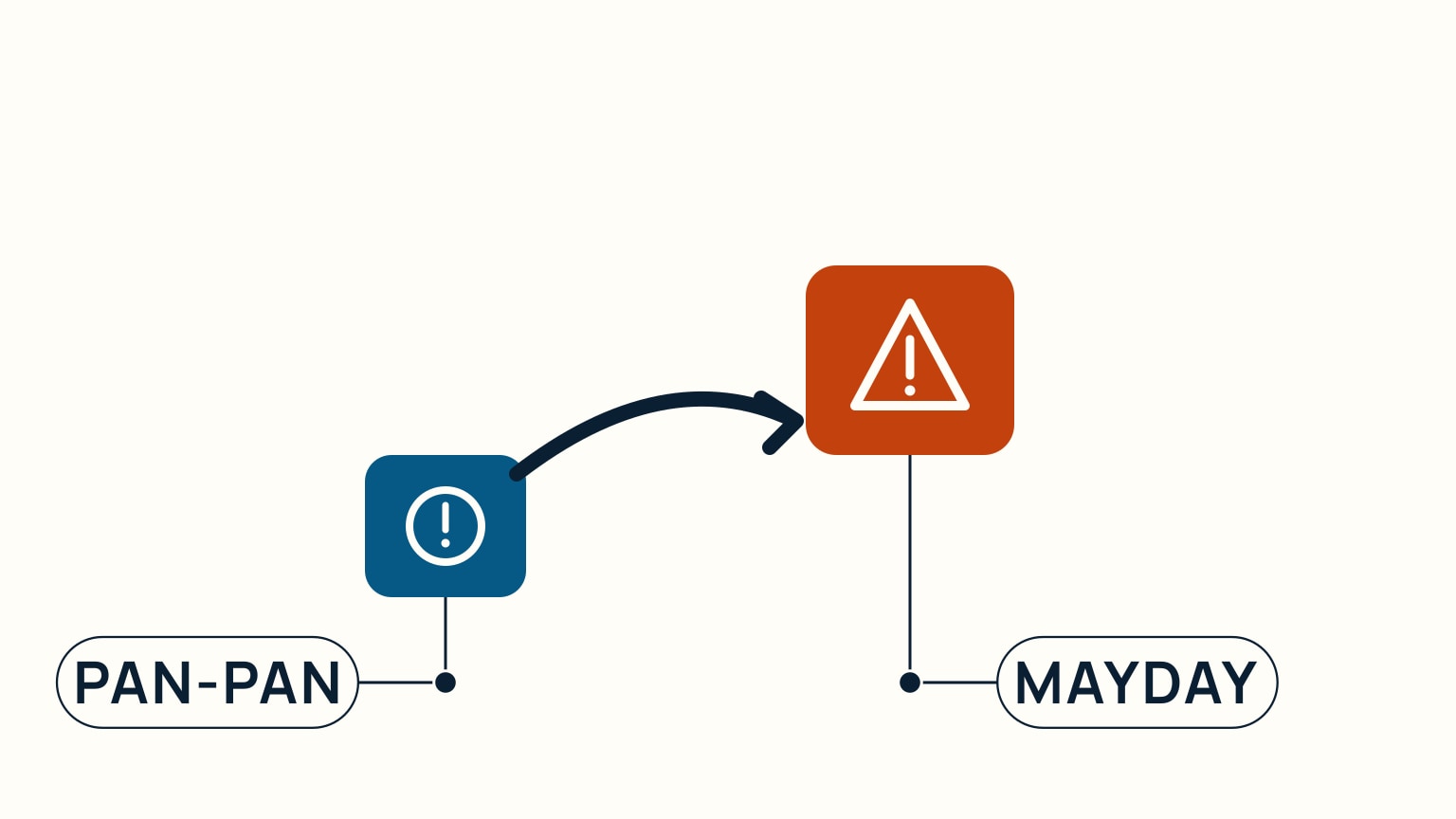
None of this needs to be memorized word-for-word before it matters. What's worth doing now is understanding the shape of the ladder: MAYDAY for grave and imminent danger, PAN-PAN for something genuinely wrong that hasn't crossed that line, SÉCURITÉ for safety information that isn't about your own emergency at all. Once that ordering is clear, choosing the right word in the moment stops being a guess: it's just naming the situation you're actually in. SailStarter's Module 9 lessons walk through this alongside the rest of marine radio communication (channel 16 and hailing, the Mayday call itself, and now the calls that sit below it), so the ladder becomes something you'd actually reach for correctly, the one time it counts.
Try it from the lesson
Can you spot the next move?
Your engine fails and the boat is drifting toward a busy channel. Nobody is in immediate danger yet, but you need prompt assistance. What do you call?
Why you can trust this guide
. We build each guide from public seamanship and safety sources, then teach the universal principle before any local difference.