Chart your course
Parts of a Sailboat: A Beginner's Tour of the Hull, Deck, Keel & Rudder
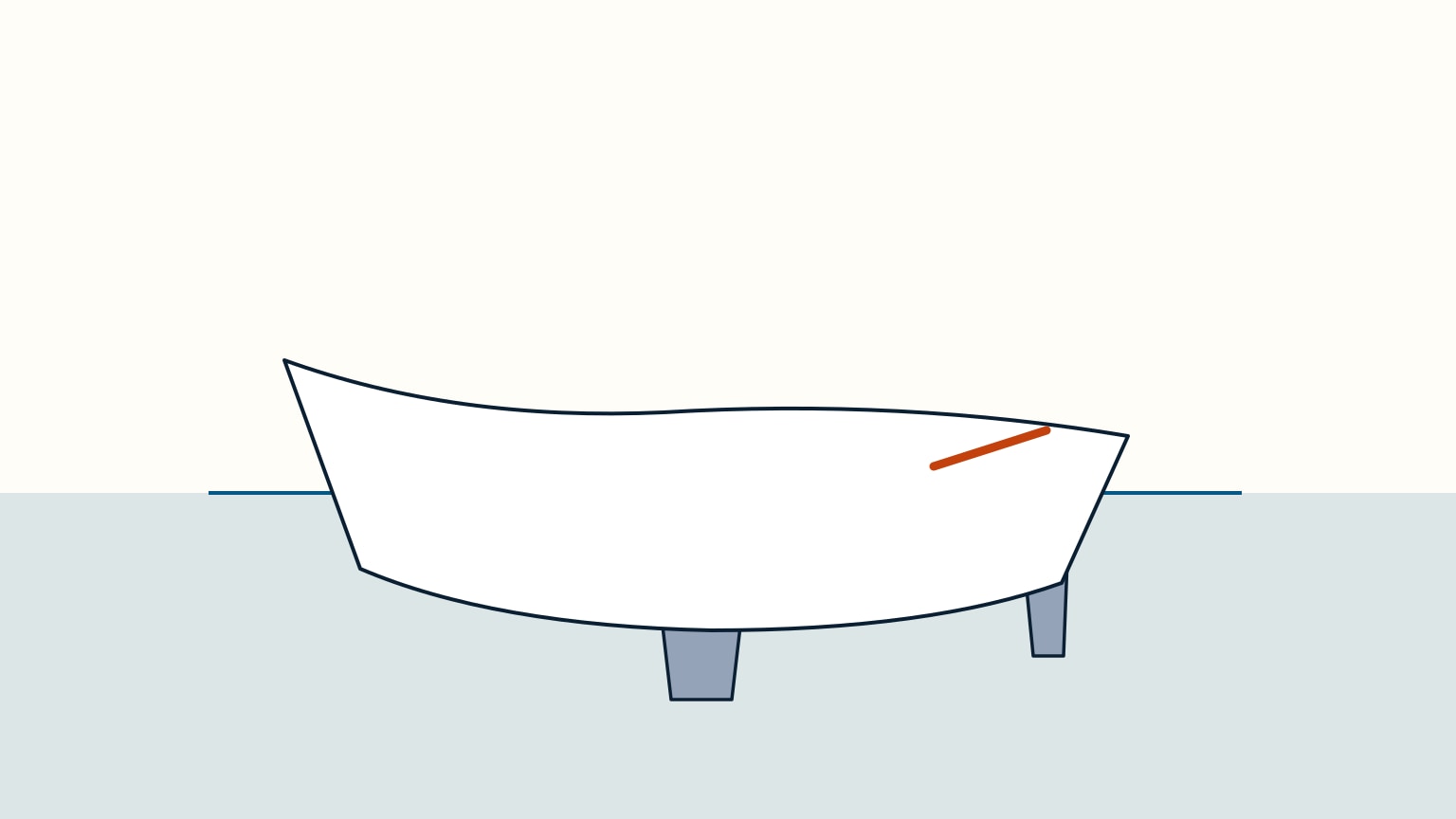
Quick answer
The short version
A sailboat's hull is the watertight shell that keeps you afloat, with the pointed bow at the front and the stern, often closed off by a flat transom, at the back. On top, the deck is where you stand and work, and the cockpit is the recessed part of the deck you steer and sail from. Underneath, out of sight, two parts do the real work: the keel resists the wind's sideways push and carries ballast that keeps the boat upright, and the rudder steers by rotating to change the angle at which passing water strikes it. Learn those seven words and you can already follow most of what a crew says aboard.
Step aboard for the first time and every surface seems to have a name you don't know yet: someone calls out "watch the boom near the cockpit" or "she's heeling because of the keel," and you nod along, lost. Sailors aren't being cryptic; a sailboat's body simply has more named parts than a car or a bike, because each one does a specific job that matters once you're actually on the water. This is the short tour: start at the hull that holds everything up, walk from bow to stern, step onto the deck and into the cockpit, then look underneath at the two parts you can't see from the dock: the keel and the rudder: that quietly do most of the real work.
The Hull: One Watertight Shape, Two Named Ends
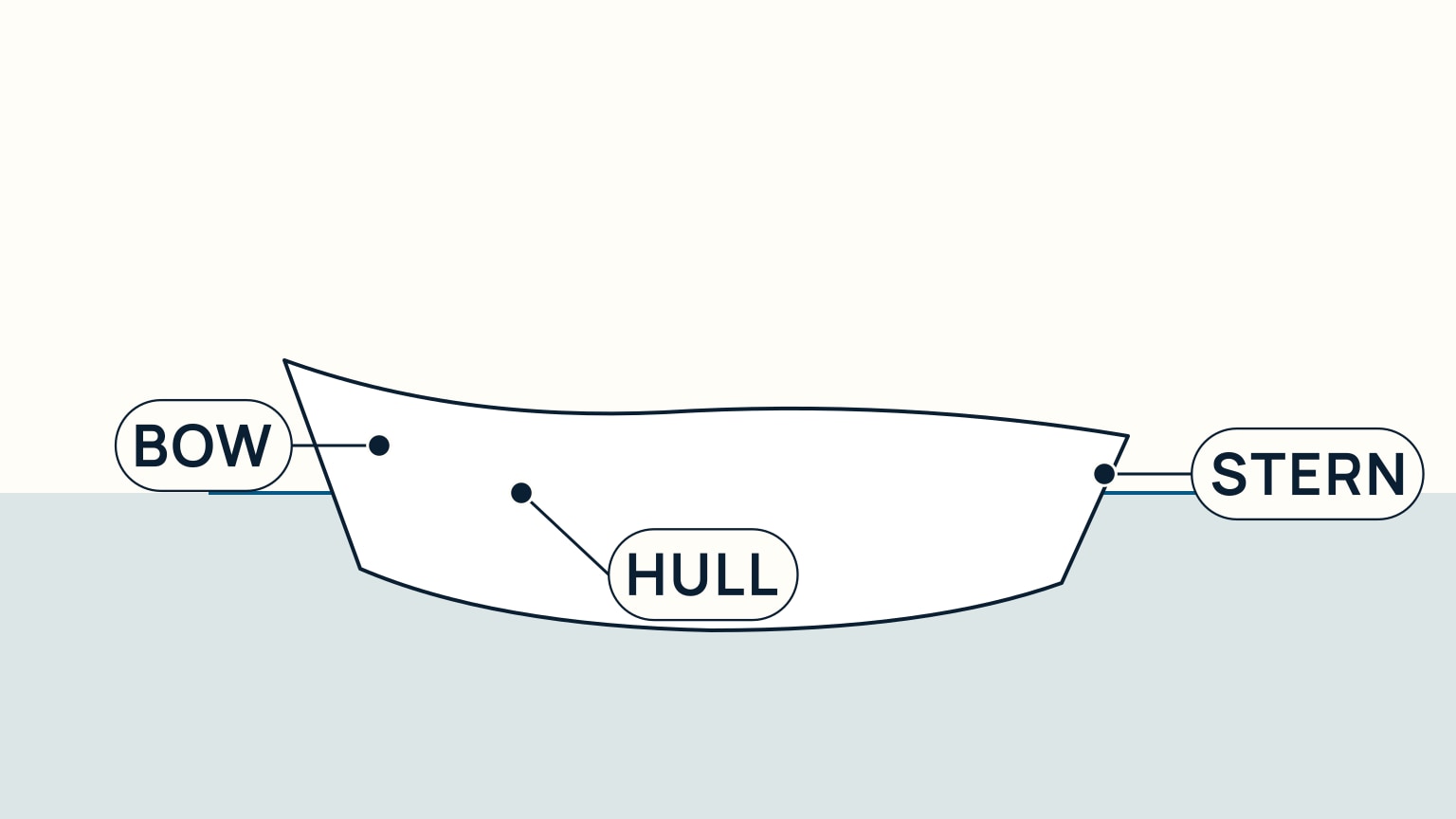
The hull is the watertight shell that forms the whole body of the boat: everything else you'll learn about is mounted on it, inside it, or hung beneath it. Its job is simple to state and easy to underrate: keep the water out, and keep you afloat.
The hull has two named ends. The bow is the front, usually shaped rounded or pointed so it can move efficiently through the water and through waves: it's the part that meets an oncoming wave first. The stern is the back, and on many boats it ends in a flat or gently curved panel called the transom, worth knowing by name because it's often where an outboard motor or other stern-mounted gear gets fitted. Stern and transom aren't quite the same word: the stern is the whole back end of the boat, while the transom is specifically the panel that closes it off.
Look at a hull afloat and you'll notice it sits partly in the water and partly out of it: the waterline marks exactly where hull meets surface. Keep that picture in mind, because the next two parts you'll meet live entirely below that line.
The Deck and Cockpit: Where You Stand and Steer
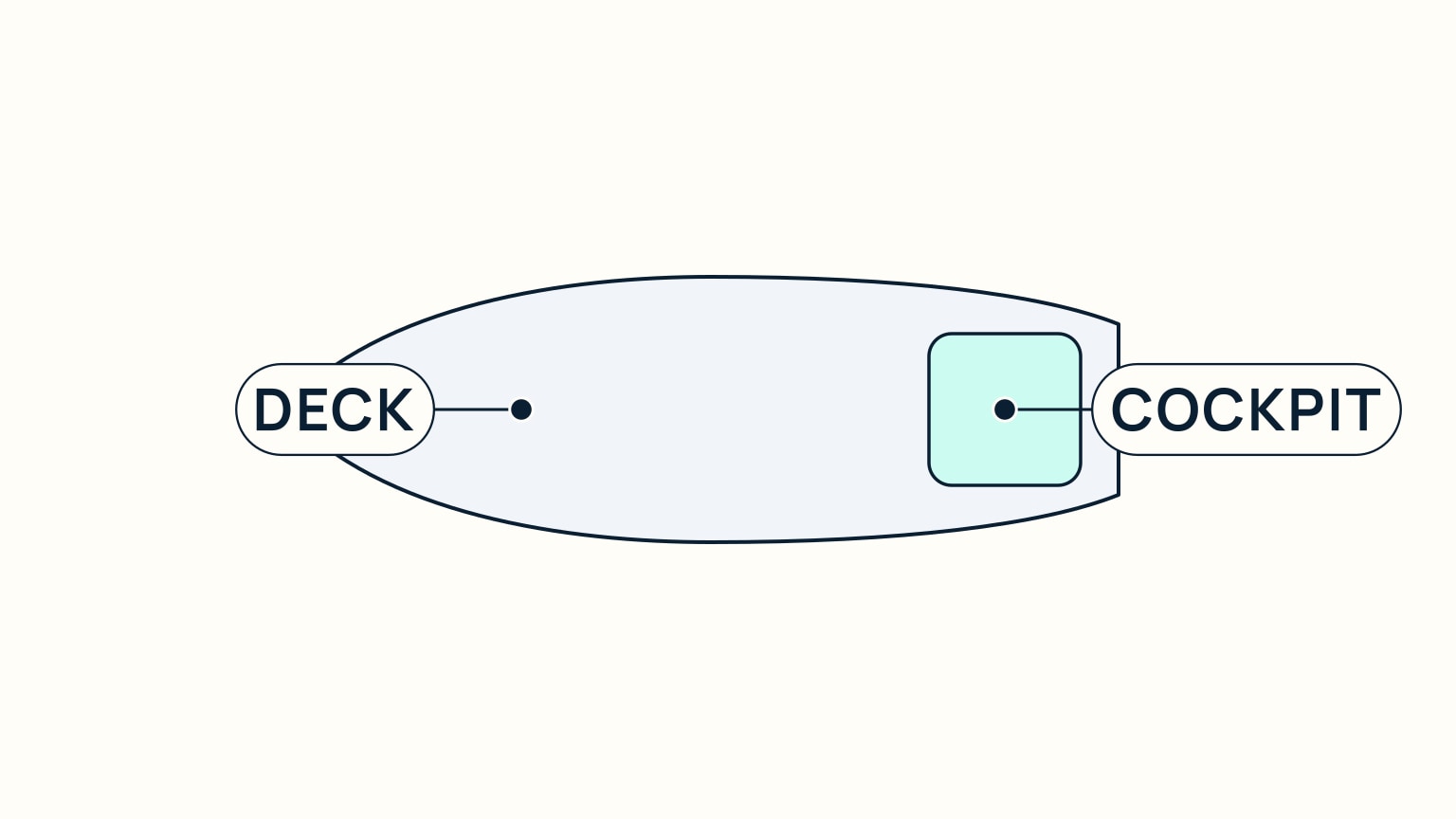
On top of the hull sits the deck: the flat, horizontal surface that caps the hull and gives the crew somewhere to stand, walk, and work. Every line you'll learn to handle and every piece of hardware you'll learn to use lives somewhere on this surface.
Toward the back of most sailboats, part of the deck drops into a recessed section: the cockpit. This is where the boat is actually steered and sailed from: the helm (a wheel or a tiller) sits here, along with the controls for adjusting the sails. Think of the open deck as the working platform and the cockpit as the control room, set a level below so the crew steering has something solid around them instead of standing exposed at the open deck's edge.
The deck and the cockpit aren't separate structures; the cockpit is simply the part of the deck shaped differently for a different job. Once you can point to where the open deck ends and the cockpit begins on any sailboat, you've placed yourself aboard: forward of it, you're on the working deck, and stepping down into it puts you at the controls.
The Keel: What Keeps Her Upright
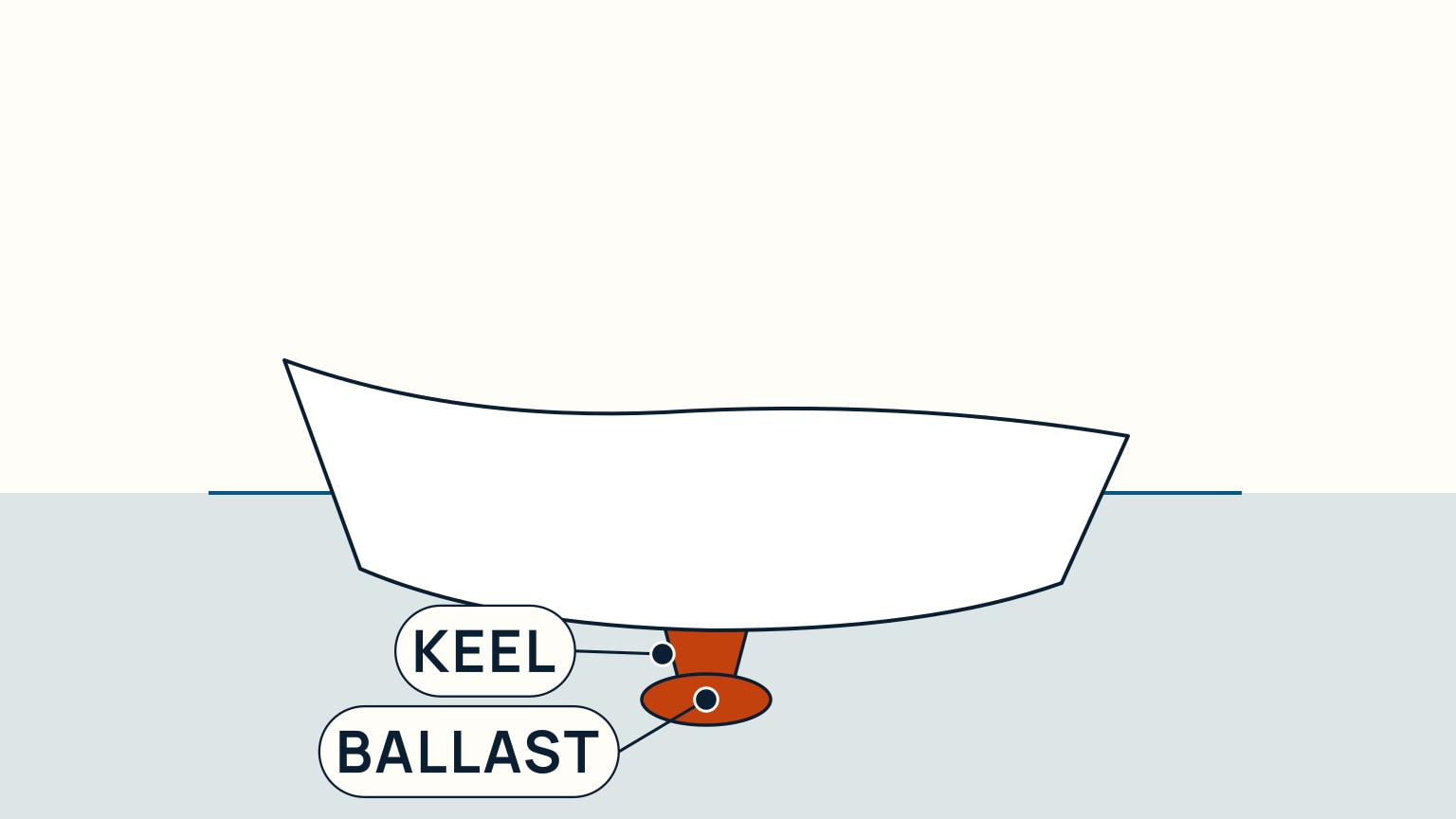
Everything so far has been visible from a dock. The keel isn't: it's a fixed, fin-shaped appendage running along the centerline of the hull, extending down into the water, and it does two jobs that turn out to be closely connected.
The first job is resisting sideways slip. Wind doesn't only push a sailboat's sails from behind: it pushes them from the side too, and without something underwater to resist that sideways push, the boat would simply skid sideways instead of holding its course. Moving forward through the water, the keel generates resistance against that sideways force, in much the same way a fish's fin does.
The second job is carrying ballast: dense weight, usually lead or iron, mounted low down in the keel. As wind pressure tips (heels) the boat over, that low, heavy weight pulls the other way, offsetting the heeling force and helping bring the boat back upright rather than letting it tip further. A boat without a keel's shape and weight would simply be pushed sideways and knocked flatter by the very same wind that a keeled boat turns into forward motion.
The Rudder: How She Turns
Add the rig and sail controls to the map
The mast is the main vertical spar. The boom extends from the mast and supports the foot area of the mainsail on many rigs. Standing rigging supports the mast, while running rigging moves or controls sails. The mainsail sits behind the mast and a jib or genoa sets ahead of it on a common sloop.
Halyards raise sails. Sheets control their angle to the wind. A mainsheet controls the boom and mainsail, while jib sheets lead from the headsail toward the cockpit. Blocks change line direction and can add mechanical advantage. Winches help the crew handle high line loads, and cleats or clutches hold lines after adjustment.
Use the mast and boom guide for the fixed and moving relationships, and sailing terms for beginners for the vocabulary used during manoeuvres.
Learn parts by walking a real boat
Start at the bow and move aft. Identify pulpit or rail, anchor gear, forestay, headsail, mast, shrouds, cabin top, side decks, cockpit, steering, stern rail, and boarding point. Then go below and locate bilge, through-hulls, batteries, engine or motor controls, and safety equipment. Ask before opening, moving, or operating anything.
Repeat the walk with functions instead of names. What keeps water out? What supports the rig? What controls a sail? What turns the boat? What stops it? Where does a loaded line run? Function makes the vocabulary easier to remember and exposes parts that need care.
Avoid common name traps
Port and starboard stay with the boat even when you face aft. Bow and stern name the ends; forward and aft describe direction or position. A rope in use usually has a job-specific name such as sheet, halyard, dock line, or rode. The keel and rudder are different: the keel resists sideways motion and contributes stability, while the rudder steers when water flows across it.
Boat designs vary. Some have tillers, others wheels. Keels, rudders, rigs, and deck layouts differ. Learn the general function first, then use the owner's manual and briefing for the particular boat. A correct generic map helps you ask where this boat places the item without assuming every yacht looks the same.
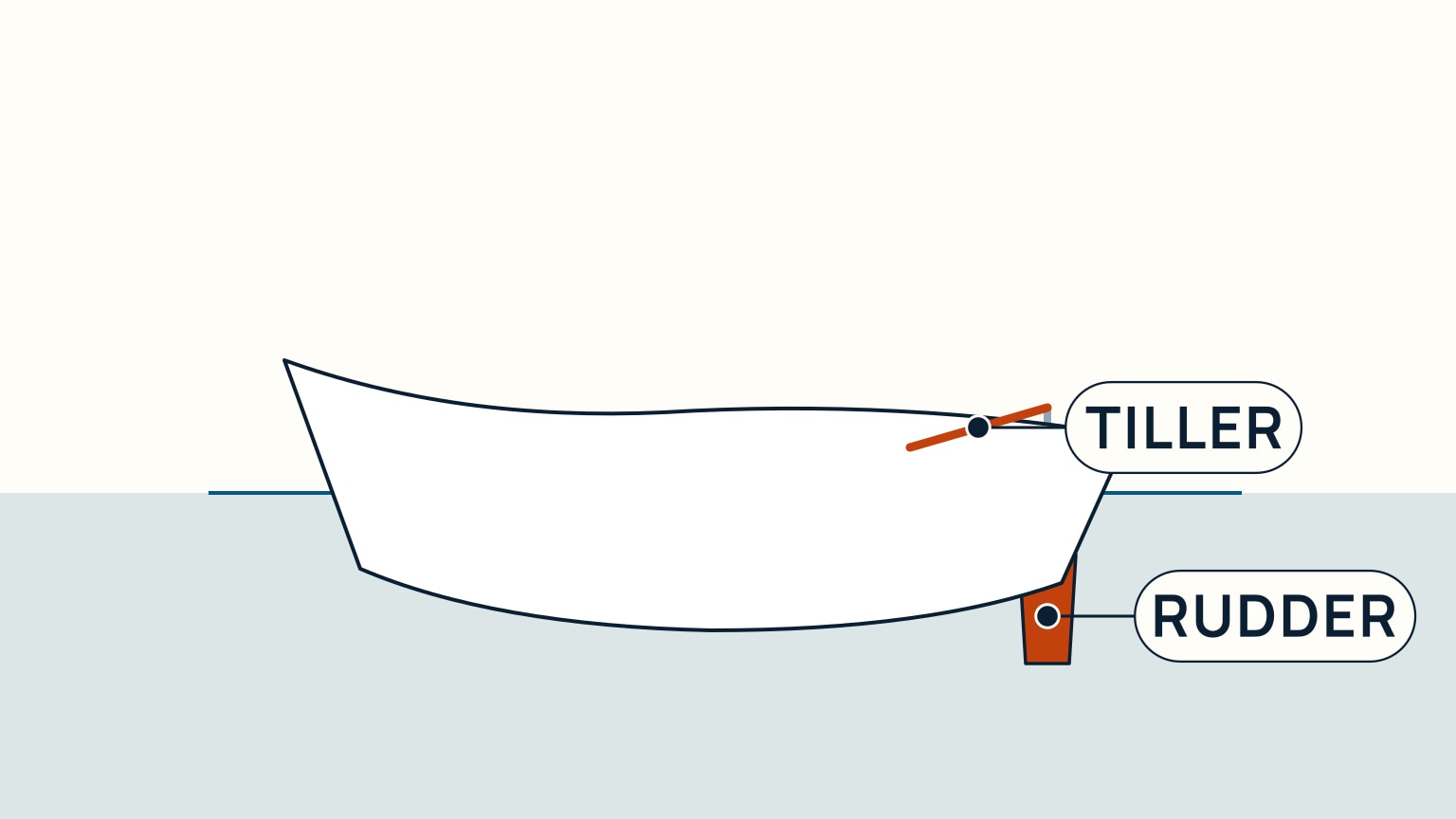
Steering happens at the stern, underwater, at a part called the rudder: a fin-shaped blade, hinged near the bottom of the hull, that turns to change your course. Push the tiller or spin the wheel in the cockpit, and you're turning this blade; you aren't turning the boat directly.
The mechanism is simple once you see it: turning the rudder angles it into the water flowing past the hull, and that redirected flow pushes the stern one way, which swings the bow the other. It's a similar idea to a fish steering with its tail, just fixed to the boat instead of moving on its own.
Here's the part that surprises most beginners: the rudder only works while the boat is moving through the water. Sit still with the rudder turned hard over, and nothing happens: there's no flow past the blade to redirect. On a small boat, the rudder is turned directly by a tiller, a lever fixed to its top that you push or pull by hand; on a larger boat, a wheel does the same job through the steering gear.
Seven words, and you can now walk a sailboat stem to stern without getting lost: hull, bow, stern, deck, cockpit, keel, and rudder. None of that vocabulary is complicated on its own: it just takes seeing each part once, in place, before it clicks. The two parts hiding below the waterline, the keel and the rudder, quietly do the most consequential work of all: one keeps the boat upright, the other decides which way she goes. If you'd like to keep building this picture (how these parts work together once the sails go up, and what each piece of deck hardware actually does), SailStarter's short beginner lessons walk through it visually, one idea at a time.
Try it from the lesson
Can you spot the next move?
What cushions the gap between the boat and dock before they touch?
Why you can trust this guide
. We build each guide from public seamanship and safety sources, then teach the universal principle before any local difference.