Chart your course
Sailboat Battery Maintenance by Battery Type
Quick answer
The short version
Sailboat battery maintenance depends on chemistry and the installed charging system. Identify every battery as flooded lead-acid, sealed AGM or gel, lithium, or another documented type, then use its manual. Inspect cases, restraints, ventilation, protected positive terminals, cables, and connections for movement, corrosion, heat, swelling, cracks, or leakage. Keep batteries clean and dry without allowing cleaning material into cells or equipment. Flooded batteries may require manufacturer-directed electrolyte checks and distilled water; sealed batteries must not be opened or watered. Lithium systems depend on a compatible charger and battery-management protection. Monitor charge behavior and capacity trends rather than trusting one voltage reading. Isolate sources correctly and call a marine electrician for damaged, hot, swollen, leaking, undocumented, or repeatedly failing systems.
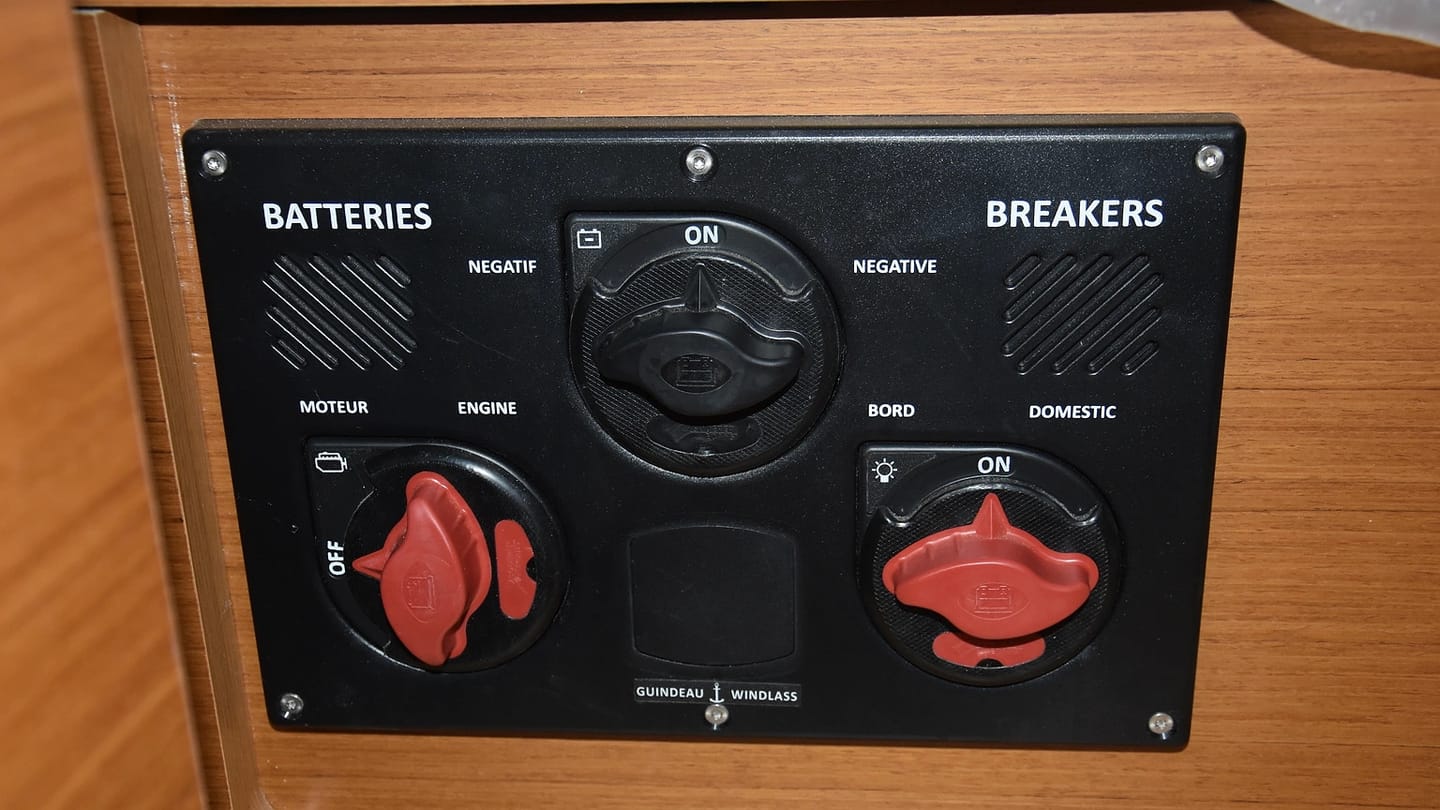
Batteries store enough energy to melt metal and start a fire. Lead-acid types can also release explosive gas and corrosive electrolyte. Treat the compartment as machinery, not a locker shelf. Remove jewelry, use eye protection, ventilate as directed, prevent tools from bridging terminals, and follow the manufacturer's disconnection and reconnection sequence. Switching a panel control off may not isolate every charger, solar input, alternator, inverter, or parallel bank.
Identify the Chemistry and Draw the System
Read the labels and record maker, model, chemistry, capacity, age, and serial number. If labels are missing, do not infer chemistry from case shape or terminal style. Trace each bank's purpose, main switch, fuse, charger, alternator connection, solar controller, inverter, monitor shunt, temperature sensor, and emergency combining arrangement. Keep the drawing with the boat. Mixed ages, chemistries, or charging requirements in one bank deserve competent review.
Find the manuals for batteries and every charging source. Check that charger profiles, temperature compensation, current limits, and battery-management interfaces match the installed products. A lithium battery marketed as a replacement still has specified charging and protection requirements. A sealed AGM battery is not a flooded battery with inaccessible caps; Trojan's AGM guidance, for example, explicitly says not to add water. Product-specific instructions outrank generic voltage charts and dockside habits.
Inspect Safely Before Cleaning or Tightening
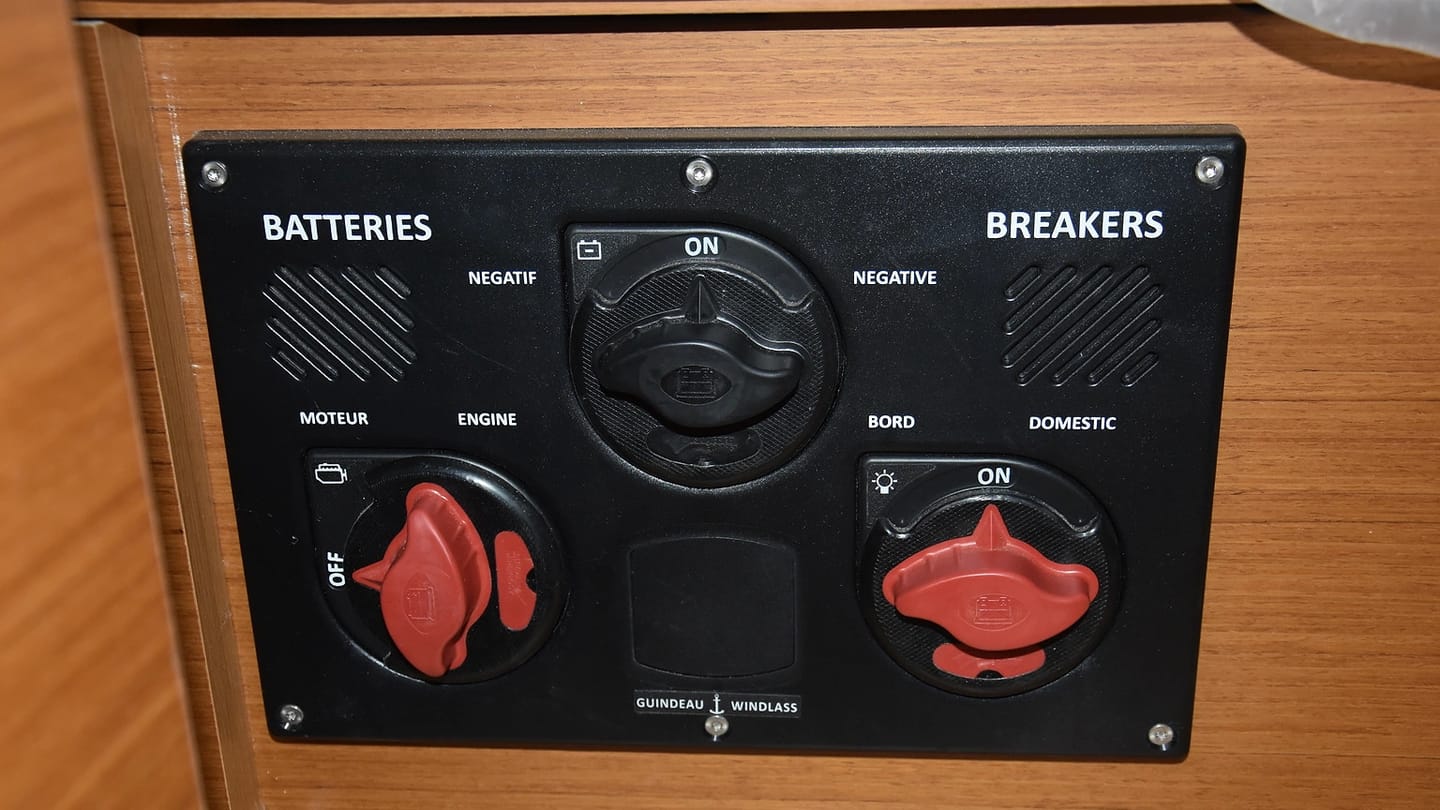
Before opening the compartment, look and smell for smoke, sharp chemical odor, heat, or a charger behaving abnormally. Do not approach a visibly failing bank with sparks or an improvised test. Ventilate as the system requires and keep flames and smoking materials away. Isolate AC shore power, solar, alternator, inverter, and DC sources using procedures you understand. Verify the safe state with appropriate instruments rather than assuming one switch controls everything.
Check restraints, trays, covers, cable support, insulation, and clearance. Look for cracked or swollen cases, electrolyte, dampness, green or white corrosion, loose lugs, damaged boots, overheated insulation, and terminals that have moved. Clean only by the battery maker's method, protecting skin and eyes and keeping neutralizing solution away from cell interiors. Tighten connections only to documented values with insulated tools. A hot, leaking, frozen, physically damaged, or repeatedly loose battery should remain isolated for professional assessment.
Charge, Water, and Monitor According to Chemistry
For flooded lead-acid batteries, inspect electrolyte only if the manual permits and only with the stated protective equipment and timing. Use distilled water to the specified level; do not add acid or overfill. Charging can raise and expand electrolyte, which is why the sequence matters. Sealed AGM and gel batteries do not receive water. Their maintenance focuses on correct charging, clean connections, restraint, temperature, and performance.
Lithium batteries use a battery-management system to keep operation within defined limits, but a BMS is not permission to ignore charger compatibility, low-temperature restrictions, alarms, or shutdowns. Investigate repeated protective trips rather than continually resetting them. For every chemistry, monitor more than an instant terminal voltage. Review charge current, time, state-of-charge information, resting behavior where appropriate, temperature, and delivered capacity over comparable use. A trend is more useful than a single number taken while loads or chargers are changing.
Store the Bank Correctly and Escalate Warning Signs
Build an electrical map before maintenance
Record every battery, its chemistry, capacity label, date if known, series or parallel arrangement, main switch, fuse or circuit protection, charger, alternator, solar or wind controller, shunt, and critical load. Trace from reliable diagrams and labels rather than disconnecting cables to see what stops working.
Different chemistries need different charging profiles, storage states, temperature limits, and maintenance. A flooded lead-acid bank may require electrolyte checks under its instructions. Sealed lead-acid and lithium batteries do not receive the same treatment. Match every charging source to the battery maker's current limits and any battery-management system.
Photograph cable routing and terminal stacking before approved work. Label conductors only after confirming their function. Unknown cables, missing protection, mixed chemistries, damaged insulation, or undocumented charging settings are reasons to pause and involve a marine electrician.
Use measurements as trends
Resting voltage is meaningful only after the maker's specified rest and within the chemistry's guidance. Charging voltage by itself does not prove that the bank reached full charge or retained useful capacity. A shunt-based monitor measures current entering and leaving when correctly installed and configured, but it also needs synchronization and correct battery settings.
Record state, major loads, charge source, current, voltage, and time. Compare similar conditions. A bank that appears charged and collapses under load, accepts little charge, warms, smells, swells, leaks, or repeatedly trips protection needs diagnosis. The battery-keeps-dying guide separates hidden load, charging failure, connection loss, and lost capacity.
Inspect safely and prevent corrosion
Isolate power as the boat and equipment procedures require. Remove jewelry, protect eyes, ventilate, and use insulated tools suitable for the work. Batteries can deliver very high fault current. Never bridge terminals, bypass a fuse, or disconnect a charging circuit under load unless the maker's procedure specifically requires it.
Look for loose or overheated connections, corrosion, damaged cases, unsupported batteries, wet compartments, chafe, and blocked ventilation. Clean and tighten only by the specified method and torque. A visually clean terminal can still have damaging voltage drop under load, so testing may be needed.
During storage, follow the battery maker's state-of-charge, temperature, inspection, and charging guidance. Control parasitic loads without disabling required safety equipment. Record every isolation change so the boat is restored correctly before launch. The spring commissioning checklist is a useful point to verify that restoration.
A monthly visual record
Photograph the bank from the same angles and log monitor state, resting condition when valid, charger status, terminal appearance, case condition, compartment dryness, restraints, and ventilation. Compare with the previous entry rather than trusting memory.
Check that added equipment has not bypassed the main protection or created an unsupported terminal stack. New electronics can also change the daily energy budget. Update the system drawing and measured load list after every installation.
If one battery in a bank differs in age, chemistry, capacity, temperature, or state, do not assume a charger will make the group behave as one healthy unit. Follow maker guidance and obtain a capacity or system diagnosis before replacing only the most obvious battery.
After maintenance, restore covers and restraints, account for tools, and verify critical loads. A final functional check should confirm that isolation, monitoring, and charging all match the documented system.
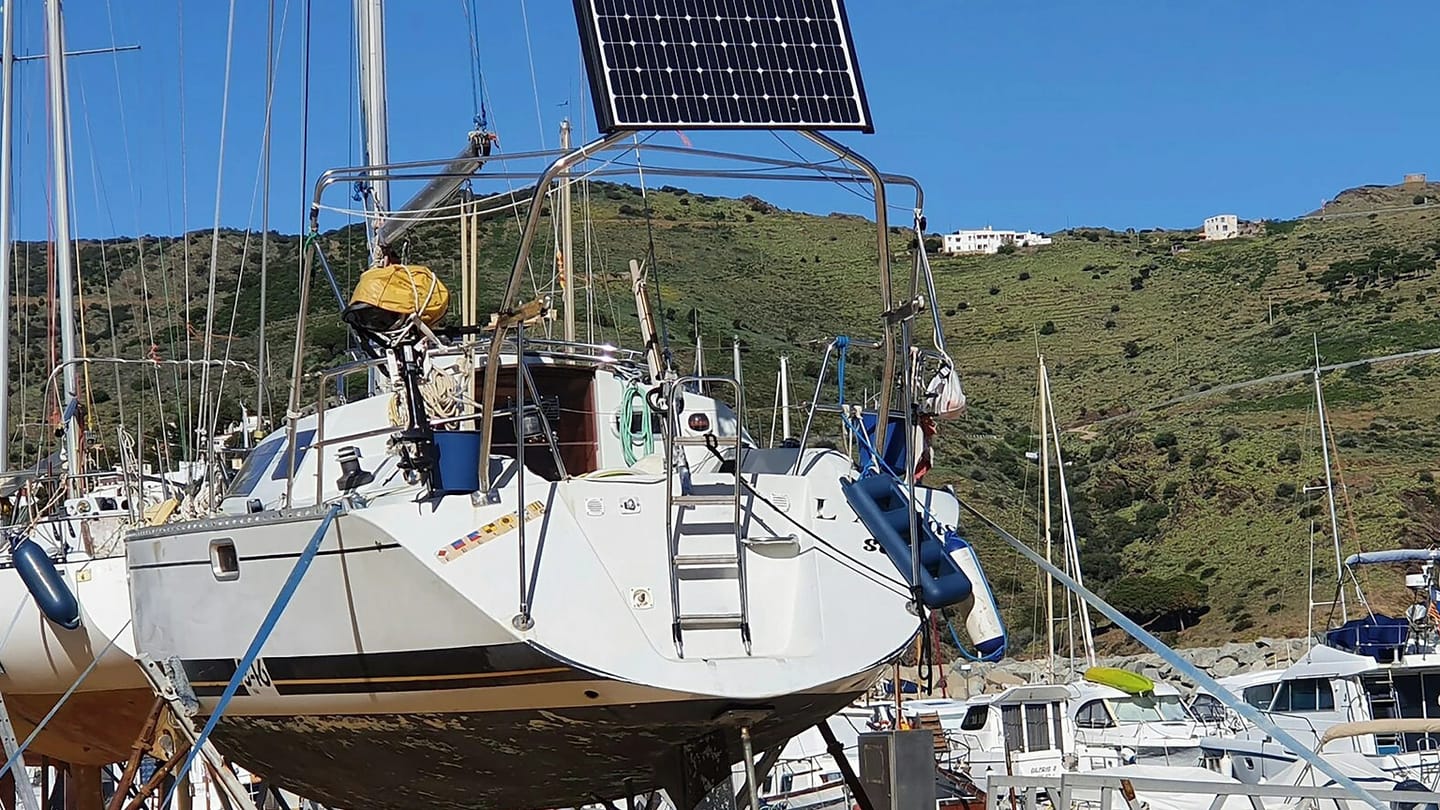
Long-term storage instructions differ. The manual controls target charge, permitted storage temperature, recharge checks, charger connection, load isolation, and whether the battery may remain aboard. Remove unintended parasitic loads without defeating required monitoring or safety systems. Keep the compartment dry and ventilated as designed. Check it after storms, shore-power interruptions, unusual cold or heat, and any charger alarm.
Arrange qualified help when capacity falls rapidly, charging voltage or current is abnormal, connections heat up, corrosion returns quickly, electrolyte use changes, the BMS repeatedly trips, or bank members behave differently. Replacement is also a system decision: cable protection, charger settings, alternator limits, ventilation, battery management, and mounting may need review when chemistry or capacity changes. Record installation date, configuration, settings, test results, water additions where applicable, faults, and disposal. Recycle old batteries through an approved program rather than leaving them at the marina.

Use SailStarter's electrical-system lesson to trace the difference between a battery, a bank, a load, and a charging source before doing maintenance. Draw the system and label every isolation point. Photograph the clean installation, note the correct charger profile, and create a short monthly record of visual condition and comparable monitor readings. Add chemistry-specific tasks only from the battery manual. If you cannot prove a circuit is isolated, or if you find heat, swelling, leakage, damaged insulation, or an undocumented modification, stop and call a marine electrician. Good battery care is careful observation plus correct charging, not repeated tightening or topping up by habit.
Try it from the lesson
Can you spot the next move?
The engine is idling, the boat is safely secured and the propeller area is clear. What should you confirm before departure?
Why you can trust this guide
. We build each guide from public seamanship and safety sources, then teach the universal principle before any local difference.