Chart your course
What Qualifications Do You Need to Charter?

Quick answer
The short version
There is no single qualification that guarantees a bareboat sailboat charter everywhere. Approval depends on the destination's current legal and port requirements, the charter company's policy, and your recent experience as skipper on a comparable yacht. Some destinations require named certificates. Elsewhere, a provider may accept a sailing resume, or require both. It may also assess the first mate, yacht size, and difficulty of the cruising area. Send the company your documents and an honest resume before paying non-refundable costs, then obtain written approval for the named skipper, yacht, base, and dates. If you are not accepted, choose a smaller boat, easier area, training, or a hired skipper.
This three-part answer prevents two common errors. A certificate holder may assume the card forces every company to release every yacht. An experienced sailor may assume years afloat remove a destination's document rule. Neither is safe. Law, contract, and practical competence overlap, but they are separate tests.
Pass the Three Approval Tests
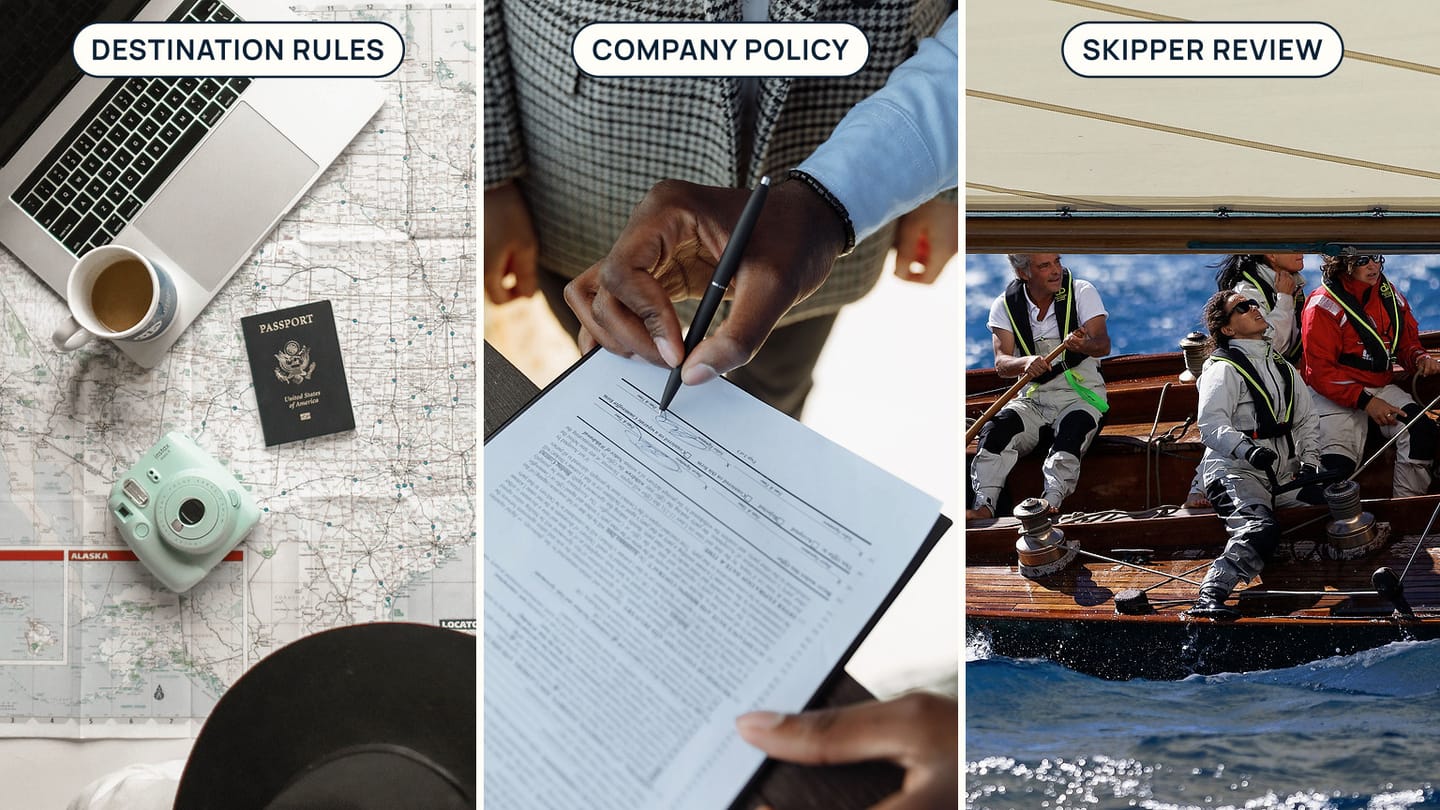
First, check the authority for the destination and water. Requirements can depend on country, coastal or inland use, boat type, propulsion, radio equipment, and the skipper's details. Use current official information. A charter blog or last year's booking may point you toward the question, but it cannot settle a current legal requirement.
Second, read the provider's written policy for the exact base. Charter groups publish general experience levels, yet individual destinations can add certificate, radio, original-document, or crew conditions. Ask whether the policy changed for your dates and save the reply. A general statement that a credential is “recognized worldwide” is not booking approval.
Third, complete the provider's competence review. Companies may ask about recent days or miles as skipper, yacht type and size, navigation area, anchoring, mooring, and close-quarters handling. They are comparing your experience with the booked yacht and cruising ground. A sailing resume is therefore an operational document, not marketing copy.
All three need to pass. A legal certificate can fail the company's yacht comparison. Company confidence in your experience cannot waive a port requirement. Written approval can still depend on you presenting originals at the base. Verify current local rules and carry what the confirmation requires.
Present Certificates and Experience Clearly
What a useful resume leaves out
Do not pad the record with ferry trips, passenger holidays, repeated copies of the same week, or theory courses presented as command. Avoid a lifetime total you cannot explain. The reviewer needs a clear pattern of current handling on boats that resemble the booking. If your strongest experience is older, state the date and add recent refresher practice rather than hiding the gap.
Keep supporting records available without sending a pile of irrelevant files. A logbook, instructor confirmation, or previous charter record may answer a follow-up question. Let the company tell you what it needs and use its secure submission method. Personal documents should not be scattered across informal email chains when an official portal exists.
List certificates by exact title, issuing body, craft category, waters, and validity. Do not shorten the name into a more impressive claim. The ICC, for example, is evidence in a UNECE framework, not a global charter entitlement. Read the ICC explanation before relying on it for a European trip.
Your resume should emphasize recent, relevant command. For each useful trip, note approximate dates, yacht type and size, area, role, and the work you actually performed. Separate skipper days from crew days. Mention catamaran experience if booking a catamaran, and describe the kind of mooring or docking you have handled. Do not convert passenger miles into skipper experience.
Providers group destinations by difficulty because sailing grounds differ. Protected water with straightforward navigation is not the same job as strong tidal streams, long exposed legs, shallow banks, or crowded stern-to harbours. A company may approve you for one area and not another. That is a matching decision, not a permanent judgment of your identity as a sailor.
Send clear copies through the provider's approved channel. Ask whether original certificates, translations, photographs, or a radio credential are required at check-in. Make sure names match the booking and travel papers. If a certificate is near expiry or the category is unclear, resolve it with the issuing body rather than asking the base to guess.

Include the First Mate and Crew Plan
A practical first-mate conversation
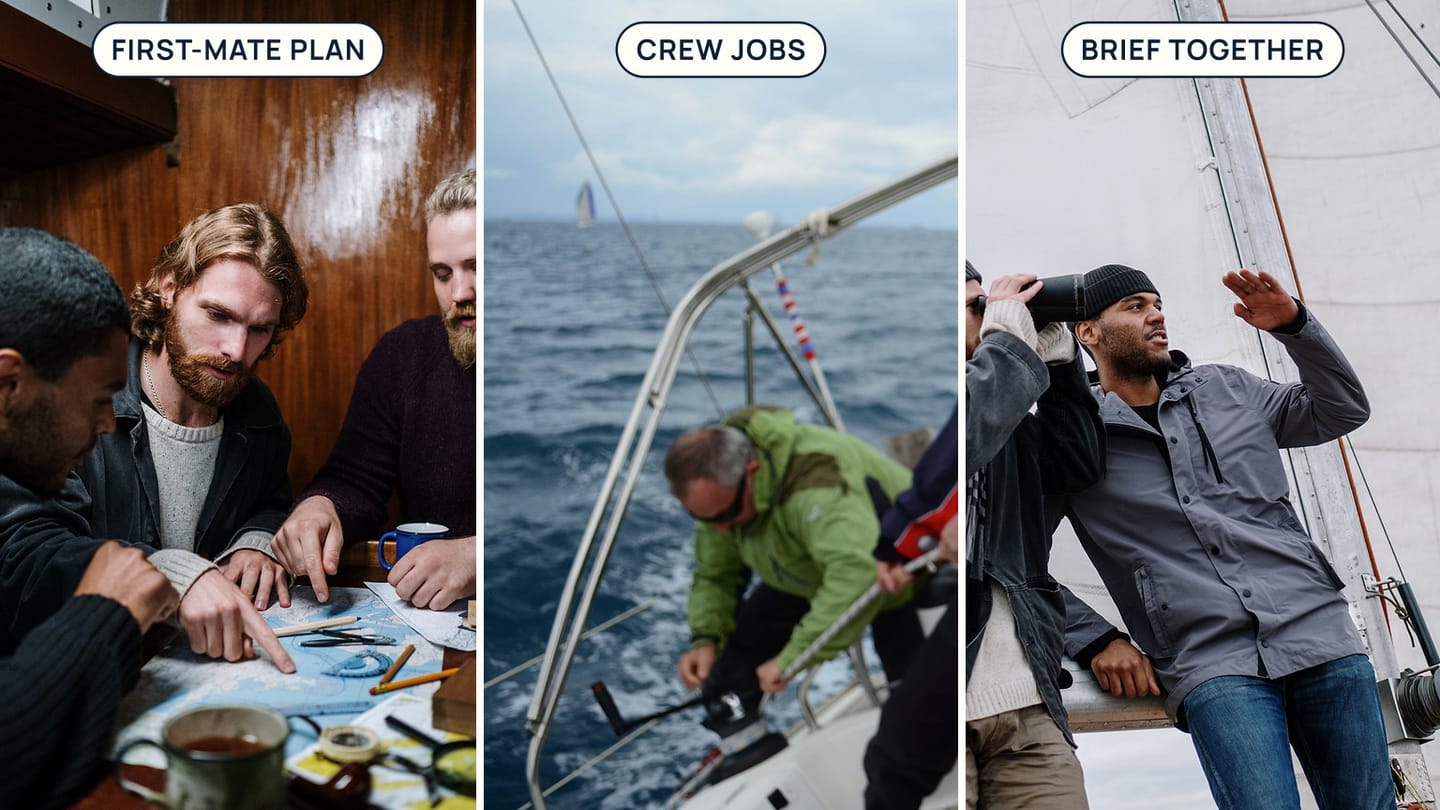
Before naming somebody, ask whether that person is willing to take the role and understands what the company expects. Work through an engine failure near a marina, a tired skipper, and a crew-overboard call. The point is not to stage an examination at the kitchen table. It is to reveal whether “experienced crew” means demonstrated support or simply the person with the next longest sailing history.
Some bases or destinations require another capable person, and a provider may request a first-mate resume even where it is not a legal rule. The second person should be able to support close-quarters work, navigation, sail handling, and an emergency appropriate to the planned trip. A signature on a form does not create those skills.
Describe crew experience honestly. If one person can take the helm but has never docked the yacht, say so. If the crew completed a course together and practises on a comparable boat, include that. Ask the company what responsibility it expects from the named first mate and whether a professional skipper changes the requirement.
Plan for skipper fatigue or illness. Who can stop the boat, call for help, read the position, and bring the yacht under control? This does not require every person to become a second skipper. It does require a stronger plan than “the base is a phone call away.” Review the crew briefing guide and assign practical roles before departure.
If you hire a skipper, clarify command, accommodation, food, fees, gratuity, and whether that person remains aboard for the whole charter. A skipper takes a cabin or berth and changes the crew's space. Some packages include provisions; adding a skipper to a bareboat may not. Read the written inclusions rather than assuming.
Close Gaps Before You Book
Recheck after any booking change
A yacht upgrade, different base, substituted skipper, or altered dates can invalidate the assumptions behind approval. Send the revised detail and ask the provider to confirm again. Keep the approval with the charter papers so the travelling crew can find it. Do not rely on a salesperson remembering a call months later.
Set a personal threshold above the minimum paperwork. You might require one recent practice weekend, a crew docking session, or an instructor checkout on a comparable yacht even when the company is willing to approve the resume. Provider acceptance answers whether it will supply the boat. Your own threshold answers whether this crew should take that boat now.
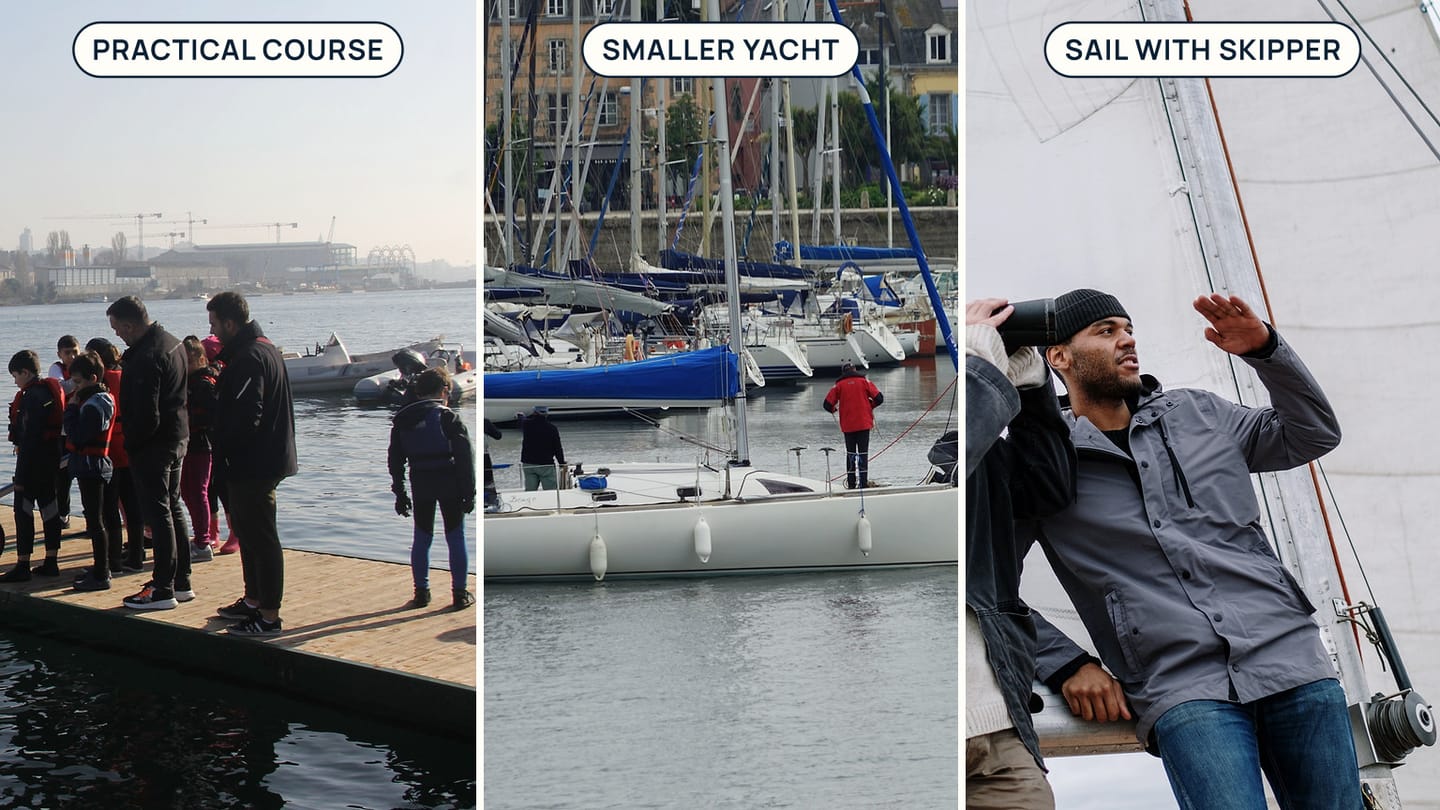
If the provider says your experience is insufficient, ask what specific gap caused the decision. It may be yacht size, catamaran handling, recent command, close-quarters practice, or the area's navigation demands. Choose a response that addresses that gap. A practical course on a comparable boat is more useful than an unrelated certificate collected for its title.
Other options include a smaller yacht, a less demanding destination, a flotilla, or a hired skipper. A flotilla offers route and arrival support, but the customer skipper still commands the yacht, so it does not automatically remove qualification requirements. The flotilla-versus-bareboat guide helps compare that workload.
Do not book flights around a verbal “should be fine.” Obtain written approval and note any conditions, such as a checkout or second qualified person. Ask what happens if the base assessor is not satisfied. Understand the cost of a mandatory skipper, yacht downgrade, delayed departure, or cancellation before accepting the contract.
Approval is only the beginning. Complete the handover, document existing damage, locate safety equipment, test relevant systems, and understand support procedures. Use the first-charter checklist rather than rushing away from the dock. Also read the insurance and deposit terms; provider approval does not remove your contractual exposure.
Finally, choose conservative first days. A certificate and resume describe past evidence. They do not guarantee rest, good weather, a prepared crew, or an undamaged yacht. Keep a route alternative and be willing to stay put. The most convincing qualification is sound judgment applied before conditions force the decision.
SailStarter can help you audit the fundamentals behind your resume. Review weather, passage planning, anchoring, docking, crew communication, and emergencies, then identify which parts need practical coaching. Do not use lesson completion as a charter credential. Send only qualifications and experience the provider requests, and let the provider and authorities decide acceptance. Your goal is not to win approval through wording. It is to choose a yacht and sailing ground that your documents, recent practice, and crew can genuinely support.
Try it from the lesson
Can you spot the next move?
A wide sailboat glides past on two side-by-side hulls, barely leaning at all. What type is it?
Why you can trust this guide
. We build each guide from public seamanship and safety sources, then teach the universal principle before any local difference.