Chart your course
Sailboat Deck Hardware Explained: The Small Fittings That Do the Work
Quick answer
The short version
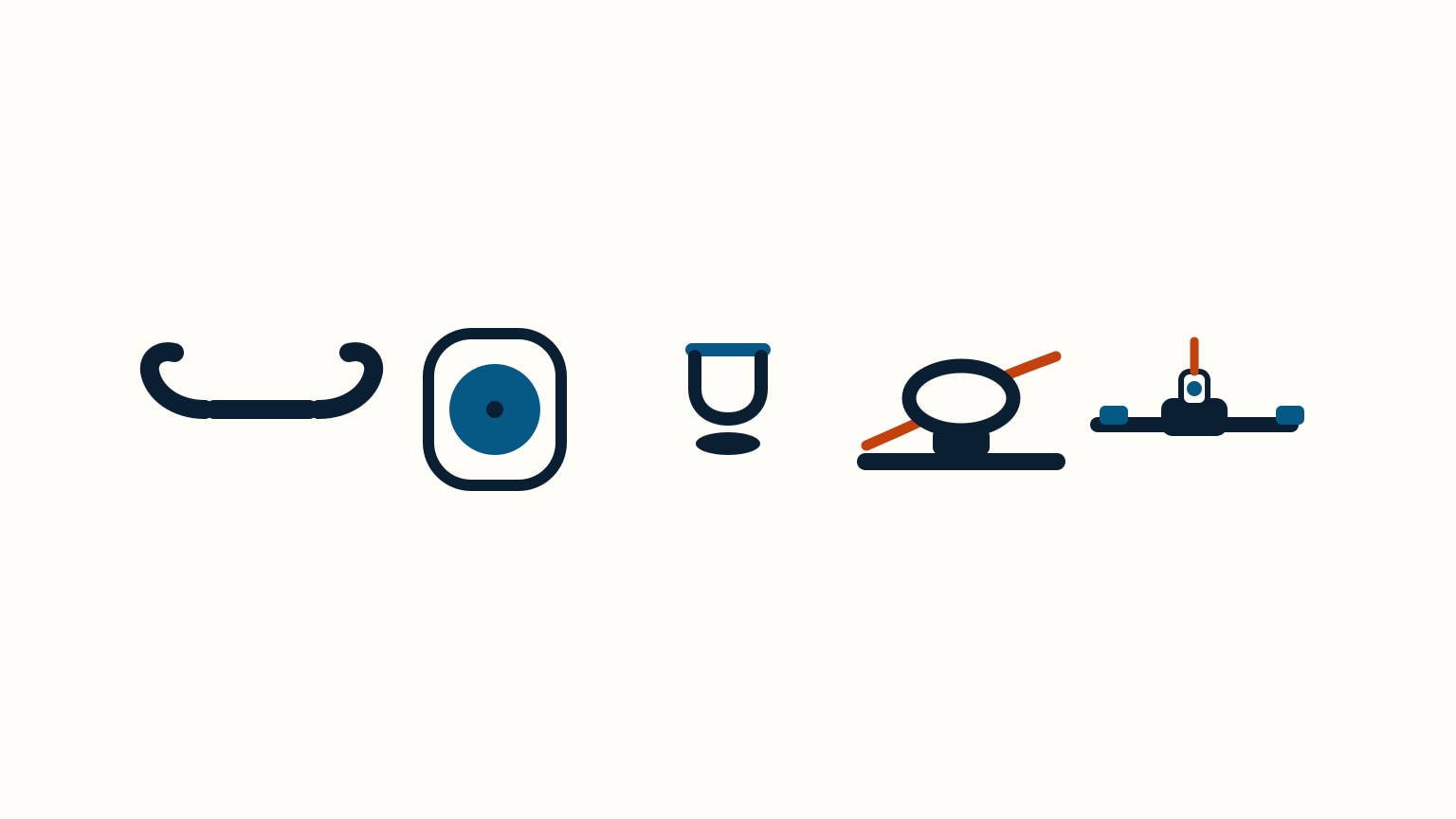
"Sailboat deck hardware" means the small metal fittings that every line on deck depends on. None is bigger than your hand, and no two do the same job. A cleat holds a line fast once you've hitched it on by hand. A block is a pulley that redirects a line. A shackle is a pin-closed connector that joins two pieces of hardware. A fairlead guides a line so it runs cleanly to its winch or cleat, without rubbing or pulling sideways. A rope clutch or jammer locks a line under tension so its winch is free for another job. A traveler lets the mainsheet's attachment point slide side to side. Learn these six fittings and a crowded deck starts making sense.
Stand on any sailboat's deck and you'll see lines running everywhere, each one passing through, around, or onto a piece of metal hardware along the way. None of these fittings is complicated by itself (most have no electronics, and several have no moving parts at all), but each has one specific job, and knowing which is which turns a tangle of gear into a system you can read at a glance. This article walks through six fittings you'll meet on almost any sailboat: cleats, blocks, shackles, fairleads, rope clutches or jammers, and travelers. You'll also spot a winch nearby doing a related but different job, covered in its own SailStarter article. Recognizing each fitting first is what makes safe, confident line handling possible.
Cleats: Holding a Line Without Gripping It
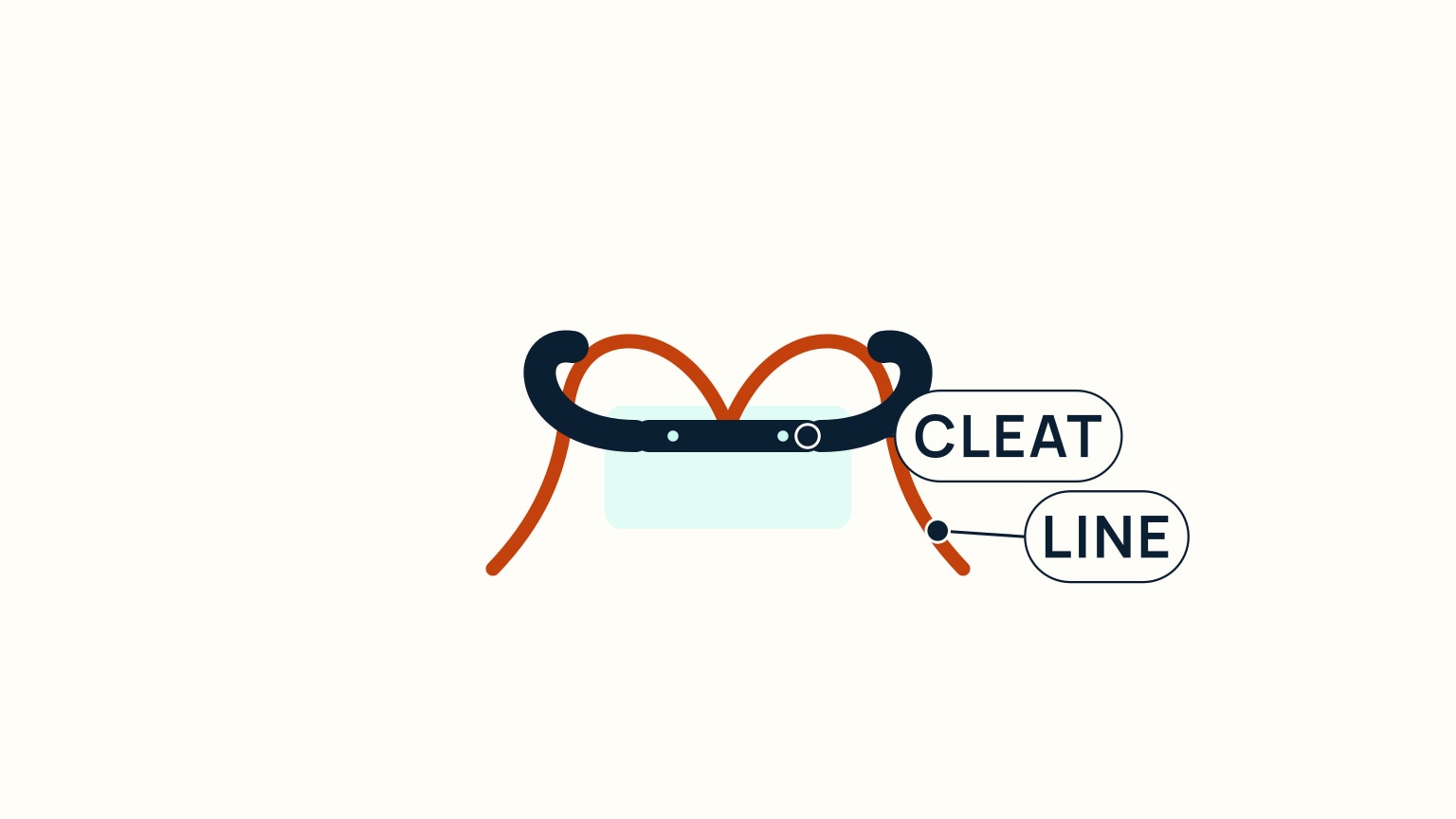
A cleat is the simplest fitting on deck: a solid horn-shaped fitting bolted down, with no drum to turn and no lever to pull. You hold a line fast on a cleat by hitching it on by hand, usually wrapping the line around the horns. Because taking a line off means untying it, and securing it again means retying it, a cleat suits lines that don't need constant adjustment (a dock line or a mooring line you set once and leave alone). That's also why you won't find a cleat holding a sheet that needs trimming every few minutes; that job belongs to hardware built to release quickly under load, further down this list. Spot a cleat by what it lacks: nothing to wind, squeeze, or lever open. If a line is simply looped around a fitting by hand and nothing else is happening, you're looking at a cleat.
Blocks and Shackles: Redirecting and Connecting
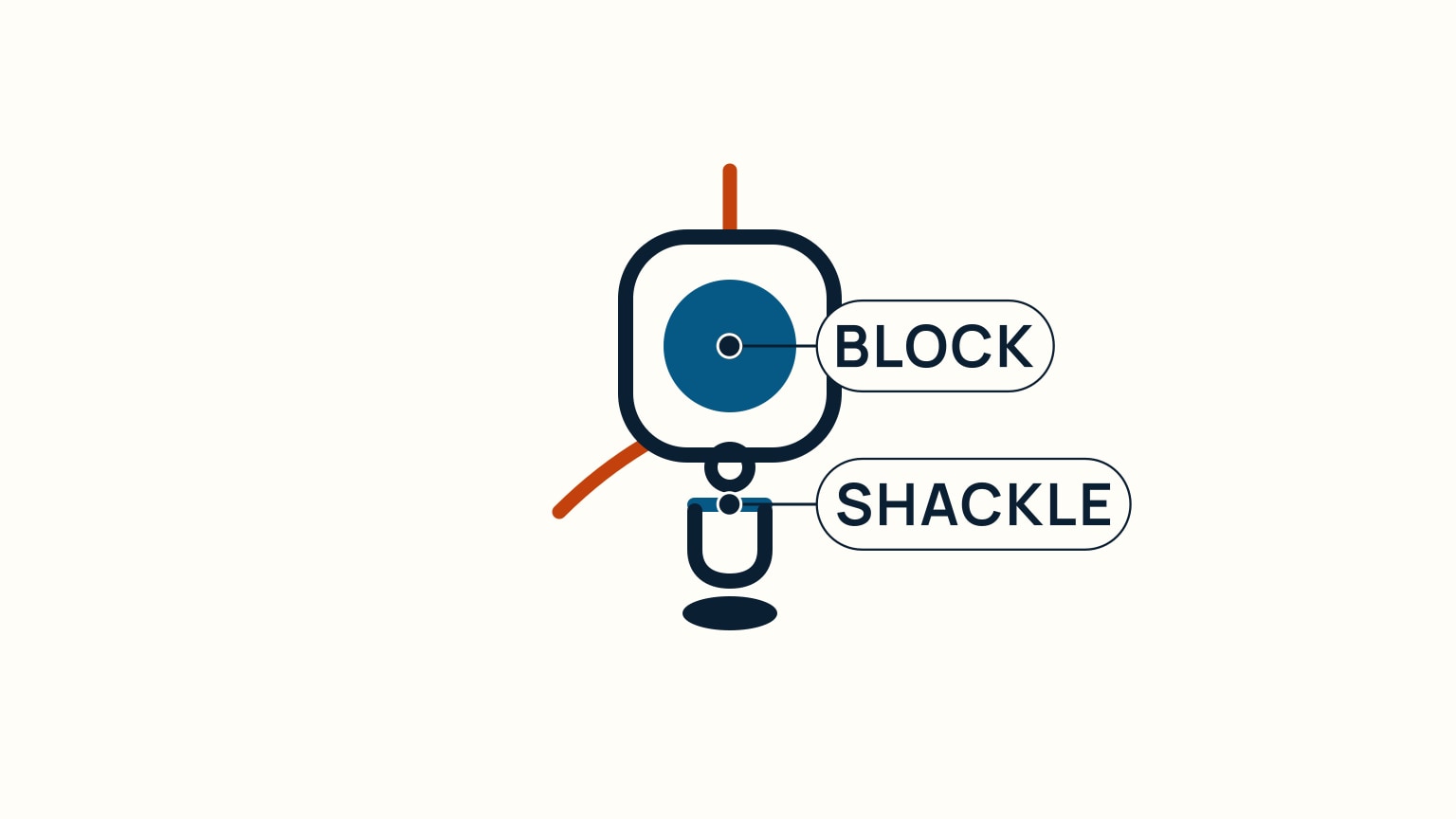
Two of the most common fittings on deck often show up attached to each other: a block and a shackle. A block is the nautical name for a pulley: a wheel, called a sheave, mounted inside a frame. A line runs through a block to change direction, and running several blocks together multiplies your pulling power well beyond what one line alone could manage. A shackle is simpler still: a metal loop, usually shaped like a U or a D, closed by a removable pin. Its job is joining two things together: a block to a deck fitting, a line to a sail, or one piece of hardware to another. Sailors often choose a D-shaped shackle for a connection that stays put, like a main halyard, and a quick-opening snap shackle for something swapped often, like a headsail changed out for different wind strengths. A block hanging from a shackle is a familiar sight on deck. One fitting redirects the load, while the other holds the assembly on.
Fairleads: Keeping the Lead Fair
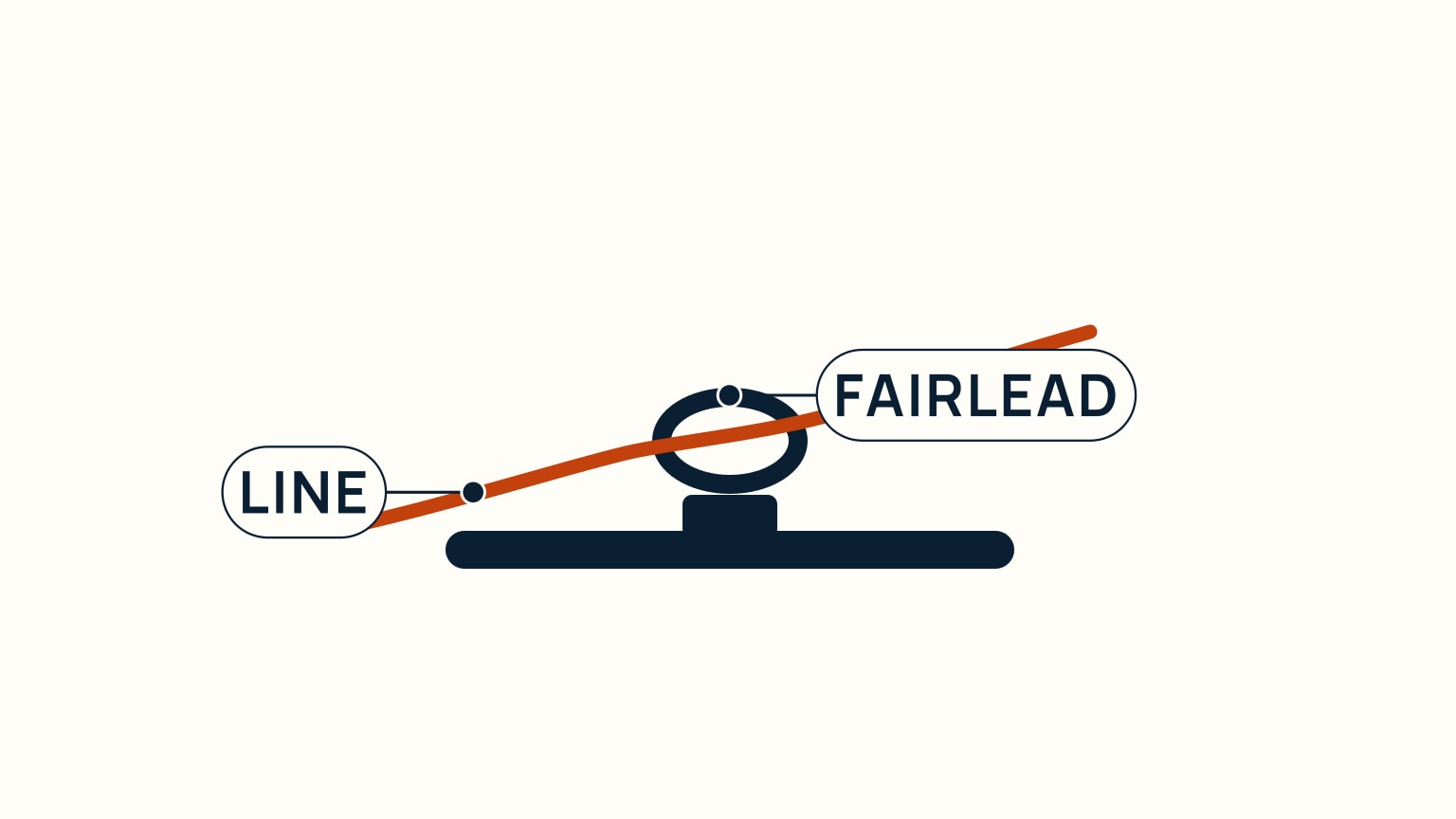
A fairlead has one job: guide a line so its "lead" (the path and angle it travels) stays fair, meaning low friction and low chafe. Without one, a line can rub against a deck edge, a hatch, or the cabin side every time it's pulled, wearing through its cover over a season of sailing. A fairlead can be as simple as a ring or a hook, or it can include a small pulley of its own. You'll typically find one wherever a line needs to turn a corner or cross open deck on its way to a winch or a cleat (a ring near the mast keeping a halyard running parallel to it, or a hook at the front of the cockpit giving a sheet somewhere clean to run). Some fairleads sit on an adjustable track and can slide fore, aft, or side to side, letting a sailor fine-tune exactly where a sheet leads before it ever reaches its winch.
Rope Clutches and Jammers: Freeing Up the Winch
A boat usually has more lines than winches, so most cockpits carry a row of rope clutches or jammers just ahead of the winches. Each one locks a line in place under tension, which lets you take that line off its winch and free the winch for a different job: hoist one sail's halyard, clutch it off, then use the same winch to trim a sheet. A clutch can be released even while it's still fully loaded, just by opening its handle. A jammer holds even higher loads but won't let go under tension: the line has to be pulled in on a winch first, taking the load off, before the jammer's handle will release it. Either way, you can still adjust the line's length in small steps while it stays engaged, without opening the fitting fully. Look for a row of levers just forward of the winches, each with its own line disappearing beneath it, and you've found the clutches.
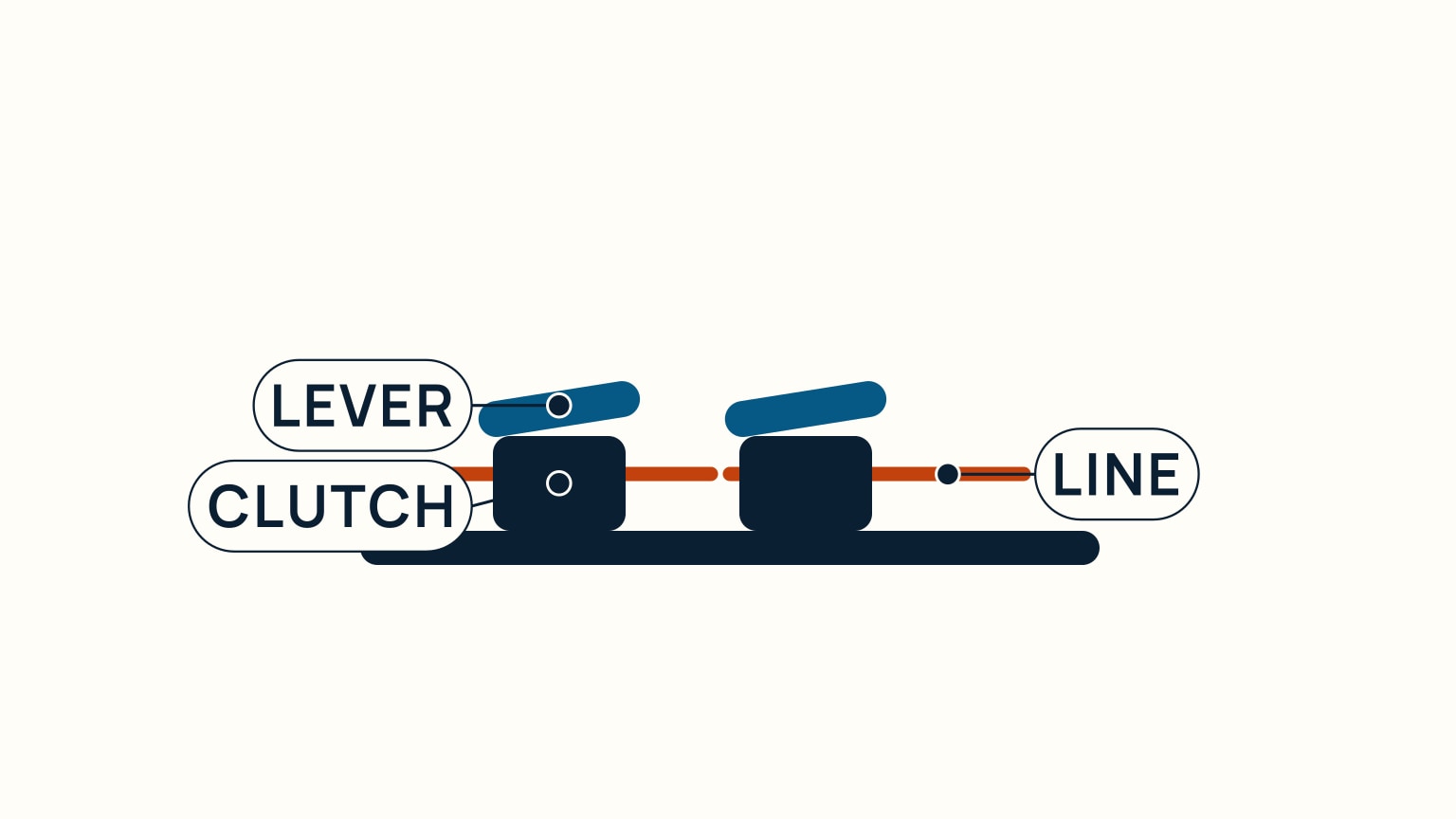
Travelers and Cars: Shifting the Sail's Angle
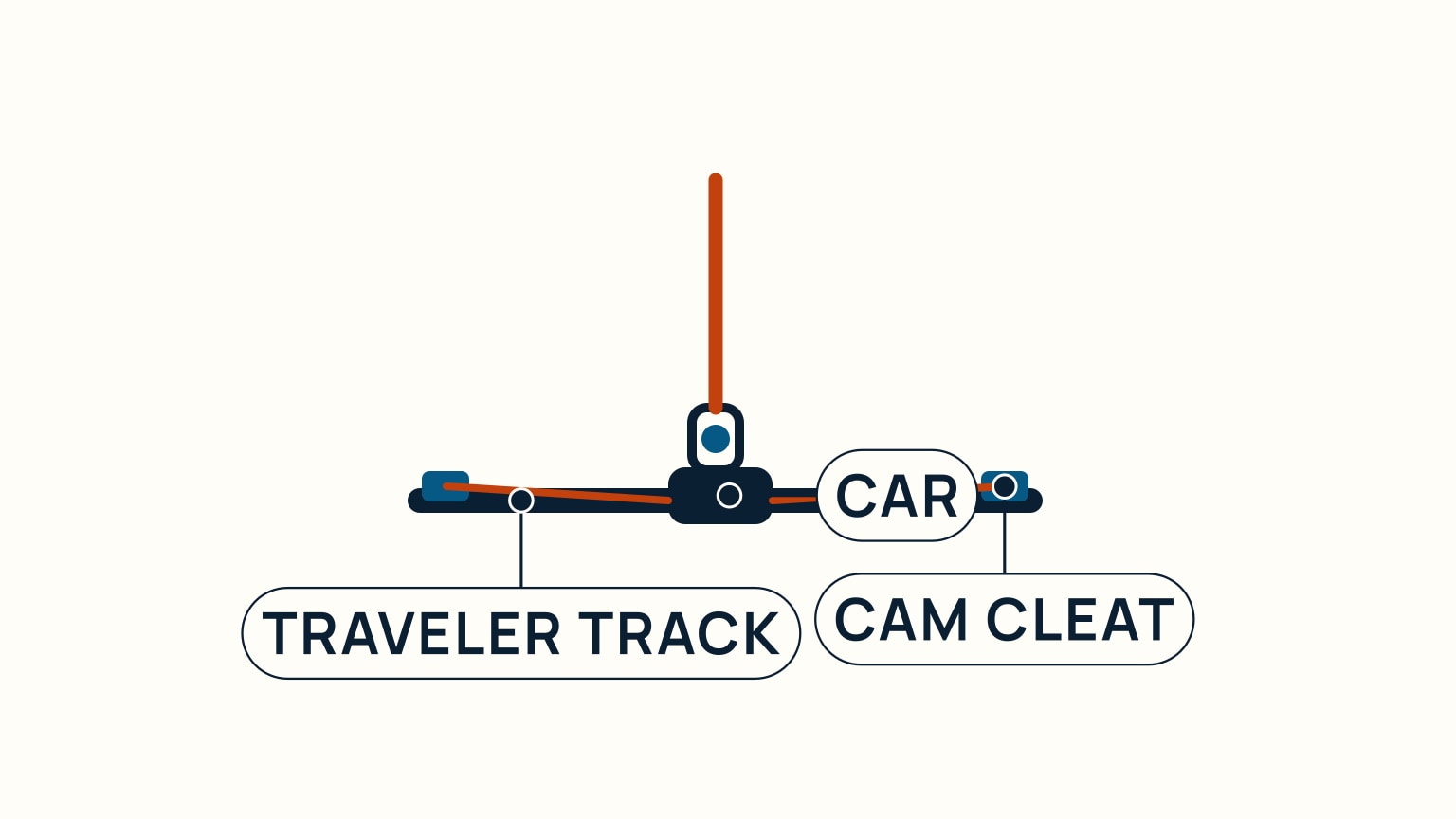
A traveler is a track, usually mounted across the cockpit or on the cabin top, with a car that slides along it, and the mainsheet's block attaches to that car instead of straight to the deck. Control lines let a sailor pull the car to one side or the other, changing the mainsail's angle to the wind without touching the mainsheet itself. That's a different effect from easing the mainsheet: easing the sheet lets the boom rise and adds twist to the sail as it goes out, while sliding the traveler car to leeward or windward shifts the sail's angle while the boom stays level and the sail's own shape barely changes. Recognize a traveler by its horizontal track, a small car riding on it, and a pair of control lines leading to cam cleats at either end. It looks like a miniature railway for the mainsheet's attachment point, and that's exactly what it is.
Trace one control from hand to sail
Choose a sheet or halyard while the boat is secured and the line is unloaded. Follow it from the sail attachment through every block, organizer, clutch, winch, and cleat. Name the job of each fitting. A block changes direction or provides purchase, a clutch holds a line, and a winch helps manage load. The exact layout belongs to that boat.
Repeat the trace in the direction load travels. Look for crossing lines, sharp leads, chafe, and a fitting that could be mistaken for another control. The winch guide explains wraps and safe line handling, while the winch-service guide covers internal care.
Inspect before loading
Check fasteners, movement, corrosion, cracks, loose parts, worn sheaves, damaged jaws, and the deck around the fitting. A smooth-looking line does not prove its hardware is secure. If a fitting moves in the deck, binds, or shows damage, unload it and arrange the correct inspection.
Keep fingers, hair, and clothing away from blocks, travellers, winches, and loaded lines. Never stand inside a loop or in the path a line or fitting would take if it failed. Hardware vocabulary is useful because it lets the crew identify the exact risk and control before load arrives.
Finish by drawing the control path from memory, then check it against the boat. If you cannot explain where a loaded line goes and how it is released, seek a briefing before operating it.
Six fittings, six distinct jobs: a cleat holds a line once you've hitched it on, a block redirects one, a shackle joins two pieces of hardware with a pin, a fairlead keeps a line's path fair and chafe-free, a rope clutch or jammer locks a line so its winch is free for other work, and a traveler slides the mainsheet's attachment point side to side. None of them is complicated in isolation, but together they turn a deck full of lines into a system you can read at a glance. Every one of them, being a small pinned or bolted fitting under real load, is worth a quick visual check before you cast off. SailStarter's beginner lessons walk through this hardware alongside the lines and sails it works with, building the same recognition on deck that you've just built here.
Try it from the lesson
Can you spot the next move?
A line needs to change direction smoothly on its way to a winch. Which fitting does that?
Why you can trust this guide
. We build each guide from public seamanship and safety sources, then teach the universal principle before any local difference.