Chart your course
Sailboat Mast and Boom Explained: The Two Spars Over Your Head

Quick answer
The short version
A sailboat's mast and boom are its two main spars, the rigid poles that give the rig its shape, as opposed to the wire and rope that supports and controls it. The mast is the tall vertical spar rising from the deck; it carries the sails and is itself held upright by a web of wire called standing rigging. The boom is the horizontal spar reaching aft from the base of the mast, and it holds the bottom edge of the mainsail. The two join at the gooseneck, a pivoting fitting that lets the boom swing side to side as you sail. Partway up the mast, short struts called spreaders push the wire bracing it outward for a stronger hold. Spars and rigging stay fixed in place; only the boom and the lines that trim it actually move.
Stand at the base of a sailboat's mast and look up, and the whole rig can feel like one tangled shape. It isn't. Two rigid poles: spars: do the structural work: the mast standing tall from the deck, and the boom reaching aft near its foot. Everything else up there is either the wire holding those spars in place or the sail they carry between them. The mast and the boom are worth a first, plain orientation on their own: what each one is, how they join at the gooseneck, what the spreaders partway up the mast are doing, and where the mainsail actually attaches to each spar. By the end, you'll be able to look at any sloop and sort what's fixed in place from what's actually built to move.
The Mast and Boom Are Spars
Every sailboat's rig is built from two kinds of parts: spars, the rigid poles that give the rig its shape, and rigging, the wire and rope that supports and controls it. The mast and the boom are both spars (poles, not wire).
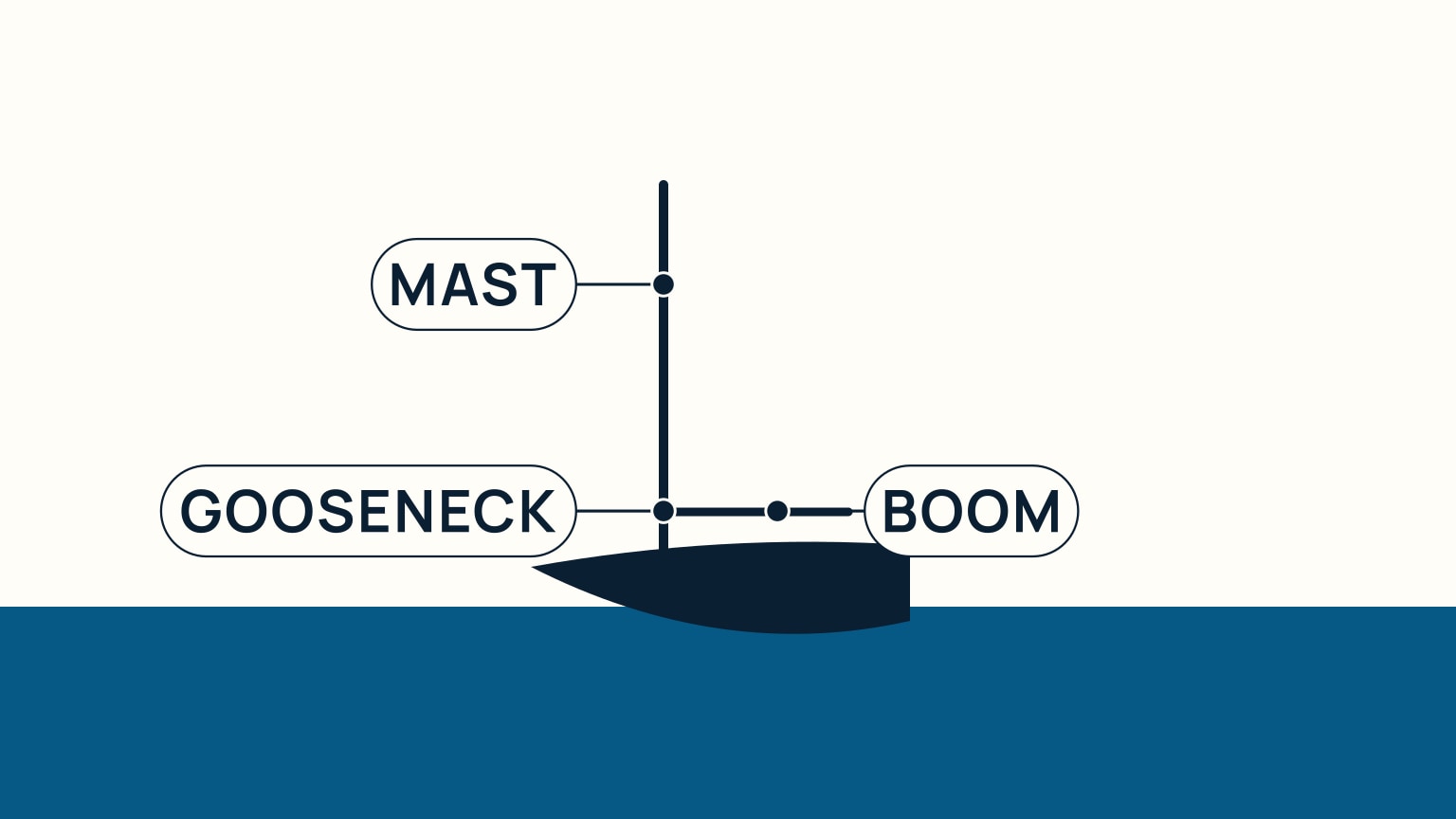
The mast is the tall vertical spar rising from the deck or cabin top; it's the pole that carries the sails and gives the rig its height. Nearly every mast is itself held upright by rigging (wire running from the mast to the bow, stern, and sides of the boat) rather than standing free on its own.
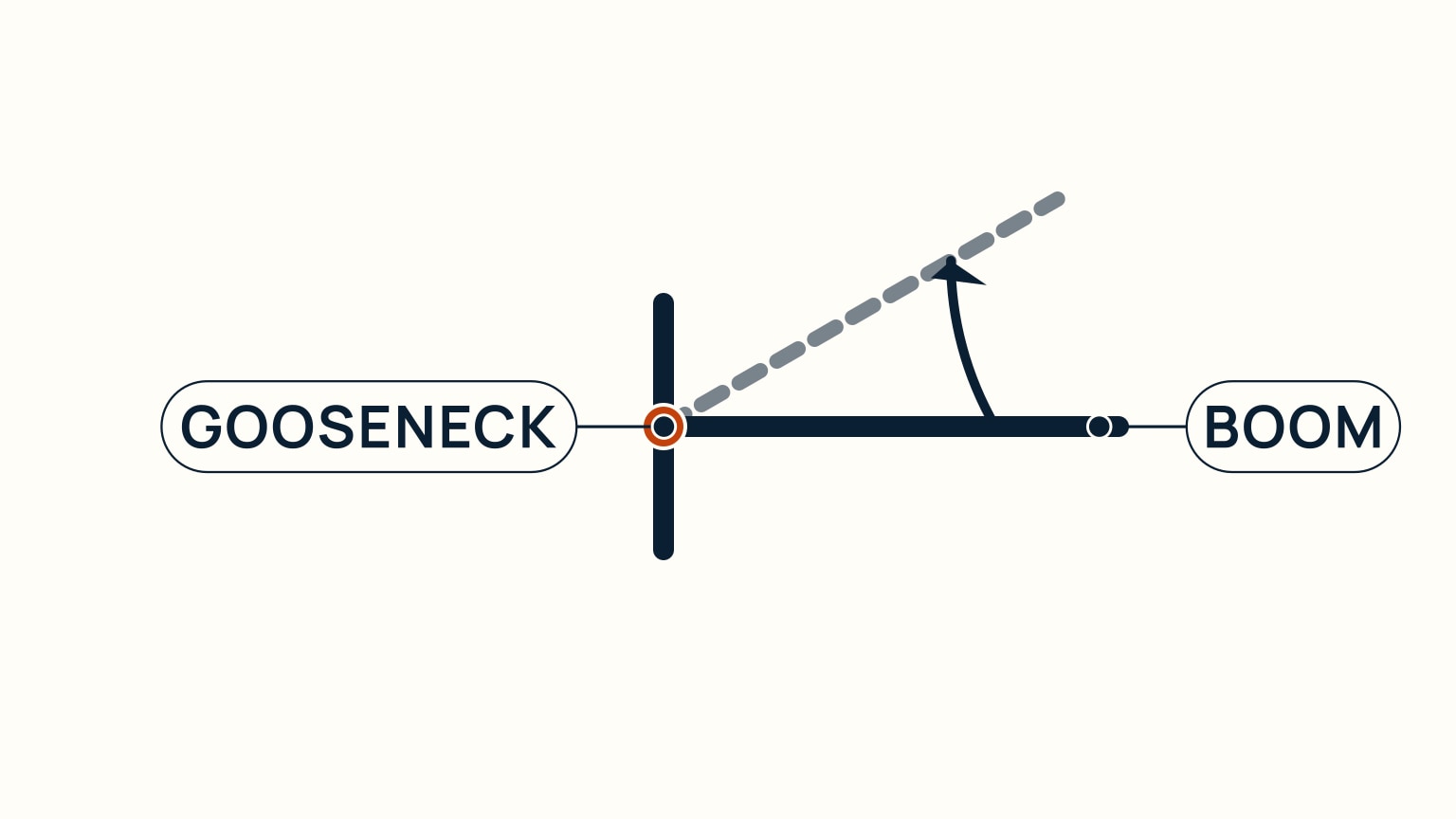
The boom is the horizontal spar that reaches aft from near the base of the mast, holding the mainsail's bottom edge and letting a sailor control the sail's angle and shape. The two spars join at the gooseneck, a pivoting fitting that lets the boom swing from side to side as the sail is trimmed.
Spreaders Widen the Brace
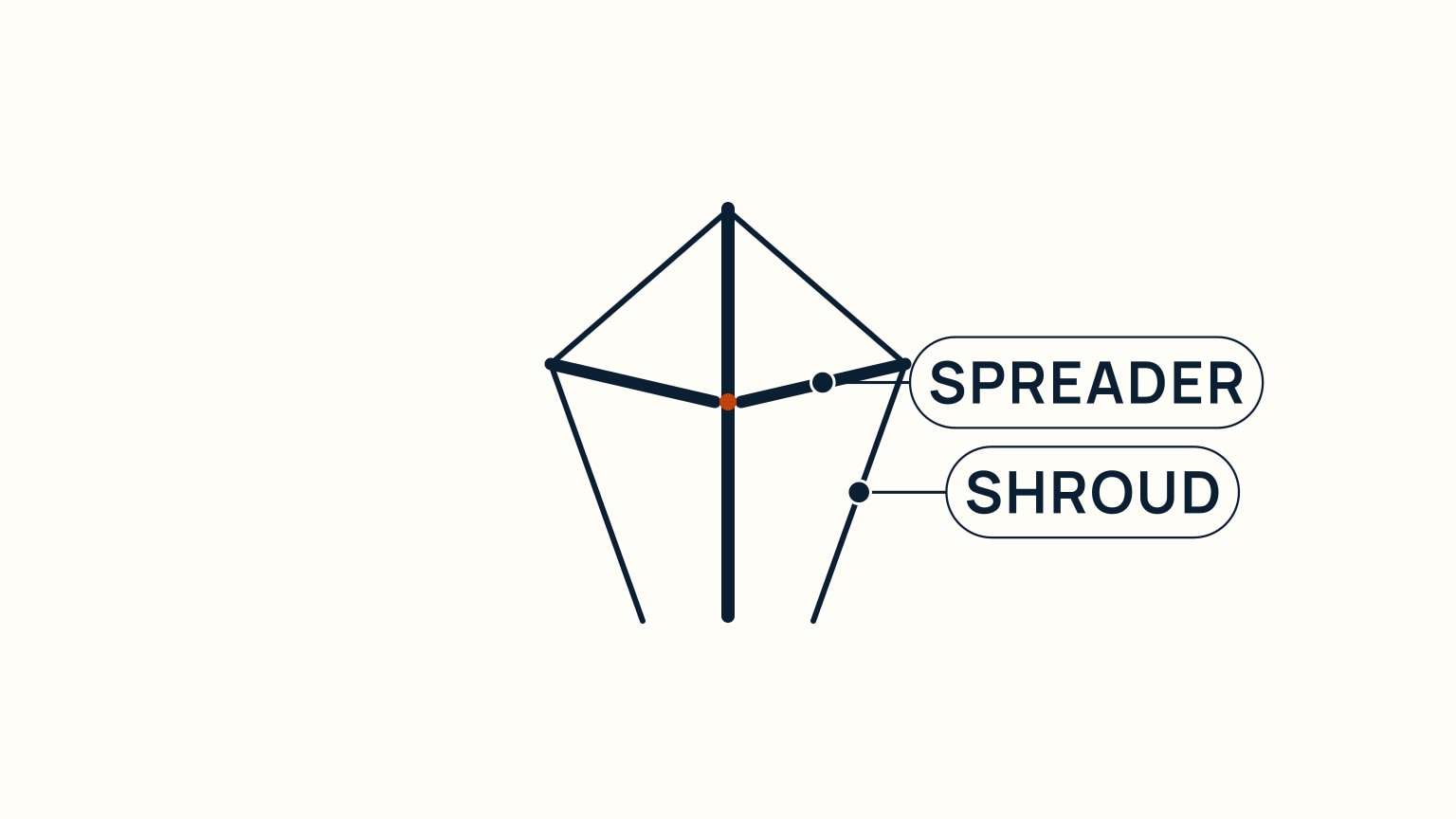
Partway up the mast, you'll often see a pair of short struts jutting out to each side. These are spreaders. A spreader's job is to push the wire bracing the mast, called a shroud, out and away from the mast, widening the angle at which that wire meets it.
A wider angle means the shroud can hold the mast up with less tension, so the wire and the mast itself can be built lighter. A boat's width limits how long a single pair of spreaders can be, so very tall masts often carry more than one pair, stacked at different heights up the spar.
Spreaders belong to the mast, not the boom. You'll only ever see them angled outward partway up the vertical spar, holding the wire clear of it. How that wire is tensioned and anchored to the hull is its own story; here, it's enough to spot the strut and know its one job: widen the brace.
Where the Mainsail Actually Attaches
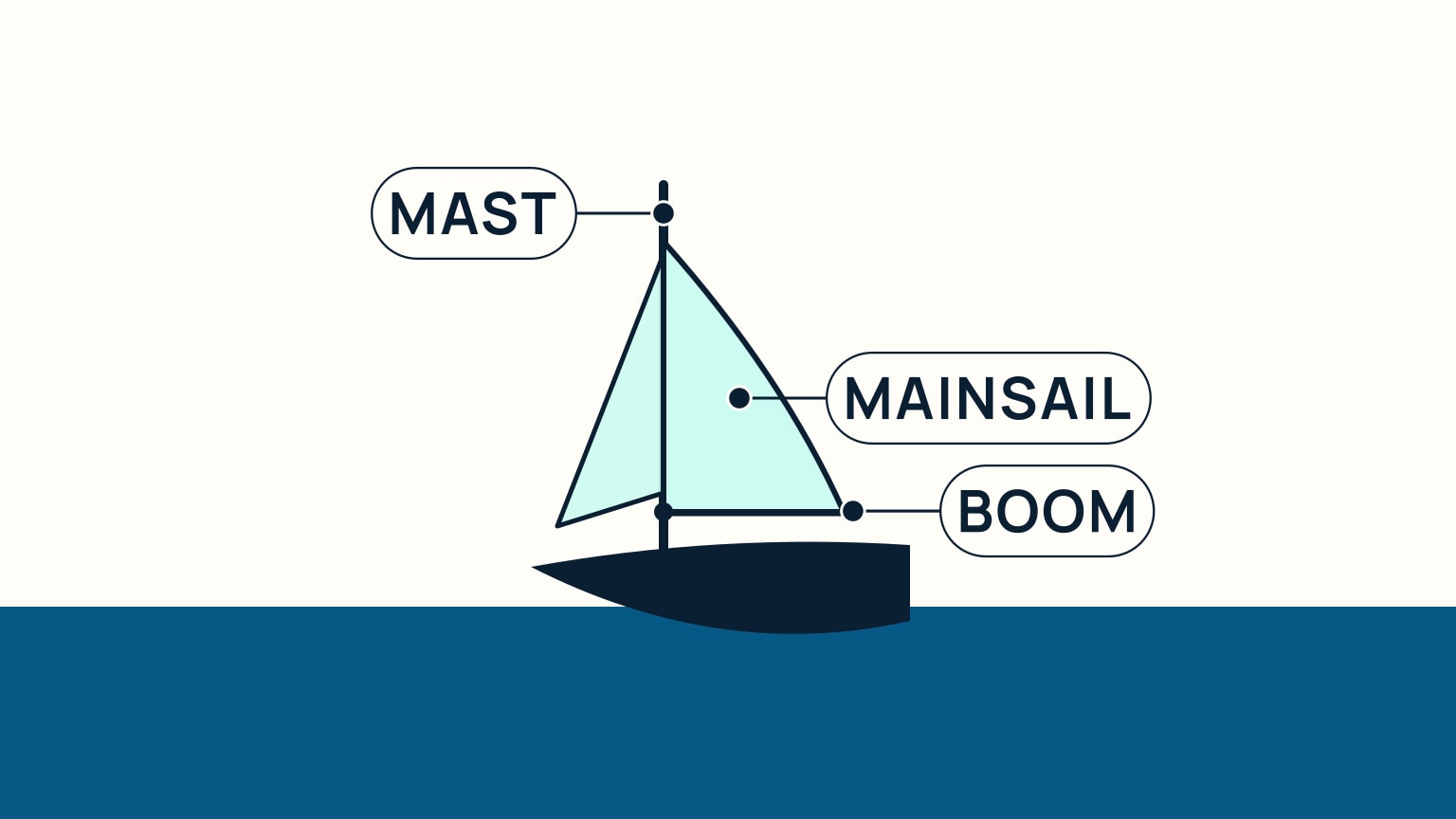
Once you can tell the mast from the boom, the sail's fit makes sense at a glance. The mainsail's front edge runs up alongside the mast, attached to it for the sail's full height. Its bottom edge runs aft along the boom, so trimming the boom in or out changes the sail's angle to the wind.
A headsail, set forward of the mast, works differently: it doesn't attach to either spar directly, but to a forward wire called the forestay, which itself runs from near the top of the mast down to the bow.
You don't need every edge and corner's name to get the picture: the mainsail hangs between the two spars you've just met, mast on one side and boom on the other, and that's the shape a sloop's whole sail plan is built around.
What Stays Fixed and What Actually Moves
Trace the loads while the boat is secured
Start with the mast step or partners and follow the standing rigging to chainplates and hull structure. The forestay supports the mast forward, the backstay or aft rigging supports it aft where fitted, and shrouds support it sideways. Spreaders push shrouds outward to improve their supporting angle. The exact arrangement varies by rig.
Now trace the moving controls. A halyard raises a sail. Sheets change sail angle. The mainsheet controls the boom and mainsail, while a vang or kicker controls boom rise where fitted. Outhaul, reefing lines, traveler, topping lift, and furling systems add their own loads. Do not move an unfamiliar control simply because it leads to the mast or boom.
Respect the boom's sweep
The boom can cross the cockpit quickly during a tack, gybe, accidental gybe, or luff. Keep heads and bodies below or outside its path, and keep loose equipment away from the mainsheet system. The skipper should warn before a manoeuvre and control the sail according to the boat's procedure.
Loaded lines and fittings can also move suddenly. Do not stand in a bight, lean on shrouds during rig work, or place fingers in goosenecks, blocks, tracks, or travelers. Inspect from a safe position while the boat is unloaded whenever possible.
Use the names to improve communication
“Ease the mainsheet” identifies a moving line. “Check the gooseneck” identifies the mast-boom joint. “Look at the port shroud” identifies a side and a standing support. Precise words shorten instructions when the boat is noisy or moving.
The parts-of-a-sailboat guide places these items on the whole boat, while sailing terms for beginners covers directions and line names. Learn the generic function, then compare it with the rig plan and manual for the actual boat.
Before sailing, look for broken wire, cracked terminals, loose fasteners, corrosion, chafe, damaged spreader ends, track problems, and unusual mast alignment. Rig tuning, stepping, structural repair, and work aloft require suitable equipment and experience. Escalate anything whose load path or safe isolation is unclear.
Stand back and the whole rig sorts into two groups. The mast, the boom, and the wire holding the mast up all stay in place once the boat is rigged. None of it is something a sailor adjusts underway. The exception is the boom itself: although it's a spar, it's built to swing, pivoting at the gooseneck every time the sail is trimmed to a new angle.
That swing is worth respecting. During a tack (turning the bow through the wind), it moves gently, but during a gybe (turning the stern through the wind instead), the mainsail fills from its far side and can carry the boom across quickly and with real force. Keep your head low and stay clear of its path whenever it's crossing the boat.
Everything that actually moves the sail (the lines that raise it and the lines that trim it) is a different system entirely from the fixed spars and wire you've just learned to name. That's a story for another lesson; for now, you can look up at any sloop and sort what's fixed from what moves.
A sailboat's overhead rig stops looking like a tangle once you know two poles are doing the structural work: the mast standing tall from the deck and the boom reaching aft from its base, joined at the gooseneck and braced partway up by the spreaders. The mainsail hangs between them, its front edge on the mast and its bottom edge on the boom, while the boom itself is the one spar built to swing. Everything else you saw up there (the wire holding the mast up, the lines that actually raise and trim the sail) has its own name and its own short lesson waiting. SailStarter's beginner lessons walk through the rest of the rig at the same easy pace, one clear part at a time, so the next sailboat you look at reads as familiar instead of overwhelming.
Try it from the lesson
Can you spot the next move?
'Which supports the mast: the shrouds and stays, or the sheets?'
Why you can trust this guide
. We build each guide from public seamanship and safety sources, then teach the universal principle before any local difference.