Chart your course
Tiller vs Wheel Steering on a Sailboat
Quick answer
The short version
A tiller and a wheel can both steer a sailboat well. A tiller often connects more directly to the rudder, gives clear feedback, and leaves the cockpit open when folded or removed, but it sweeps through crew space while turning. A wheel can provide mechanical advantage and a fixed helm position on a larger boat, yet the pedestal and linkage occupy space and add parts to inspect. Boat design matters more than the control's name. Try both underway, check visibility and reach, inspect the complete steering path, and find the emergency steering equipment. Choose the system that suits the boat, regular crew, and maintenance you can support.
Beginners sometimes treat a wheel as the mark of a serious yacht and a tiller as training equipment. Real boats are less tidy. Fast performance boats, compact cruisers, and traditional yachts may use tillers, while many cruising boats use wheels because their rudders, cockpit layouts, and steering loads suit them. You steer through the whole system: control, linkage, rudder stock, bearings, rudder, and the water flowing past it. How to Steer a Sailboat covers what that rudder is actually doing to the water; this article compares the two ways of turning it.
Feedback, cockpit space, and inspection access all shift depending on which system the boat carries.
| Dimension | Tiller | Wheel |
|---|---|---|
| Feedback | Direct lever; load usually arrives at your hand right away | Filtered through cables, gears, or hydraulics; can register later and feel smaller |
| Movement direction | Moves opposite to the direction you want the bow to go | Turns in the direction you want the bow to go |
| Cockpit space | Sweeps an arc across the cockpit; can free space when removed | Fixed pedestal station occupies space continuously |
| Typical boat fit | More common on smaller, faster, or simpler boats | More common on larger cruising boats, given steering loads and layout |
| Inspection | Fittings, stock, bearings, laminate, and stops are mostly visible | Chain, cables, rods, sheaves, and quadrant are mostly hidden |
How do feel and feedback compare underway?
A tiller usually moves in the opposite direction from the bow: push it to port and the rudder turns the boat to starboard while moving ahead. Its direct lever can make changes in water pressure and balance easy to feel. The tiller may load up as heel or sail balance changes. That feedback helps only when the helmsperson learns to make small movements instead of wrestling it.
A wheel turns in the direction you want the bow to go, though the number of turns and mechanical ratio vary. Cables, chain, gears, rods, or hydraulics can provide mechanical advantage and change the feel reaching your hands. Neither arrangement guarantees better control. Sail trim, rudder design, bearings, linkage condition, boat speed, and heel all shape helm response.
Why the helm loads up mid-sail
As a boat heels further or the sails power up, many helms feel heavier, whatever is in your hands. Sailors call this weather helm, and Weather Helm Explained covers why it builds and what eases it. The steering type doesn't cause that load. It only decides how directly you feel it and how much hardware sits between your hand and the rudder.
A gust often announces itself as extra weight before the boat visibly reacts. On a tiller, that increase usually arrives at your hand right away, so a small ease of the sheet or a touch of helm can catch it early. On a wheel, the same increase in load typically still arrives, filtered through whatever cables, gears, or hydraulics connect it to the rudder, so it can register a little later and feel smaller by the time it does. Neither response is automatically safer. It changes how much you lean on feel versus watching the sail and the water for the same information.

What does the working cockpit look like?
A tiller sweeps an arc across the cockpit. Crew need to know where it will move during a turn, and bags or legs cannot block it. When secured upright or removed at anchor, it may free much of the space. The helmsperson can often shift position to see around a sail, but must keep the tiller within reach and avoid trapping it against seating.
A wheel creates a fixed station and a pedestal that remains in the cockpit. Large wheels may improve reach from the side deck or coaming but make passage around them tight. Small wheels save room but may not suit the steering geometry. Sit, stand, tack, reach controls, and move fore and aft on the real boat. Check whether a shorter or less mobile crew member can steer and still see.
A quick cockpit walk-through
Stand at the helm and swing the control hard over in both directions while someone else watches where it passes and times the arc. On a tiller boat, check whether that swing crosses the companionway, a winch, or wherever crew usually sit working the sheets. On a wheel boat, walk around the pedestal at a working heel angle rather than standing upright at the dock, and see whether the rim, brake, or engine controls block the path forward. Repeat the check underway if you can. A cockpit that feels open when the boat is level can close up the moment it heels.
Inspect complexity and emergency use
A simple tiller may attach directly to the rudder head, but its fittings, stock, bearings, laminate, and stops still require inspection. Look for play, cracking, corrosion, loose fasteners, stiffness, and water entry. Tiller pilots and restraints add their own attachment loads and must never replace an active lookout. Boat Steering Failure covers the immediate response either system may need if the helm suddenly stops answering.
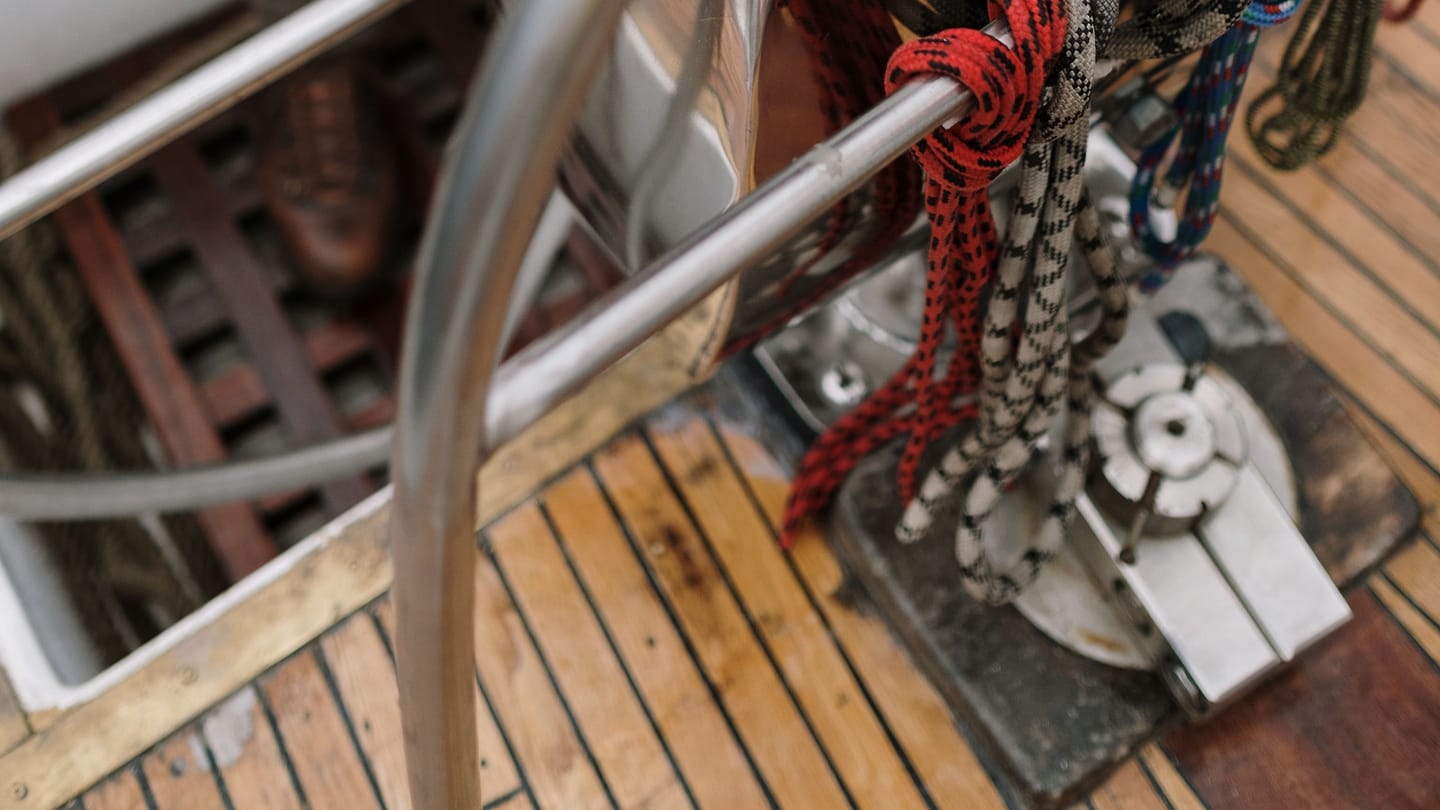
Wheel systems hide more of their path. Access the chain or hydraulics, cables or rods, sheaves, quadrant, fasteners, mounts, stops, stock, and bearings as fitted. Follow the maker's inspection and lubrication instructions. A wheel that feels stiffer than it used to, carries more play before the rudder answers, or transmits a grinding or notchy sensation as it turns is telling you that something has changed somewhere along that hidden path. Because you can't see most of a wheel's linkage while steering, a change in feel is often the earliest warning you get, which is one more reason to know what the system felt like when it was healthy.
Common mistakes with emergency steering
Locate the emergency tiller and fit it in calm conditions. The most common failure is never asking the question until the primary system already needs an answer. A few habits catch that early. Find the fitting before you need it. Time how long it takes to install. Check that the socket hasn't corroded shut from disuse. Confirm that whatever gear normally sits on top of it can be cleared quickly, not just in principle. Then steer with it, briefly, in calm water, so the first time you rely on it isn't also the first time you've used it. Stored beneath a packed locker or impossible to fit around cockpit furniture is not a practiced backup.
Choose by trial, not image
Steer each candidate under power and sail at several safe speeds. Make small course changes, tack, reverse, and hold a steady heading. Notice feedback, friction, play, visibility, fatigue, seating, and reach to sheets or engine controls. Ask the regular crew to try as well. One person's comfortable wheel height can be another person's shoulder strain.
Separate the steering type from the boat's condition. A neglected wheel system may feel vague; a worn tiller bearing may feel worse. A well-designed example of either can be precise and comfortable. Consider repair access and local service. Then choose the complete boat that meets your sailing job.
Does boat size decide it?
Larger cruising boats more often carry wheels, because of the steering loads and cockpit layouts involved, and small, fast, or simple boats more often carry tillers, but neither pattern is a rule. What Size Sailboat Is Best for a Beginner covers the tradeoffs that drive that choice, of which steering type is only one. Judge the specific boat in front of you rather than assuming its size already settled the question.
Can you switch later?
Changing from tiller to wheel later is rarely a casual accessory swap, because structure and geometry must carry steering loads either way. Treat it as part of a boat-buying decision, not a future upgrade you'll get around to. If neither system on a boat you like feels right after a real trial, that's useful information now, while you can still choose a different boat, rather than after you own one.
SailStarter's steering lesson shows how the rudder changes water flow and turns the boat. Use it before your next trial, then compare a tiller and wheel without trying to prove a favourite. Hold a steady course, make a small correction, feel the load during a gust, and move through a tack. After sailing, trace the linkage and fit the emergency steering arrangement with the owner or instructor. Write down what your hands, shoulders, sightline, and crew space told you. Good steering feels predictable and remains inspectable. The right choice is the one that lets your actual crew control the actual boat without hiding maintenance or emergency problems.
Try it from the lesson
Can you spot the next move?
A line needs to change direction smoothly on its way to a winch. Which fitting does that?
Why you can trust this guide
. We build each guide from public seamanship and safety sources, then teach the universal principle before any local difference.