Chart your course
Sailboat Sea Trial Checklist for Buyers

Quick answer
The short version
A sailboat sea trial is a planned operating check, not a joyride and not a substitute for a survey. Agree who is responsible for the boat, the route, weather limits, crew roles, and which systems may be operated. Begin at the berth, observe a cold start when possible, then test steering, forward and reverse, engine load, sailing controls, instruments, and basic comfort in safe conditions. Watch temperatures, charging, exhaust cooling flow, vibration, leaks, and control response. Record what was tested, what was not, and what needs specialist follow-up. Pair the trial with an independent inspection and haulout for a serious purchase.
The useful sea trial begins before the lines come off. You are trying to learn how a particular boat starts, moves, stops, steers, sails, and supports its crew. A fast reach in pleasant weather can hide awkward controls, a weak reverse response, poor visibility, or a leak that appears only under load. Bring the surveyor when that is part of the agreed scope, and ask the owner or responsible operator to handle unfamiliar systems. Use a written sequence so conversation and excitement do not erase the less glamorous checks.
Plan the trial before departure
Confirm permission, insurance arrangements, responsibility, crew, duration, route, and a safe weather window. Ask whether the engine can be left cold for the start and which equipment will be demonstrated. List any systems that cannot be tested, such as heating on a warm day or sails not aboard. A limitation belongs in the final record, not in your memory.
Bring the boat’s specifications, equipment list, earlier survey information, and your questions. Carry a notebook or use a simple form with time, engine speed, readings, and observations. Do not create risky tests. A sea trial is normal operation within safe limits, not a stress test in rough conditions. The skipper retains responsibility for navigation and the crew should keep a proper lookout.

A Short Script for Agreeing Scope
Picture a weekday afternoon trial on a cruising sloop you found through a broker. Before anyone steps aboard, say out loud who is in charge if something goes wrong (usually the owner or the broker's skipper, not you), how long the trial will run, and which route keeps you clear of other boat traffic while giving you open water to work up to speed. Ask directly whether the engine has been run today. A boat that was warmed up an hour before you arrived will hide a hard cold start, one of the more telling moments in the whole trial. Ask what is not aboard or not working (a missing sail, a disconnected instrument, a system nobody wants tested that day) and write the answer down rather than trusting memory once you are underway and distracted.
That short conversation is worth more than it sounds. If you compare this trial against records from a used sailboat inspection checklist or a prior owner's maintenance log, you already have a list of systems to prioritize instead of testing everything with equal attention.
Test the boat under power
Before starting, look at the bilge and machinery space so you have a baseline. Check fluid levels only with permission and according to the manual. Observe the starting sequence, warning lamps, smoke, cooling-water discharge where visible, charging indication, gauges, sound, and vibration. After warming, check for new water, fuel, oil, coolant, or exhaust evidence.
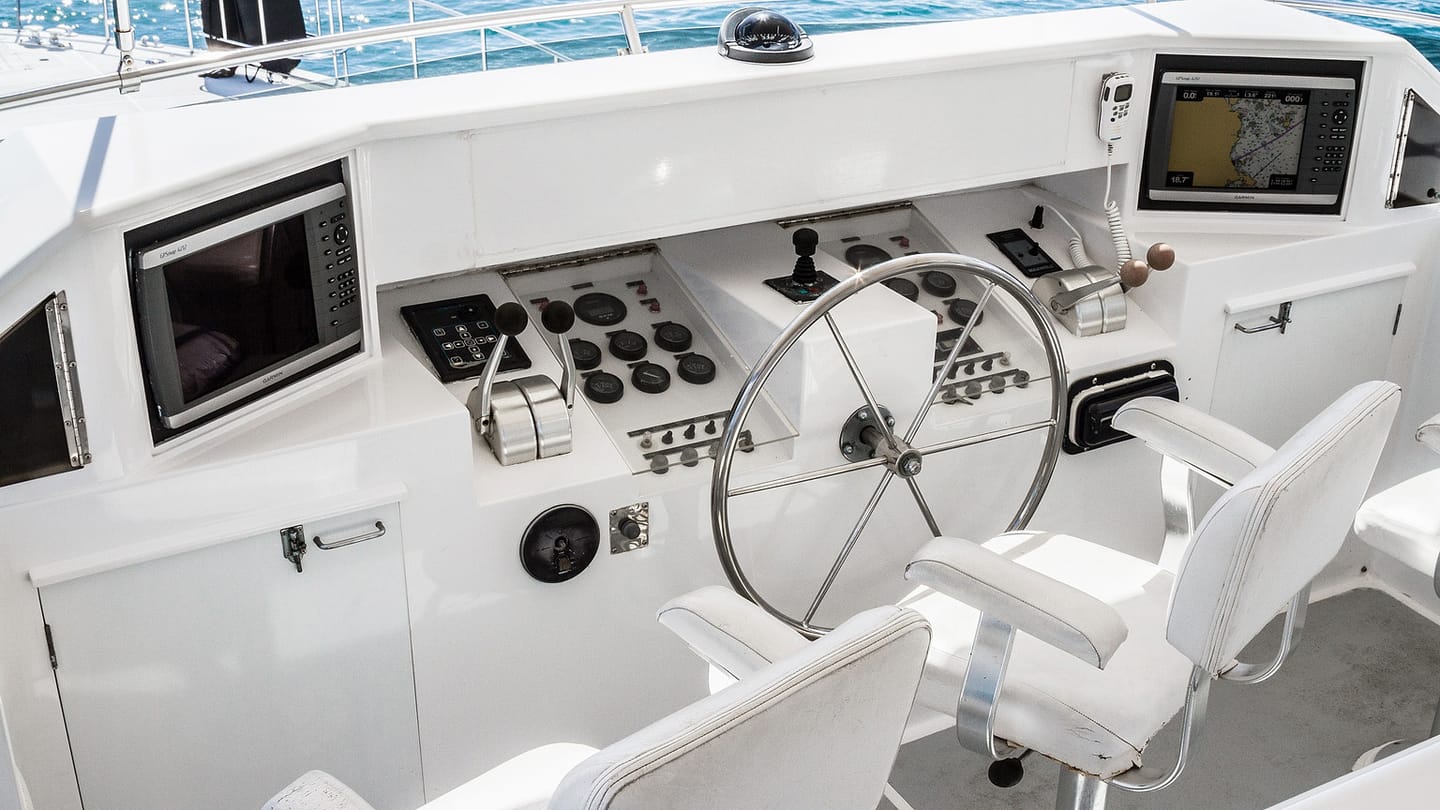
In open water, operate at several normal speeds and note whether temperature and charging remain stable. Try ahead and astern engagement, low-speed steering, stopping, and turning where safe. Notice prop walk, delayed response, unusual noise, excessive vibration, and whether the helmsperson can see. Return to the machinery space after the loaded run. A clean idle at the berth cannot show every fault that appears under load.

Reading the Warning Signs Under Load
A gauge that settles is reassuring. A gauge that keeps climbing is not, even if it has not reached a red line yet. Watch the trend over the loaded run rather than a single glance: temperature that rises steadily instead of levelling off, charging indication that fades as load increases, vibration that grows rather than staying constant, or any smell of exhaust or fuel that was not there at idle are all reasons to bring the engine back to idle and note the finding rather than push on to see how far it goes. None of these observations diagnoses the cause for you. That is exactly why the record says "follow-up for a mechanic" instead of a guess, and why marine diesel overheating is worth reading before your own trial so you recognize a developing problem instead of a settled one.
Test steering, sails, and deck controls
Move the helm through its useful range and feel for stiffness, play, vibration, or lag. Watch the rudder response where practical. Find the emergency steering equipment and ask how it is fitted. Under sail, hoist, reef, tack, ease, furl, and lower the sails that the conditions safely allow. Look at winches, clutches, tracks, sheets, halyards, and furling gear while they are working.
Sail on more than one heading. Notice balance, weather helm, visibility past the sails, line loads, and whether controls can be reached without awkward movement. Look for water entering around fittings as the boat heels. The purpose is not to judge peak speed. It is to learn whether the boat behaves predictably and whether its layout suits the people who will actually operate it.

What the Helm Should Feel Like
A helm without obvious faults still tells you something on every heading. Turning it should meet steady, even resistance the whole way through its range, not a loose middle section where nothing happens followed by a sudden bite. Letting go briefly (only where safe, and only long enough to feel the boat's tendency) should show the boat settling toward a predictable balance rather than lurching one way. If the wheel or tiller needs constant correction on a heading where the sails look properly trimmed, that is worth a note even though it is not a clear pass or fail on its own. Small, specific observations like this are more useful later than a general impression that the boat "felt fine."
Record results and define follow-up
Check navigation displays, depth, speed, lights, pumps, charging sources, communications, and domestic equipment within the agreed scope. Compare readings with independent observations where possible. Sit in the normal helm and crew positions. Try moving below while someone remains responsible on deck. Noise, handholds, ventilation, bunk access, and seasickness exposure are ownership facts too.
At the end, repeat the bilge and machinery-space look. Photograph readings or findings with permission. Mark each checklist line tested, observed, not tested, or follow-up. Send engine data to a mechanic, rig questions to a rigger, and structural uncertainty to the surveyor. A successful trial does not prove a boat fault-free. It gives you organized operating evidence to combine with the survey, haulout, records, and purchase terms.
Turn Notes Into a One-Page Sheet
Four short columns do most of the work: system, what you did, what you observed, and status. A few filled-in lines might read: engine cooling, ran twenty minutes at cruising speed, temperature held steady, no follow-up. Autopilot, none aboard, not tested. Forestay and swage fitting, visual look only from deck, small rust streak near the terminal, follow-up for a rigger. Bilge, checked before and after the loaded run, dry both times, no follow-up. None of those four lines proves the boat sound or unsound by itself. Together they turn a pleasant afternoon into evidence you can hand to a surveyor, and they make the gap between "I tested this" and "I only looked at this" impossible to blur later. Pair that sheet with the findings from sailboat survey red flags and you have a much clearer view of which follow-up items are routine and which deserve a firm answer before you commit.
Common Questions Before You Commit
Can you run the engine or handle the helm yourself during the trial? Usually yes for the parts you already know, but agree it beforehand, and let the owner or their skipper handle anything unfamiliar, such as an unusual reefing system or a windlass you have never used. What if the boat has no sails aboard, or the wind is too light to load them properly? Record that limitation plainly rather than guessing at how the rig would behave under load you never actually applied. Does a clean trial mean the boat is sound? No. It means the systems you tested behaved normally on the day you tested them, in the conditions you had, which is exactly why a trial pairs with an independent survey and a haulout rather than replacing either one.
Use SailStarter’s first-boat lesson to write the operating questions your own sailing plan creates. Then turn those questions into a one-page sea-trial sheet with four phases: berth, power, sail, and return. Leave room for readings and untested items. Share the plan with the owner, broker, skipper, and surveyor before the day so access and expectations are clear. During the trial, let the responsible operator keep control while you observe and record. Review the notes after the boat is secured, when the pleasant sail is no longer steering the decision. The right outcome may be an offer, a specialist check, a price discussion, or a polite no.
Try it from the lesson
Can you spot the next move?
A wide sailboat glides past on two side-by-side hulls, barely leaning at all. What type is it?
Why you can trust this guide
. We build each guide from public seamanship and safety sources, then teach the universal principle before any local difference.