Chart your course
Sailboat Survey Red Flags Buyers Should Understand

Quick answer
The short version
Sailboat survey red flags are findings that create a serious safety, structural, financial, or access question. Examples include unexplained structural cracks or movement, persistent moisture evidence, active leaks, severe corrosion, poor repairs, loose keel or rudder attachments, deteriorated rigging, unsafe electrical work, and machinery faults under load. Context matters: one cosmetic crack is not equal to movement at a loaded fitting, and a long list of small jobs may be less important than one inaccessible structural uncertainty. Ask the surveyor to explain evidence, consequence, urgency, repair scope, and any area not inspected. Use specialists and written estimates before deciding whether to renegotiate or walk away.
A survey report is not a pass-or-fail certificate. It records what the surveyor could inspect on a particular day, within an agreed scope. Most used boats have findings. The buyer’s job is to understand which ones affect immediate operation, which are ordinary maintenance, which need a specialist, and which leave too much uncertainty. Read the limitations as carefully as the recommendations. A polished summary means little if the rig was not inspected aloft, the engine was never loaded, or the hull could not be seen ashore.
Look for structure and water pathways
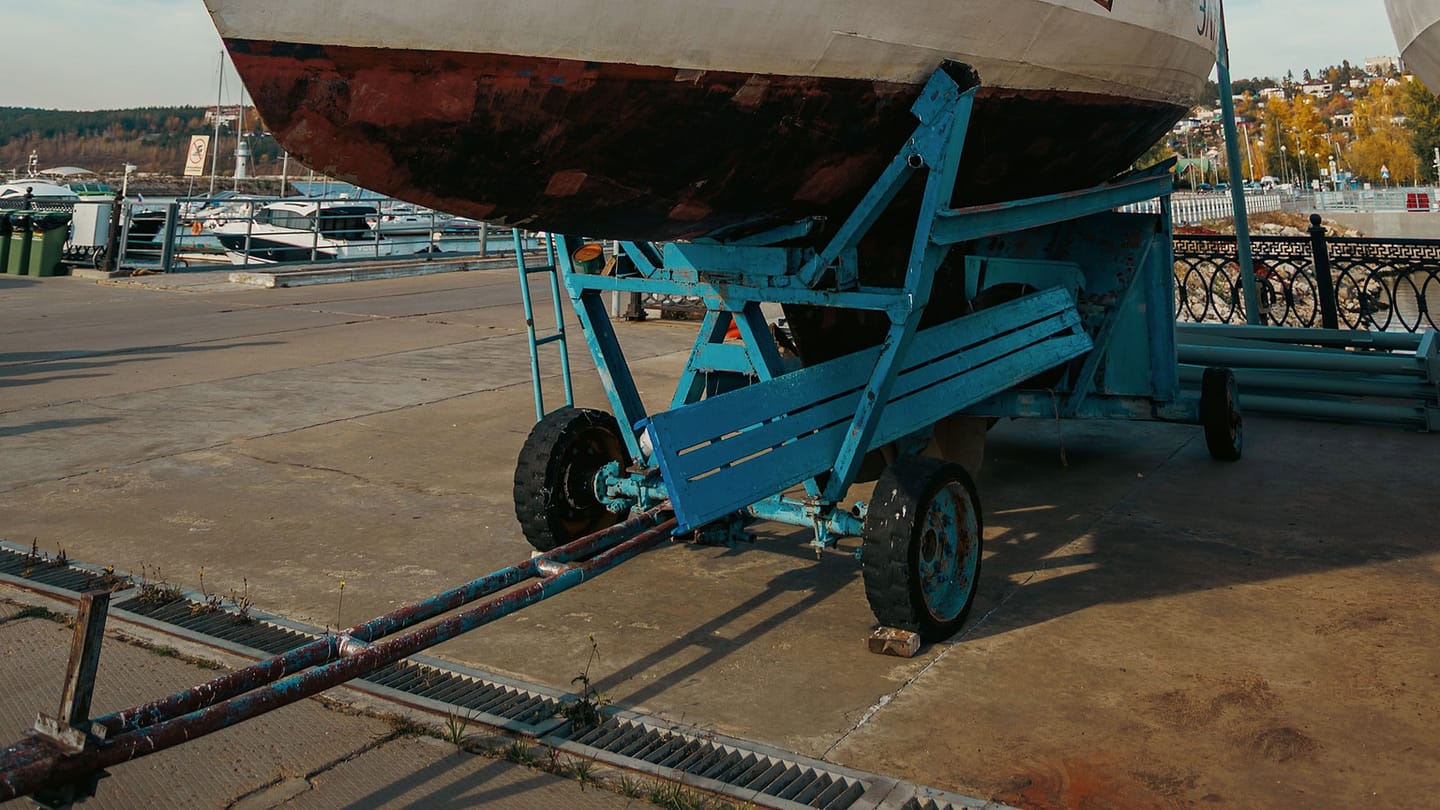
Ask the surveyor to explain cracks, distortion, movement, delamination indicators, moisture evidence, soft deck areas, previous repairs, and load-bearing attachments in their exact location. A superficial finish crack and a changing gap beside a bulkhead do not carry the same meaning. Keel joints, chainplates, mast support, rudder bearings, steering mounts, through-hulls, and hull-to-deck connections deserve context because they transfer load or keep water outside.
Water marks need a source. Old staining may document a repaired leak, while fresh water beneath a fitting may show an active path. The report should distinguish observation from inference and note where panels, liners, coatings, or stored gear blocked access. Do not ask for false certainty. Ask what additional access, haulout, measurement, or repair inspection would answer the question.
Treat rig and steering findings as systems
Standing rigging, chainplates, terminals, mast, spreaders, gooseneck, running rigging, furling equipment, winches, and sail controls work together. Corrosion, cracked fittings, broken wire strands, seized parts, poor alignment, or unknown age may call for a rigger. A deck-level survey cannot always assess the masthead or hidden chainplates.
Steering checks should include helm feel, rudder movement, bearings, stock, quadrant or tiller attachment, cables, chains, hydraulics, stops, and emergency steering access as fitted. Play or stiffness has many possible causes. The red flag is not simply that the wheel moves a little. It is an unexplained condition in a critical path, especially when inspection access is poor or the emergency arrangement cannot be demonstrated.

Separate machinery and electrical questions
An engine should be assessed cold where possible, then under normal load during the trial. Starting behavior, smoke, cooling, temperature, charging, vibration, mounts, controls, exhaust, fluids, leaks, and service records form one picture. A general surveyor may identify concerns without diagnosing internal condition. Compression tests, oil analysis, electronic diagnostics, or specialist inspection can be separate work.
Electrical red flags include overheated connections, unsupported wiring, unsuitable household components, poor overcurrent protection, corroded terminals, unlabeled changes, and battery installations that do not match sound marine practice. The exact standard and installed equipment matter. Ask a qualified marine electrician to scope repairs when the survey identifies unsafe or extensive alterations. A working light does not prove the circuit behind it is sound.

Read severity, uncertainty, and cost together
Sort findings into immediate safety or watertight work, required pre-use repairs, near-term maintenance, monitoring, and cosmetic choice. Then add a separate column for unknowns. An inaccessible area, missing record, or untested system is not a defect, but it can expose you to a defect you have not priced. Decide which unknowns must be resolved before the purchase becomes unconditional.
Request repair estimates from yards or specialists who understand the boat’s construction and local labour market. Include access, haulout, dismantling, parts lead time, and making good afterward. Discuss material findings with the insurer or lender when relevant. Never pressure the surveyor to turn a nuanced report into a single verdict. Your decision combines the findings with price, intended use, budget, and tolerance for a refit.
Separate evidence from the repair story
Record exactly what was observed: movement, cracking, staining, elevated moisture reading, corrosion, leakage, wear, poor operation, or missing access. Then record what remains unknown. A symptom can justify further investigation without proving one cause or one repair.
Ask the surveyor which finding needs specialist assessment and what access that assessment requires. Get written quotes only after the relevant specialist understands the evidence. A seller's estimate or a buyer's guess should not turn uncertainty into a precise price.
Follow water to structure
Stains, soft areas, damaged sealant, and moisture readings matter most when you map the path. Look above, below, inside, and outside the area where access allows. Ask whether the finding affects a fitting, deck core, bulkhead, hull laminate, keel area, or only a removable finish.
The bilge-water guide gives a diagnostic pattern based on rate, colour, smell, weather, and machinery state. A survey adds instruments and professional judgment, but it still benefits from separating source, path, and consequence.
Treat connected systems together
A rigging defect can affect chainplates, deck attachments, mast support, and the sail plan. Steering wear can involve cables, quadrant, rudder bearings, stock, and emergency steering. An engine symptom can involve fuel, cooling, exhaust, mounts, controls, or electrical supply. Ask whether the inspection reached the connected parts.
Use the standing-rigging checklist to understand the visible evidence owners can monitor. It does not replace a professional rig inspection or the survey scope.
Read electrical findings by consequence
Look for protection, isolation, support, condition, labelling, and evidence of heat or corrosion. A working light does not prove the circuit is safely installed. A dead circuit does not prove the battery is at fault. Ask a qualified marine electrician to investigate defects outside the surveyor's scope.
Keep machinery and electrical uncertainty separate in the decision sheet. One may need a specialist test, while another needs replacement before use. Combining them into a single "systems allowance" can hide the item that actually stops the purchase.
Decide from severity, uncertainty, and timing
For every red flag, write four answers: What happens if it is left? What evidence is missing? When must it be resolved? Who can price or verify it? A severe known defect and a small uncertain defect create different decisions. Both deserve a clear next step.
The marine survey process explains how to agree scope and use the final report. Read limitations as carefully as recommendations. If access prevented inspection of an important area, the absence of a finding is not evidence that the area is sound.
Do not let one attractive feature cancel several unrelated concerns. Compare the boat with another candidate or with continued access through a club or charter. The purpose of the survey is to support a decision you can explain, including a decision to stop.
SailStarter’s boat-choice lesson helps you define what the boat must do before a report arrives. Use that brief to rank findings by their effect on your real sailing. Ask the surveyor five plain questions about every major item: what was seen, why it matters, how urgent it is, what further inspection is needed, and what repair outcome would close it. Put specialist answers and written estimates beside the report. Then decide away from the boat and without a seller’s deadline pressing on you. A survey earns its fee when it changes a decision, defines work, supports a fair negotiation, or gives you sound reasons to leave an unsuitable boat behind.
Ask what could not be inspected. Tanks may be hidden, liners may block structure, machinery may not run, sails may remain bagged, and weather may prevent a trial. Put each limitation beside the risk it leaves. The next step may be better access, a specialist, a sea trial, records, or acceptance of uncertainty.
Compare repair quotes with the intended use and purchase timetable. A yard may be able to complete a job only after the planned season, or a specialist may require further dismantling before pricing. Timing and access are part of cost.
Watch for patterns rather than isolated cosmetic flaws. Repeated leaks, mixed electrical work, missing service records, and several unfinished repairs may point to a broader maintenance history. Treat that as a question for evidence, not as a verdict about the seller.
Finally, write the conditions under which you will proceed, renegotiate, investigate, or withdraw. Decide those rules before affection for the boat turns every new finding into an exception.
Try it from the lesson
Can you spot the next move?
A wide sailboat glides past on two side-by-side hulls, barely leaning at all. What type is it?
Why you can trust this guide
. We build each guide from public seamanship and safety sources, then teach the universal principle before any local difference.