Chart your course
Sailboat Tool Kit for Beginners

Quick answer
The short version
A good beginner sailboat tool kit starts with paperwork, not the hardware store. Pull the manuals for your winches, engine, stove, and electrical panel, and note the exact fastener sizes, fuse ratings, and service points they call for. Around that list, add a compact set of screwdrivers, wrenches and sockets in both metric and SAE, pliers, a multimeter, and basic safety gear, all sized to fit what is actually bolted to your boat. Store everything dry, labeled, and protected from salt air, and then use it for small, reversible jobs you can check afterward. Treat fuel, gas, structural, high-current electrical, and unexplained flooding as the point where the smartest next move is a call to a qualified technician rather than another repair attempt.
New owners often buy a tool kit before they know which tools their boat needs. That order wastes money on gear that never fits a single fastener aboard and leaves gaps around jobs you will actually face. Sailboats carry a strange mix of hardware: a winch built in one country, an engine cast in another, wiring added by two or three previous owners along the way. A kit built around your specific manuals, fastener sizes, and storage conditions earns its place in the cockpit locker instead of just taking up space in it. This article works through that order: check the documentation first, choose tools that match what you find, store them so salt and motion do not ruin them, practise with low-risk jobs, and then learn where a sensible owner steps back and calls for qualified help.
Read the boat's manual before you buy anything
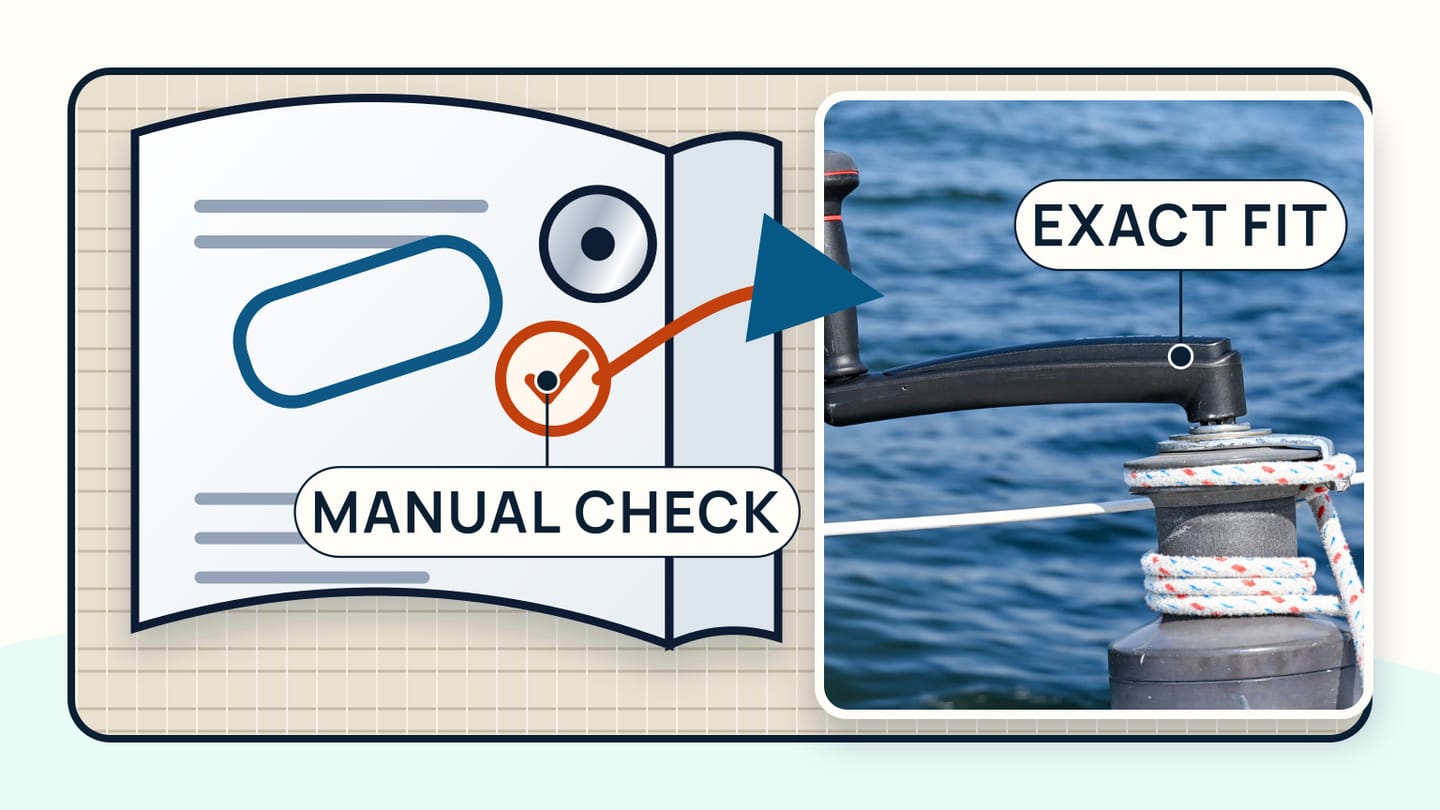
Every boat has manuals somewhere, whether that is a binder from the surveyor, PDFs from the manufacturer, or a printed sheet tucked inside a winch box. Start there. Service literature is where manufacturers list the exact fastener sizes, fuse ratings, and service intervals their equipment needs, and that information beats a generic shopping list because it removes guesswork the first time something actually needs attention. A winch is a good example: the handle size and socket dimension are specific to that model, and a handle that "should" fit a similar yacht can still bind or slip under load on yours.
If your documentation is incomplete, a thread-pitch gauge or fastener-size gauge lets you confirm a bolt or screw's exact dimensions before you buy a replacement, rather than guessing from memory at the chandlery counter. Treat any inherited paperwork as a starting point to verify against the equipment in front of you, since a previous owner may have swapped a winch or added a pump without leaving updated notes behind. Building this list is also how you build real repair skill instead of a pile of tools you never use with confidence: each entry ties one boat-specific component to one procedure, so when you reach for a wrench later you already know its job. Keep the finished list somewhere a second crewmate can find it, on paper or in a shared note, so the information survives past the person who compiled it.
What hand tools actually earn a place in the kit?
A short, well-fitted set beats a large box of unknowns. For most sailboats that means straight-slot and Phillips screwdrivers in several sizes, a socket and combination wrench set in both metric and SAE (boats built to different national standards often carry both on one hull), channel-lock and needle-nose pliers, a couple of adjustable wrenches sized for turnbuckles, wire strippers and crimpers, a small hacksaw, and a compact multimeter. Add work gloves, eye protection, a bright flashlight, and rags, since most boat jobs happen in tight, dim spaces rather than a well-lit garage at home.
Fit matters more than quantity. A driver or socket that does not match a fastener's exact size and head shape can round its corners or "cam out" under torque, turning a five-minute job into a damaged fitting that now needs replacing. That is why the manual work from the first step pays off here: once you know your winches take a particular handle and your stanchion bases take a particular hex size, you can service a winch or tighten deck hardware correctly on the first attempt instead of the third. Resist the urge to buy every attachment a catalog offers. Add a tool only once you can name the specific job it solves aboard your own boat, and let real maintenance decide what comes next rather than a generic list.
Store and label the kit so it survives the boat
Salt air and constant motion are harder on tools than daily use ever is. A sealed, solid case with a gasketed lid keeps rain and spray off the metal, and a vapor corrosion inhibitor placed inside the case releases a light protective layer onto every tool without any extra effort from you. Wipe tools dry and give them a light coat of a corrosion-inhibiting spray after any job, especially one that put them in contact with salt water, before they go back in the case.
Divide the kit by task so a common item is never buried under everything else: inspection gear, mechanical tools, electrical tools, and cleanup supplies each get their own labeled tray or bag. Small spares such as fuses, hose clamps, and terminal ends keep best in clear, sealed bags so you can see what is left without opening every pocket. Label the outside of the case with a marker or a printed tag and stow it in the same locker every time, so a crewmate who did not pack it can still find the right screwdriver without asking around. A heavy case left loose in an unsecured locker can also become a hazard once the boat starts moving, so secure it the same way you would secure any other weight below.
Practise simple inspection under supervision
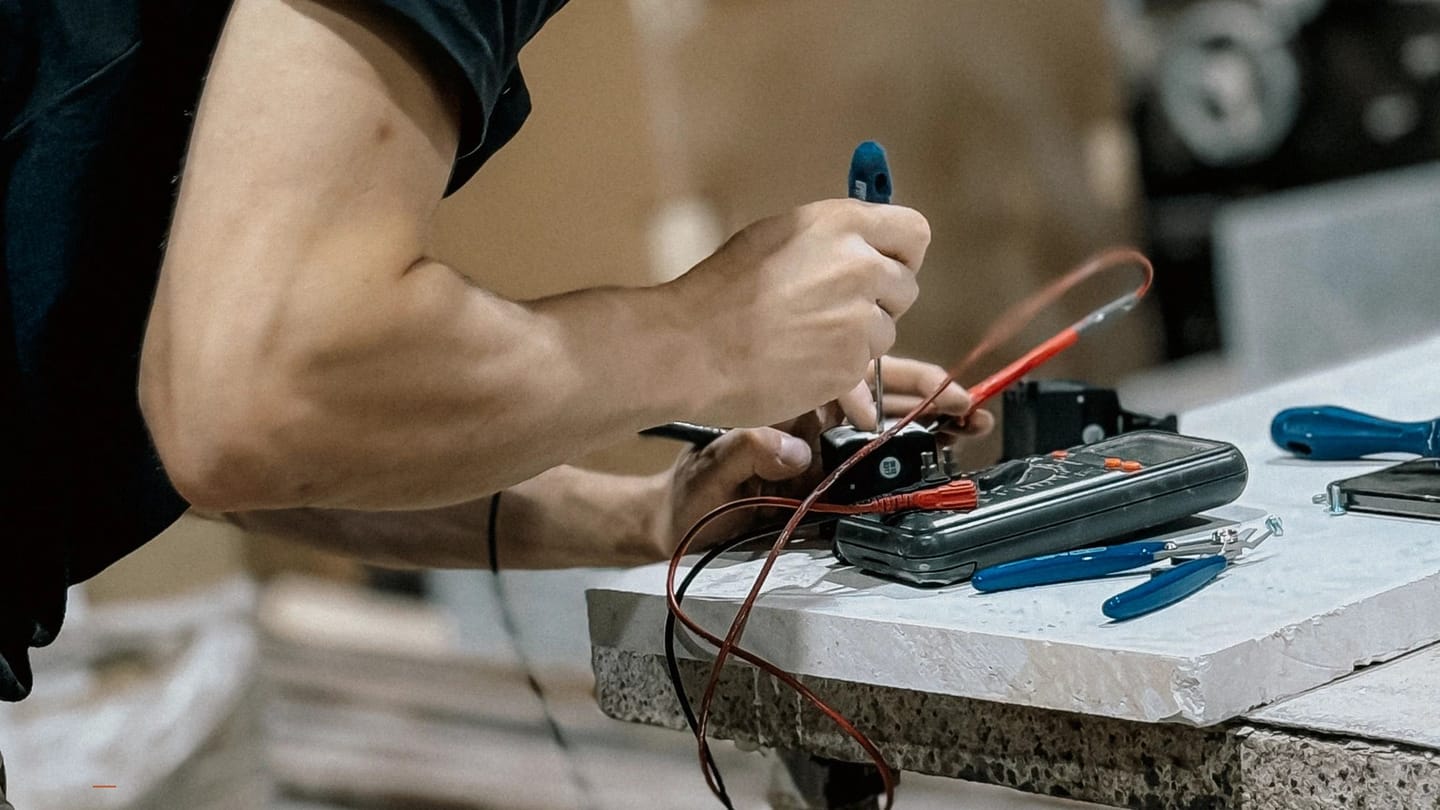
The kit only earns its keep once you use it on real, low-risk jobs. Start with tasks you can fully see and reverse: checking a battery's resting voltage, testing a suspect fuse for continuity, or cleaning a corroded terminal. A multimeter makes several of these checks concrete instead of a guess. A battery at rest typically reads below about 12.6 volts; once you connect a charger, a jump into the 13-14 volt range confirms current is actually reaching the battery rather than just sitting at the dock. Set the meter to continuity and touch the probes to a fuse or a bulb's contacts. A beep or a low reading means the path is intact, while no beep and a high or infinite reading means it is broken somewhere between the probes.
Testing a live circuit still carries a real risk of shock or a battery-acid burn, so know exactly what you are touching before the probes touch it, and work through how a boat's electrical system is laid out before you start probing wires you do not recognize. Record the starting condition of whatever you are checking, do the work, and then verify the result rather than assuming a task is finished because you stopped working on it. Let supervised practice like this decide which tool you add next, ahead of any list from a catalog or a forum thread. If a reading does not match what you expected, write it down and treat that as new information instead of a reason to keep guessing.

When should you stop and call for professional help?
Stop as soon as a job touches fuel, gas, a load-bearing structural part, high-current wiring, or an unexplained inflow of water, and bring in someone qualified before you continue. These are the categories where a wrong guess can injure someone or sink the boat, and a beginner's tool kit was never meant to diagnose them. A propane system, for example, should only be pressure-tested and repaired by a marine technician; if a shutoff test shows the gauge losing pressure over a few minutes, that is a leak that needs a technician to trace it properly, since a temporary patch will only hide the real fault underneath.
Flooding gives its own warning signs worth learning now, before you are under pressure to notice them. A bilge pump that runs constantly in calm weather, one that never runs at all, an unfamiliar splashing sound, or visible water at a fitting or through-hull all mean it is time to stop what you are doing, get life jackets on, and start manual bailing while someone locates the source. If the crew cannot control it, that is when you make a Mayday or Pan-pan call rather than keep working the problem alone. The same boundary applies to strong fuel smells, engine faults that do not match anything in a normal diesel maintenance routine, and structural cracks or seized fittings you cannot explain. Make the area safe within your own knowledge, preserve what you have found, and hand the rest to someone whose job it is.

A tool kit like this grows slowly and honestly, one verified fastener and one supervised job at a time. It will never replace training, a good marine electrician, or your own judgment about a task that has gone past what you understand, and that is fine: the kit's job is to support routine care and small, reversible fixes while you build real skill through practice and training. If you want a steadier foundation for the decisions behind all this, from reading your own systems correctly to knowing when a fix is genuinely reversible, SailStarter's lessons build that judgment step by step alongside the practical skills. Try a lesson, keep the manuals close, and let real maintenance on your own boat decide what belongs in the kit next.
Try it from the lesson
Can you spot the next move?
The engine is idling, the boat is safely secured and the propeller area is clear. What should you confirm before departure?
Why you can trust this guide
. We build each guide from public seamanship and safety sources, then teach the universal principle before any local difference.