Chart your course
Sailboat Transport by Truck: What the Cost Covers
Quick answer
The short version
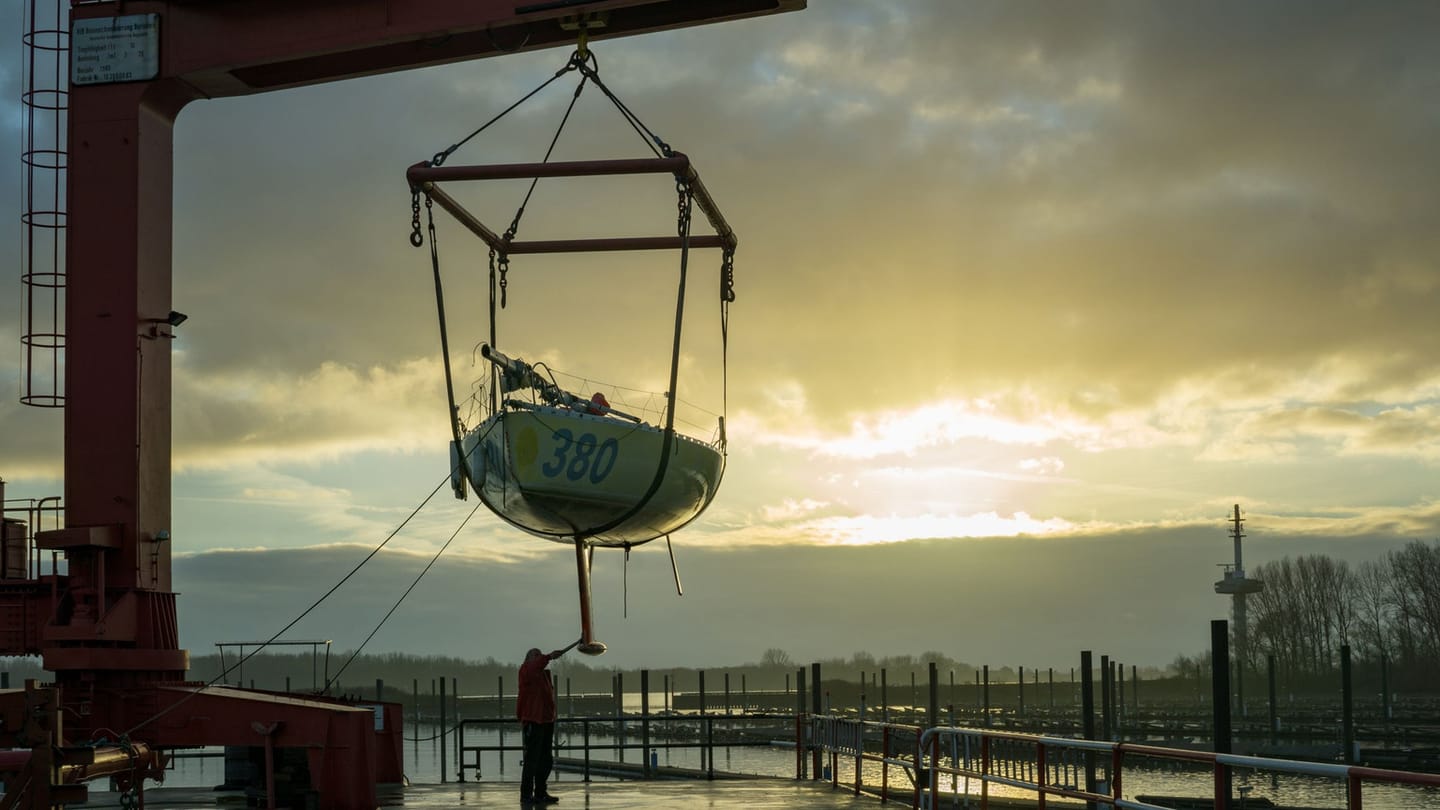
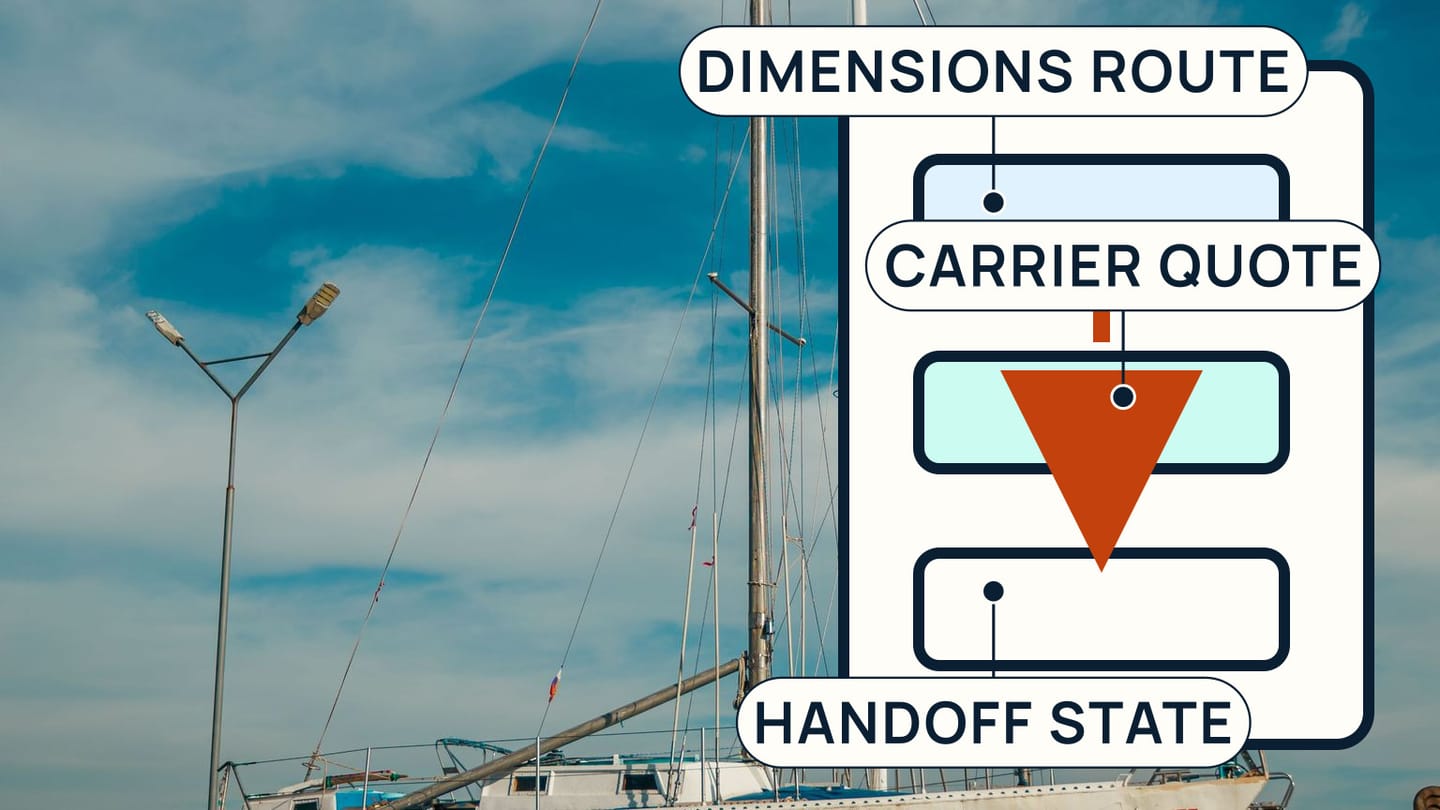
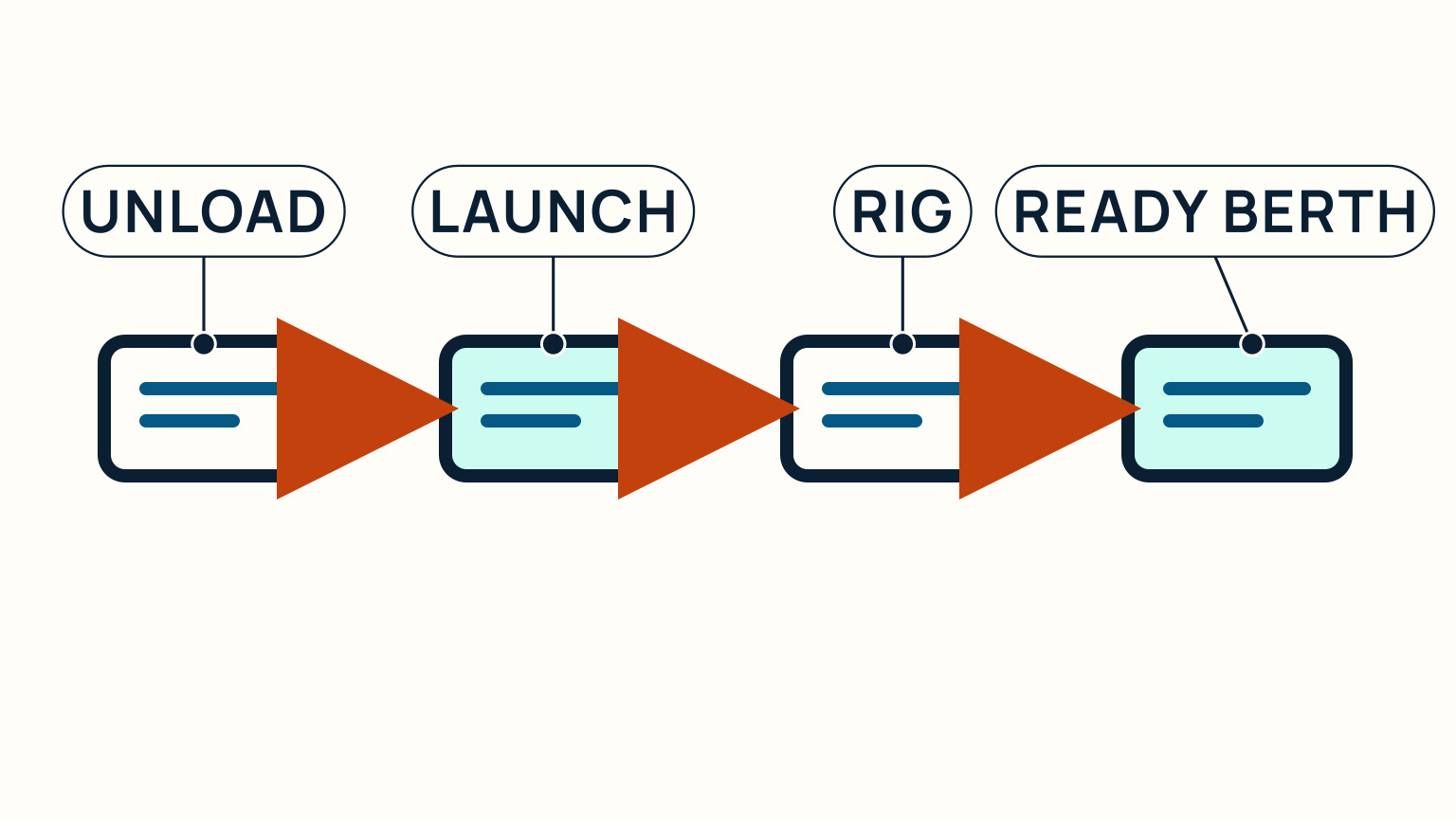
A truck quote is only one boundary in a sailboat move. The total job can include haul-out, mast removal, packing, cradle or support preparation, loading, route permits, the carrier's road movement, unloading, launch, re-rigging, commissioning, and a final check at the new berth. Ask where the carrier's responsibility begins and ends. A low distance price is not comparable with a full move until those handoffs are written down.
Road rules, dimensions, permits, and yard capabilities vary by place. The transport provider and local authorities decide what route and equipment are permitted. Your useful role is to describe the boat accurately, expose every handoff, and avoid assuming a price includes work that is merely necessary.
Define the move before requesting a quote
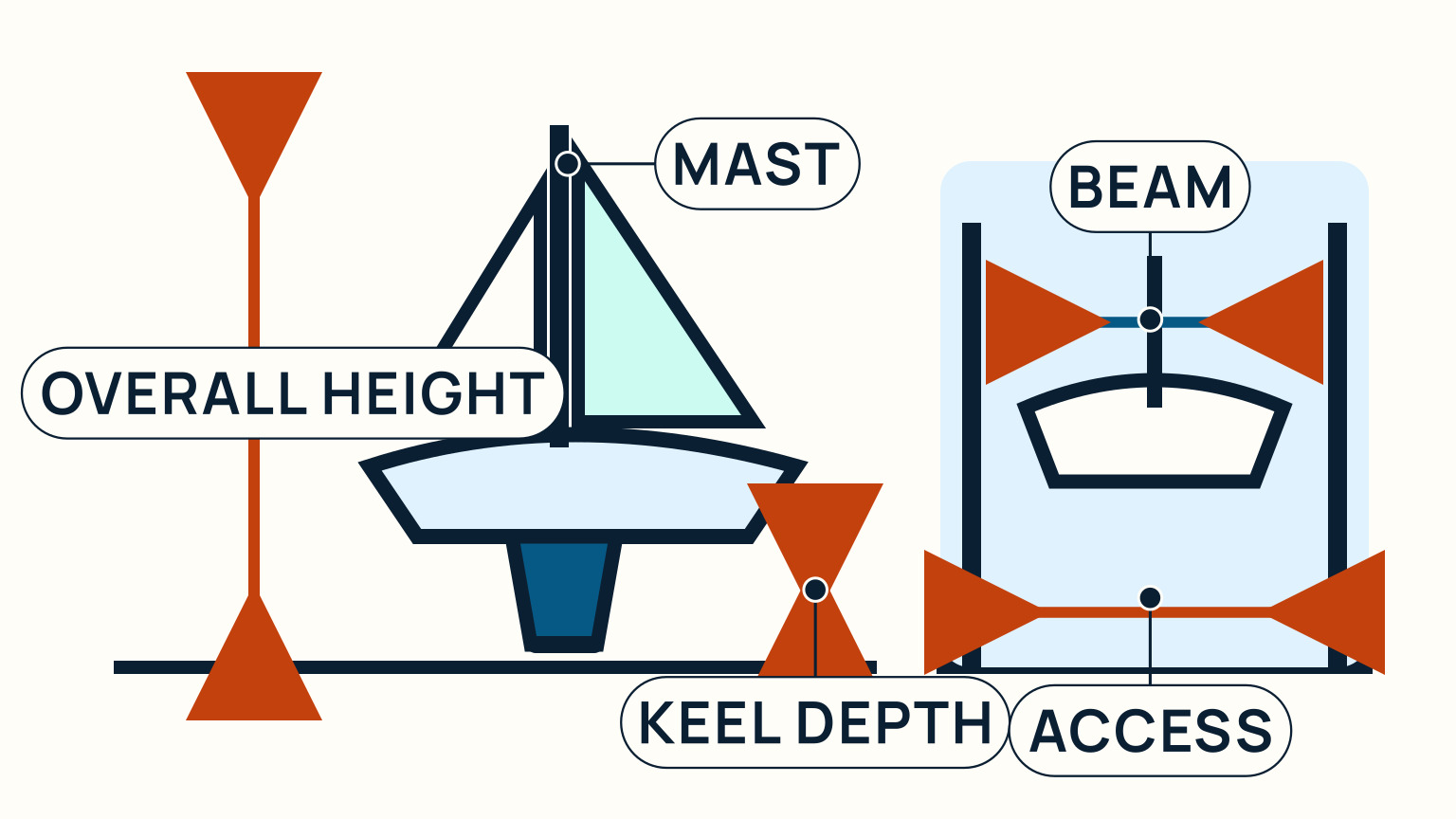
Prepare a one-page brief: present location, destination, boat make and model, length, beam, height, draft, displacement if known, mast arrangement, keel type, access at both yards, and the intended completion point. Add condition issues, target window, berth availability, and photographs that show the boat's present state. A carrier needs reliable dimensions; a broker listing is not always enough.
State whether the boat will arrive as a loaded hull, an unloaded hull, a launched boat, or a commissioned sailboat with the mast stepped. Those descriptions represent different work. The destination may be ready for a truck but not for a crane, or ready for a launch but not a rigging crew.
Ask the departure yard what it needs from you before the lift. It may need keys, a current contact, access to through-hulls, instructions for the cradle, a mast plan, and confirmation that loose gear is secured. Ask whether the yard will supply stands or whether the carrier's support arrangement is part of the contract. A sailboat cannot be treated like an empty box; support points, keel, hull shape, and rig all matter to the people moving it.
Give every provider the same brief. If one quote assumes the mast is already down and another includes mast work, the totals answer different questions. Record the assumption in plain words beside the price. This makes later comparison easier and gives the provider a chance to correct a mistaken premise before trucks and cranes are booked.
What should the written scope include?
Ask each provider to name included work, exclusions, and assumptions. Clarify haul-out, lift, mast work, cradle, covers, loose-gear preparation, loading, permits, escorts, storage, unloading, launch, and travel changes. Confirm who supplies insurance for each phase and who documents condition at handoff.
The exact route is the carrier's operational decision. A bridge, road restriction, weather, or oversized-load rule can change it. Do not promise a launch date until the carrier and both yards have confirmed their part of the chain.
Ask what happens if the planned date moves. A carrier may have a cancellation rule, a storage boundary, or a requirement for the yard to keep the boat accessible. A yard may charge for stands or storage while waiting. These are ordinary parts of a road move, not hidden penalties, but they must be visible before you choose a date based only on the carrier's availability.
Read insurance wording rather than assuming the word "insured" means the same thing at every stage. Ask who carries what cover while the boat is in slings, on the road, at the destination yard, and after launch. Tell your own insurer about the move and ask what it requires from you. Do not broaden a provider's answer into a promise about damage it did not agree to cover.
Measure the boat and the yards
Check the boat's dimensions with the people who will load it. Include mast height when stepped, keel depth, radar arches, pulpits, davits, solar gear, and any equipment that changes the load profile. Ask the departure yard where the truck and lift can stand, and ask the destination yard the same question. A route can be possible while a narrow gate, soft ground, or unavailable crane makes one end impossible on the planned date.
Secure or remove loose items as the yard and carrier require. Photograph the hull, deck, mast, and equipment before loading, then repeat at unloading. These records do not decide every damage claim, but they make the handoff factual.
Prepare the boat for motion in all directions. Empty or secure lockers, remove canvas and items that can catch wind, latch hatches, protect sharp edges, and follow the yard's instruction for batteries, fuel, water, and through-hulls. Do not improvise supports or tie-down points. The carrier and yard need to agree on how the hull and rig are protected; an owner should not create a new load path with a convenient rope.
At the loading site, take a slow condition walk with the person accepting the boat. Photograph existing scratches, gelcoat marks, rig condition, and anything already removed. Make a written note if the boat is wet, dirty, or partly dismantled, since those conditions can conceal a later question. Repeat the same walk at delivery before equipment is moved away.
Track responsibility at every handoff
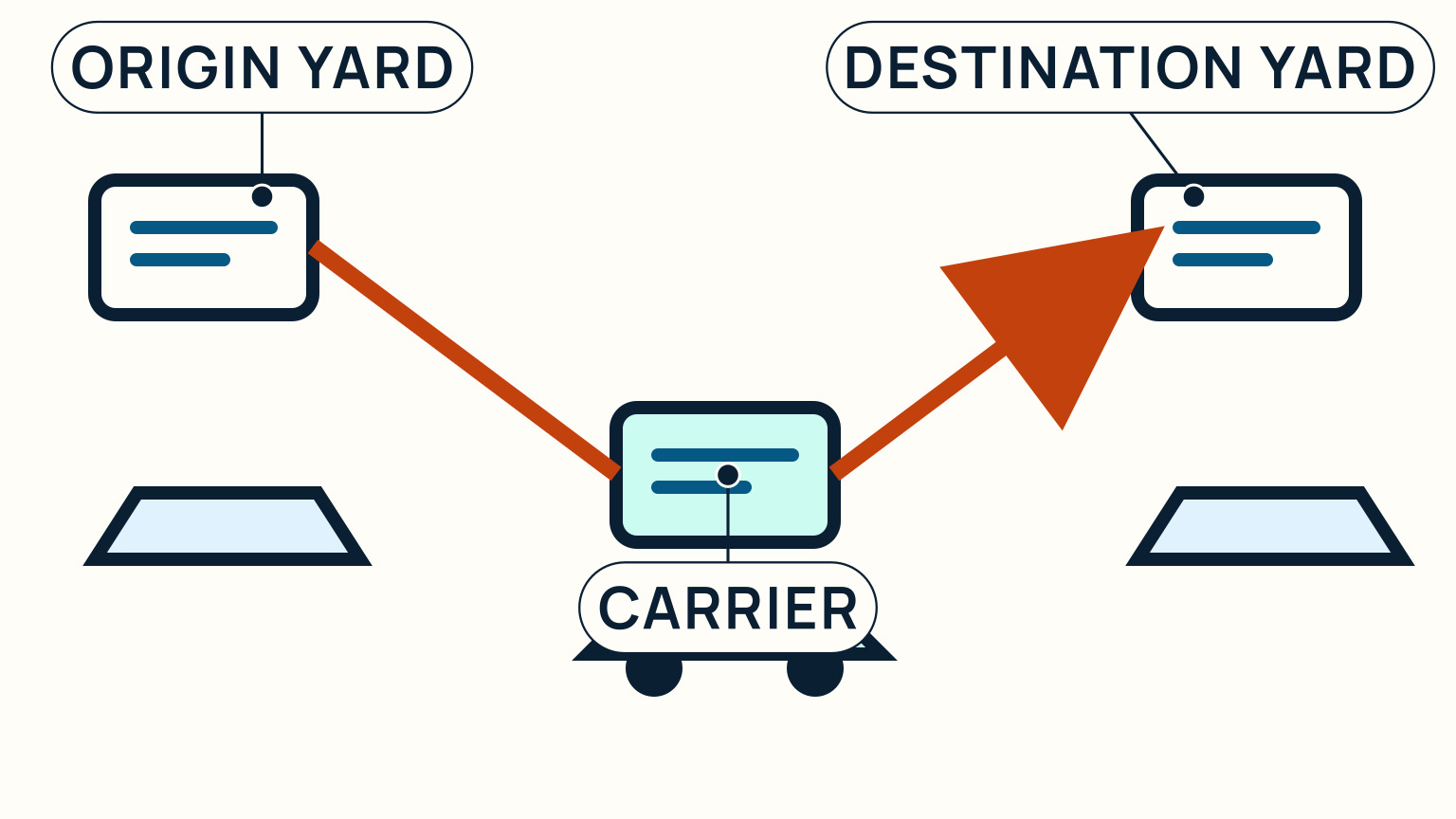
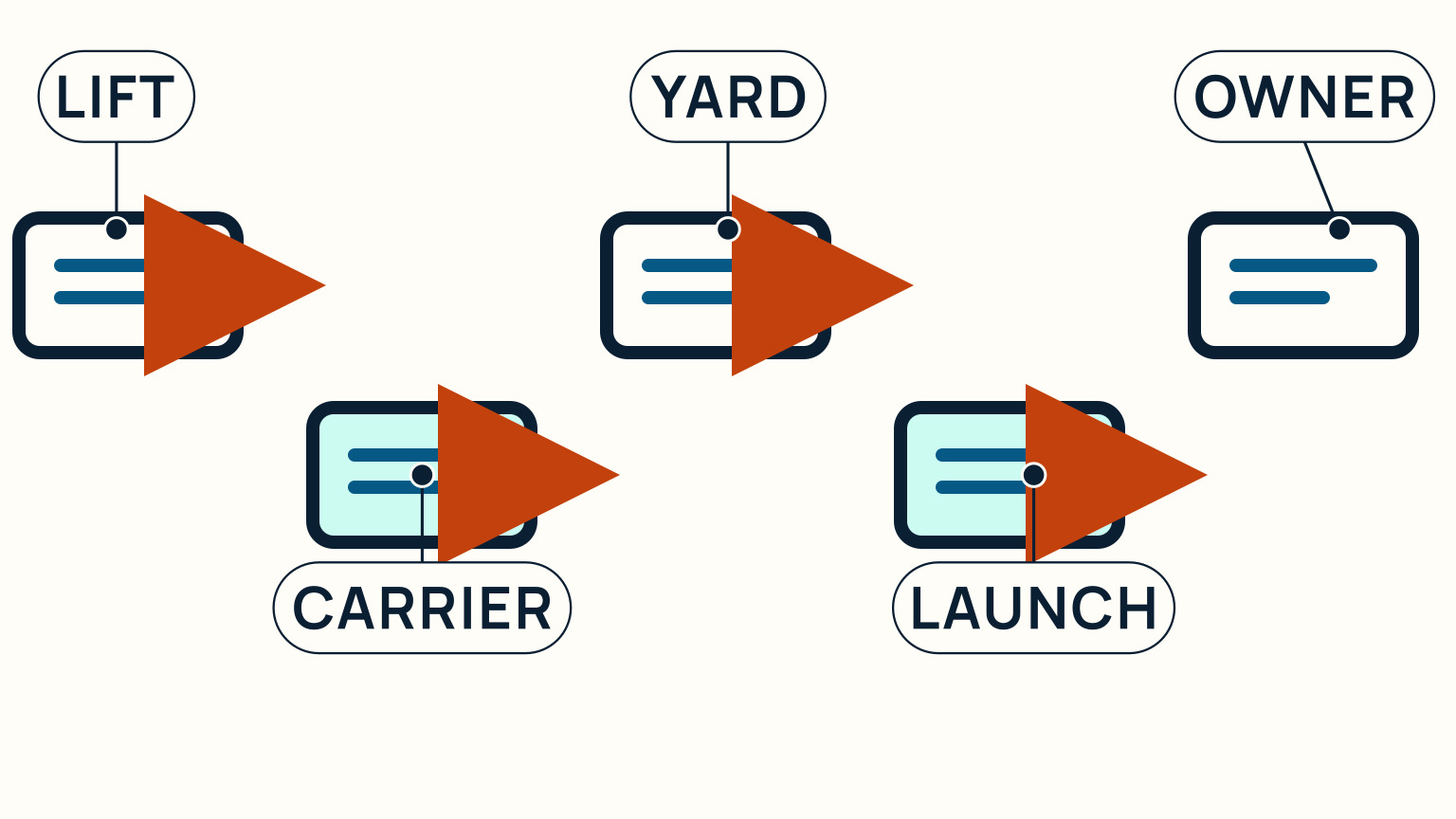
Create a handoff sheet: yard accepts boat, crane loads, carrier accepts load, carrier delivers, destination yard unloads, rigger steps mast, yard launches, owner accepts final condition. At each point record time, contact, condition note, photographs, keys, documents, and any new defect. Do not let responsibility become vague during a rushed loading window.
If a finding changes the plan, pause. A damaged support, leaking hatch, insecure mast, unavailable lift, or route restriction may require different work. Pressing on to protect a date can make a recoverable preparation issue into an expensive transport loss.
Keep the key and document handoff explicit. The carrier may need access to the boat while the owner should retain originals that do not need to travel. Decide who can authorise an extra charge if the driver, yard, or rigger finds a problem. Give that person a spending limit and a way to contact the other owners. A missed phone call should not produce an unapproved repair or leave a truck waiting without a decision.
The transport day is not the right time to negotiate a new scope from memory. If a provider proposes a change, ask for the observation, the practical consequence, price, and the safe alternatives. Save that exchange with the quote and handoff sheet. It creates a useful record without asking anyone to make a legal conclusion at the dock.
Compare the delivered condition
Compare quotes against the same final condition. A boat delivered on a truck is not equivalent to one launched, rigged, and ready for a local sea trial. Add every omitted task before choosing the lower number. Then keep contingency for work discovered at haul-out or reassembly.
Ask each provider to identify the exact acceptance point in writing. One yard may consider its work finished when the hull is in slings, while the carrier's responsibility begins only once the load is secured. The destination rigger may need a separate acceptance after the mast arrives. Those boundaries are more useful than a long list of hopeful inclusions because they tell you who is responsible for the next call, inspection, and decision when timing changes. A complete move is a chain of accepted conditions, not one uninterrupted service.
After launch, inspect steering, rig, engine, electrical systems, hatches, through-hulls, and equipment before treating the move as complete. A road move may protect the boat from an offshore delivery, but it creates its own preparation and recommissioning work.
Plan the first local outing as a check, not a delivery deadline. Confirm that the mast and rig have been handled by the appropriate professional, that control lines run freely, and that equipment removed for transport is restored deliberately. Test systems according to the boat's normal pre-departure routine. If an item needs correction, document it and contact the party responsible under the written scope before assuming it is ordinary owner maintenance.
The price that matters is the total cost to reach the condition you actually need: perhaps a safe hull at a yard, perhaps a launched boat, or perhaps a commissioned sailboat with a berth and a first local check complete. Compare the offers at that endpoint. A clear scope is the best way to avoid buying a low road number and discovering that the move stopped halfway through the real job.
Use sailboat delivery options, haul-out planning, and mast stepping cost to prepare questions. SailStarter can help with the boat systems. The carrier, yards, insurer, and responsible local authorities decide the actual move.
Try it from the lesson
Can you spot the next move?
A wide sailboat glides past on two side-by-side hulls, barely leaning at all. What type is it?
Why you can trust this guide
. We build each guide from public seamanship and safety sources, then teach the universal principle before any local difference.