Chart your course
Sloop vs Cutter vs Ketch: Which Rig Fits?
Quick answer
The short version
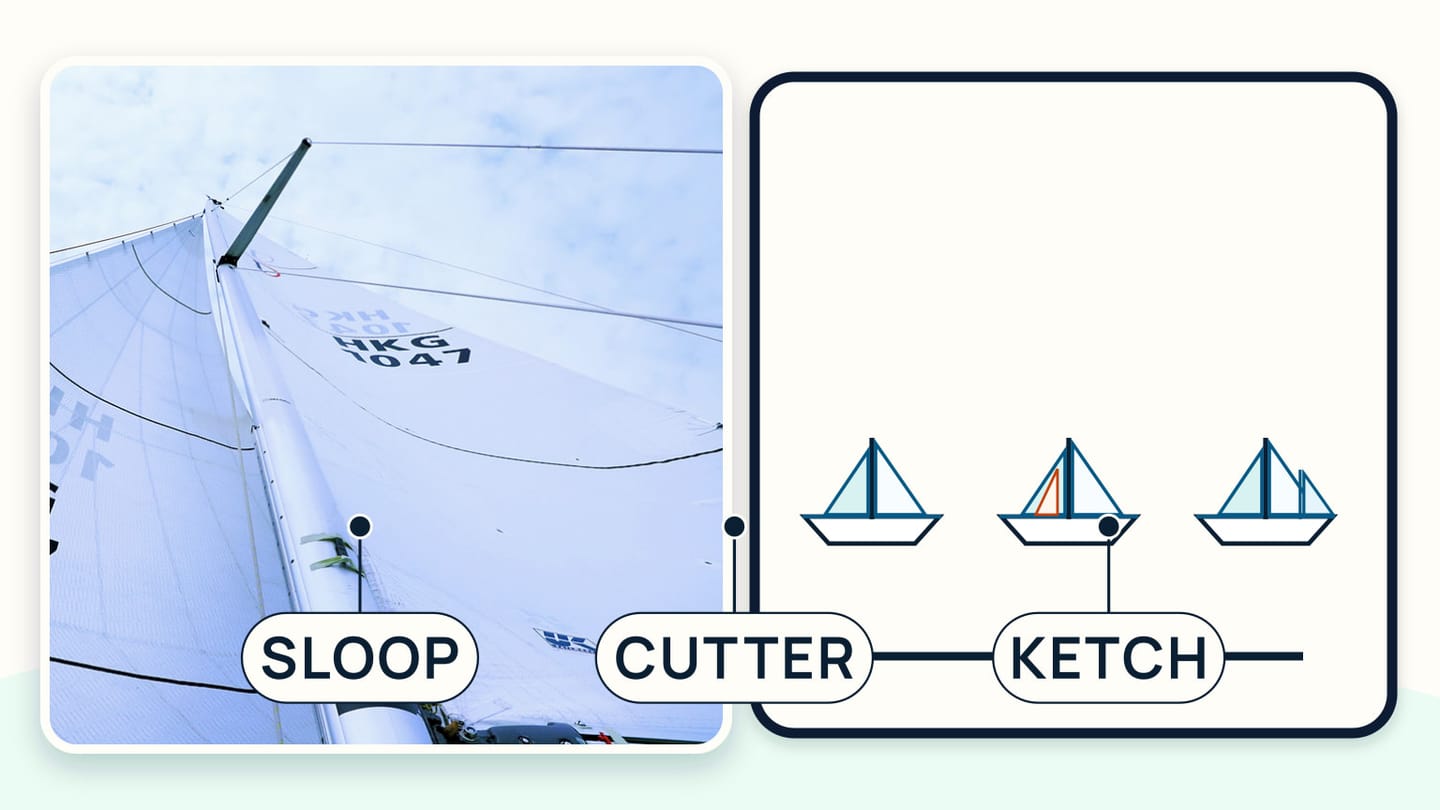
A sloop has one mast, a mainsail, and one headsail. A cutter also has one mast, but carries more than one headsail. A ketch has two masts, with the shorter mizzenmast ahead of the rudder stock. Those labels are useful for recognizing the layout. They cannot tell you whether a particular boat is easy for you to manage, well maintained, or right for the water you plan to sail. Use the rig name as the first question, then look at the sails, controls, condition, and the people who will handle them.
If you are looking at a listing or standing on a dock, the visible sail plan can make a boat seem more complicated than it will feel underway. It can also hide work that is already waiting in the rigging. The useful comparison is practical: how many sails will you prepare, how are they reduced, who can handle them, and what needs a careful look before you call the boat a fit. Start with the definitions, then move from silhouette to the actual system in front of you.
Identify the rig before you compare it
The cleanest way to identify a sloop is to look for one mast, one mainsail behind it, and one headsail ahead of it. A cutter still has one mast, which is why a quick glance can confuse the two. The difference is forward of the mast: a cutter has more than one headsail. A ketch is the obvious outlier because it has a mainmast and a smaller mizzenmast aft. The mizzenmast's position matters. It sits forward of the rudder stock, which separates a ketch from another two-masted arrangement.
That vocabulary is worth learning because it stops a vague sales description from doing all the thinking for you. It also gives you a way to ask specific questions. On the cutter, ask which headsail is normally carried and how each one is set or stowed. On the ketch, ask how the mizzen is controlled and whether its running rigging is complete. On a sloop, ask how the single headsail changes area or comes down. The rig name is a map of where to look, not a verdict.

Count the jobs, not only the sails
More sail area forward of the mast can mean more choices, but it also means more controls, attachment points, and places where a plan can become untidy. A cutter's two headsails should prompt a close look at their halyards, sheets, furling or attachment arrangement, and the space available when one sail is not in use. The question is not whether two headsails are good or bad. It is whether the arrangement makes sense to the people who will prepare, change, reduce, and stow them.
A ketch adds a mizzen sail and its own controls. That can divide the sail plan into smaller pieces, yet it adds another spar and another set of running rigging to understand. A sloop has fewer named sails in this comparison, which may simplify the inventory, but its actual workload still depends on the boat's reefing and headsail system. You can get a clearer view of the forward sail choices in roller furling versus hank-on headsails and of the basic vocabulary in parts of a sail.

Imagine the routine your crew will repeat
Try a simple dockside exercise. Point to each sail in turn and say who would get it ready, who would reduce it, and where it would end up after sailing. If the answer relies on one experienced person doing every unfamiliar job, the label has exposed a crew-fit question. If every control is clear, led safely, and explained in the boat's guide, a more involved layout may still be comfortable for the crew you have.
This matters most when you are choosing between boats for ordinary days rather than a perfect demonstration. Think about leaving a berth, putting sail up, taking sail down, and putting the boat away with the number of people you expect. Ask how the headsails are managed while the main is reduced. Ask where loose lines go when the mizzen is not set. Then ask the owner or charter operator to show the sequence. A clear demonstration is more useful than a promise that a rig is simple.
For a broader view of what different hulls and sail plans can offer, read types of sailboats for beginners. It keeps the choice tied to the kind of sailing you want to do rather than to one attractive photograph.
Inspect the system behind the silhouette
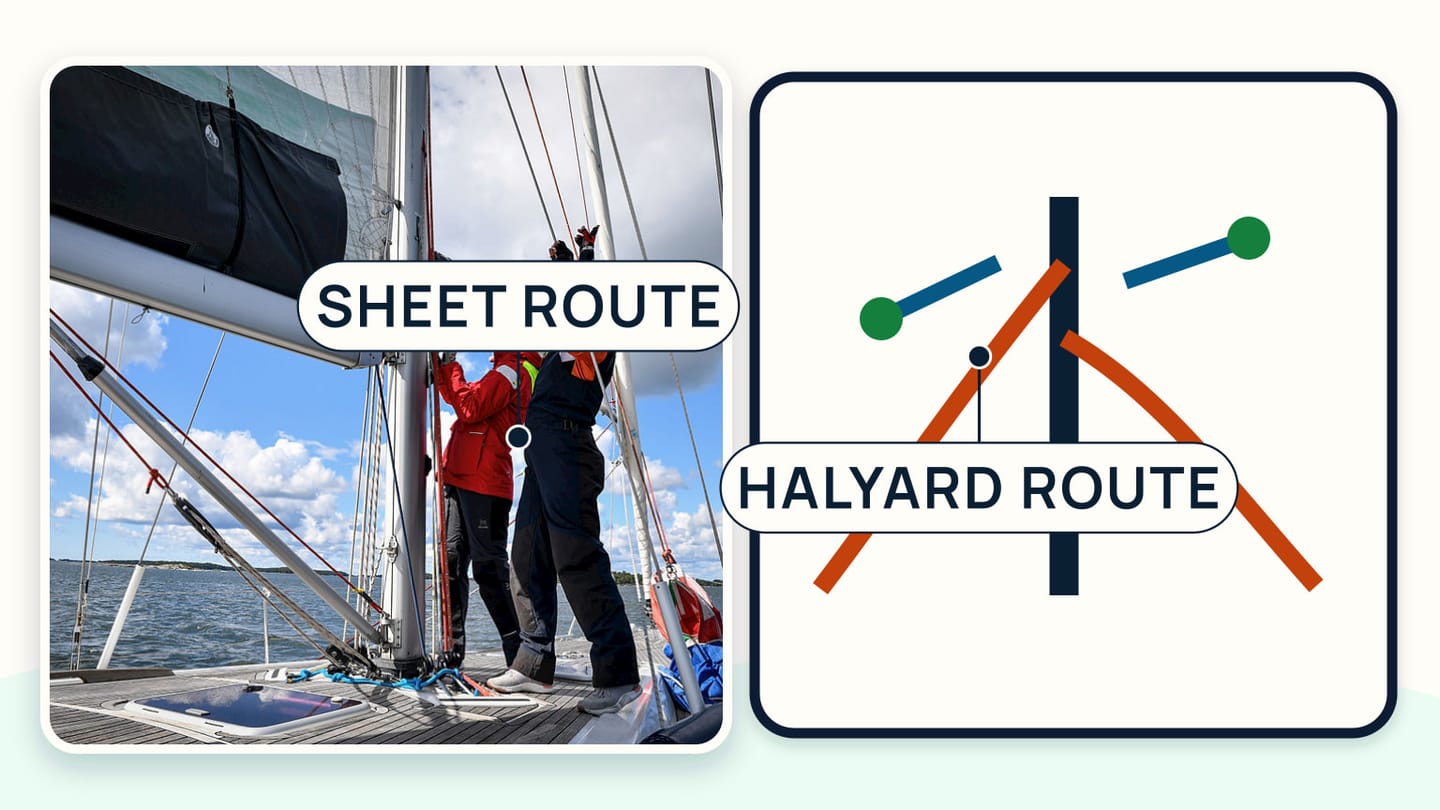
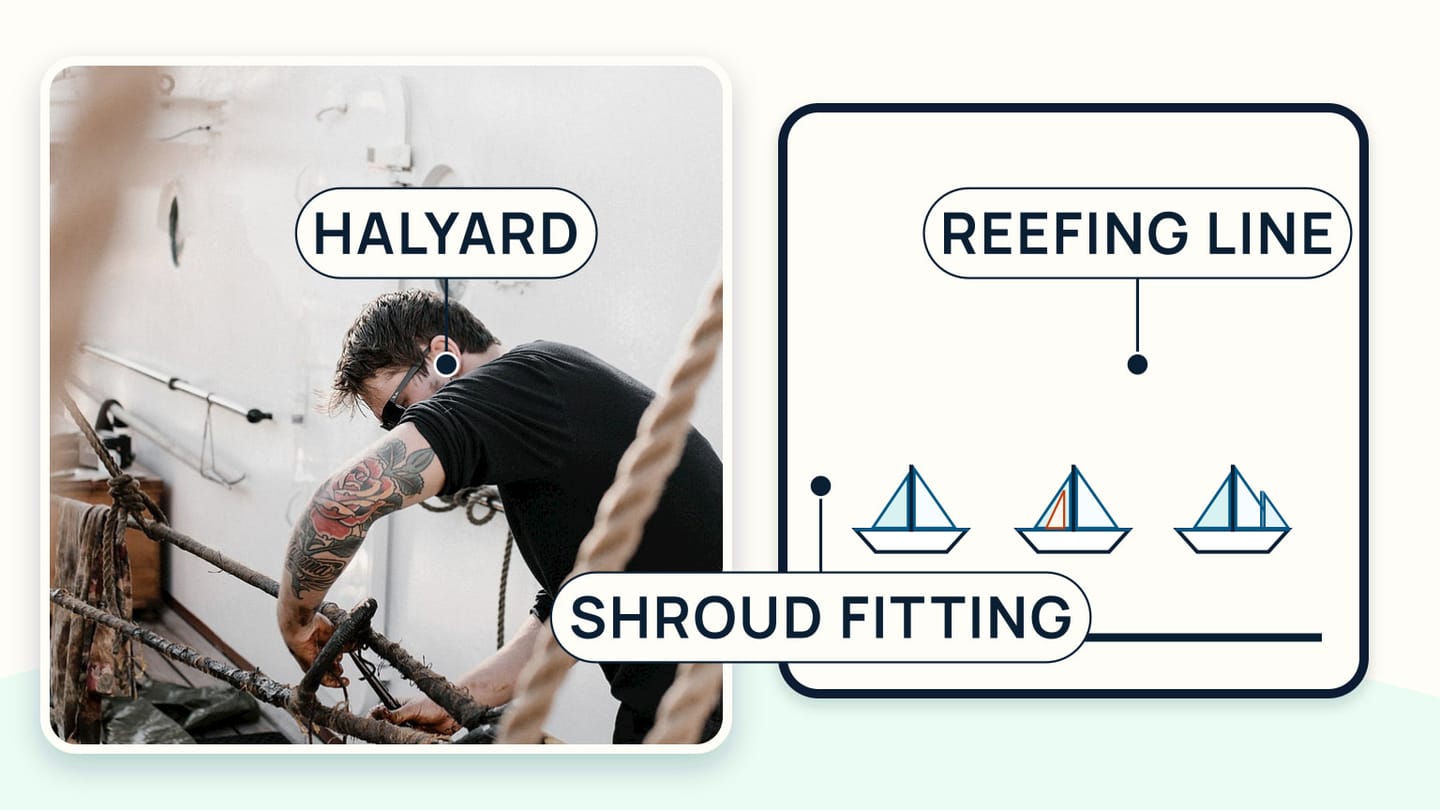
Every rig deserves a condition check before it earns your trust. The RYA's equipment guidance calls out halyards, sheets, shrouds, sails, reefing systems, fittings, and the owner's manual or rigging guide. That list is useful because it makes you inspect the parts that do the work rather than admiring the number of masts. A neat sail plan can still have worn lines, damaged sails, or a reefing system that nobody aboard can explain.
Work from the deck upward. Look at the fittings and line runs you can see. Follow each halyard and sheet to its cleat, clutch, winch, or attachment point. Look at the sail cloth and at the hardware that changes or reduces sail area. Then ask for the boat's own guide. It should explain the systems installed on that boat, which may differ greatly from another boat with the same rig name. For a more focused inspection approach, use this standing-rigging checklist alongside a qualified inspection where one is appropriate.
Choose with questions that change the answer
Compare candidates using the same questions. What sails are actually carried? How are they put up and reduced? Which controls are working, and which need attention? Is the rigging guide available? Can your normal crew repeat the routine without guessing? Those questions apply to the sloop, cutter, and ketch alike, which makes them fairer than a claim that one label suits everyone.
Then separate what you know from what you assume. You can see the mast count and sail layout. You cannot see the condition inside a fitting or infer a boat's handling from its rig alone. Stability, maintenance history, sail condition, and the crew's experience all sit outside the word on the listing. Arrange a proper inspection and a demonstration before you make a decision that depends on any of them.
SailStarter's lesson on the boat you stand on helps you identify the main parts of a sailing boat before you compare their layouts. It is a useful next step if the rig vocabulary is still new.
SailStarter can help you arrive at a boat with the vocabulary already in hand. Start with the short, visual lessons on boat parts and sail controls, then use a dockside visit or a qualified professional to answer the boat-specific questions. The course teaches fundamentals. It does not replace an inspection, an owner's manual, or time on the water.
Before you leave a viewing, ask for a normal-day demonstration. See where spare lines live, where a lowered sail is secured, and whether the person showing the boat can name each control without hesitation. Make separate notes for condition, missing information, and preferences. Those categories lead to different next steps. A worn line may need maintenance. A missing guide may need an answer before you buy. A layout that feels awkward may simply be a poor fit for your crew.
If a rig appeals to you, learn its ordinary routines before committing to it. A short familiarization sail with the owner, charter operator, or an experienced friend can turn unfamiliar vocabulary into useful questions without pretending to replace a survey.
Use a quiet dockside walk-through to turn the rig name into practical information. Trace each headsail sheet and halyard, identify which control belongs to the mizzen where fitted, and ask where each line is secured when the boat is put away. Then repeat the question for the normal reduction sequence. If nobody can explain a route or a control, record that as missing information rather than assuming it will be obvious once wind and time pressure arrive.
For a purchase, club boat, or charter, separate condition from crew fit. A rig can be sound but still demand routines that your usual crew does not want to manage. Another rig may suit the crew yet need maintenance before it is ready. Seeing those as different questions keeps a visible sail plan from deciding more than it can. The useful next step is a demonstration, the boat's rigging guide, and an inspection appropriate to the decision you are making.
Try it from the lesson
Can you spot the next move?
What cushions the gap between the boat and dock before they touch?
Why you can trust this guide
. We build each guide from public seamanship and safety sources, then teach the universal principle before any local difference.