Chart your course
Standing Rigging Explained: What Actually Holds Up a Sailboat's Mast

Quick answer
The short version
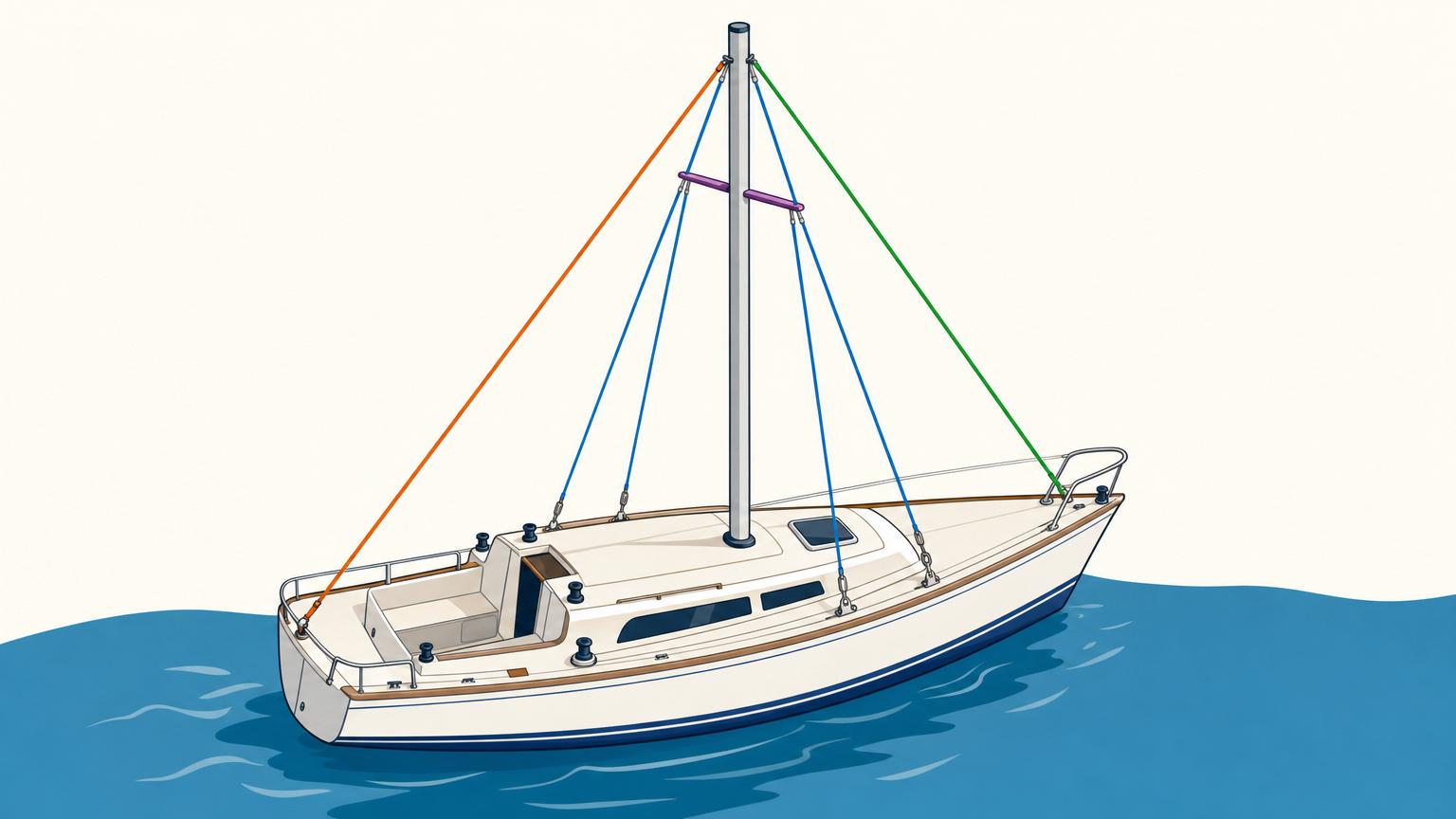
Up close, a sailboat mast can make you wonder what keeps it upright. The answer is standing rigging: a small set of fixed wires or rods with two jobs. Shrouds brace the mast from side to side. Spreaders are short struts that push the shrouds out from the mast, creating a stronger supporting angle. The forestay runs forward to the bow and supports the mast from ahead. On most sloops, the backstay runs aft to the stern and supports it from behind.
"Standing" means these supports normally stay in place. Running rigging, such as halyards that raise sails and sheets that control sail angle, moves during sailing. Some boats use an adjustable backstay or have no backstay, but the same two supporting jobs still apply.
Four Parts, Two Supporting Jobs
The diagram below puts all four parts on one mast at once: shrouds and spreaders handling the side-to-side load, forestay and backstay handling fore-and-aft. The next two sections take each half in turn.
Start at deck level when the number of wires feels confusing. Find one attachment beside the hull and look upward. If the wire reaches toward the side of the mast, you are following a shroud. Move to the bow and repeat the exercise with the wire that runs aft and upward: that is the forestay. From the stern, the matching wire normally leads forward and upward to become the backstay. This deck-up approach is easier than trying to sort a cluster of wires against the sky.
Then step far enough back to see the whole mast. From ahead of the boat, the shrouds form a wide supporting triangle on the two sides. From alongside, the forestay and backstay form the fore-and-aft pair. Changing viewpoint separates wires that can overlap in a photograph or from the cockpit. You are identifying direction and attachment, not judging condition or tension. Those checks belong to a rigger or to a separate standing-rigging inspection.
Shrouds and Spreaders: Side-to-Side Support
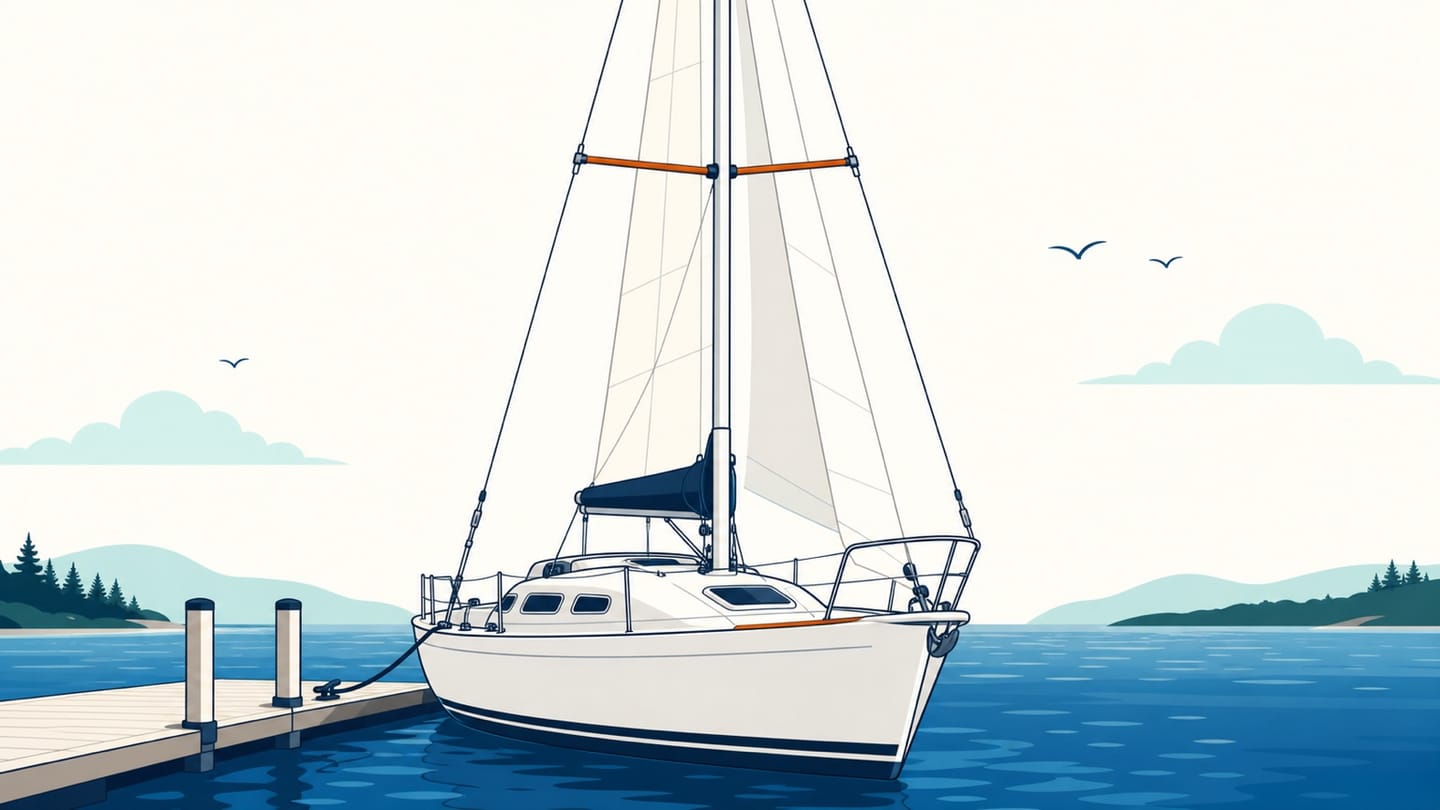
The shrouds are part of the standing rigging, the fixed wires that support the mast. They descend from the mast to both the port and starboard sides, meaning the boat's two sides. You may also hear them called sidestays. They are arranged symmetrically, though a boat may have more than one shroud on each side.
Follow a shroud downward and you will see it finish at a chainplate, a metal plate that fastens the wire to the hull. Now follow it upward. It may pass over a short strut projecting outboard from the mast. This is a spreader.
Spreaders come in pairs. They push the shrouds farther from the mast, creating a wider angle between wire and mast. That wider angle lets each shroud provide the same side support with less tension. Taller masts may have more than one pair of spreaders.
Why the Angle Matters
The angle between a shroud and the mast has its own name: the shroud angle. A shallow angle asks the wire to carry more tension for the same sideways support. A spreader widens that angle without moving the chainplate on the hull. Seen from ahead, this is why the wire does not simply run in a straight, narrow line beside the mast.
Naming Multiple Shrouds
On a taller mast, one shroud on each side may not be enough, so builders add more and name them by where they attach. The cap shroud, or upper, runs from the top of the mast. An intermediate shroud, where fitted, starts partway up, while a lower shroud supports the lower section. A boat may also have more than one pair of spreaders. You do not need to memorize every variation to recognize the shared job: each of these wires braces the mast sideways.
Riggers sometimes name every stay on the boat the same way: by where it lands on the deck rather than by which job it does. Under that system, port and starboard sidestays, forestay, and backstay are simply the same four attachment points described from the deck up. It is the same wire either way, so "sidestay" and "shroud" are two names for one thing, not two different parts.
Once you spot this shape, the side-to-side job becomes easy to recognize. It is one calm, simple half of the mast's two-job support system.
Forestay and Backstay: Fore-and-Aft Support
Fore-and-aft means along the boat from front to back. Two stays usually brace the mast in these directions.
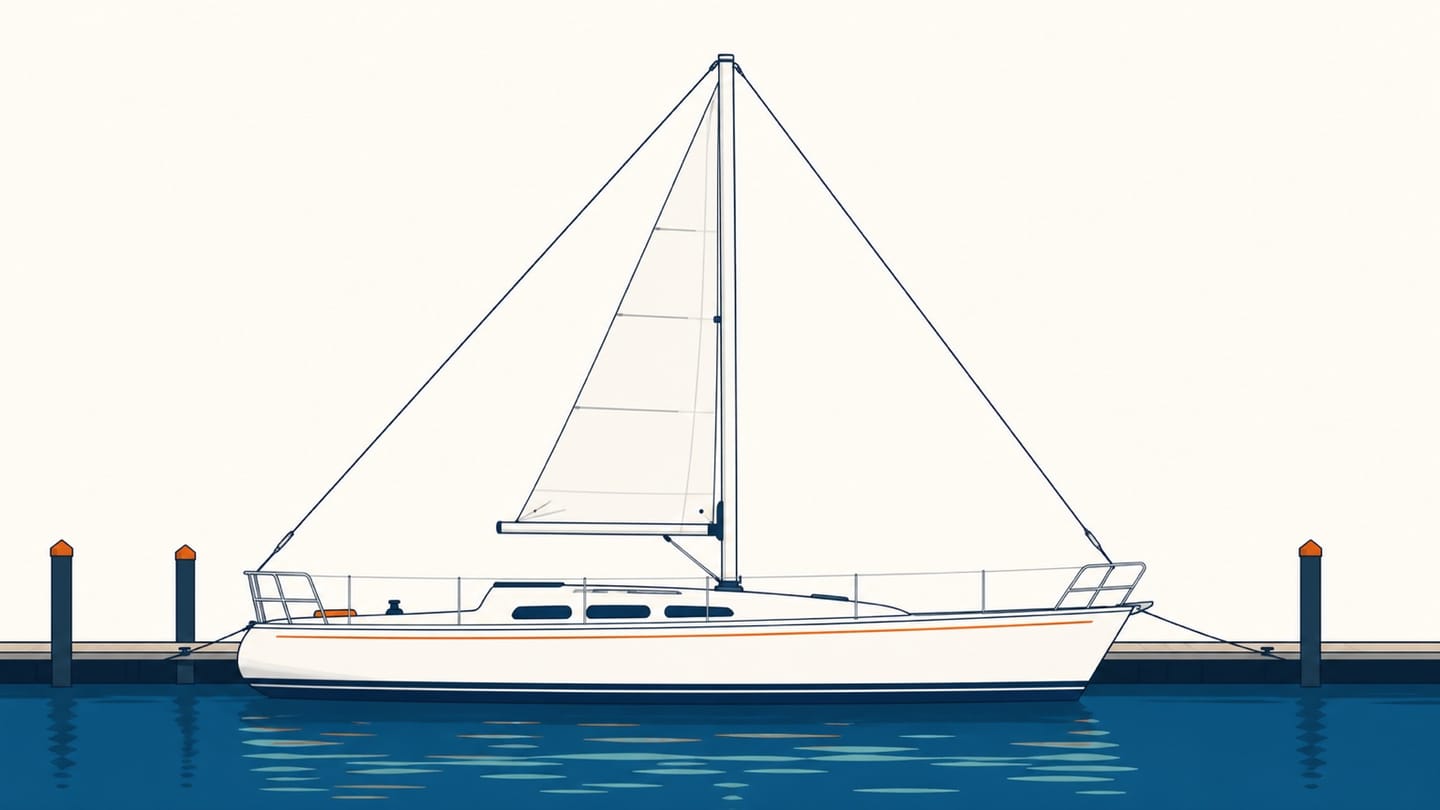
The forestay runs forward from high on the mast toward the bow, the front of the boat. It supports the mast from forward and helps keep it from falling backward. On some boats, it joins the very top of the mast. On others, it attaches a little lower.
Masthead and Fractional Rigs
Where the forestay joins the mast has its own vocabulary. A masthead rig attaches the forestay right at the top. A fractional rig attaches it somewhat lower. Either way, the forestay usually carries a sail of its own, a jib or genoa, which can make the wire harder to pick out at a glance. Look just behind the sail's forward edge and you will find the forestay running the same course from bow to mast.
The backstay normally runs aft from the top of the mast toward the stern, the back of the boat. It supports the mast from behind and helps keep it from falling forward. Together, the forestay and backstay act as an opposing pair: one braces from forward, while the other balances it from aft.
Split Backstays
A backstay does not always run as a single wire straight to the centre of the transom, the flat panel across the stern. On some boats it splits into two legs instead, one running down to each aft corner of the boat. Either arrangement does the same fore-and-aft job from behind the mast, so do not be surprised if the boat in front of you has two aft wires instead of one.
Real boats can look different. Some designs have no backstay because their side supports are arranged differently. You may also see a backstay that can be adjusted rather than one that stays permanently fixed. Even with these variations, position gives you the quickest clue: forward is the forestay; aft is normally the backstay.
When the Backstay Moves
Most standing rigging earns its name by staying put, but some boats use an adjustable or running backstay. It still braces the mast even though a sailor changes it. Other designs have no separate backstay because their side supports lead aft and provide the needed support. These differences can make an unfamiliar rig look incomplete when it is not. Return to the two jobs instead of searching for an exact copy of the diagram: identify which wires support the mast sideways, then identify how it is supported fore and aft.
A Quick Way to Sort Any Wire You See
Faced with an unfamiliar boat, you rarely need more than one question to place a wire: does it run to the side, or fore-and-aft? A wire meeting the deck out near the rail is a shroud, whatever pairs of spreaders it passes on the way down. A wire meeting the deck on the centerline is either the forestay or the backstay, and its direction, forward to the bow or aft to the stern, tells you which. That one question covers every variation this article has named.
Trace one wire at a time and say both endpoints aloud. “Mast to port side” or “mast to bow” is often enough to recover the correct name without guessing.
A sailboat's mast stays up because standing rigging is a small, fixed set of named wires, not because of luck, magic, or hidden machinery. The shrouds run down each side and stop the mast leaning sideways, while the spreaders are the horizontal bars that hold those wires farther out. For fore-and-aft support, the forestay runs forward to the bow and the backstay usually runs aft to the stern, so you can identify each part at a glance by its position. This article has stuck to naming and locating the parts; once you are ready to think about care and wear, inspecting standing rigging is the separate topic that covers it. For now, try SailStarter's short beginner lessons to keep learning the parts of the boat, one clear visual at a time, and build on your understanding of the wires that hold the mast up.
Try it from the lesson
Can you spot the next move?
The boom pivots at its mast joint. Does that make it a shroud or stay?
Why you can trust this guide
. We build each guide from public seamanship and safety sources, then teach the universal principle before any local difference.
- en.wikipedia.org
- sailmagazine.com
- upffront.com
- en.wikipedia.org
- en.wikipedia.org
- en.wikipedia.org
- en.wikipedia.org
- en.wikipedia.org
- uksailmakers.com
- oxfordreference.com
- en.wikipedia.org
- goodoldboat.com
- goodoldboat.com
- inavx.com
- sailing-blog.nauticed.org
- rigworks.com
- en.wikipedia.org
- sailing.mit.edu
- en.wikipedia.org
- en.wikipedia.org
- en.wikipedia.org
- uksailmakers.com
- ultimatelexicon.com
- en.wikipedia.org
- en.wikipedia.org
- pmrsailing.uk
- cruisingworld.com
- americansailing.com
- eoceanic.com