Chart your course
Swing Keel vs Fixed Keel: How to Choose
Quick answer
The short version
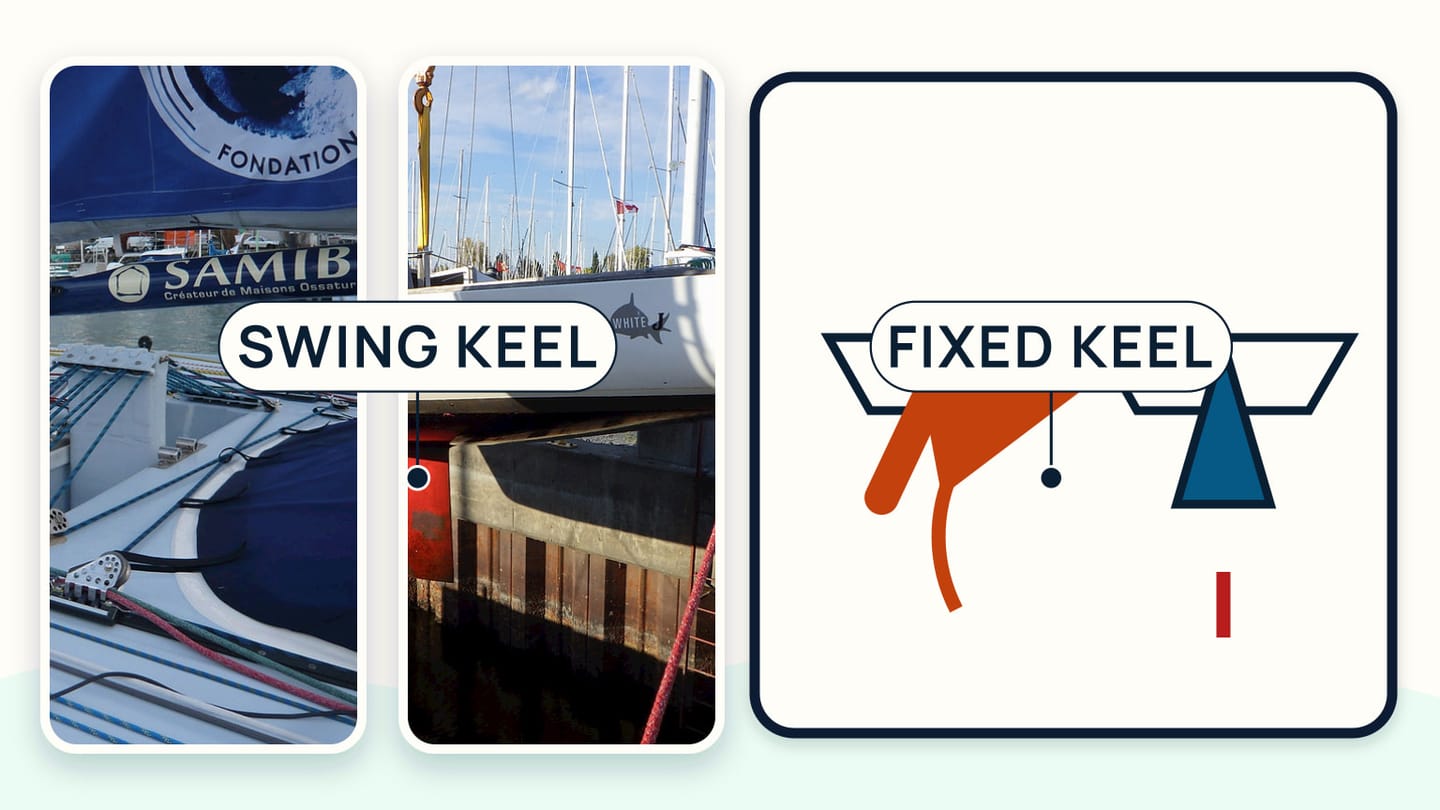
A fixed keel stays down. A swing-keel arrangement uses moving gear so the keel or foil can change position in its case. That difference can affect access to shallow water, launching, storage, and the list of gear you need to understand. It does not tell you everything about stability, handling, impact response, or suitability. Those depend on the individual design and how its equipment is maintained. Read the boat's guide, inspect the moving system, and choose around your real use rather than a generic winner.
The useful first question is not which keel is better. It is what each candidate asks of you. A fixed keel removes a moving-keel routine, while a swing arrangement adds controls, a case, and a securing system. Both still need sound structure and condition checks. The work below helps you turn that broad difference into a sensible boat-viewing conversation.
Start with the arrangement you can see
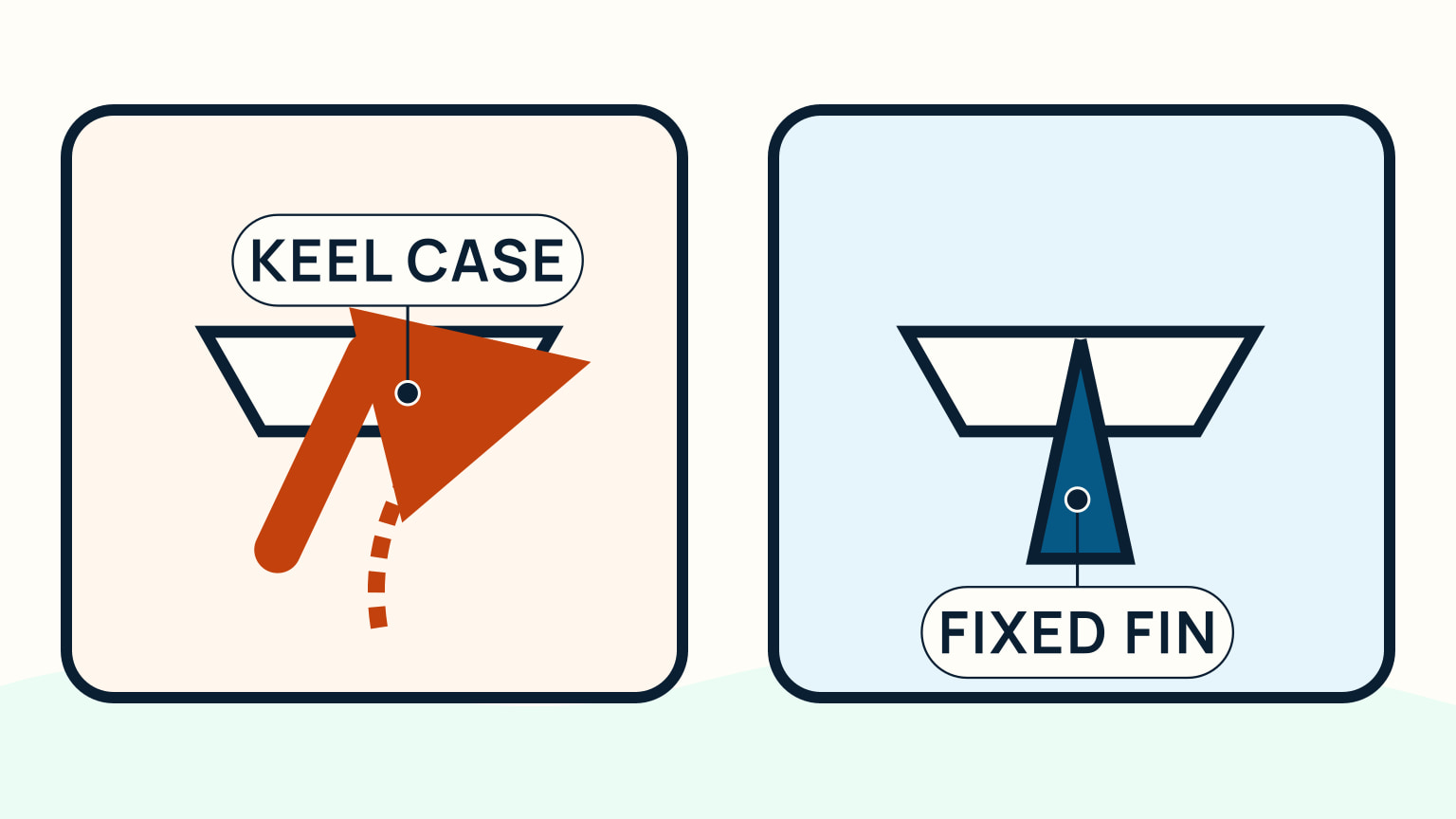
A fixed keel is permanently deployed. Its draft stays part of the boat's everyday shape. That gives you a simple first planning number: the boat needs enough water for its fixed underwater depth wherever it goes. A swing-keel boat has a different physical arrangement. Its moving foil or keel changes position through a case, so its raised and lowered positions both matter. The exact route, stop, lifting gear, and indicator vary with the boat.
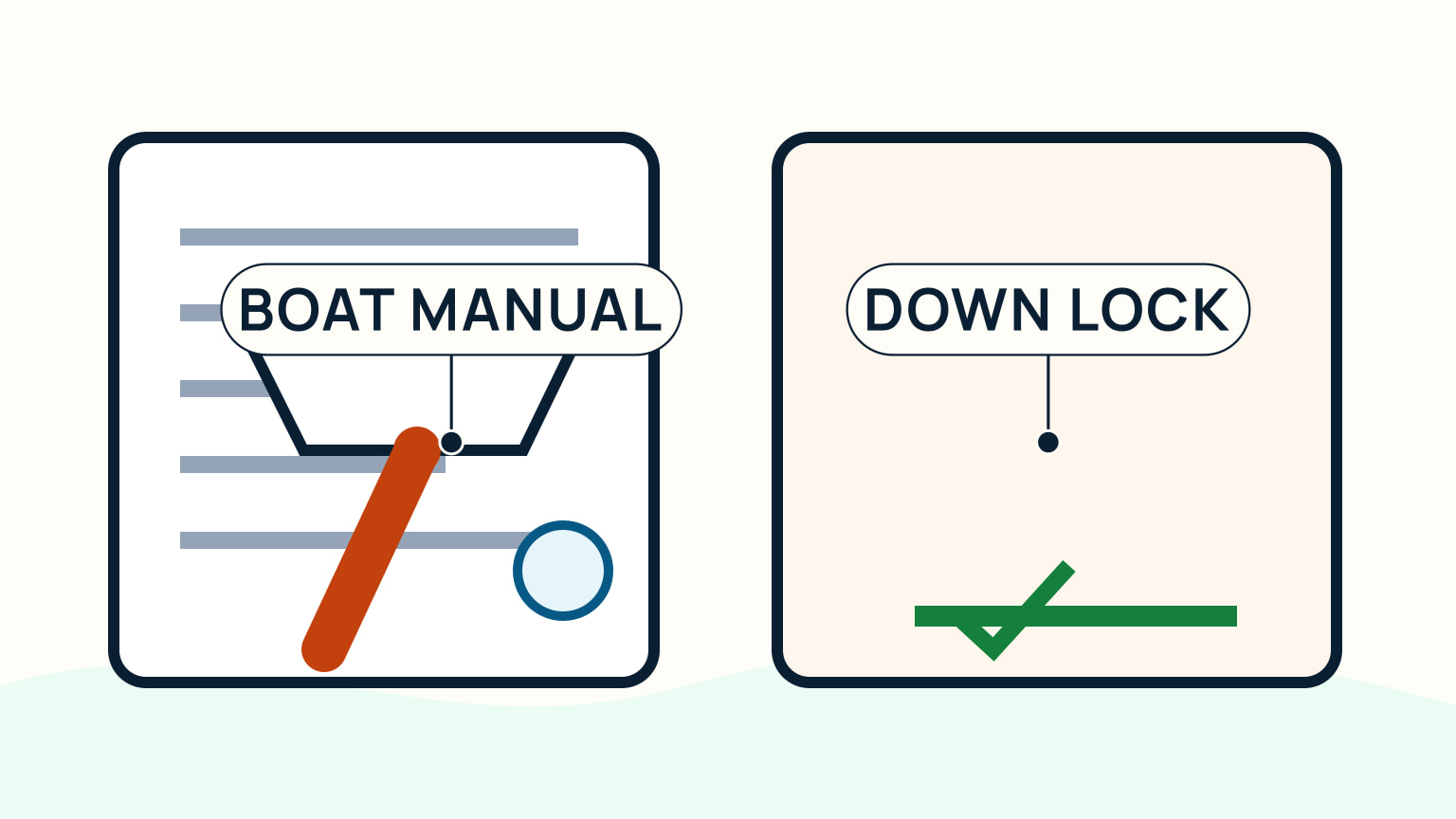
Do not let a sales label fill in details that are not there. Ask the owner to show the keel in each normal position. Ask what tells the helm that it is fully down or fully raised. Look for the control, the case, and the point where the moving part is secured. The RYA's safety guidance is direct that rudders, centreboards, daggerboards, and keels should be in good condition, and that users should have the owner's manual or equivalent guide available. That is a better starting standard than assumption.
Compare access with the boat's real draft
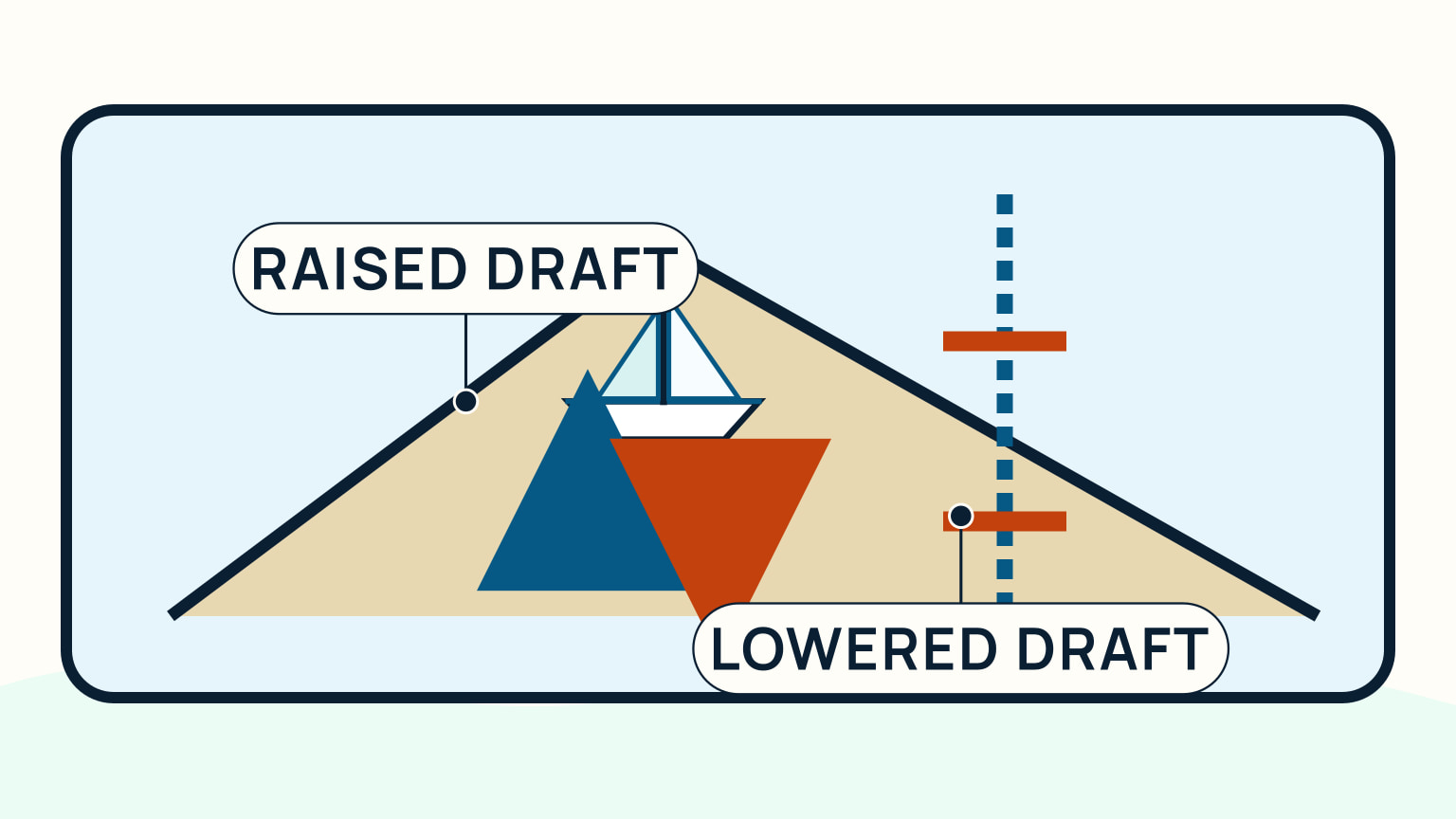
The attraction of a moving keel is easy to understand. A raised configuration may change where a boat can be launched, stored, or approached. Yet the usable benefit belongs to the exact boat and its operating instructions. You need the lowered draft for normal sailing decisions, the raised draft for the maneuver you are considering, and the rules for when the boat may be moved between those positions.
Use those figures in real places rather than in a catalogue comparison. Check the launch ramp, berth approach, trailer, storage cradle, and water you expect to use. A chart is planning information, not permission to push the boat into an unfamiliar shallow area. If depth is part of your decision, under-keel clearance explains how draft, charted depth, tide, and a margin belong in the same calculation. If you are comparing broader shapes, keel types explained is a useful companion.
Treat the moving system as real equipment
A swing keel does not move by reputation. It has controls and supporting parts that need to work together. The boat's guide should identify the lifting method, the travel path, any pin or lock, and the checks before launch or recovery. Look for obvious wear, damage, loose fittings, or a control system that cannot be demonstrated. If a feature cannot be explained, write it down as an unanswered question rather than guessing how it is meant to operate.
The securing arrangement deserves special attention. RYA guidance says devices fitted to secure a keel or weighted centreboard should be in use. That does not give you a universal procedure for every design. It does tell you that the mechanism is not decoration. Ask how the fitted system is checked, when it is used, and what the manual says about it. Keep the answer with the boat's documents so the next crew member does not have to reconstruct the system from memory.

Keep stability claims design-specific
It is tempting to turn a keel type into a safety score. Avoid that shortcut. The RYA says users should familiarise themselves with their vessel's own stability and righting characteristics. Its safety guidance also notes examples of boats inverting with a keel or weighted centreboard retracted. The practical lesson is simple: a moving keel position is part of the boat's intended configuration, and the effect of getting it wrong belongs to that design.
Ask for the manufacturer's limits and the boat's operating guidance. Do not substitute a forum claim, another boat's manual, or a broad slogan about ballast. If you need to know how a particular boat behaves after knockdown, grounding, or capsize, get advice from the maker, a qualified professional, or the responsible class association. A careful answer may be less dramatic than a general rule, but it is the only one that belongs with a purchase or operating decision.
Make a viewing checklist for your use
Bring a short list to every viewing. Record fixed, raised, and lowered draft where those figures apply. Ask to see the control and securing system operate. Check for the guide and maintenance records. Note your intended launch, berth, storage, and sailing water. Finally, ask who aboard will be responsible for the moving-keel routine. A boat that fits your route and crew can be a stronger choice than one that wins an abstract comparison.
You can add a hull and appendage walk-around to a general used-boat visit. This used sailboat inspection checklist helps you organize questions without pretending to replace a survey. When condition or structural history is uncertain, a qualified inspection is the sensible next step.
SailStarter's boat-parts lesson gives you the terms to ask clearer questions at a dock or boatyard. It is a foundation for observation, not a substitute for the builder's instructions or a professional assessment.
Use SailStarter to build the vocabulary that makes an inspection less mysterious. Then keep the important choice close to the actual boat: its manual, its condition, its operating limits, and the places you plan to use it. That is a better basis for a keel decision than any one-word label.
Write down what you did not see. If the boat was ashore with the keel raised, ask for evidence of the lowered position. If it was afloat, ask how the raised position is checked before recovery. If a seller says the system was serviced, ask what was done and whether there is a record. A careful buyer does not need to accuse anyone. They need enough information to decide whether the unknowns are acceptable for the boat and the budget.
Keep towing, ramp, storage, and launch questions in the same notebook. The keel arrangement is only one part of how a trailer sailer or fixed-keel boat fits your routine. A choice that works beautifully at one club can be inconvenient at the place you will actually keep the boat.
If you are comparing several boats, give each one the same visit structure. Inspect the control, see the documents, record the relevant draft figures, and note any unanswered question. Matching the process keeps a vivid but incomplete demonstration from outweighing practical evidence from another boat.
If the system will affect the way you trailer, launch, or store the boat, include those people and places in the decision. The boat must work on the water and through the ordinary work of getting it there.
Bring that record to any survey or professional inspection. It lets you use paid expert time on the unanswered points that genuinely affect the decision. A short list of observed controls, questions, and intended use is far more helpful than the broad request to decide whether a keel is good.
Turn the viewing checklist into an operating sequence. Before launch or recovery, identify the documented keel position, the control used to change it, and the securing device that the boat requires. Confirm who will do each part of that sequence. The point is not to create a universal swing-keel routine. It is to make sure that the crew can follow the arrangement the builder intended for this boat, at the location where it will actually be used.
Keep unknowns visible. If you have not seen the keel in a particular position, if the control cannot be demonstrated, or if records do not explain a repair, write that down beside the draft and storage questions. Those gaps may call for a survey, a builder or class-association question, or a different boat. They should not be filled with a general claim about fixed or moving keels. A decision is stronger when its limits are named as clearly as its advantages.
Try it from the lesson
Can you spot the next move?
What cushions the gap between the boat and dock before they touch?
Why you can trust this guide
. We build each guide from public seamanship and safety sources, then teach the universal principle before any local difference.