Chart your course
Taking a Tow at Sea
Quick answer
The short version
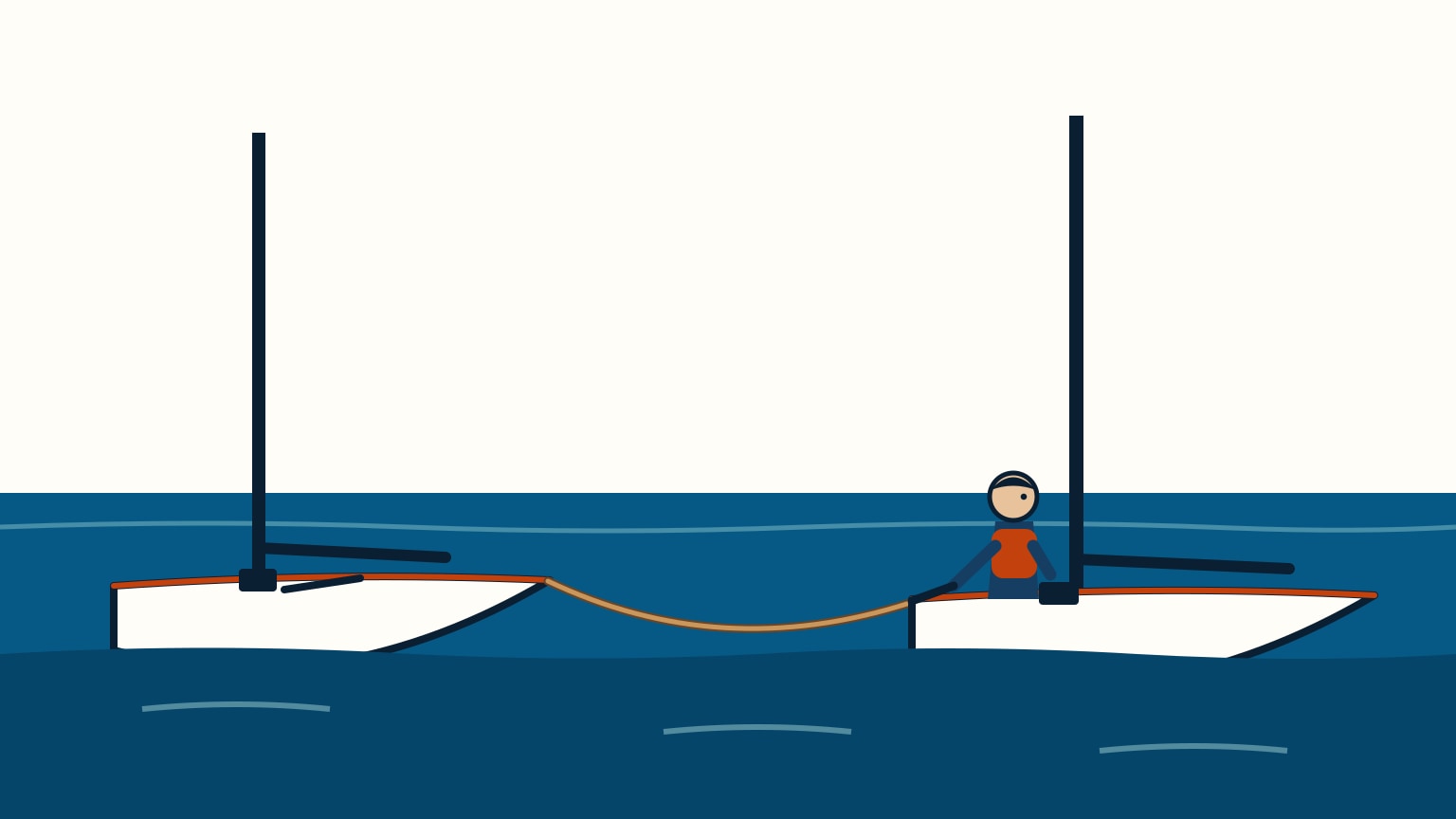
Taking a tow starts with a plain call for help: a routine "I'm disabled" report, not a distress call, unless someone or the boat is in real danger. Whoever answers, whether a commercial towing operator or, where one exists, a rescue service, agree what the job actually is (a simple tow or a salvage operation) before any line goes over. Then rig a bridle to both bow cleats, not one, with the chafe points padded, and agree the route, speed, and radio channel before the towline comes taut. Keep the line long enough that both boats ride the same wave together, stay astern in open water and alongside only in a flat harbor, and never stand in a loaded towline's path. The towed boat steers; the towing boat sets the pace.
A tow looks simple from the shore: one boat pulls, the other follows. On the water it's a short sequence of deliberate decisions: who to call and when, what the job is actually called, how the line is rigged, and how everyone stays clear of it once loaded. None of it is dramatic; a tow is one of the more routine ways a day on the water ends, not an emergency in itself. This article walks through that sequence in order: when a tow is the sensible next step, the difference between an ordinary tow and salvage, how to rig and brief both boats before the line comes taut, the towline-and-wave rule that keeps the ride gentle, and the safety habits that make the whole thing routine instead of eventful.
When to Call for a Tow
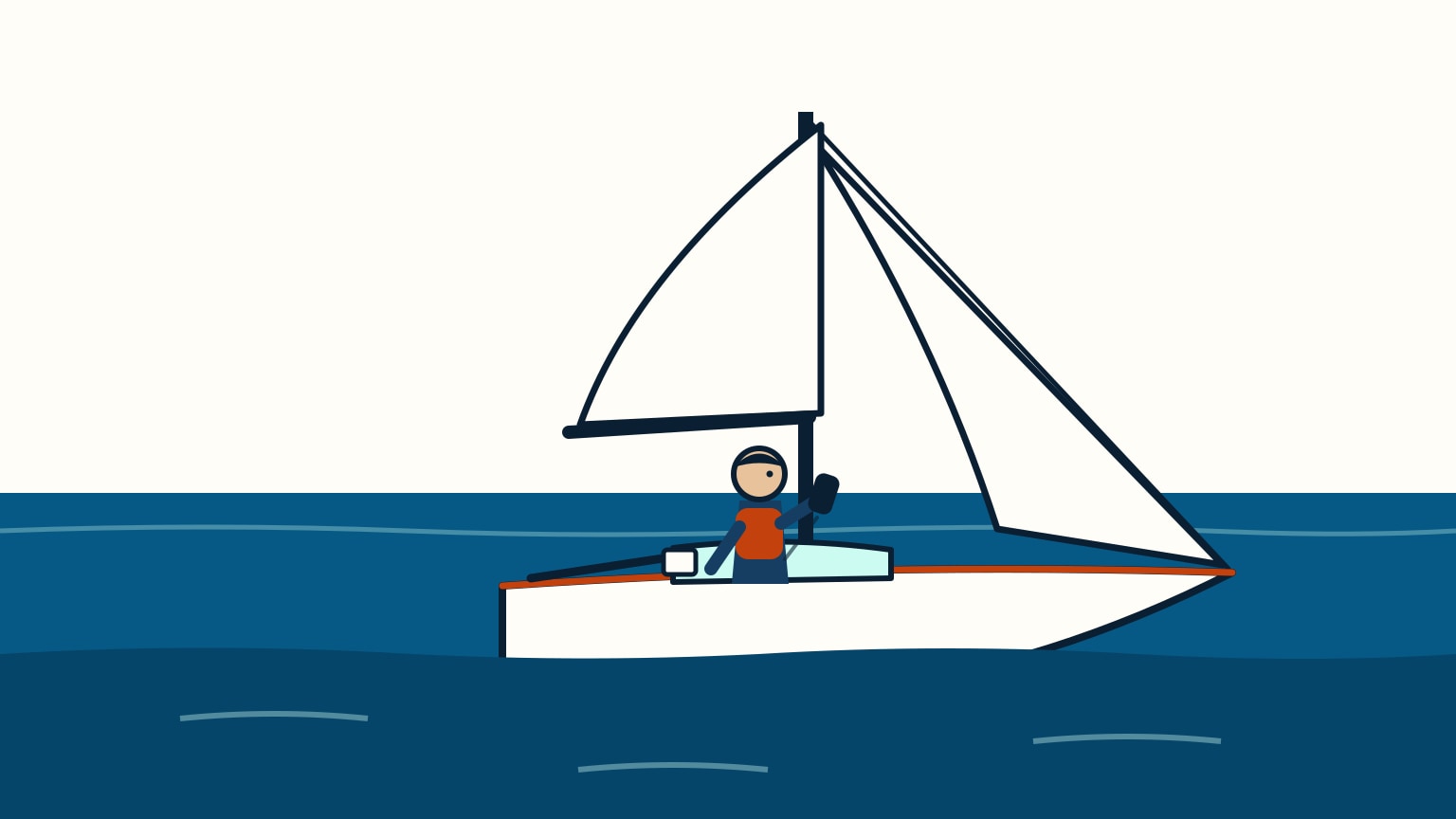
Most situations that end in a tow start the same way: an engine that won't restart, a fouled prop, a sail that can't be doused, or a soft grounding with nobody hurt and no water coming in. That's worth an early, ordinary call to a marina, a nearby boat, or a coast station. It isn't an overreaction, and it isn't a distress call. If it does turn urgent, the standard radio step for that is a Pan-Pan, a real tier below distress; a Mayday call is kept further back still, for grave danger together with imminent danger to the boat or crew, both at once. It's fine, even expected, to ask for help long before either applies. Who answers depends on where you are. In many places a commercial or membership towing operator is the first call for a routine breakdown, with a coast guard or volunteer rescue service held in reserve for real danger; elsewhere the split runs differently. It's worth knowing which applies on your own water before you need it, rather than guessing mid-call. Either way, calling early costs little, and it's exactly what a dispatcher or rescue coordinator would rather hear.
Simple Tow or Salvage? Agree Terms First
A tow and a salvage claim are not the same job, and the distinction depends on more than how hard the situation looks. An ordinary tow applies when there's little or no real peril: a dead battery, an empty fuel tank, a boat drifting in calm water. Salvage is different: it requires actual peril to the boat, its crew, or the surroundings, and because it's a rescue of property in danger, it can carry a claim on the boat's value rather than a flat fee. A reputable commercial tower will say up front if a job looks like salvage rather than a routine tow, precisely so nobody's surprised by the bill afterward. The plain version of the advice, repeated by towing companies themselves: settle what the job is, and what it costs, before the line goes over: not once you're already under tow and the leverage has shifted.
Rig the Bridle, Brief the Boats
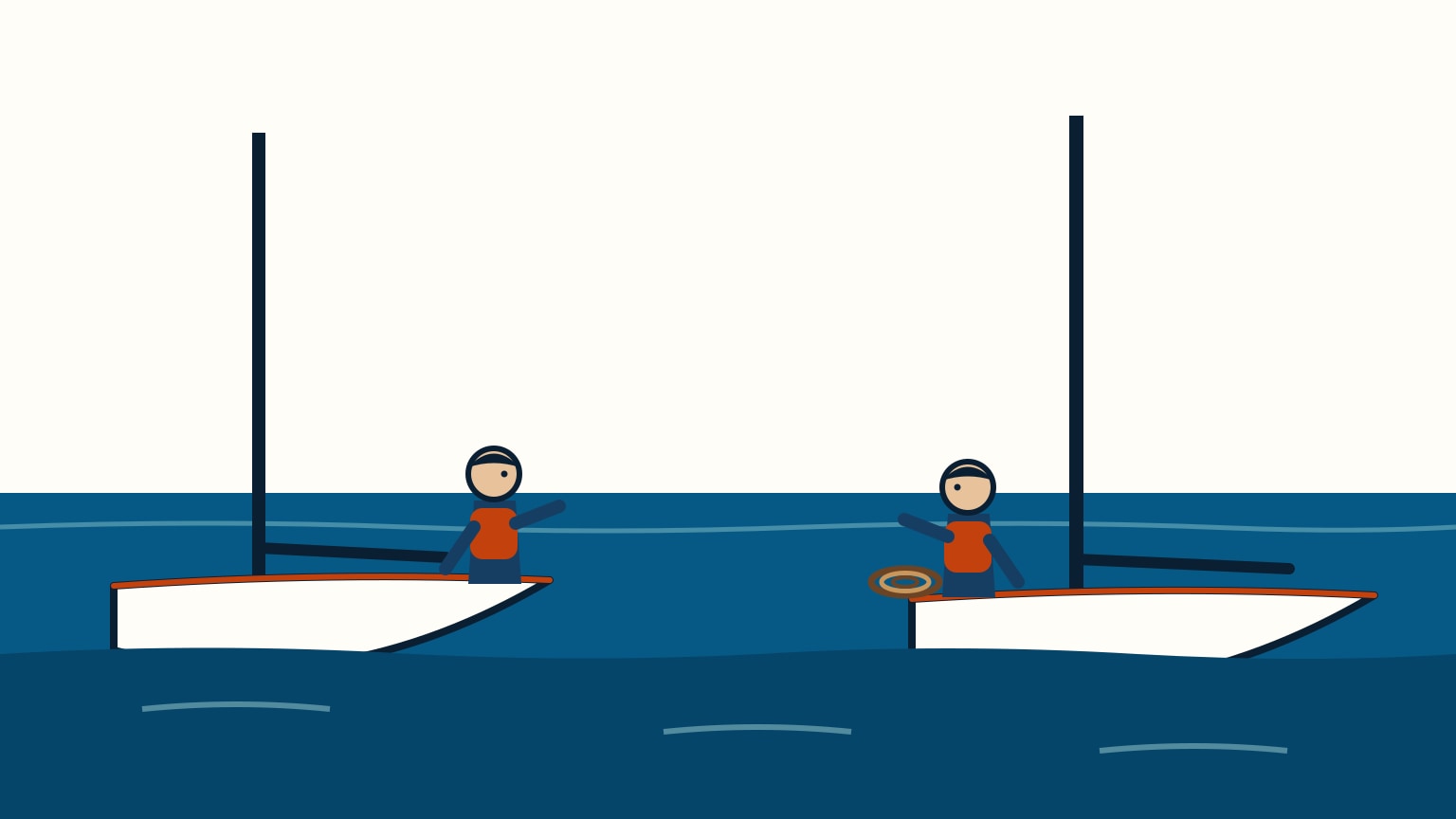
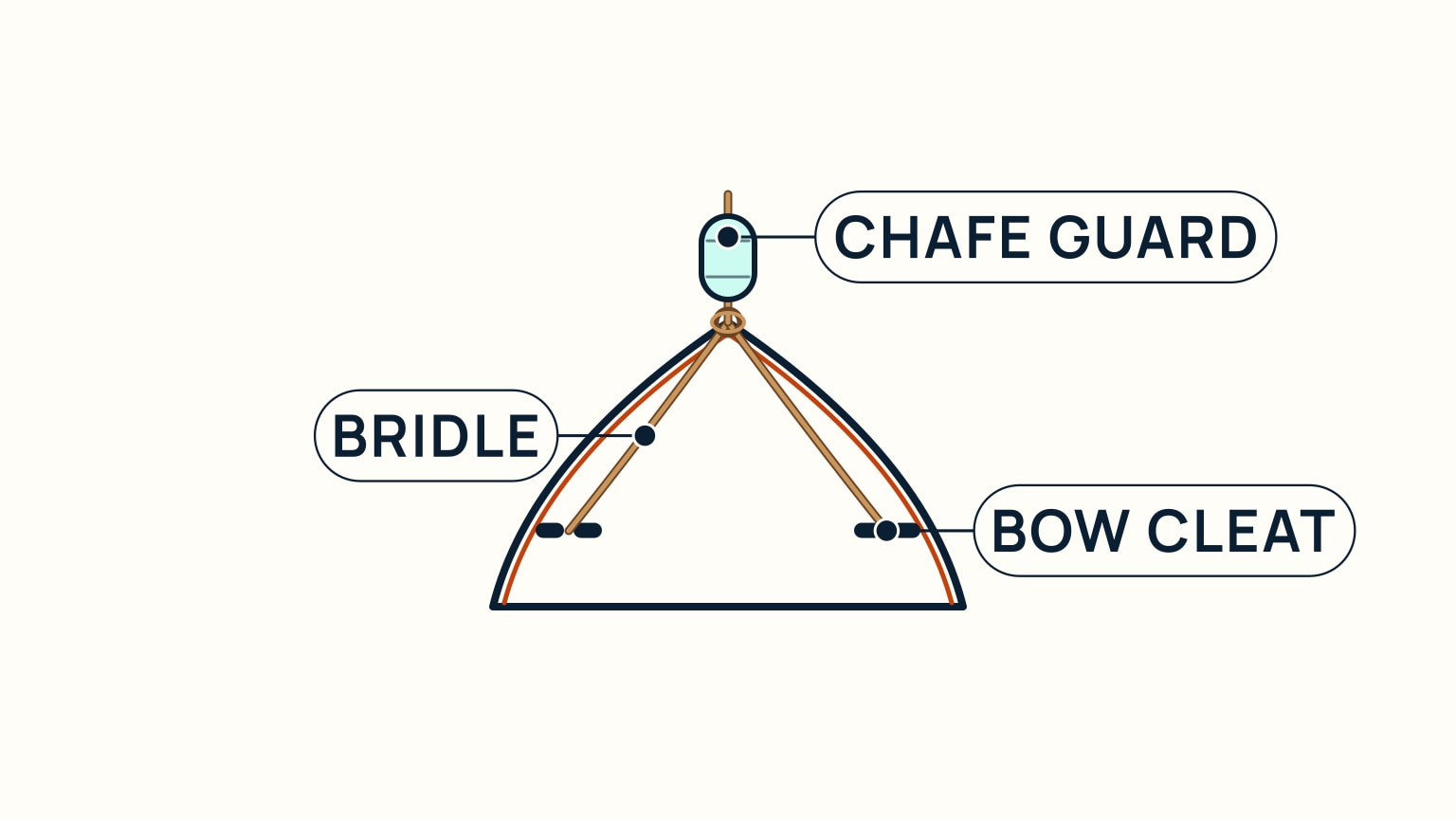
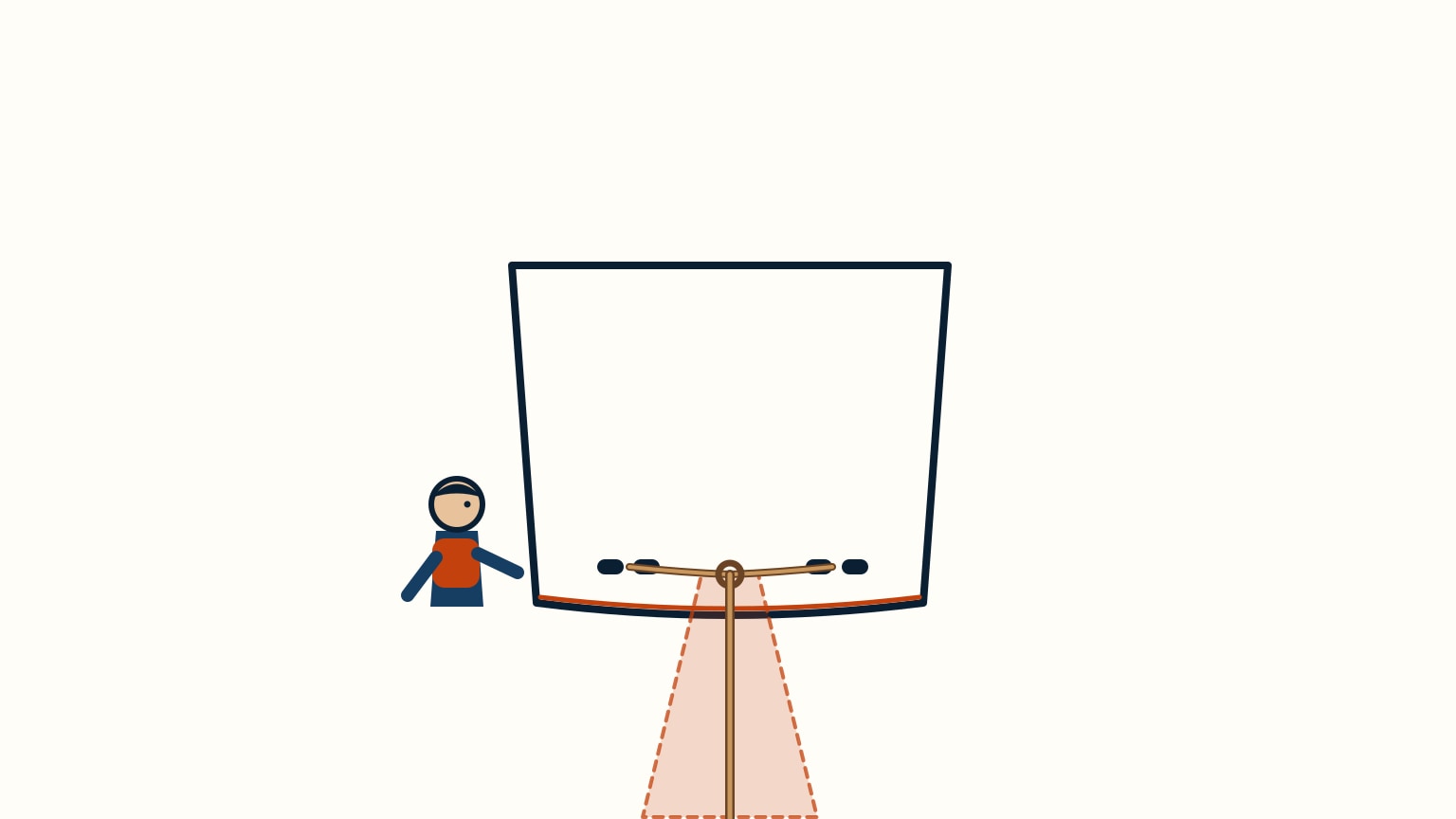
Getting ready to be towed starts on your own foredeck, ideally before the towing boat even arrives. Run a single long line to both bow cleats (never just one, since a towline's snatch loads can rip a single cleat straight out of the deck) and pad every point it could rub: a length of hose, a folded rag, anything between the line and a sharp edge like a low pulpit. While that's being rigged, agree the practical details with the other boat over the radio: a channel to stay on, the speed you'll hold, and where you're actually headed, so nobody's guessing once the line comes taut and shouting over an engine is the only other option. If the plan includes coming alongside at any point: most towed boats only do this right at the dock: get fenders out before the hulls get close, the same as any ordinary docking. None of this takes long, and doing it before the line loads is far easier than adjusting anything once it is.
The Towline in Waves: Astern or Alongside
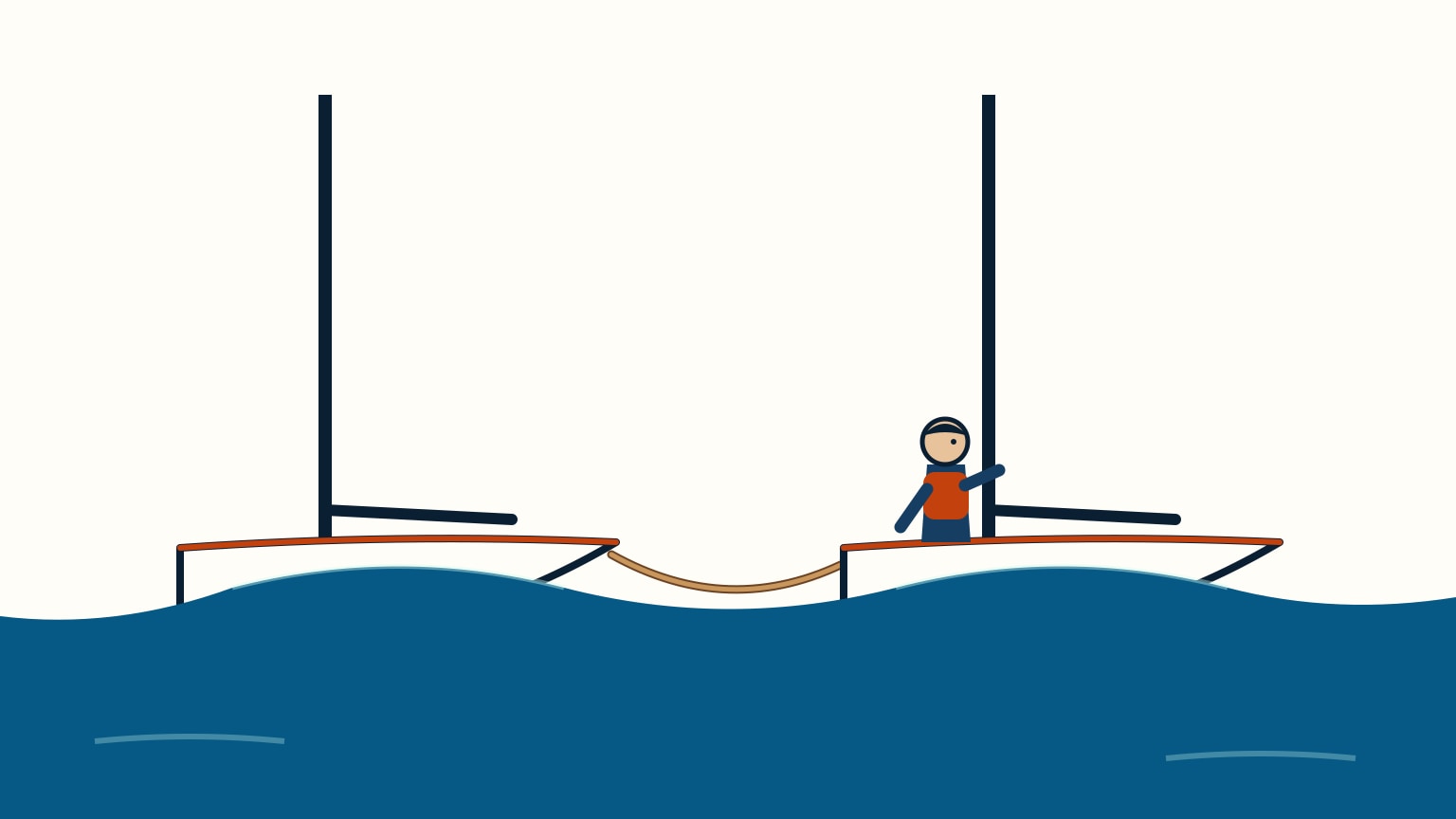
Out in open water, towing is done astern, on a long line, and the length matters more than it looks like it should. Give the line enough scope that both boats ride the same wave at the same time (cresting together, dropping into the trough together) rather than one boat surging forward on a crest while the other is still down in the trough behind it. A line that's too short turns every wave into a sudden jerk on the deck fittings; a longer, stretchier line lets its own sag and give absorb that shock instead. Towing alongside (lashed hip-to-hip rather than towed from well ahead) trades all of that sea-keeping for close-quarters control, which is exactly why it belongs in flat, sheltered water: coming into a harbor, or maneuvering onto a dock, not out in a seaway. A tow that starts astern in open water often finishes alongside, once both boats are already in calm water near the berth.
Handling the Line, Giving a Tow, Dropping a Tow
Monitor the tow as a changing system
Assign one person on each boat to watch the line, attachment points, chafe, boat alignment, and communication. Check bilges and steering on the disabled boat. Adjust speed or line length before snatching loads become severe, following the agreed plan and equipment limits.
Keep every person out of the towline's recoil area and away from bights. Never step over a loaded line. Use chafe protection where the line crosses a fairlead and inspect it often. At night or in poor visibility, make the tow and both vessels visible as current rules require.
If conditions, destination, or risk changes, communicate early. A simple tow can become unsafe through worsening weather, flooding, steering failure, line damage, traffic, or fatigue. Stop or transfer the tow while there is still room rather than waiting for the attachment to fail.
Prepare release before entering confined water
Agree how and when the tow will shorten, move alongside, transfer to another vessel, or release. Ready fenders, lines, anchors, and propulsion where available. Confirm that the towline cannot reach either propeller.
Release only on command with the line controlled and people clear. A slack line can sink, foul a rudder or propeller, or tighten suddenly. Recover it promptly. Record any damage to cleats, bitts, fairleads, bridles, or rope before reusing them.
The anchorage guide helps choose a safer destination when harbor entry is unsuitable, and Mayday calling covers grave and imminent danger. A tow is one response to a disabled boat; it does not replace distress communication when lives or the vessel are in immediate danger.
A towline under load is a hazard in its own right, whichever boat you're on. Never stand in the direct line of it, or anywhere it would recoil to if it parted: a loaded line can snap back with real force, and a working line takes no notice of fingers left too close. Steering stays with the towed boat throughout; its rudder is what keeps it tracking behind the towing boat, not some fixed path of its own. If you're the one giving a tow to another boater, keep expectations modest: recreational boats and gear aren't built for this the way a dedicated tow boat is, so take up slack slowly, hold a genuinely slow speed, and expect wide, gentle turns rather than anything sharp. Dropping the tow is planned the same way starting it was: agreed over the radio, done slowly, at a stop or near enough to one, with a bridle rigged to release cleanly rather than a knot fought under load. None of this is complicated; it's just deliberate, every step of the way.
None of this needs to be worked out cold with a line already over the side. Grounding and steering trouble are two of the more common paths to needing a tow in the first place. See You've Run Aground: What To Do Next if you've just felt the keel touch, or Boat Steering Failure: What To Do if the rudder's the problem. Both usually resolve on their own. When a tow is the right call, knowing its shape in advance is most of the work: who to call, what a bridle looks like, and why the line stays long in waves. SailStarter's lessons on boat handling and emergency preparedness walk through this same sequence, so none of it is something you're improvising for the first time on the day you actually need it.
Try it from the lesson
Can you spot the next move?
A towing boat is about to pass you a line. What's worth settling before it comes tight?
Why you can trust this guide
. We build each guide from public seamanship and safety sources, then teach the universal principle before any local difference.