Chart your course
What Is a Winch on a Sailboat? How It Works and How to Use One

Quick answer
The short version
A winch on a sailboat is a power multiplier for a loaded line, not a knot and not a cleat. It is the metal drum in the cockpit, often with a removable handle sticking out. Instead of relying on your strength to pull the rope, you wrap it around the drum so friction and the handle help you.
Lead the line onto the bottom of the drum and wrap clockwise on almost every winch. Check yours. Start with a couple of even turns, then add wraps as the load builds. Keep your hands clear of the drum and control only the tail, the loose end, because a loaded line can pull fingers toward the drum. Keep the tail firm as you grind (turn the handle). When finished, ease the loaded turns gradually, then move the tail to the holding fitting. Everyone fumbles this at first; direction and hand position matter more than strength.
You are in the cockpit, looking at a metal drum with a handle sticking out of it. A rope loops around the drum, so why use it instead of pulling the rope by hand?
A winch on a sailboat is a power multiplier for a loaded line, a rope being used on the boat. Its drum, handle, and gears help you hoist or trim a sail with less effort. The rope does not spool onto the drum. It takes a few turns around it, and friction helps you control the load. A winch is not a knot, and it is not the fitting that holds the line when you finish.
The sequence itself is simple: wrap, tail, grind, ease, and secure. The calm hand habits that go with it come with a little practice. Everyone fumbles a winch at first. Good technique is mostly about wrap direction and hand position, not strength.
What Is a Winch on a Sailboat? That Metal Drum in the Cockpit
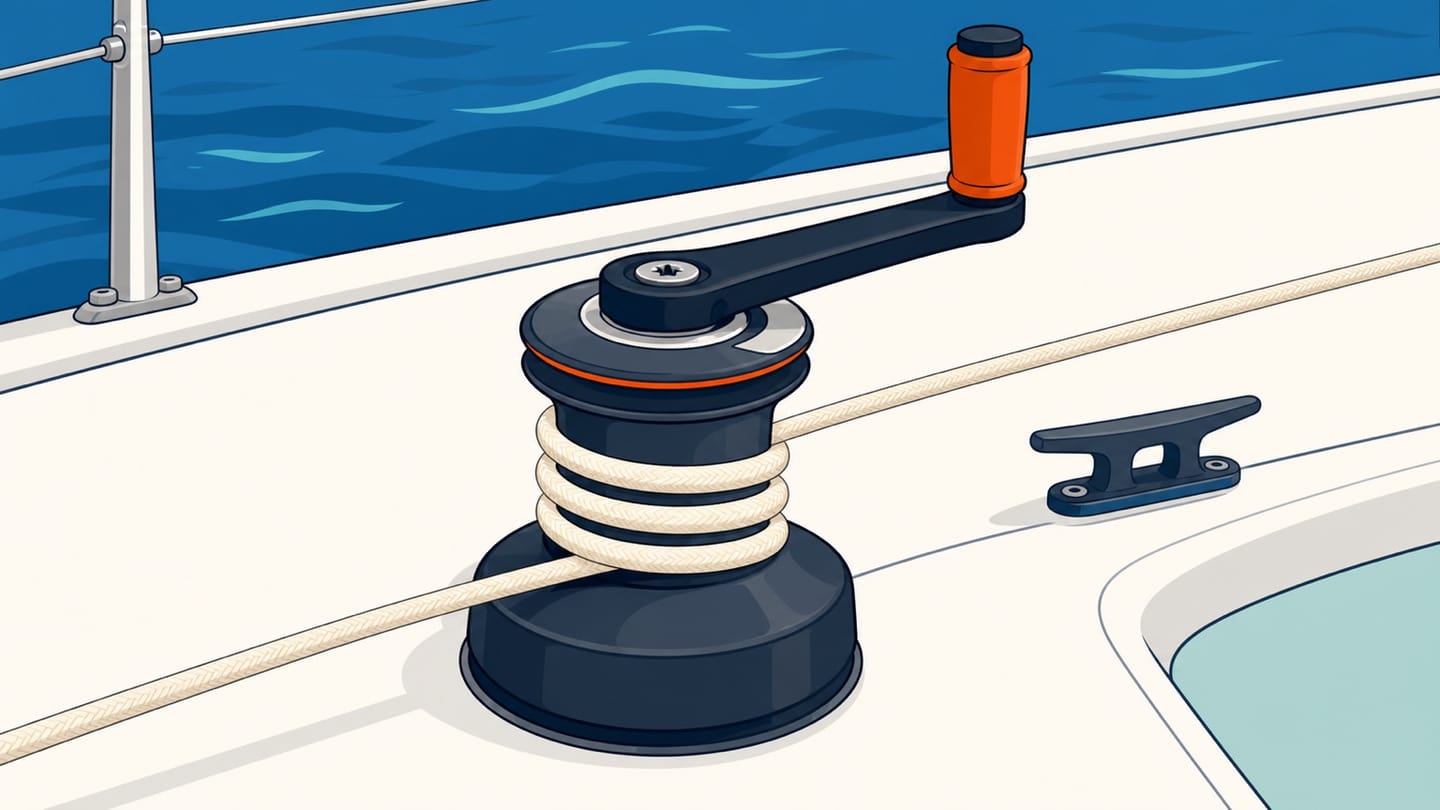
A winch on a sailboat is the metal drum you find in the cockpit, often with a removable handle fitted on top. At first, you may wonder why you cannot simply pull the rope. Sailors call a rope in use a line, and that line can be under more pull than your hands can manage comfortably.
The winch helps you control loaded sheets and halyards. A sheet adjusts a sail. A halyard raises or lowers one. The line takes a few turns around the drum, and you turn the handle. Together, the drum, handle, and gears multiply your pulling power. As a simple example, a sail pulling with about 100 lb (45 kg) of force might need only about 25 lb (11 kg) of force at the handle.
Think of the winch as a power multiplier for a line. It does not tie or secure the line like a knot or cleat. It also does not store the line like a spool; the line wraps around the drum and continues past it.
How Wraps and the Handle Multiply Your Pull
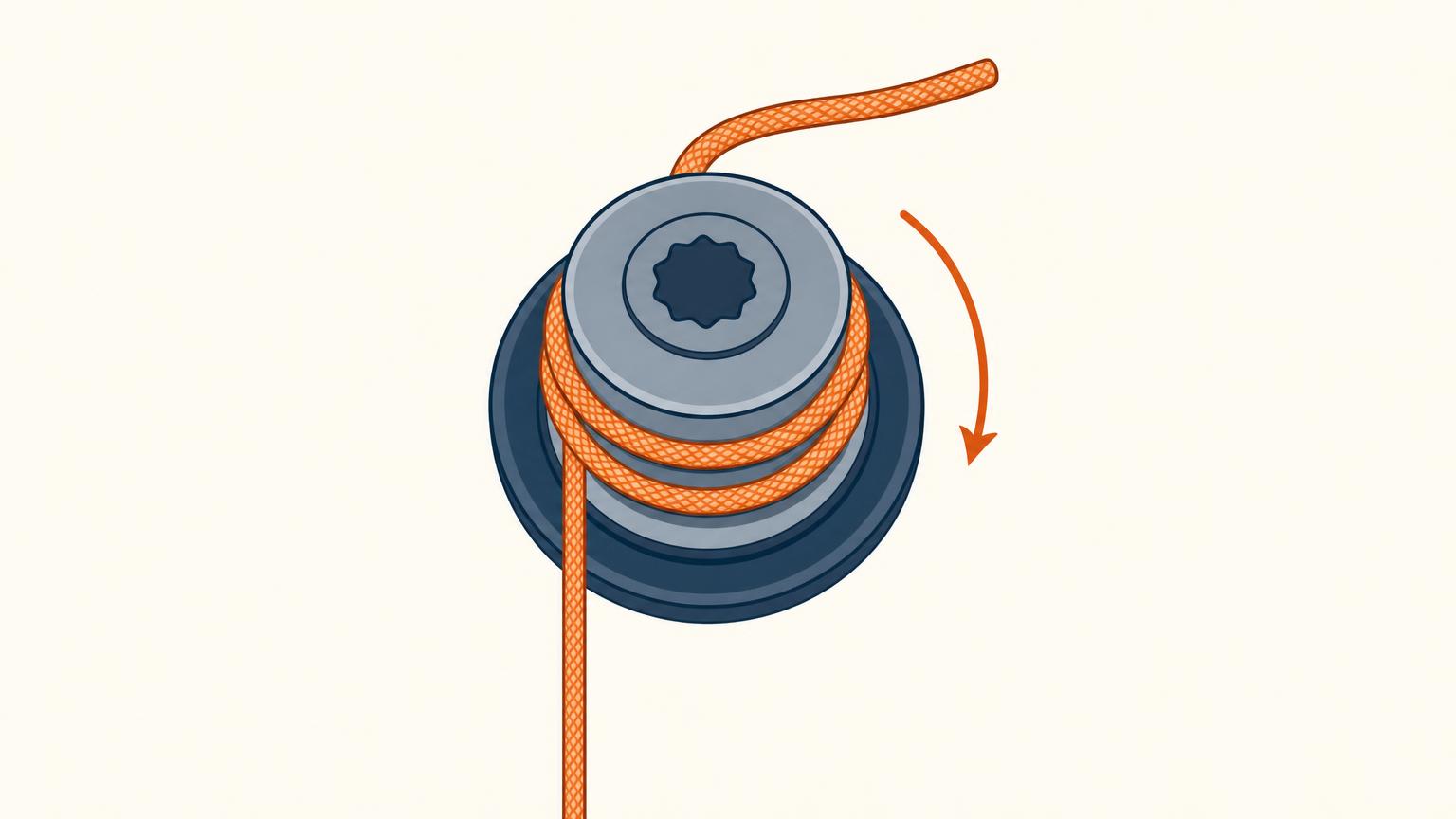
The rope stays one continuous line. It enters near the bottom of the drum, takes several even turns around it, then leaves from the top. That loose end is called the tail.
The turns create friction between the rope and drum. As you keep light tension on the tail, that friction helps control the much larger load on the other side. Start with a couple of turns, then add more as the load builds. Follow any markings or instructions on the winch.
The handle adds leverage. Turning it rotates the drum, while gears inside the winch multiply your effort further. Together, the wraps and handle let you control a loaded line with a manageable pull. The rope does not spool onto the drum; it moves across the drum while you take in the tail.
Viewed from above, you wrap clockwise on almost every winch. Check yours before loading it, because uncommon counter-rotating winches do exist.
The Basic Technique: Wrap, Tail, and Grind
Lead the line onto the bottom of the drum. Viewed from above, wrap it clockwise on almost every winch. Start with a couple of even turns, but check the arrows, markings, or instructions on yours.
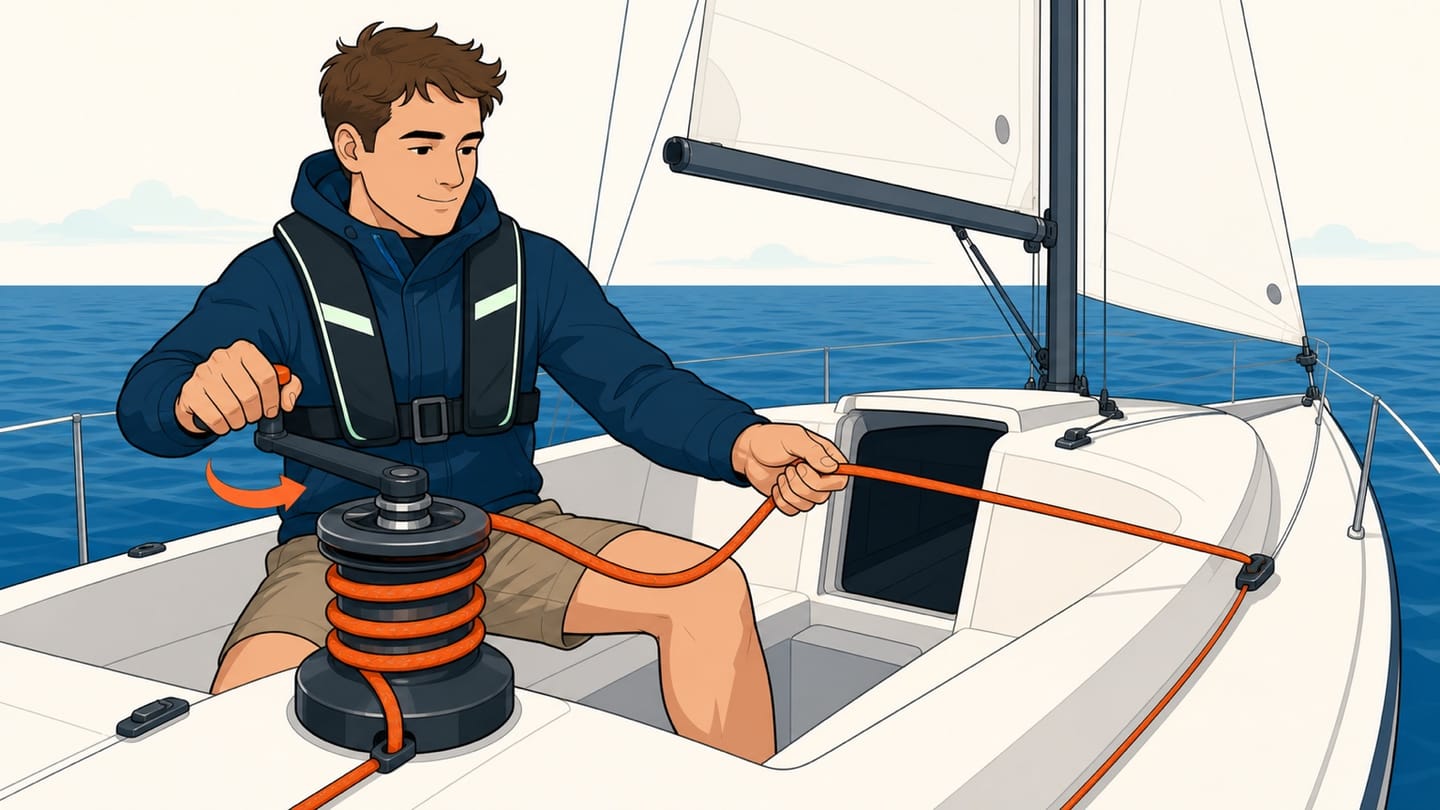
Pull in easy slack by hand before you fit the handle. As the load builds, add more wraps as needed. The wraps create friction, so you can control a much larger load from the loose end leaving the drum.
Controlling that outgoing end is called tailing. Keep steady tension on it while you grind (turn the handle). Without tension on the tail, the line can slip instead of tightening.
Keep your hands and fingers clear of the drum. Touch only the outgoing tail, never the loaded line feeding onto the drum while it is working. A loaded line can pull your fingers toward the drum. When you finish, remove the handle.
Everyone fumbles this sequence at first. Correct wrap direction and calm hand position matter more than strength.
Ease with Control, Then Secure the Line
Match each winch to its line
Trace which sheet, halyard, reefing line, or other control reaches the winch and where the load continues. Some boats share winches through clutches; others dedicate one to a sheet. Labels and the crew brief should remove doubt before any handle turns.
Check that the lead enters the bottom of the drum fairly. A high or angled lead can encourage overrides. Clear loose rope, secure clothing, and keep knees, fingers, and hair away from the drum and handle sweep.
Understand the two sources of advantage
Wraps around the drum create friction, allowing the tailer to control a much larger line load. Internal gears and the handle add mechanical advantage on geared winches. More handle effort is not a reason to keep grinding against a jam, closed clutch, fouled sail, or end stop.
Listen and look while taking in. If the load rises unexpectedly, stop and find the cause. The person tailing and the person grinding must be able to stop each other immediately.
Practise the full cycle
With a light supervised load, prepare the tail, add the correct wraps from bottom upward, insert the handle, tail while grinding, transfer the load to its intended cleat or clutch, remove the handle, and tidy the tail. Then practise easing by taking control of the tail and reducing friction gradually.
Keep fingers out of wraps and self-tailing jaws. Never straddle a sheet or stand where a parted line or fitting would recoil. A riding turn requires securing or transferring the load before clearing it, not pulling at the trapped wrap by hand.
The step-by-step sailing-winch technique guide covers loaded handling in more depth. The cleat-hitch guide explains a separate securing method used for dock lines and other appropriate loads.
Inspect rope, drum, self-tailer, fasteners, handle socket, and mounting for wear or unusual movement. Service the winch by its maker's instructions. A metal drum is only one part of a load system that includes line, lead, backing structure, crew, and the sail or equipment being controlled.
Common beginner questions
Can a winch hold the line by itself? Only if the complete setup is designed and left in the securing state taught for that boat. The tail, self-tailer, clutch, or cleat each has a role. Never walk away from a load because the drum looks still.
Why not put fingers on the wraps? The line can move without warning and trap them against the drum. Control the free tail outside the wraps.
Why remove the handle? A left handle can spin, strike someone, snag a line, or be lost. Stow it after the load is secured unless the immediate procedure requires it in place.
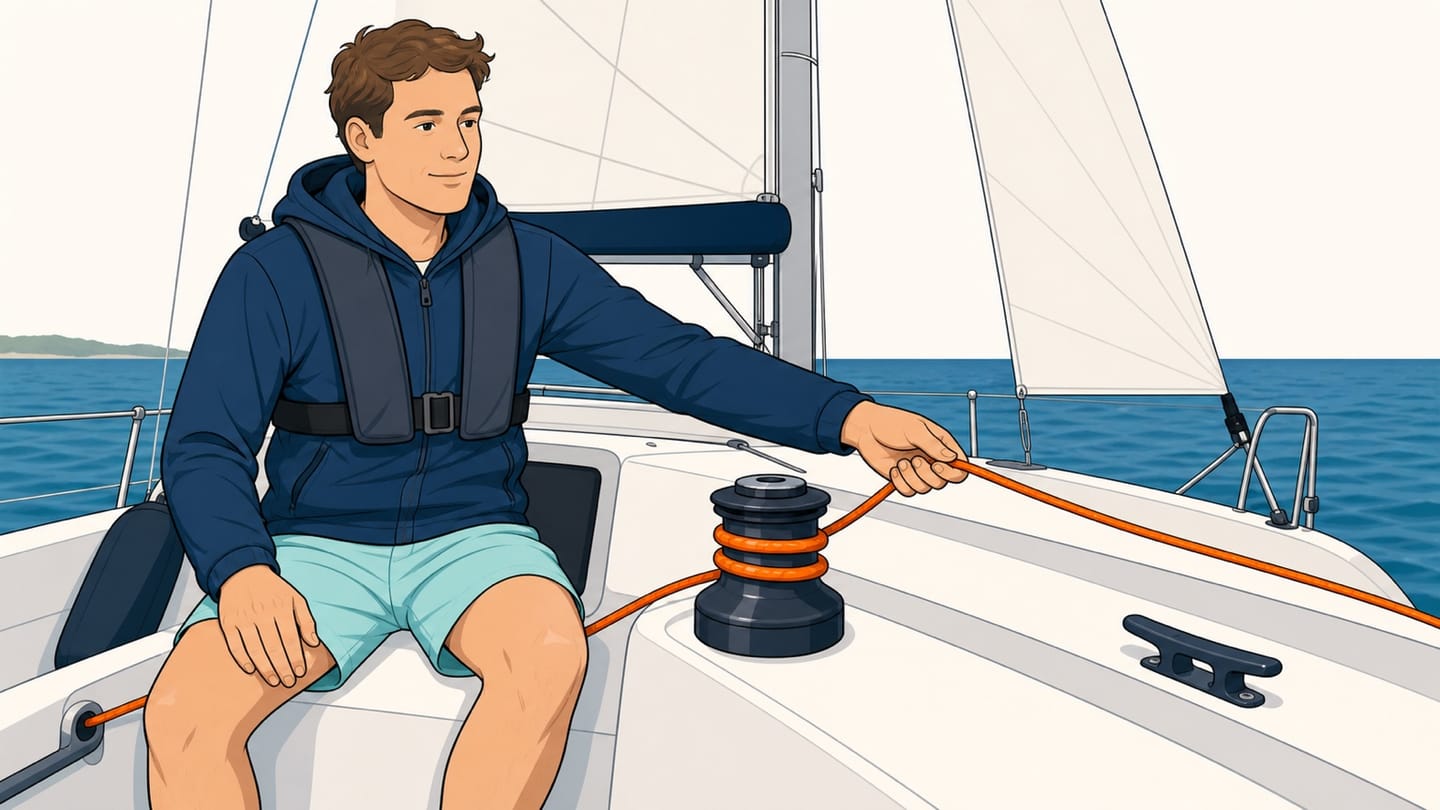
When you need to let the line out, keep control of the tail, the loose end. Ease the loaded turns gradually instead of releasing them at once. Control only the line leaving the drum, and keep your fingers clear of the drum and the line feeding onto it. A loaded line can pull your fingers toward the drum. Once you have eased enough, move the tail to the fitting that holds the line. The winch controls the load; the fitting holds it when you finish.
A winch on a sailboat is a power multiplier for a loaded line, not a knot, and not a cleat. Everyone loads a winch wrong the first few times. Getting it right is mostly about wrap direction and hand position, not strength. When you are ready, try SailStarter's short beginner lessons on reading the wind and trimming the sails, because the winch is the tool you use to trim.
Try it from the lesson
Can you spot the next move?
Someone asks you to take the helm. What job are they handing over?
Why you can trust this guide
. We build each guide from public seamanship and safety sources, then teach the universal principle before any local difference.
- mountaineers.org
- harken.com
- lewmar.com
- sailing.mit.edu
- yachtingmonthly.com
- sailingworld.com
- safe-skipper.com
- practical-sailor.com
- goodoldboat.com
- westmarine.com
- myboatlife.com
- harken.com
- fisheriessupply.com
- gmesupply.com
- pbo.co.uk
- skippertips.com
- toplicht.com
- aceboater.com
- nomadsailing.co.uk
- blog.dockwa.com
- benharrisonkeywest.com