Chart your course
Float Plan for Sailors: How to Check the Weather and Leave Word Before You Go
Quick answer
The short version
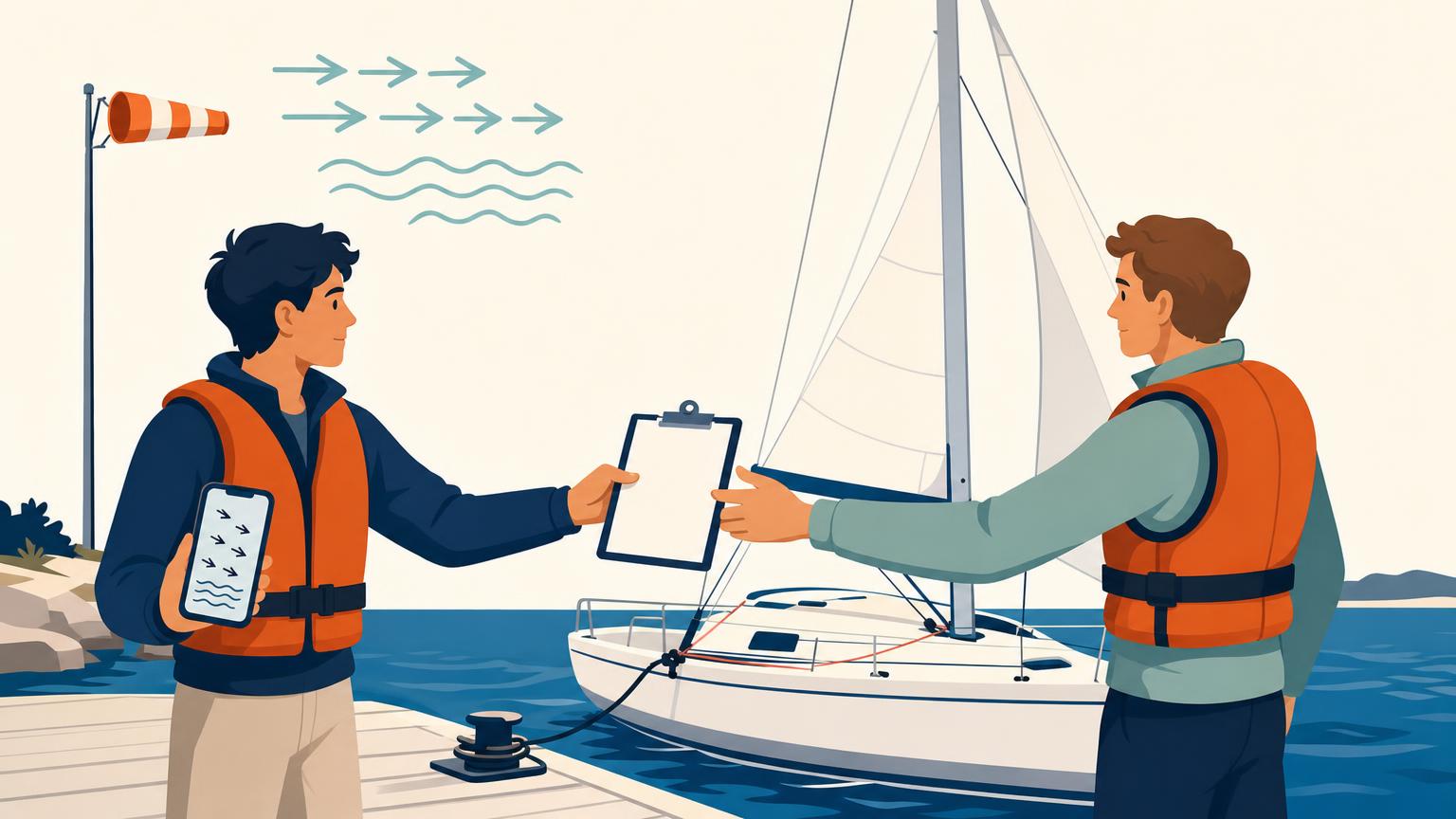
Before sailing, check the latest official marine forecast for your whole route, then leave a float plan with a reliable person ashore. Forecast services use different warning names and thresholds, but any notice that conditions may be hazardous for small craft means "change the plan." Your note describes the boat and says who is aboard, where you will go, and when you expect to return. When you return, tell the person holding it so nobody acts on an overdue plan after you are already safe.
Some of the best sailing decisions happen while the boat is still tied to the dock. You check the latest marine forecast, see that the day no longer suits a beginner trip, and choose another time. Nothing went wrong on the water because you made the call before leaving.
A second quiet habit supports every departure: you leave a float plan for the trip with a reliable person ashore, noting who's aboard, where you're headed, and when you plan to return. Once you're safely back, you let them know.
Check the Marine Forecast Again Before Departure
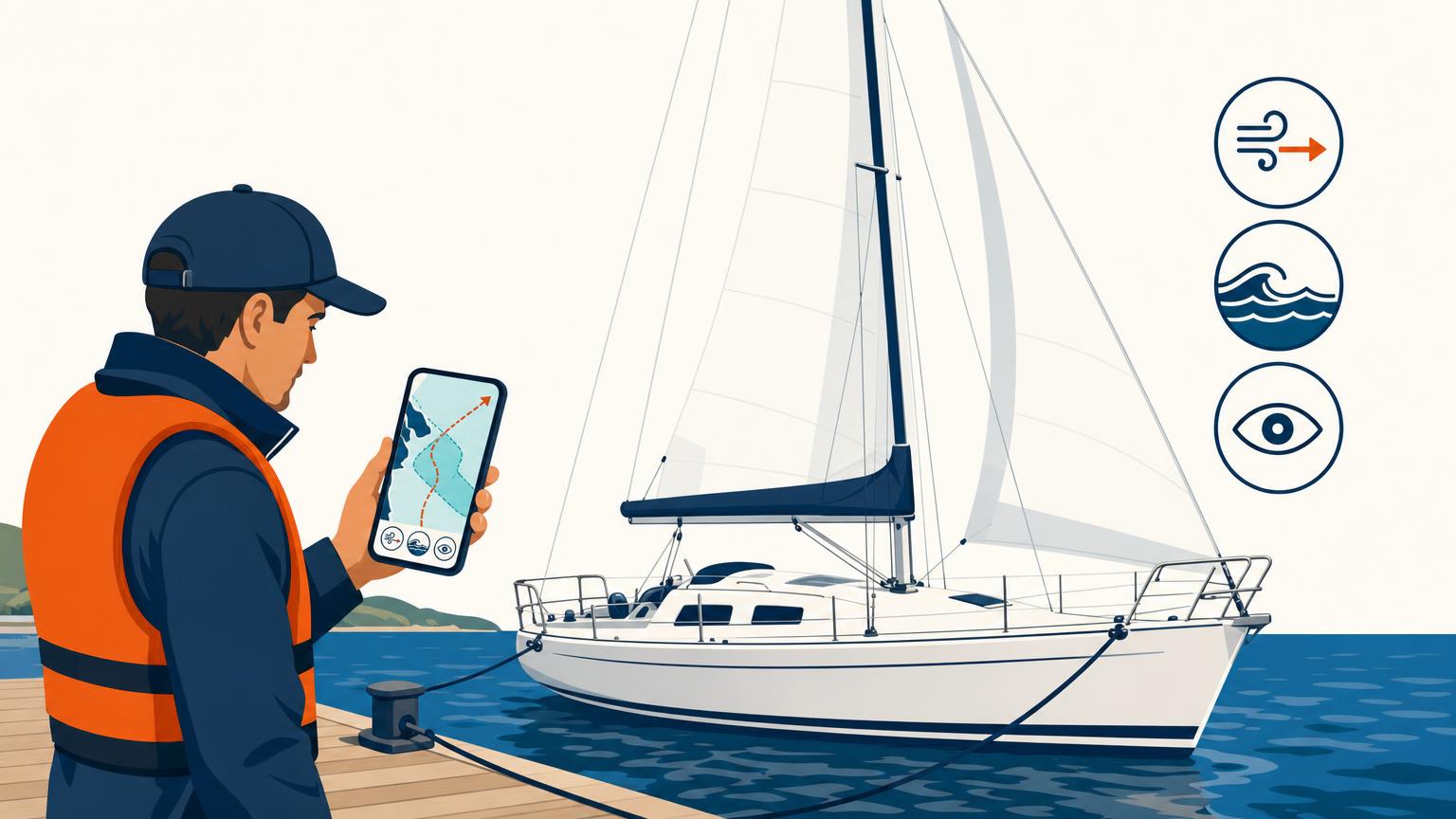
Marine forecasts are reissued on a regular schedule, so the report you read earlier may no longer be the latest one for your sailing area. Use the official marine forecast service for every part of your route. Check the issue time, wind, waves, visibility, and any active advisory or warning. After that weather check, the other half is leaving a float plan with a trusted person ashore.
Know the Warning Words That Mean “Not Today”
When you read the marine forecast, focus on meaning rather than memorizing one service's vocabulary. Agencies choose their own names and thresholds, and the same phrase may not be used everywhere.
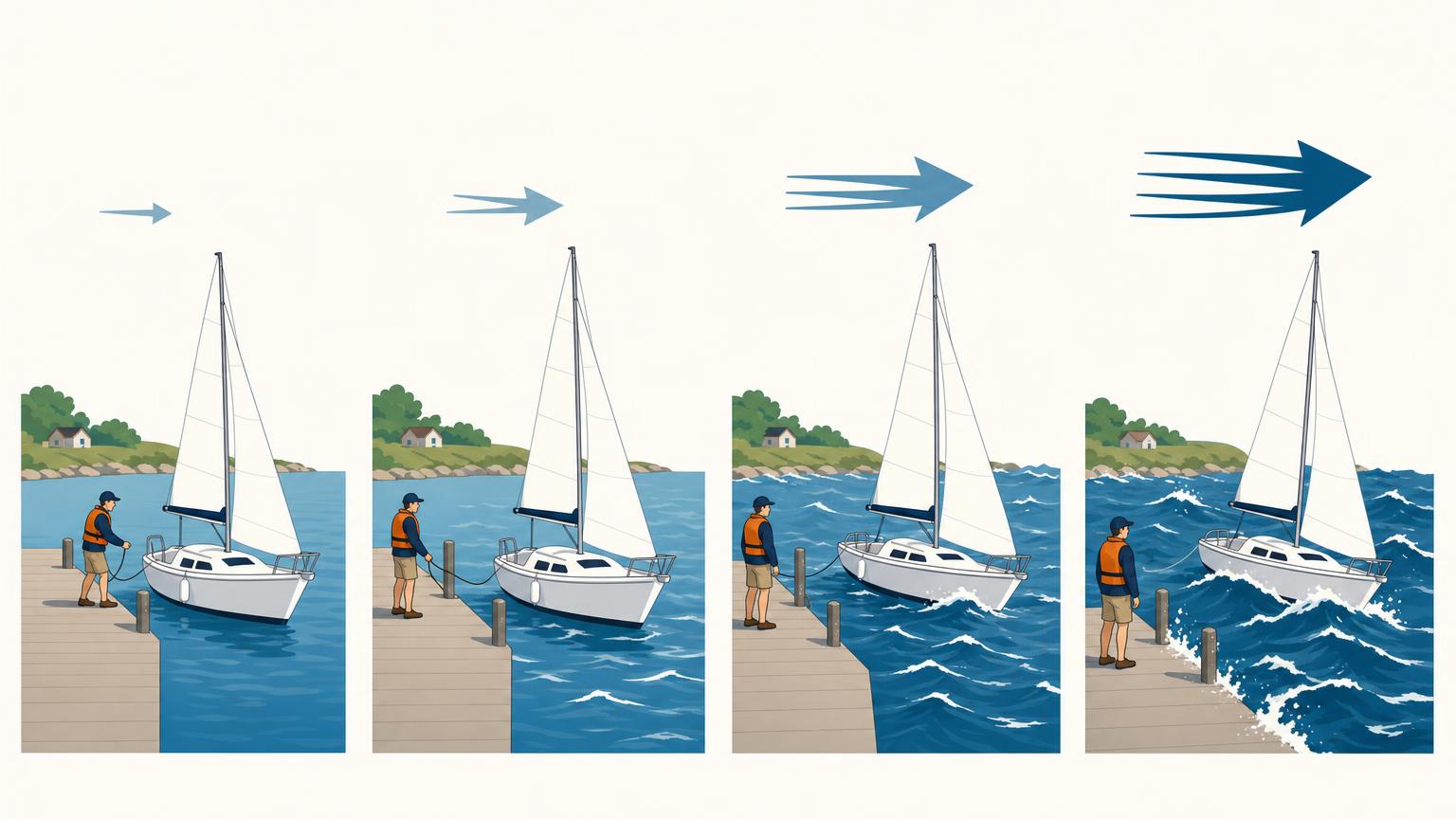
The practical cue is plain: if the official forecast says wind or sea conditions may be hazardous for small craft, a beginner trip should be postponed, shortened, or moved to more sheltered water. A stronger warning makes the decision even clearer.
Do not treat the absence of one familiar warning name as proof that conditions are safe. Read the forecast values and sea-state description, consider the whole route, and compare them with your boat, crew, and experience.
Make a Float Plan That Helps Someone Find You
A float plan records who is aboard, where your boat is going, and when you expect to return. It is a practical seamanship habit, not an automatically tracked flight plan.
Leave it with a trusted person ashore. If a local authority offers a template, use it as a prompt, but make sure the holder understands the plan and knows which local rescue service to contact if you are overdue.
A clear boat description helps responders recognize your vessel, while the names of those aboard show who may be missing. Your route, planned stops, and expected return time turn simple lateness into useful information about where to look and when you became overdue. Contact details and the safety equipment aboard add useful context.
Choose a Holder and Close the Plan
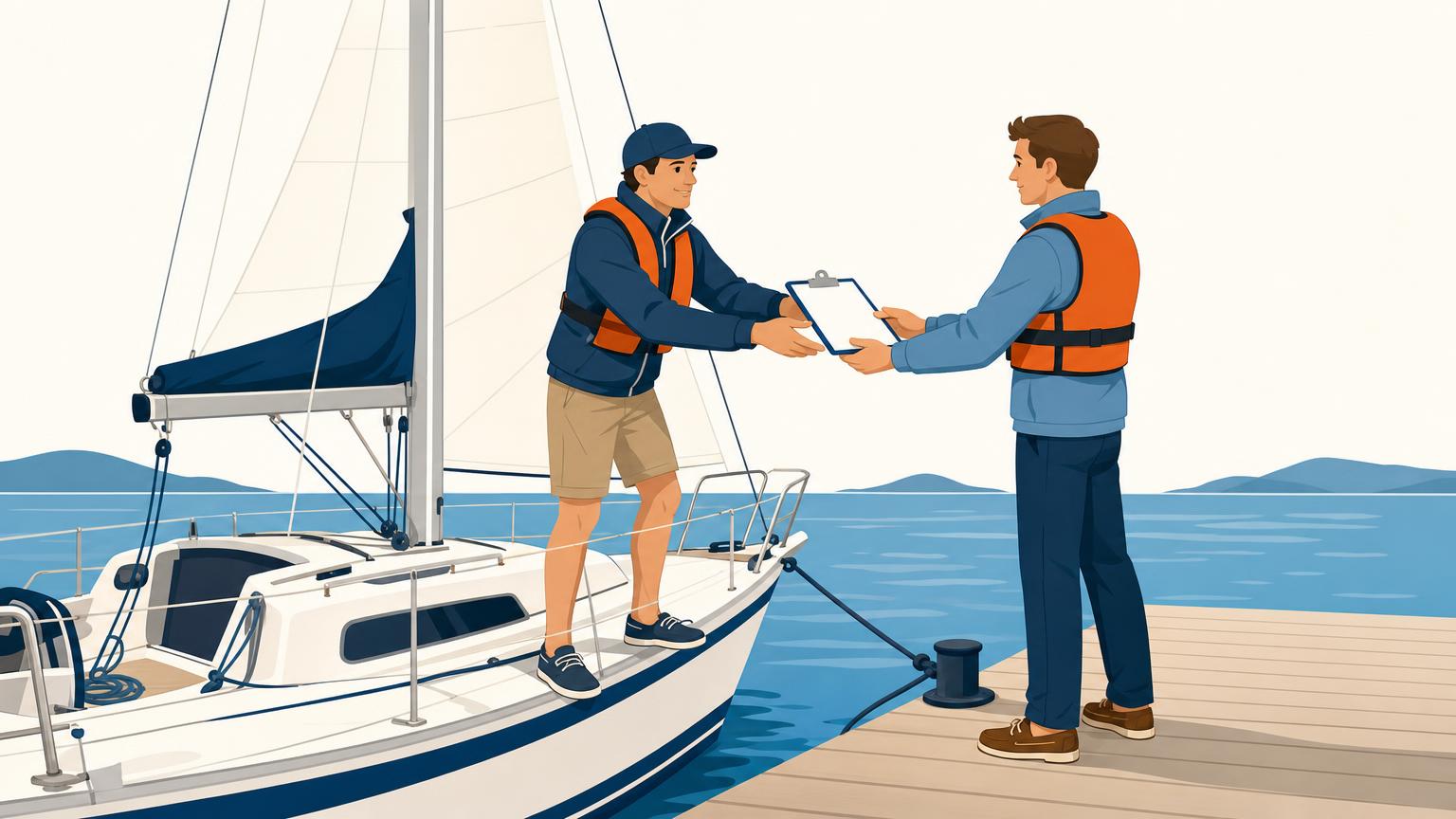
A float plan only works if its holder notices you are late, so choose a responsible person ashore who will be reachable around your expected return time. Walk them through the route and explain what a missed check-in means.
Make sure your holder knows which local rescue authority to contact if the boat does not return as planned. Emergency numbers and agency names vary, so agree on the correct contact before you leave rather than improvising after you are overdue.
Once you are safely back, tell your holder right away and cancel the plan. That message prevents an unnecessary search, so closing the loop matters as much as leaving the plan before you go sailing.
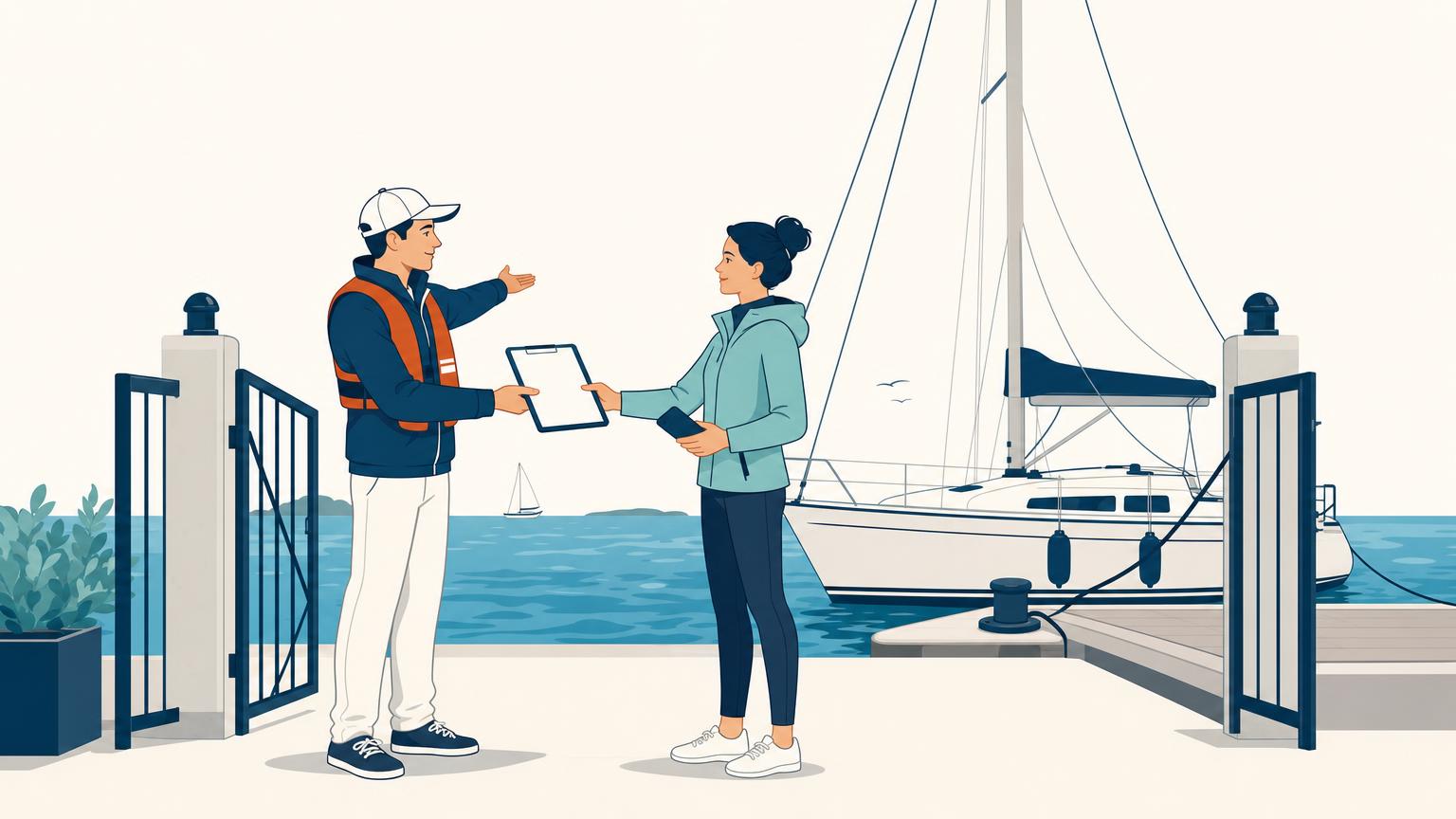
Make the forecast match the trip
Use the latest official marine forecast for every zone and time covered by the route. Record issue time, wind direction and speed, gusts, sea state, visibility, precipitation, warnings, and expected changes. Compare the return period as carefully as departure.
The marine forecast guide explains how to turn those fields into a timeline. Check current observations and continue monitoring updates under way. A forecast is an input to judgment, not a one-time permission to leave.
Write clear decision points
State what will shorten, delay, or cancel the trip. Include changes in wind, waves, visibility, crew condition, daylight, equipment, and the return berth. Set a latest time for a turn or route change. Boat and crew limits differ, so use experience, manuals, qualified instruction, and conservative judgment rather than one universal wind number.
If the forecast approaches the edge of the plan, review strong-wind preparation. The whole crew should know the first reef, sheltered alternative, and point where the boat turns back.
Give the holder actionable facts
Include boat name and description, registration or identifying details where appropriate, people aboard, departure point and time, route, stops, destination, expected return, vehicle or trailer information when useful, communications, and safety equipment. State the time at which the holder should act if you have not closed the plan.
Provide the correct current local rescue contact and explain what information to pass. The holder should not need to search old messages or guess which authority serves the area. Requirements and contact methods vary, so verify them before departure.
Update material changes
If the route, destination, or return time changes materially and communication is available, tell the holder. Do not send constant minor updates that make the real plan hard to identify. Use one agreed channel and ask the holder to confirm the change.
If communication is unavailable, the original plan remains the information ashore. This is another reason to choose a conservative route and clear alternatives rather than a plan that changes completely after departure.
Close the plan every time
Contact the holder as soon as the boat is secured and everyone is safe ashore. Use the agreed wording so the person knows no further action is needed. If you are late but safe, update before the trigger time where possible.
Make closure part of the securing checklist beside engine shutdown, lines, shore power, and log entry. A float plan loses trust if the holder repeatedly has to chase crews who forgot to cancel it.
Review the plan against the day
After the sail, compare forecast with observations, planned with actual route, and expected with actual timing. Note which detail helped and which was missing. Update the next template.
Keep personal information limited to what the holder and responders need, and store it appropriately. The useful float plan is current, readable, held by someone responsible, and closed promptly. It supports a search if the boat is overdue, while the weather check helps the crew avoid starting a trip that does not fit.
A final forecast check and a clear note to someone ashore are quick, ordinary habits. Together, they help you decide whether to leave the dock and give others useful information if you do not return as planned. Before each sail, use the latest official marine forecast for your whole route. Leave your boat details, route, expected return time, and correct local rescue contact with a trusted person, then tell them when you are safely back. That last message closes your float plan, so the person holding it knows no follow-up is needed. These steps cannot predict every change or replace your judgment. They make your departure decision more informed and your plan easier to act on. Try SailStarter's short beginner lessons next to practise checking a marine forecast and preparing a simple float plan before you sail.
Use a template, but read every field before sending it. Old crew names, a previous route, or an outdated rescue contact can make a complete-looking plan less useful. Date the plan and remove fields that do not apply rather than leaving ambiguous values.
Tell the holder what normal delay looks like. A marina queue or agreed weather stop may change timing, but the trigger still needs one clear deadline. If you expect a routine update at a waypoint, say what the holder should do if that message never arrives.
Choose a holder who is willing to act. Confirm they will have their phone, the plan, and the correct contact at the relevant time. If they cannot, choose someone else or another suitable process. A plan left with an unreachable person is only a note.
For a group of boats, keep each vessel's identity, crew, route, and closure clear. Do not assume one boat's safe return cancels the others. The organizing body may have its own formal procedure, which should be followed alongside current local requirements.
Try it from the lesson
Can you spot the next move?
Your local marine forecast says conditions may be hazardous for small craft this afternoon. What should that change?
Why you can trust this guide
. We build each guide from public seamanship and safety sources, then teach the universal principle before any local difference.
- ndbc.noaa.gov
- bom.gov.au
- weather.gov
- vos.noaa.gov
- nhc.noaa.gov
- mapservices.weather.noaa.gov
- marinenavigation.noaa.gov
- community.wmo.int
- wwmiws.wmo.int
- wmo.int
- weather.gov
- spc.noaa.gov
- rmets.org
- en.wikipedia.org
- floatplancentral.cgaux.org
- dnr.maryland.gov
- emnrd.nm.gov
- discoverboating.com
- boatsafeus.com
- boaterexam.com
- rya.org.uk
- rya.org.uk
- rnli.org