Chart your course
What to Pack for a Sailing Trip
Quick answer
The short version
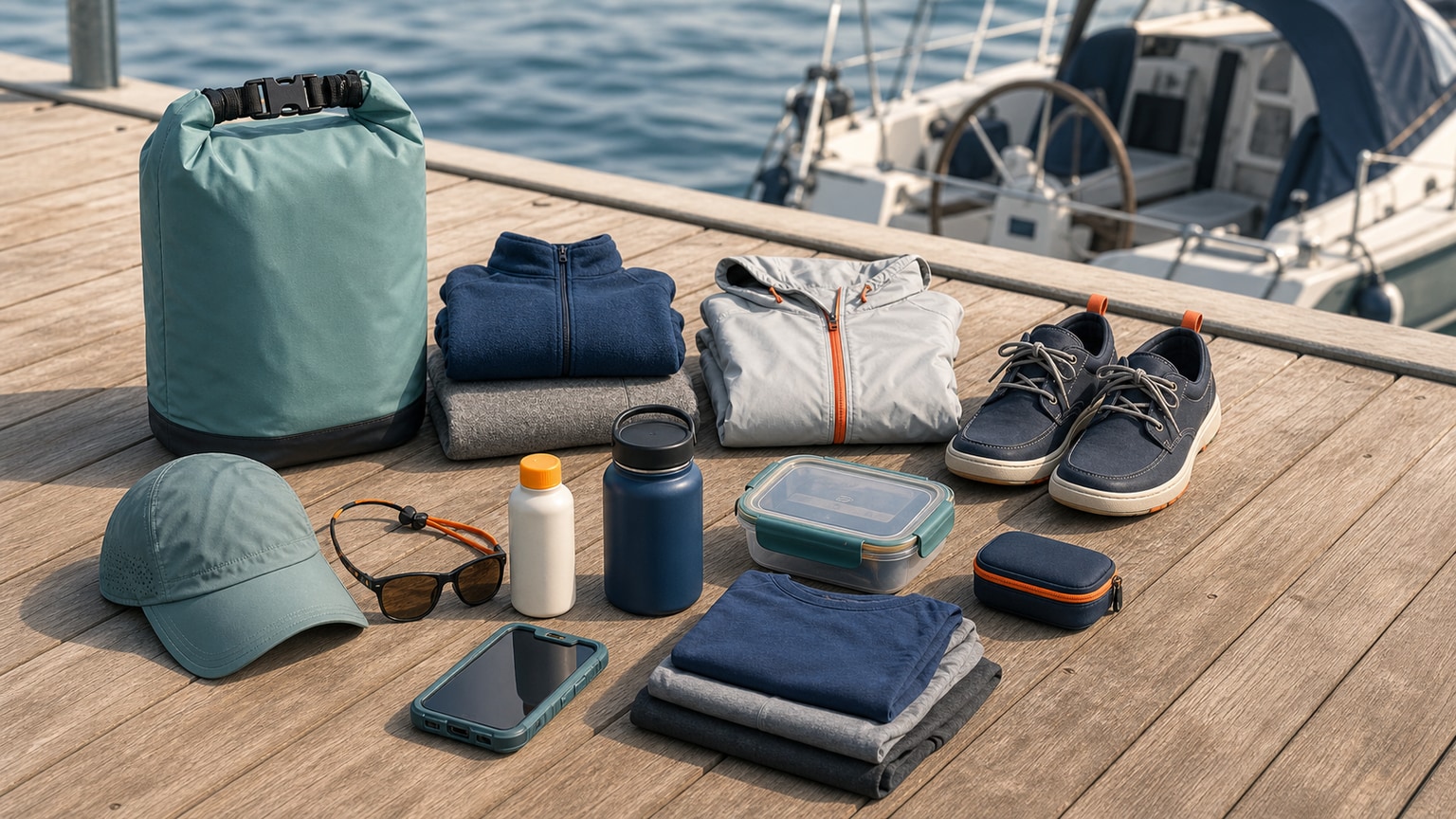
For a first day sail, pack light layers, a waterproof outer layer, secure non-slip footwear, a hat, retained sunglasses, sunscreen, water, suitable food, personal medication, and a dry change of clothes. Put your phone and other water-sensitive items in a small dry bag or waterproof container. The exact kit changes with the boat: dinghy sailing is wetter and may require a wetsuit, while a yacht offers more shelter but still brings spray and rain. Ask the skipper, club, or school what lifejacket, waterproof clothing, and specialist kit they provide before you buy or carry duplicates.
This list is for a lesson or day sail, not a week-long charter. A boat has limited stowage, and a compact soft bag is easier to place safely than a rigid suitcase. Pack for the forecast and the water, then leave anything precious or unnecessary ashore.
Three groups keep the decision simple: clothes you wear, essentials that stay dry, and items you confirm with the skipper. That is enough to arrive prepared without building a specialist wardrobe first.
Check the forecast before you close the bag, then compare it with the provider’s message about the boat and supplied equipment. Those two checks decide which layers actually travel.
Wear Layers That Can Change
Conditions on the water can feel different from the dock. For yacht sailing, wear layers that can be added or removed: a light top, a warm jumper or fleece, and a waterproof jacket. Waterproof trousers can help outside warm conditions.
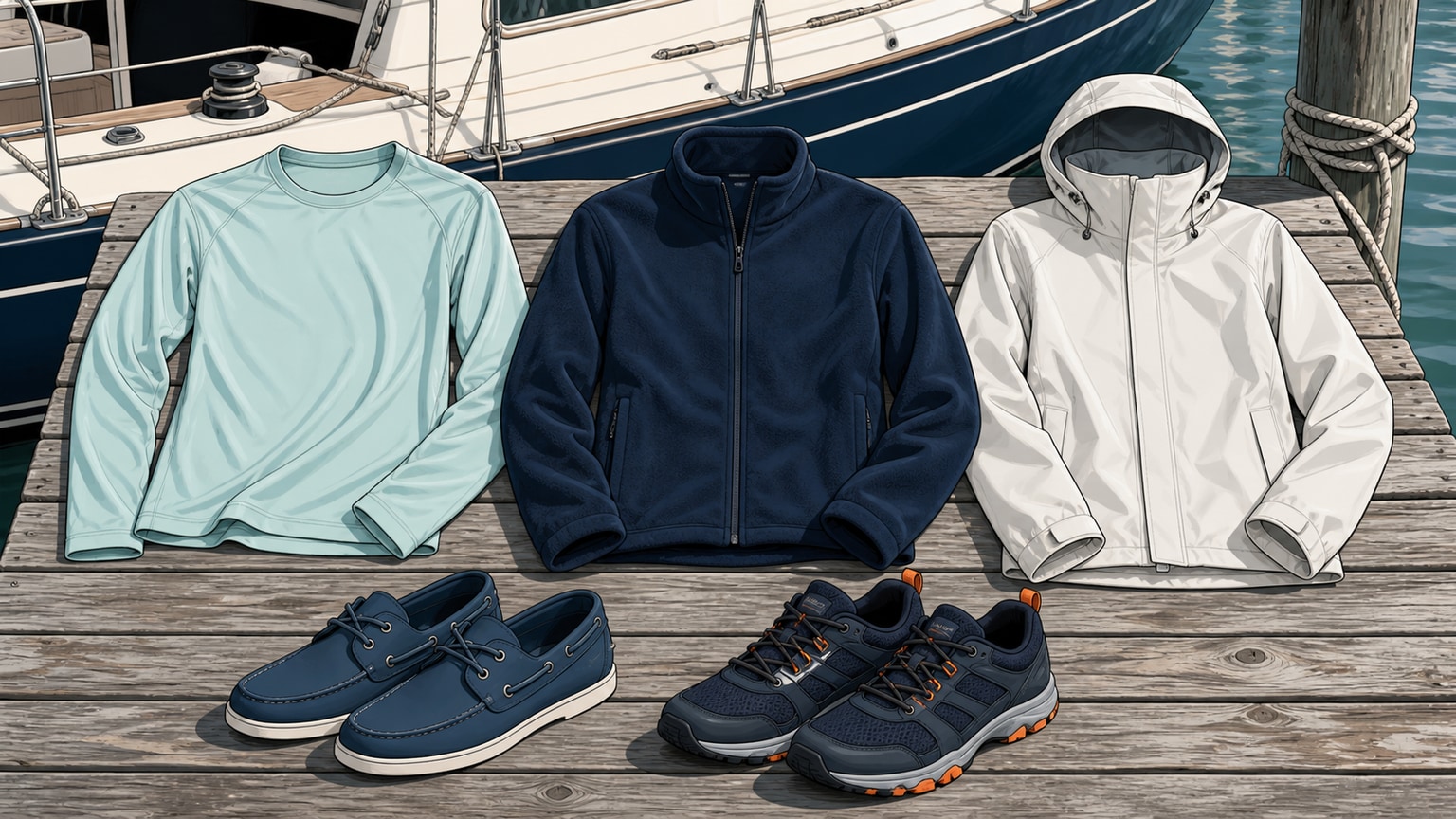
Choose footwear with grip that stays secure on your feet. Non-slip shoes or sailing boots suit a yacht. Water-friendly shoes or old trainers suit many dinghy sessions. Avoid footwear that slides easily or can fall off in the water.
Dinghy sailing brings you closer to spray and the possibility of getting fully wet, so a wetsuit and more water-focused clothing may be appropriate. Do not guess from the weather alone. Ask the provider what its boats, water temperature, and session require, and what it supplies.
Try the full combination before the day. You should be able to bend, sit, and move your arms without a tight layer restricting you. Pack thinner pieces that work together rather than one bulky item that cannot adapt.
A dinghy day and a yacht day need different footwear
Picture the same warm, breezy forecast used for two different sessions. On a yacht, a light top, a fleece, a waterproof jacket, and non-slip deck shoes or sailing boots are usually enough, because the cockpit and guardrails keep most of the crew relatively dry between gusts of spray. On a dinghy, the same forecast can still mean sitting in wind-chilled water on your feet, leaning out over the side, or capsizing and swimming the boat back upright, so water-friendly shoes or old trainers and a wetsuit style suited to the water temperature often replace the yacht layers entirely. The forecast alone will not tell you which wardrobe to pack. The boat type does, which is exactly why the confirmation call in the last section matters more than the weather app.
Secure Sun and Personal Essentials
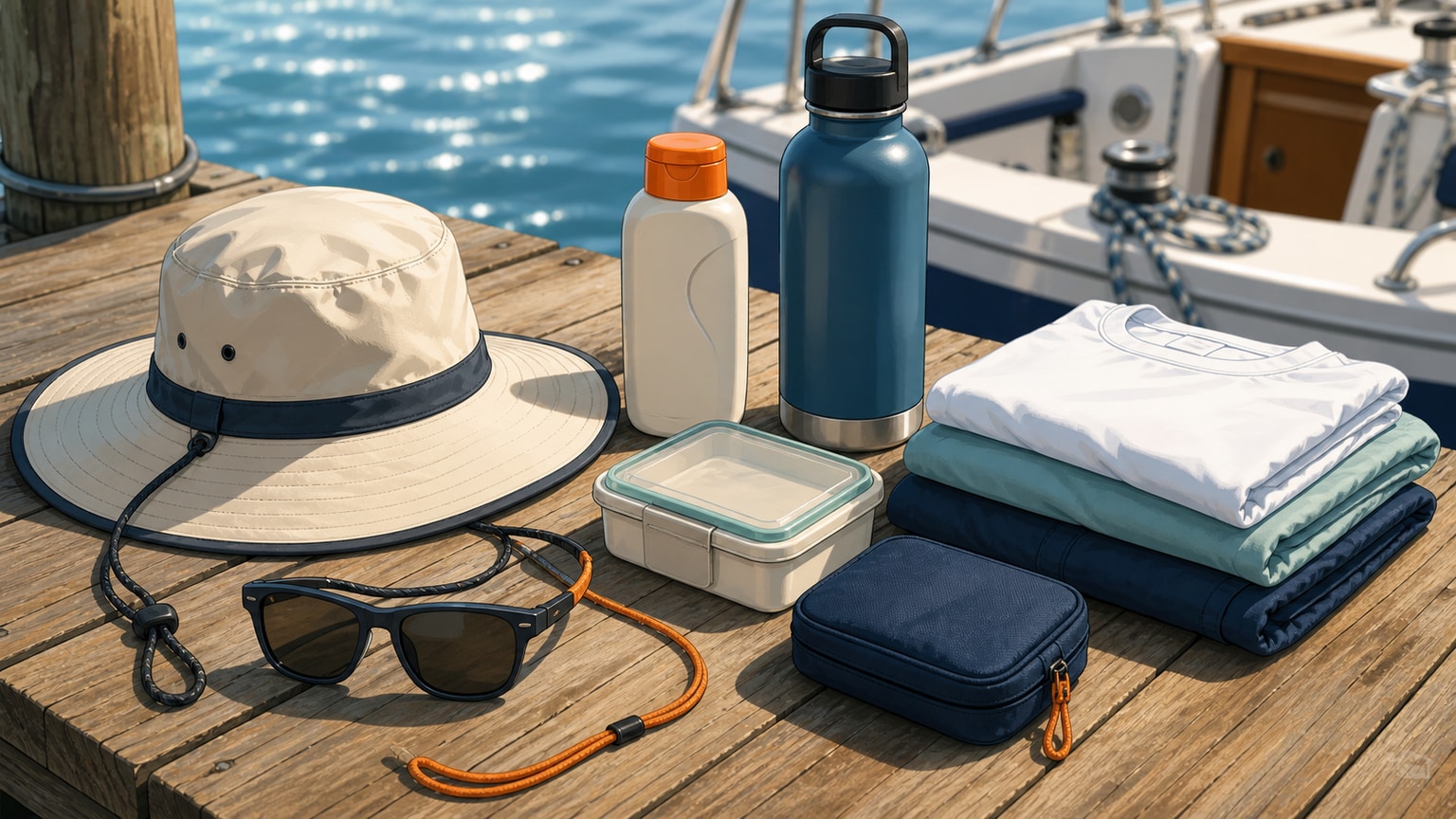
Pack sunscreen, a hat suited to wind, and sunglasses with a retaining strap or cord. Sun protection matters even when the day does not feel hot, and a loose hat or pair of glasses can disappear over the side quickly.
Bring drinking water and suitable food for the length and activity of the session. Keep personal medication easy to reach. Tell the responsible person about any need that could affect the plan rather than burying the medication at the bottom of a packed bag.
Take a complete dry change for afterward, including whatever you would want if spray or rain soaked your sailing clothes. It can remain ashore if the centre has secure changing space, or travel in the dry bag if the skipper directs. The point is to have a warm, dry option when the session ends.
Secure loose personal items before boarding. A glasses strap, closed pocket, and hat that stays on reduce the number of belongings the crew must chase or retrieve while working.
Common packing mistakes worth avoiding
A loose hat or a pair of sunglasses without a strap can disappear over the side quickly, so add the strap before the trip rather than after you have already lost a pair. Bringing motion-sickness medication for the first time on the day itself is another common mistake. If you know you are prone to feeling unwell on the water, it is worth reading about preventing seasickness well before the trip and trying any remedy on land first, so you already know how it affects you before relying on it afloat. A third mistake is packing food that needs careful unwrapping or is easy to spill. Simple, one-handed food travels better on a moving deck than anything that needs a plate.
Cold water is its own separate risk that a warm-looking day can hide. If you plan to sail somewhere the water itself is cold, it is worth understanding what cold water shock does to the body before you go, so that the layers you pack and the advice you follow from the skipper make sense together rather than feeling like unrelated instructions.
Keep the Dry Bag Small and Usable
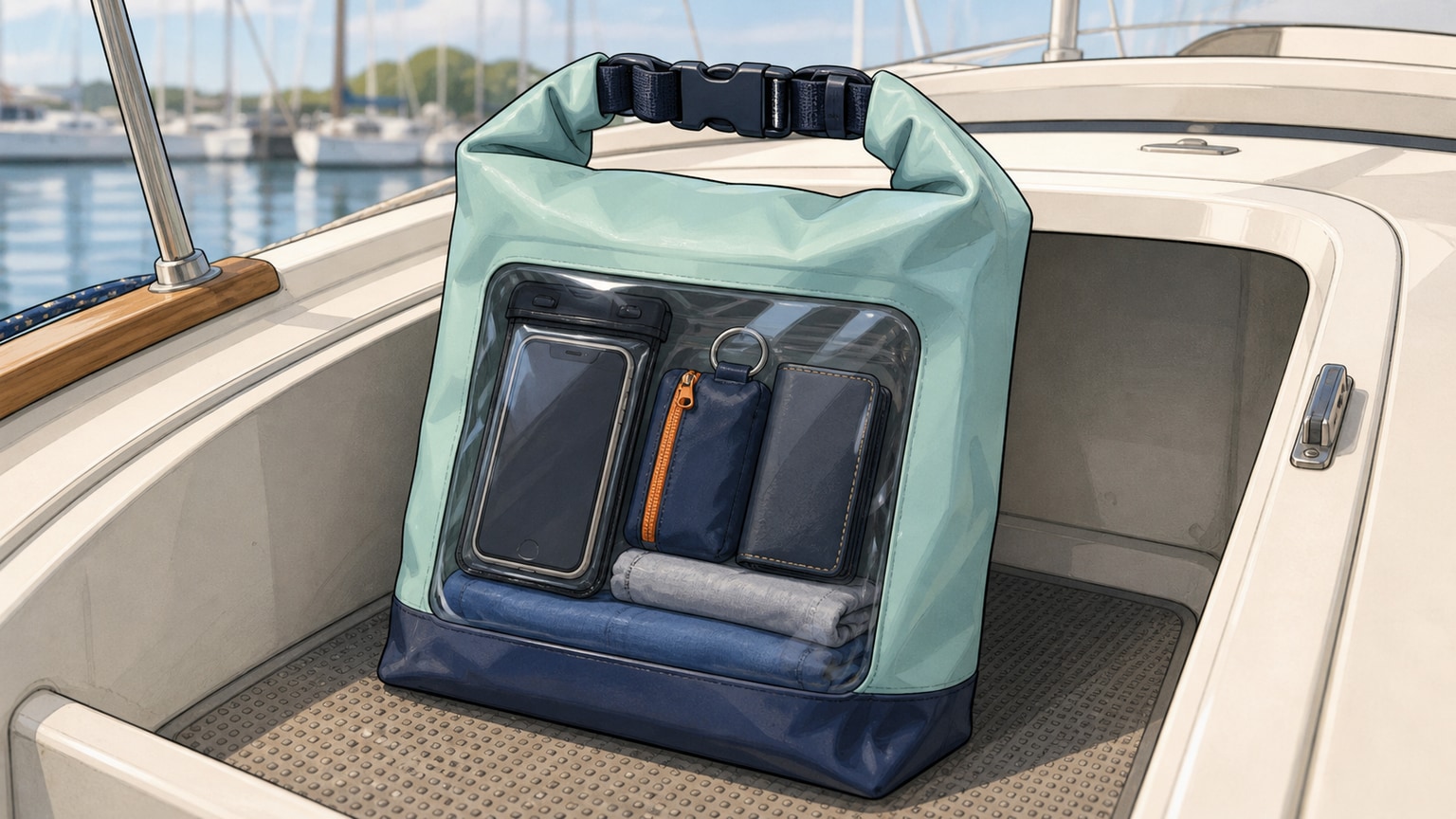
A small soft dry bag is useful because it protects belongings and fits into limited stowage. Put your phone, keys, wallet, and spare clothing inside. A waterproof phone case or sealed container should keep the device accessible rather than making it impossible to use when needed.
Close the bag correctly and avoid filling it with loose valuables. If an item would cause worry all day, consider leaving it ashore. Keep the deck and cockpit free of luggage by placing the bag exactly where the skipper asks.
The dry bag is personal protection, not the boat’s emergency equipment locker. Do not assume your phone replaces the boat’s communication plan. Listen to the safety briefing and learn what equipment the skipper carries and how the crew would call for help.
Keep the bag compact and soft enough to fit where directed. A dry bag that can be carried and stowed easily suits this job.
What goes in the bag versus what stays ashore
A short way to sort belongings before you leave the car or the clubhouse: anything you would be upset to lose overboard, cannot easily replace, or need dry to be useful again (phone, keys, wallet, spare clothing) goes in the dry bag. Anything you do not need during the session and would rather not worry about, such as extra cash, jewellery, or a second device, is better left locked ashore than carried “just in case.” If you are new to the boat, this is also a good moment to ask what a first sailing lesson usually expects a beginner to bring, since a school or club session often already provides the safety equipment and only needs you to arrive with the personal items covered here.
Confirm the Boat, Forecast, and Supplied Kit
Before leaving home, check the latest marine forecast and current warnings. Look at the full session period rather than only the first hour. Forecast ranges can differ from actual conditions, so bring the agreed layers even when the dock looks calm.
Contact the skipper, club, or school with three questions. What type of boat will you sail? Which lifejacket, buoyancy aid, wetsuit, or waterproofs are supplied? Is there any local item you must bring? Equipment arrangements vary by provider.
Then adjust the bag rather than adding everything “just in case.” A wet dinghy session may shift your kit toward a wetsuit and shore clothes. A yacht lesson may need ordinary layers and waterproof outerwear. Current local guidance and the provider’s instructions take priority over a universal online checklist.
Make the confirmation early enough to change the plan. Borrowed gear may need a size, and a revised forecast may lead the provider to alter the boat or postpone the session.
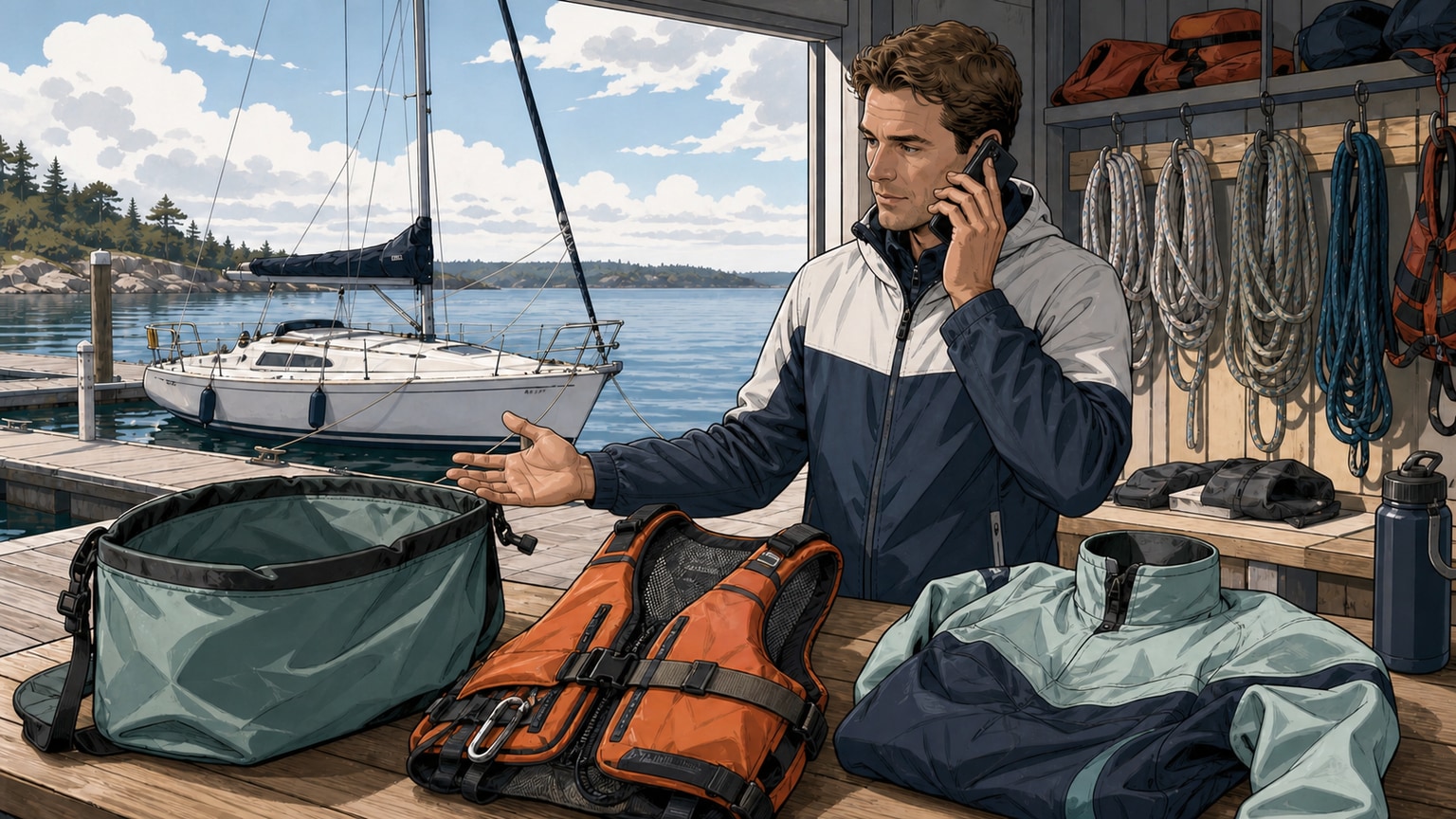
Quick answers before you leave the house
Do I need my own lifejacket or buoyancy aid? Most schools, clubs, and charter operators supply one sized to you, but confirm this rather than assuming, and ask about it in the same message where you ask about the boat and the forecast. Can I bring my phone on the water? Yes, inside a sealed or waterproof case, but treat it as a personal device rather than the boat’s safety equipment, since a phone can lose signal or battery exactly when it would matter most. What if the forecast changes overnight? Check it again in the morning rather than trusting the version you read the day before, and expect the provider to contact you if the change is significant enough to affect the plan.
Use SailStarter’s clothing lesson to understand why layers, waterproof protection, and secure footwear work on a moving boat. Then turn that knowledge into a short personal checklist for your session: wear, keep dry, confirm. Ask the provider before purchasing specialist gear, pack only what fits the plan, and verify the current forecast and local instructions. Keep medication and a protected phone accessible, and place the bag where the skipper directs as soon as you board. Good preparation should make the first sail feel less cluttered. Your attention can stay on the boat and the briefing instead of on a large bag of equipment you never needed. Pack for the confirmed plan.
Try it from the lesson
Can you spot the next move?
You're packing for a warm-forecast afternoon sail. Cotton T-shirt and jeans, or a synthetic/merino base layer?
Why you can trust this guide
. We build each guide from public seamanship and safety sources, then teach the universal principle before any local difference.