Chart your course
Why Do Sailboats Lean? Heel, Ballast, and How Sailors Manage It
Quick answer
The short version
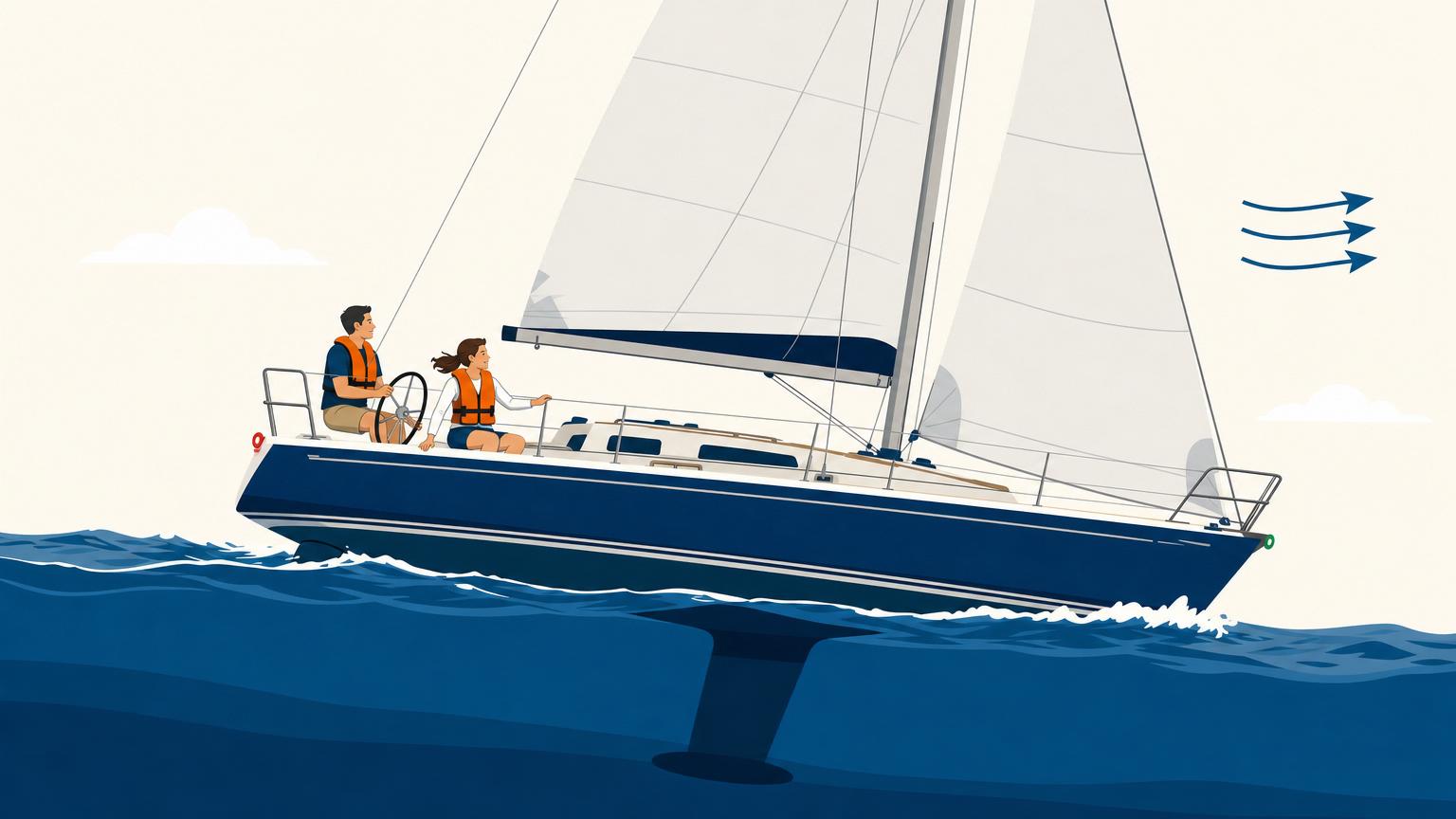
The first time a sailboat tilts, you may grab the rail. But why do sailboats lean? Wind pressure pushes sideways on the sails. This normal lean is called heel, and it is part of the boat's balance. The boat settles at a steady angle. On a keelboat, a ballast keel holds weight low, several feet (roughly a metre or more) below the waterline. As the boat heels, that weight gains leverage and pushes back. To reduce heel, you can ease the sheet (the line controlling the sail) or reef to reduce sail area. On small, unballasted boats, crew hike: they move their weight to windward, the higher side, and use their bodies as a counterweight.
The first time the deck tilts, you may grab the rail and wonder what is happening. You can relax into the motion: the boat is leaning as it is designed and expected to do. This ordinary lean is called heel.
So, why do sailboats lean? Wind pressure on the sails tips the boat until the forces pushing it over and back upright reach a stable balance. On many sailboats, heavy ballast carried low in the keel is designed to push back against the lean.
You also have simple ways to reduce heel. You can ease the sheet (the line that controls the sail) to reduce pressure, reef to cut the sail's area when the wind is stronger, or, on a small boat, move your body weight outward to act as a counterbalance.
Heel Is a Normal, Balanced Lean
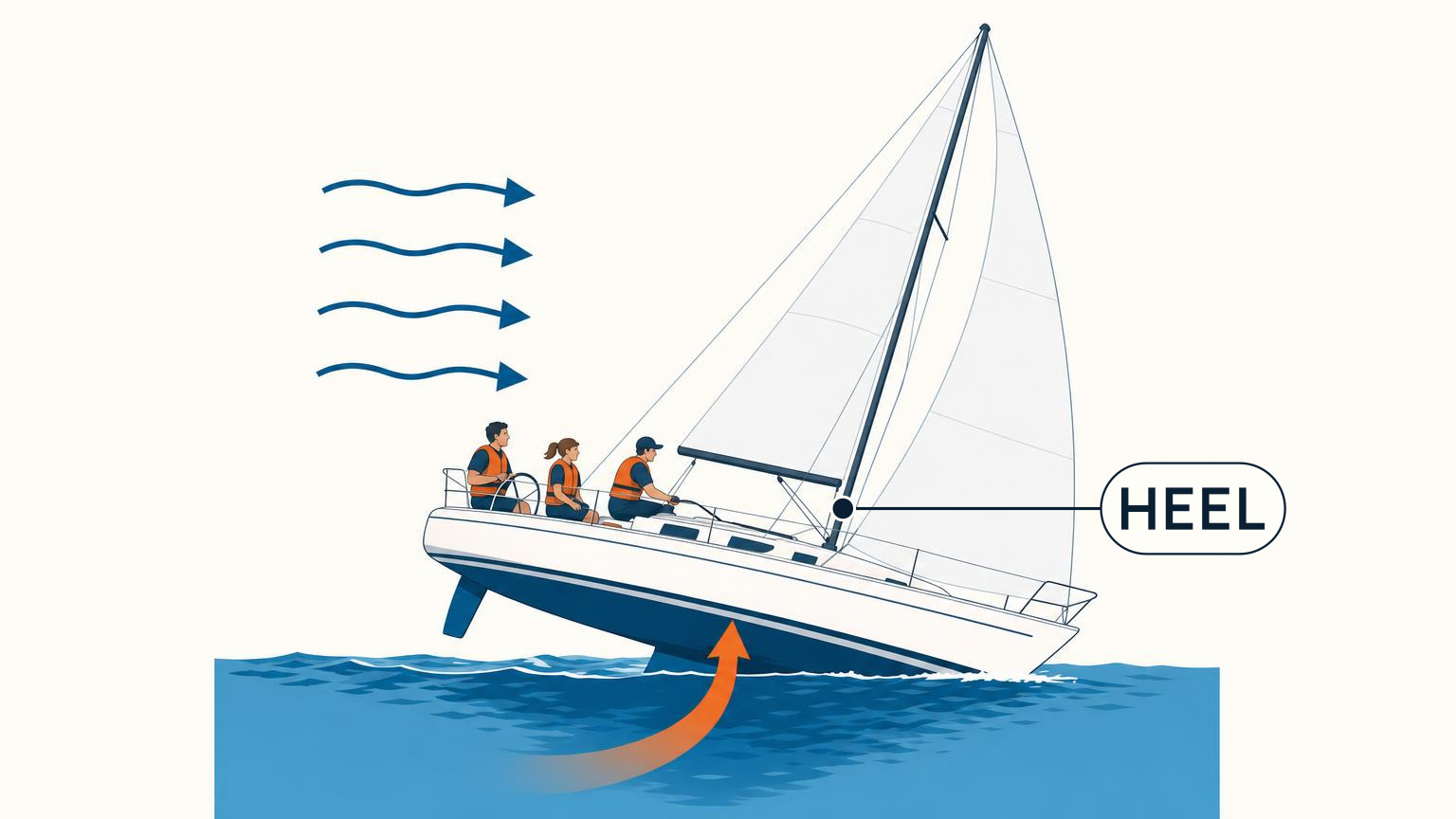
The first time the deck tilts beneath you, you may grab the rail and wonder whether the boat will keep going. This ordinary lean is called heel. The boat leans away from the wind because wind pressure pushes sideways on the sails.
But heel is not usually a motion that continues without end. As the hull leans, the boat develops a stronger turning force back toward upright. Sailors call this the righting moment. At the same time, the force from the sails continues to lean the boat.
The boat settles when these two turning forces match. One force heels it; the other rights it. At that balanced point, the boat can sail at a steady angle with the deck sloping and the mast tilted.
So a heeled boat is not necessarily unbalanced. It has found a new balance at an angle. Later sections show how the keel helps create that balance and how you can reduce the angle when you want a flatter, more comfortable ride. The overlay compares the mast with a dashed Upright reference and marks the Heel angle.
How the Ballast Keel Pushes Back
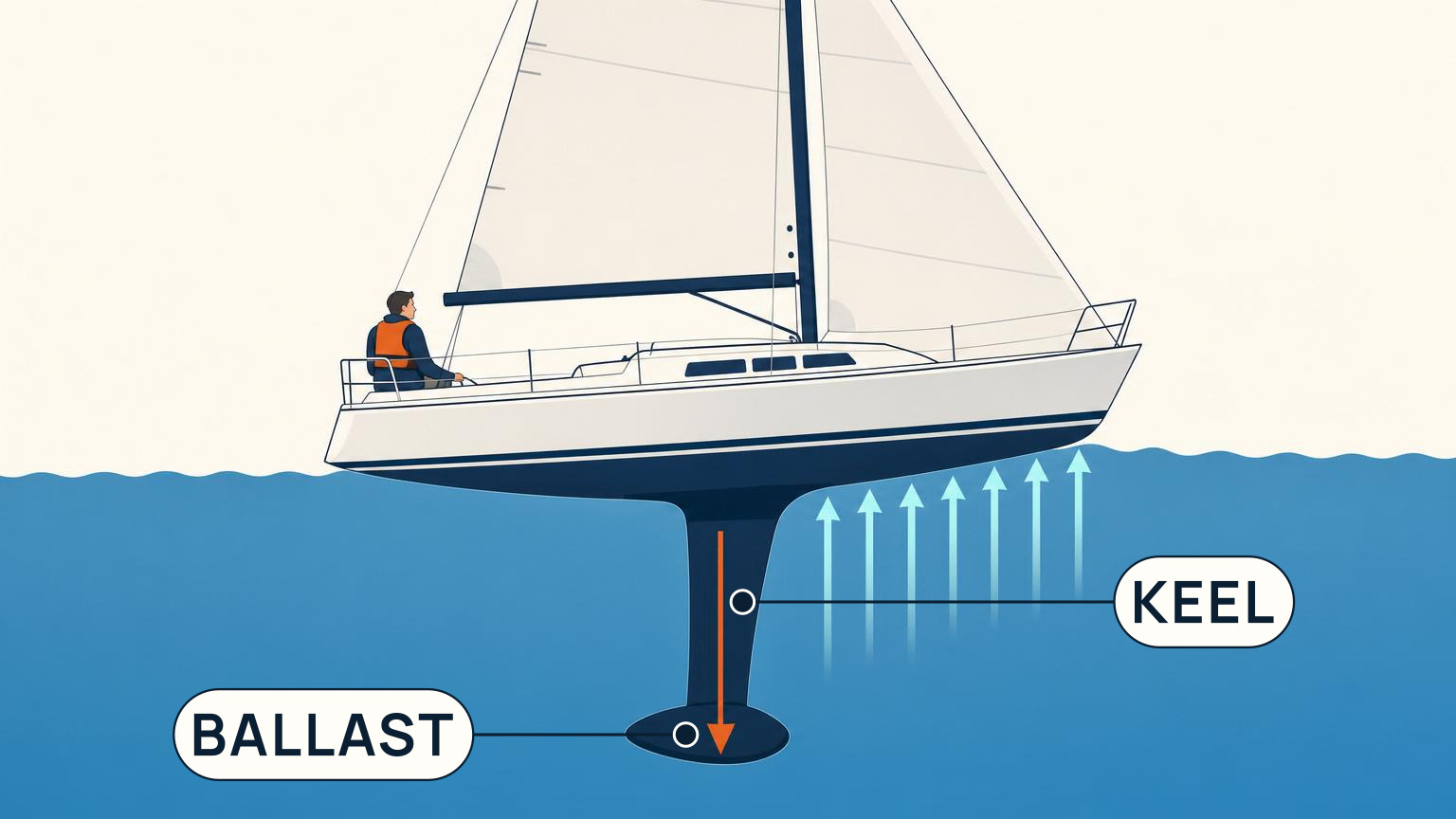
A keelboat carries ballast (dense weight, often iron or lead) low in its keel. This lowers the boat's center of gravity, the point around which its weight is balanced. Keeping that point low gives the boat leverage against heel.
The water also helps. As the boat leans, a different part of the hull sinks into the water. The center of buoyancy, where the water's support is centered, shifts sideways while the center of gravity stays fixed. Those two forces no longer line up. The distance between them forms a lever that works to rotate the hull toward upright.
Sailors call this turning force the righting moment. As the boat heels, the low ballast gains leverage and the hull's changing support in the water adds to the restoring force. The boat settles when this righting moment balances the force making it lean. That is why ordinary heel can feel steady rather than as if the boat will keep tipping farther and farther. In the ashore photograph, the Keel label lands directly on the deep red ballast fin below the hull.
Ease the Sheet for an Immediate Adjustment
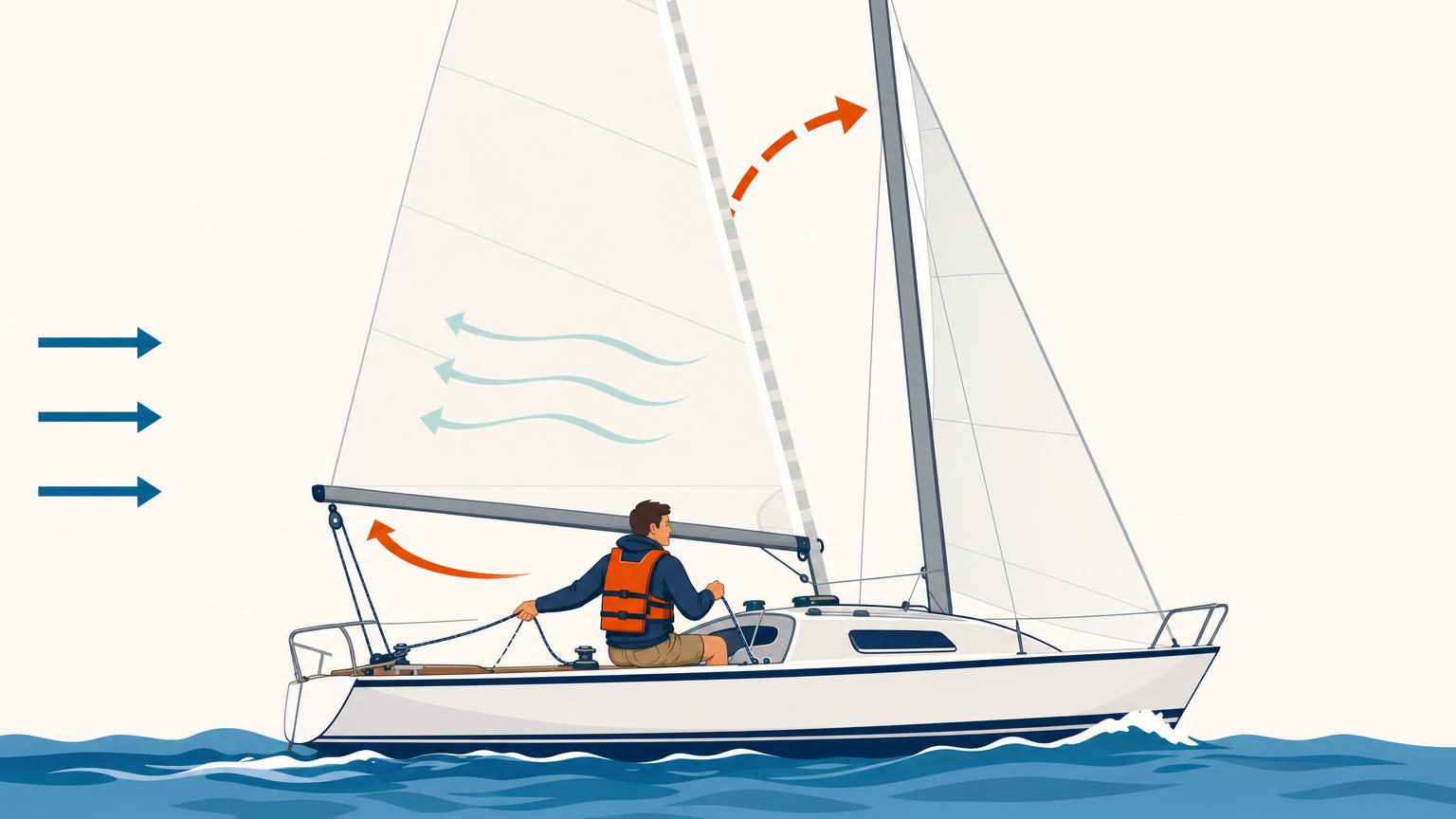
A sheet is the line you let out or pull in to adjust a sail. When a gust makes the boat heel more than you want, ease the sheet by letting some line run out. The sail and the boom along its lower edge can then move farther outward.
Easing the mainsheet lets the mainsail luff and spill wind from its upper part. Spilling wind means allowing some wind pressure to leave the sail instead of using all of it for power. With less pressure, the boat heels less (so it leans less) and often feels more comfortable and easier to steer.
This is an immediate adjustment, not a permanent change. When the gust passes, you can pull the sheet in again as needed. If the boat remains overpowered after you ease the sheet, the next step is to reduce the sail area by reefing. Paired views of the same real control point show the working black sheet at the winch and then isolate the sailor’s hand, with an orange arrow following that same black rope in the controlled easing direction.
Reef the Sail When Less Area Is Better
Easing a sheet (the line that controls a sail) is a quick response. It lets some wind pressure spill from the sail, so the boat can settle with less heel.
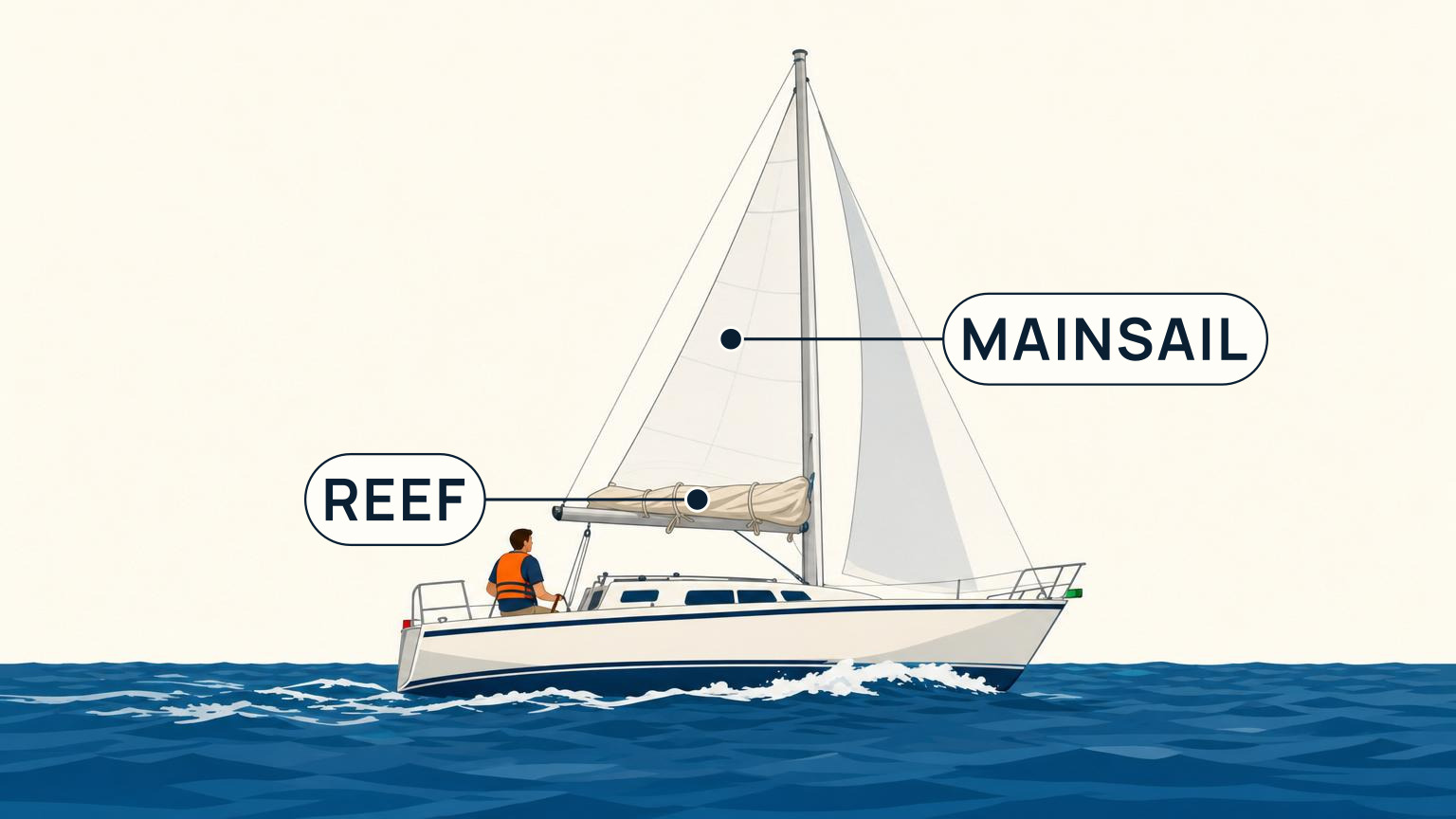
When stronger breeze lasts, you can make a longer-term adjustment by reefing. Reefing means reducing the sail area exposed to the wind. Depending on the boat's reefing system, part of the sail is folded or rolled away and secured. The remaining sail becomes the boat's smaller working sail.
With less sail area, the wind creates less heeling force. The boat leans less and becomes easier and more comfortable to steer. You still have useful sail power, but not more than you need for the conditions.
The difference is simple: easing the sheet gives an immediate adjustment, while reefing changes how much sail you carry for a sustained stronger breeze. The paired real-photo views first show the whole boat, then move close enough to see the shortened working mainsail and the unused lower cloth gathered along the boom.
On Small Boats, Crew Weight Becomes a Lever
Distinguish normal heel from too much power
Normal heel settles into a balanced angle with responsive steering and controlled sails. Excess heel often brings heavy weather helm, repeated loss of grip, water near the deck edge, uncomfortable movement, or a need for large rudder angle. The correct threshold depends on the boat, sail plan, sea state, and crew.
Ease the mainsheet or traveler for an immediate reduction in sail force. Bear away only when the manoeuvre and sea room make it safe, because course changes affect apparent wind and boom movement. If the boat repeatedly becomes overpowered, reef or change to a smaller sail by the established procedure.
Use crew weight deliberately on small boats
Move only on command, keep low, and use the hiking or seating positions designed for the boat. A person crossing at the wrong time can increase heel or destabilize a tack. Keep hands and feet away from loaded lines and moving boom.
Crew weight is not a substitute for reducing sail when wind exceeds the manageable plan. Fatigue, waves, cold, and a light or inexperienced crew all change what can be sustained. Practise capsize recovery for the exact dinghy with supervision before sailing independently.
The capsize guide explains the difference between heel, knockdown, capsize, and inversion. The weather-helm guide shows how heel can increase steering load.
Check the boat when heel feels asymmetric
Compare both tacks in similar wind. A large difference can come from sail trim, crew position, stored weight, rig alignment, centerboard or keel condition, rudder, or damage. Sudden new heel or steering behavior deserves inspection.
Keep heavy stores low and secured according to the boat's plan. Do not move ballast or alter the rig to chase a flatter angle without design guidance. Stability comes from the complete hull, keel or centerboard, rig, sails, load, and crew arrangement.
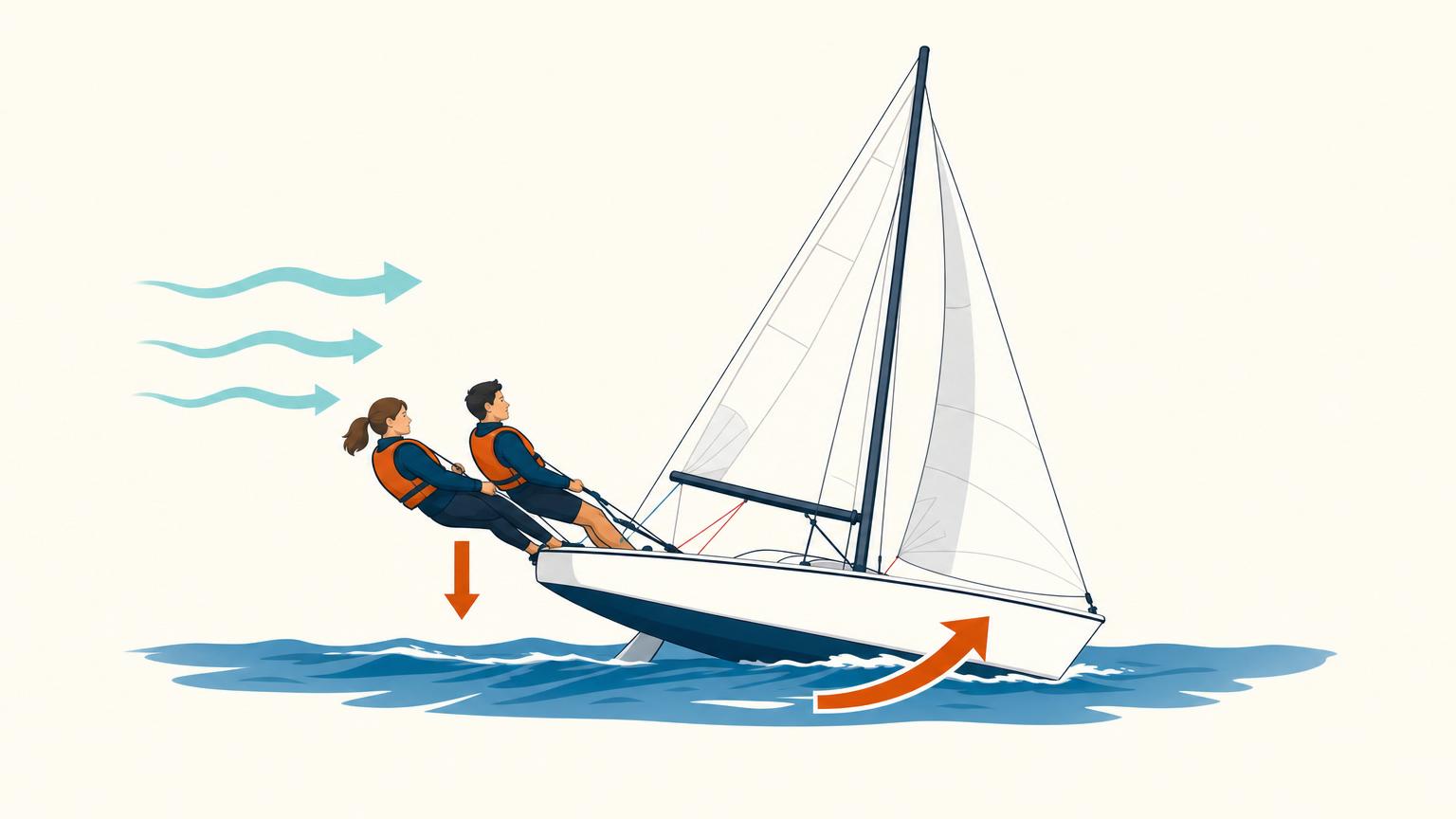
On a dinghy or another small sailboat, your body can help reduce leaning. Sailors call this live ballast. You move to the windward side (the side nearer the wind) and lean your upper body beyond the edge. This action is called hiking out.
The farther your weight moves from the boat's center, the more leverage it has around the boat's center of buoyancy, the point where the water's support acts. The force making the boat heel must now lift your weight too, so the boat leans less.
Your position depends on the boat. You might sit on the side deck with your feet braced inside. Some boats have hiking straps that hold your feet. Others have a trapeze, a wire that lets a sailor stand out from the side. Look at which support the boat provides and where its crew normally sits.
Hike out first as the boat heels more. If you are already as far out as you can comfortably go, ease the mainsheet (the line controlling the main sail) to spill some wind. The dinghy photograph draws the boat centreline and shows the sailor’s weight moved outboard.
A sailboat's steady lean is expected. The ballast keel (the weighted fin below the hull) is already pushing back and helping the boat settle at a balanced angle. When you want less heel, you have simple choices. You can ease the sheet, the rope that controls the sail, to reduce pressure. You can reef, which means reducing the sail's area. On a small boat, you can also move your weight outward to help balance the wind's push. These adjustments make the boat more comfortable and easier to steer. To practise spotting and managing heel step by step, try SailStarter's short beginner lessons on sail trim, reefing, and crew balance.
Try it from the lesson
Can you spot the next move?
The sails fill and the boat settles into a modest, steady lean while remaining easy to steer. Is that heel automatically a fault?
Why you can trust this guide
. We build each guide from public seamanship and safety sources, then teach the universal principle before any local difference.
- americansailing.com
- en.wikipedia.org
- en.wikipedia.org
- en.wikipedia.org
- en.wikipedia.org
- discoverboating.com
- goodoldboat.com
- wavetrain.net
- practical-sailor.com
- cruisingworld.com
- uksailmakers.com
- yachtingmonthly.com
- sailmagazine.com
- precisionsailloft.com
- sailing-blog.nauticed.org
- sailing-blog.nauticed.org
- speedandsmarts.com
- lifeofsailing.com
- spinnaker-sailing.com
- sailzing.com
- naosyachts.com
- attenboroughsc.org.uk