Chart your course
Windward vs Leeward: How to Tell Which Side Is Which
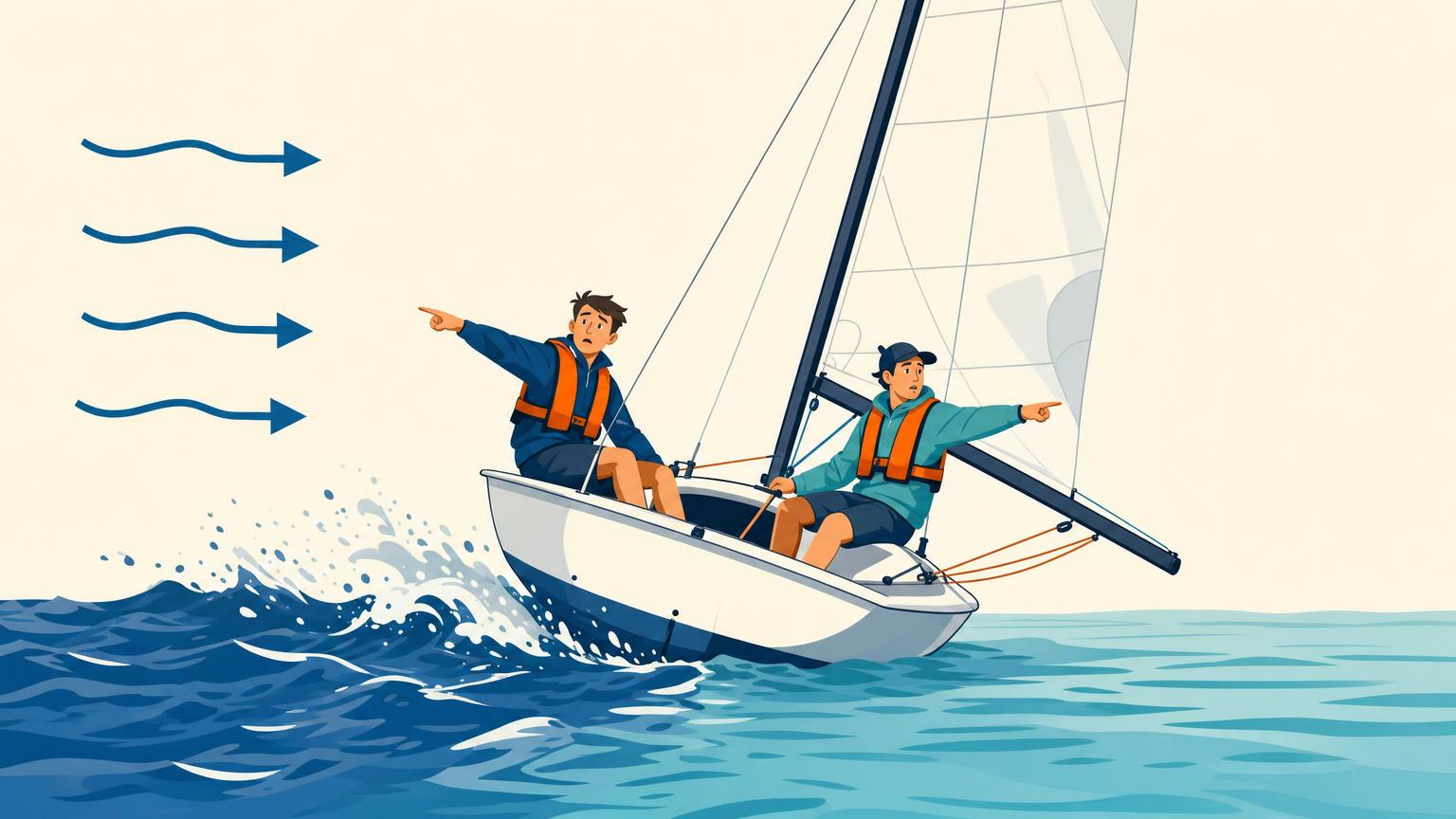
Quick answer
The short version
Windward and leeward follow the wind, not the boat's fixed left and right sides. Windward is the side facing the wind's source. Leeward is the opposite, more sheltered side. For a quick visual check, look at the boom: it sits over the leeward side, away from the wind. If the boat leans, the windward side is higher and the leeward side is lower.
During a tack, you turn the bow through the wind. The wind then reaches the boat from the other side, the boom swings across, and the windward and leeward names swap sides too.
Two sailors can point to the same rail and call it different things: "left" depends on where you face. The boat's left and right sides stay fixed, but windward and leeward follow the wind instead, swapping sides during a tack, when you turn the bow through the wind.
You do not need a compass to tell them apart. The boom usually rests over the leeward side. When the boat leans, or heels, windward is the higher side and leeward is the lower side. These clues help you choose where to sit for balance, and which rail lets wind carry spray, smoke, or water away from you.
Follow the wind, not left and right
Two sailors can stand on the same boat and point to different "left" sides if they face different ways. Boats avoid that confusion with port and starboard: the fixed left and right sides when you look toward the bow, or front.
Windward and leeward work differently. They follow the wind, not the hull.
The windward side faces the place the wind is coming from. Think of it as the upwind side. You feel the wind more directly there.
The leeward side is opposite. It faces the direction the wind is blowing toward and is more sheltered from it. You may also hear this called the lee side.
Try this quick check: notice where the wind meets your face, a flag, or a ribbon. Trace that airflow back toward its source. The boat side nearest that source is windward. The other side is leeward.
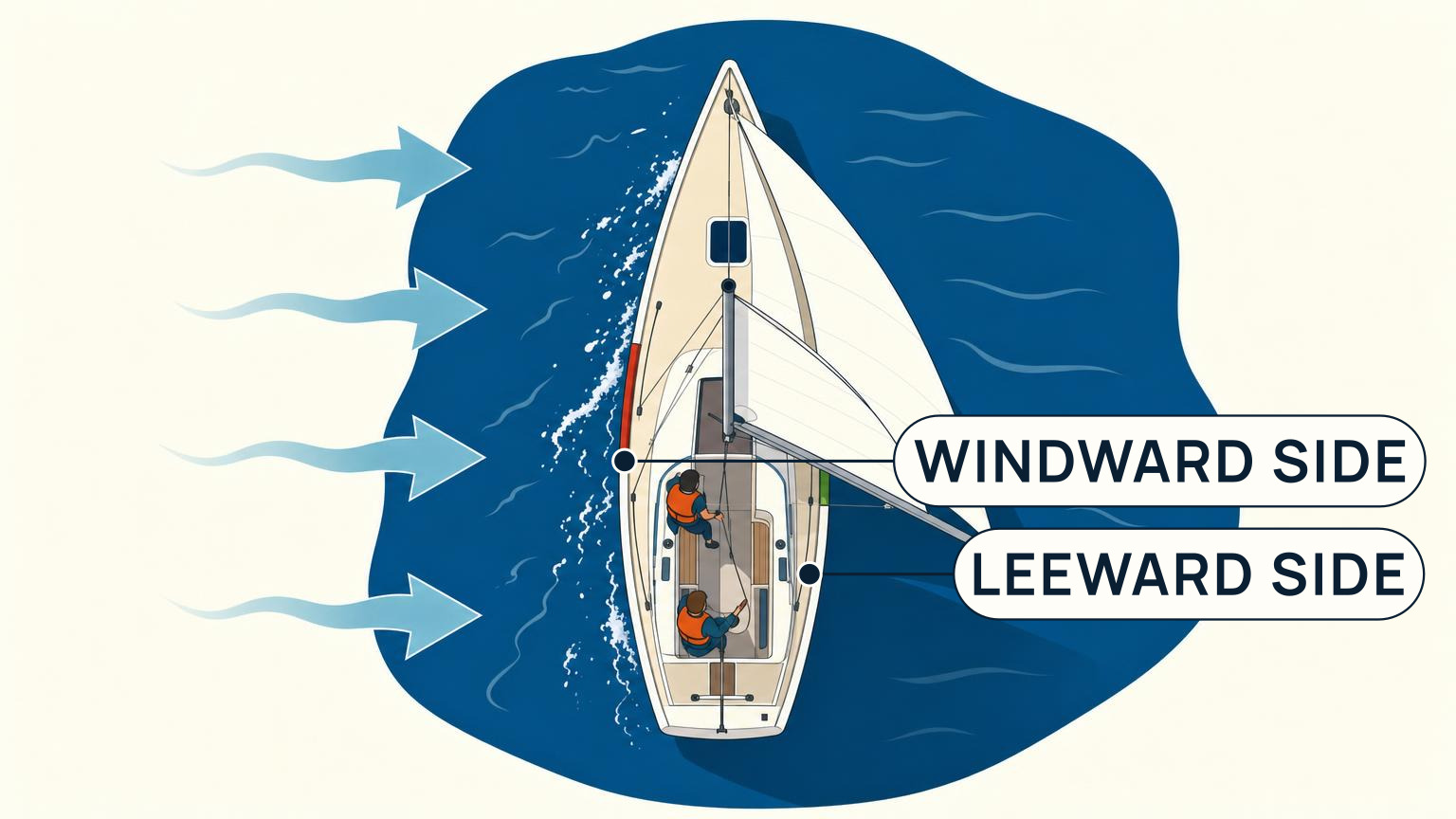
These names are not painted permanently onto the boat. If the wind begins coming from the other side, the windward and leeward labels swap. The overhead figure labels the actual windward and leeward rails and includes a blue Wind arrow.
Why sailors bother naming these sides at all
Knowing the pair has a practical payoff beyond vocabulary. When two sailing vessels have the wind on the same side, the right-of-way rules place the responsibility on the boat to windward: it must keep out of the way of the boat to leeward. The same principle carries into racing, where a windward boat that is overlapped with a leeward boat on the same tack has to keep clear of it. Neither rule works if you cannot tell which side of your own boat is which in the moment a decision is needed, which is why the boom-and-heel check in the next section is worth practising until it is automatic rather than something you work out under pressure.
Use the boom and heel as windward and leeward clues
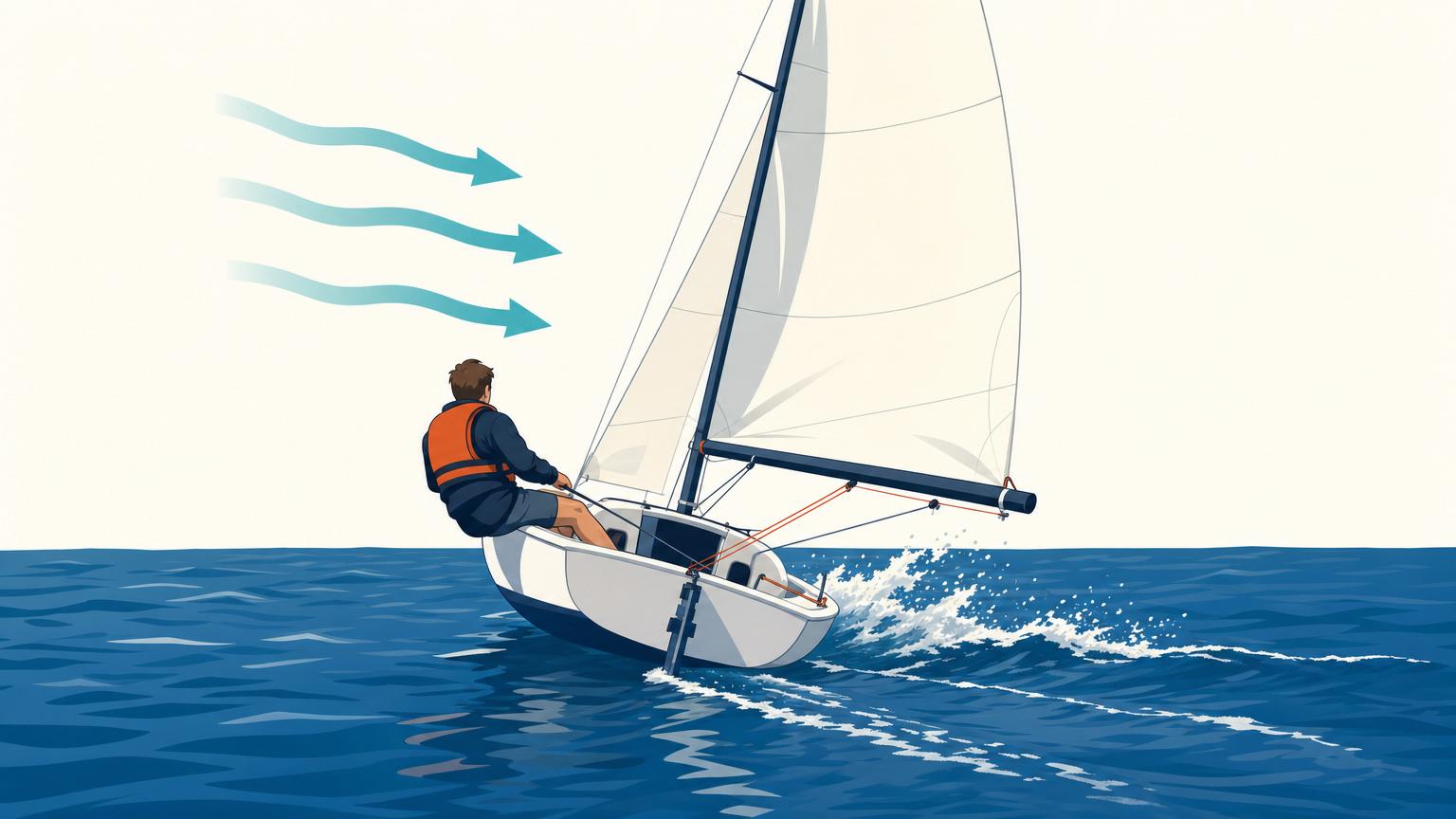
Look first at the boom, the horizontal pole below the mainsail. The wind normally pushes the sail and boom toward the leeward side, away from the wind. The opposite side is windward, where the wind comes from.
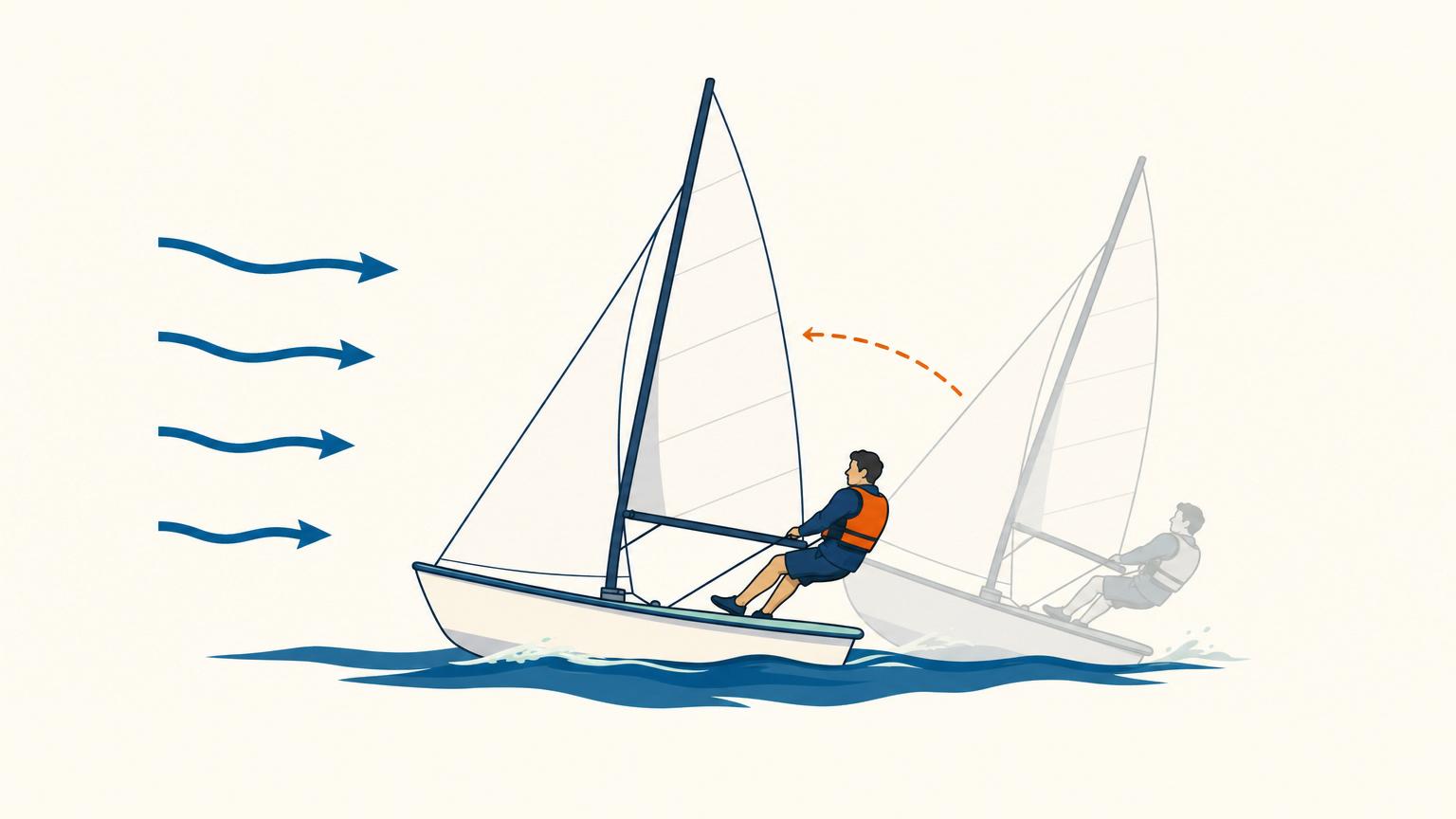
The boat's lean gives you another clue. Sailors call this lean heel. Wind pushes the sail and rig sideways, so the boat heels away from the wind. The rail, the boat's outer edge, rises on the windward side and drops on the leeward side.
Read the clues together. The boom and low rail usually show you the leeward side. The high rail shows you the windward side.
These clues work best when the sail is full and the boat is heeling. In light wind, the boat may stay flat, or the sail may flap instead of filling. Then check what you can feel: the wind reaches your face or neck from the windward side. In the top view, the blue arrow establishes incoming wind, the actual boom and orange sail extend to leeward, and two orange crew markers sit on the opposite windward rail.
The boom test comes from the collision rules
Sailors did not invent this shortcut for convenience. Collision regulations for sailing vessels define a boat's windward side as the side opposite the one carrying the mainsail (or, on a square-rigged vessel, opposite the largest fore-and-aft sail). In other words, the rule that decides which vessel has to give way when two sailing boats meet uses the same boom position you just learned to read. Getting comfortable with the boom clue on your own boat is practice for a check you may need to make quickly when another boat is converging with yours.
Watch the names swap during a tack
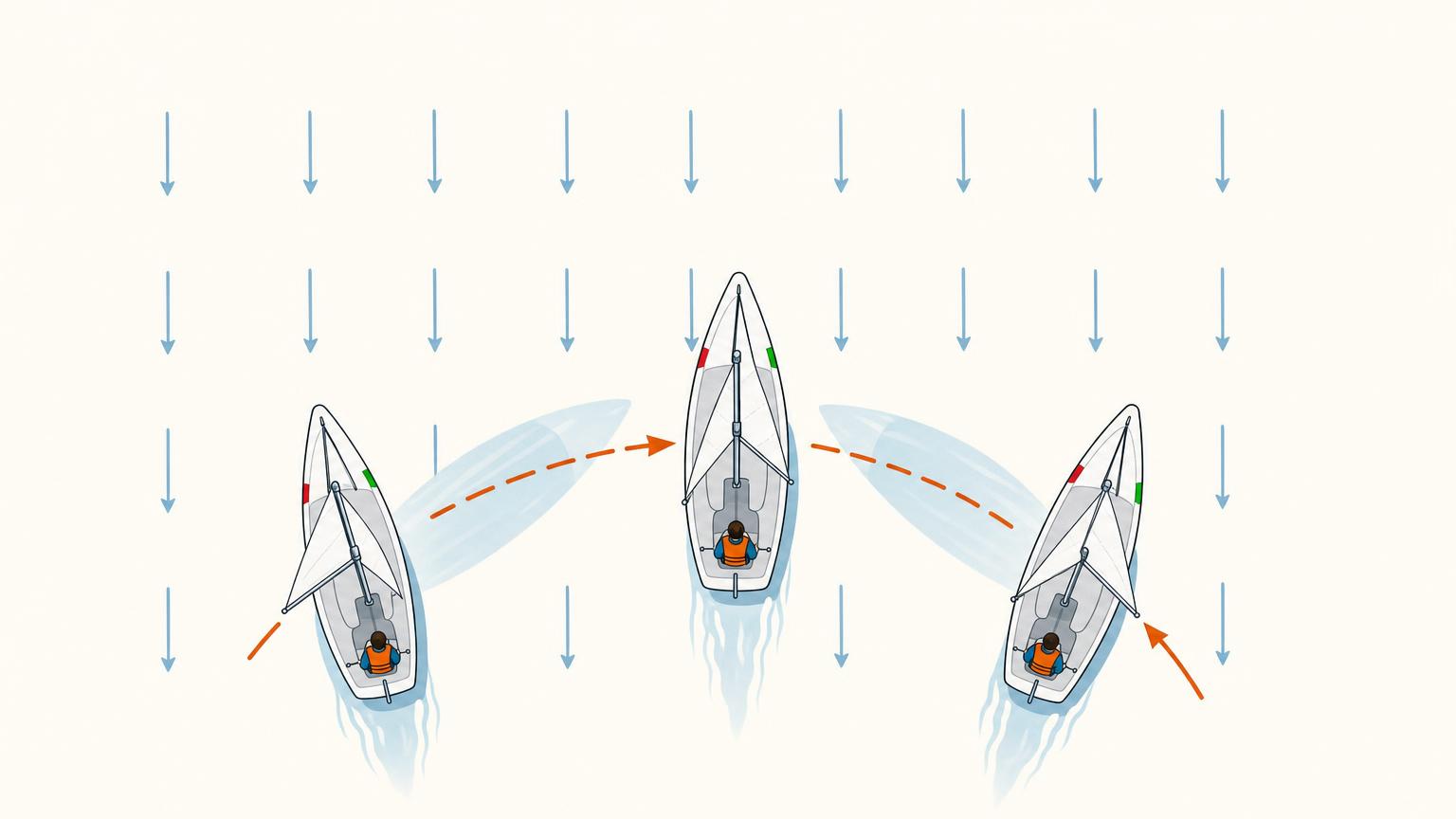
A tack is a turn that takes the bow, the front of the boat, toward and through the wind. Before the turn, the wind reaches one side first. That side is windward. The opposite, sheltered side is leeward.
As the bow passes through the wind, the wind begins arriving on the other side. The names follow it. Your former windward side becomes leeward, and your former leeward side becomes windward. The hull has not changed, but each side now has a different job.
You can often see the swap happen. The boom crosses the boat as the sail changes sides. When the sail fills again, the boom settles on the new leeward side, away from the incoming wind. If the boat leans, it leans away from the wind too: the new windward side rises, while the new leeward side lowers.
The simple check is: after a tack, look again. Do not keep the old labels. Beneath one fixed blue wind arrow, the lower and upper boats label the orange rail Windward before and Windward after, with Head to wind between them. The two targets sit directly on opposite orange rails, so the swap is visible without relying on a colour key in the surrounding prose.
Your windward side even names your tack
Racing rules define which tack a boat is on by its windward side: if your windward side is your port side, you are sailing on port tack, and if it is your starboard side, you are on starboard tack. That mirrors the ordinary port and starboard sides of the hull, which never change, but the tack name still follows the wind rather than the hull, because it depends on which of those fixed sides happens to be windward right now. The change happens at a precise moment: you stay on your original tack right up until the bow passes through head to wind, and you are on the new tack from that instant, even before the sail has filled or the boom has finished crossing. Practising a controlled tack is the easiest way to feel that moment rather than just read about it.
Sit to windward when the boat heels
When wind fills the sails, it creates a sideways force as well as a forward force. That sideways push moves the top of the mast toward leeward. The boat then heels. It leans away from the wind.
This makes the two sides easy to spot. The windward side rises and becomes the high side. The leeward side drops and becomes the low side.
Moving your weight onto the higher, windward side helps oppose that lean. Sailors call moving body weight farther to windward hiking. The basic idea is simple: the wind pushes the boat one way, and your weight helps balance it from the other side.
Treat this as a visual clue and a basic physical principle, not a complete boat-handling instruction. If the boat tacks and the wind begins coming from the opposite side, the high side (and the side you call windward) changes too. In the overhead photograph, the blue Wind arrow identifies the incoming side and the orange line runs along the rail carrying the crew, labelled Crew: windward.
Why the boat leans away from the wind at all
The lean itself comes from the same force that drives the boat forward. Wind filling the sails pushes partly forward and partly sideways, and that sideways push acts high up on the mast, so it tips the rig, and the whole boat, toward leeward. The full explanation, including why some boats resist this more than others, is worth reading in why sailboats heel. For this article the short version is enough: heel is a direct, visible sign of where the wind is coming from, and moving your weight to windward is a direct, visible answer to it.
Use the leeward rail for a downwind release
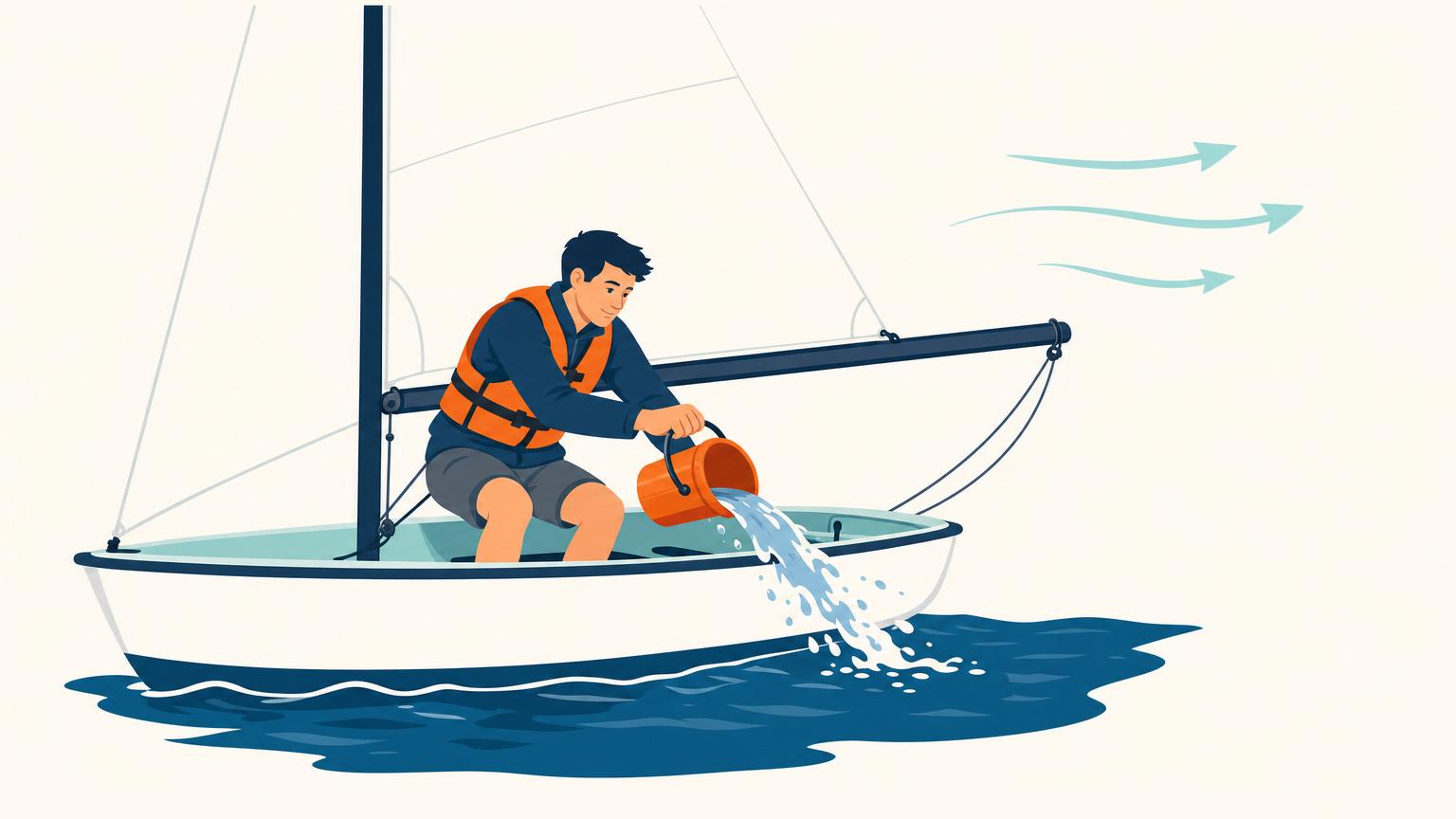
The windward side takes the wind directly and often gets the first spray. The leeward side is the more sheltered side, away from the wind. That makes the leeward rail useful when you need to empty water without having it blow back across the cockpit.
If you are tipping out a bailer (the scoop or container used to remove water), first feel where the wind is coming from. Then pour over the opposite, leeward side. Use the same side for water collected from spray. If you have to be sick over the side, choosing leeward also helps the wind carry it away from the boat.
This practical difference can help you remember windward and leeward: one side meets the wind, while the other gives water a path away. If the boat changes direction or the wind shifts, check again because the sides may swap. This trick is for water or being sick, not for rubbish or anything you would otherwise stow. In the plan view, the blue Wind arrow reaches the orange windward rail first. The labelled teal release path starts at the opposite leeward rail and points clear of the hull.
The same rule shows up in an emergency
Coastguard and flare-manufacturer instructions use exactly this logic for handling a distress flare: hold it out over the downwind, leeward side of the boat, arm outstretched, so the flame and hot residue blow clear of the hull and the person holding it rather than back across the deck. A buoyant smoke signal is thrown overboard the same way, to leeward, while staying within sight of anyone coming to help. None of this changes if you never need to use a flare, but it is one more example of the same underlying pattern: leeward is consistently the side you send things away from the boat, and windward is consistently the side things arrive from.
You can now read the boat at a glance: the wind-facing side and the sheltered side stand apart through the boom's position and the boat's lean. That gives you the practical meaning of windward and leeward, not just two new words. When the boat tacks (turns its bow through the wind), you already know those names swap sides as the boom crosses. You can choose the windward rail to help balance a heeling boat, or the leeward rail when you empty a bailer so the water goes clear. To see the swap happen step by step, try SailStarter's short beginner lesson, Windward and Leeward.
Try it from the lesson
Can you spot the next move?
The boat turns through the wind, and the airflow now reaches the opposite rail first. What happens to windward and leeward?
Why you can trust this guide
. We build each guide from public seamanship and safety sources, then teach the universal principle before any local difference.
- oceanservice.noaa.gov
- noaa.gov
- oceanservice.noaa.gov
- oceanservice.noaa.gov
- racingrulesofsailing.org
- ussailing.org
- ussailing.org
- ussailing.org
- sailing.org
- navcen.uscg.gov
- ecfr.gov
- racingrulesofsailing.org
- americansailing.com
- sailingvirgins.com
- amnautical.com
- marineinsight.com
- en.wikipedia.org
- en.wikipedia.org
- en.wikipedia.org
- sailing.mit.edu
- safe-skipper.com
- neilson.co.uk
- nbcolympics.com
- nauticed.org
- coastguard.nz
- orionsignals.com
- endeavour-sailing.co.uk
- imo.org
- gard.no
- boataround.com
- amsea.org
- gjwdirect.com
- sailingmagazine.net
- sailzing.com
- en.wikipedia.org