Chart your course
How to Dock a Sailboat in Wind and Current
Quick answer
The short version
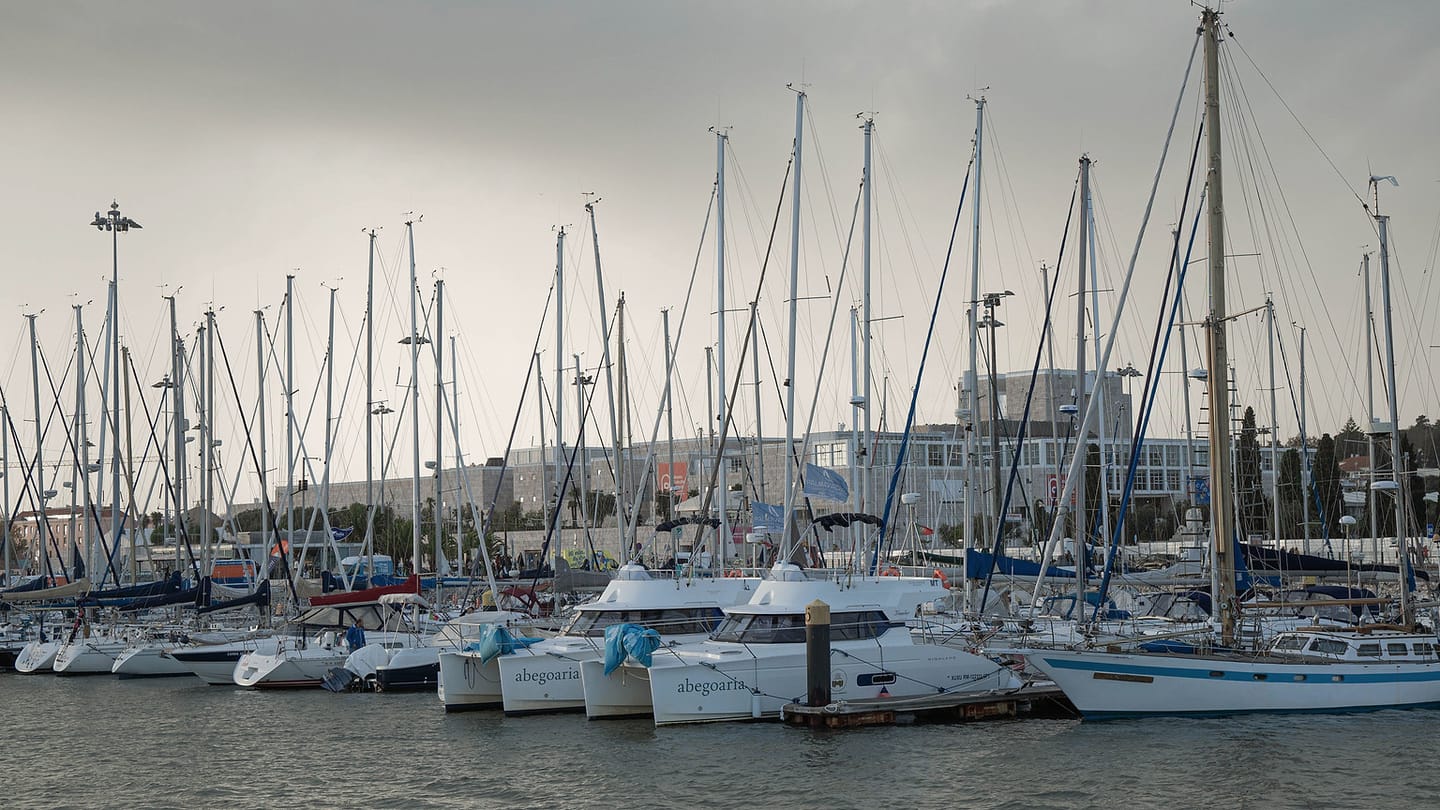
To dock in wind and current, pause outside the final approach and identify which force moves your boat most. Wind acts on the rig and exposed hull; current acts below the water. Prepare fenders and the lines you actually need, brief each crew member, and choose an approach with a clear escape route.
Use the lowest speed that still gives reliable steerage. Aim to arrive controlled rather than stopped too early, and abort while you still have room if the boat is not settling as expected. Nobody should jump or place a hand, foot, or body between boat and dock. A second approach costs little; an injury can end the season.
Docking advice often gives one angle and one throttle sequence as though every berth were identical. The better skill is reading force. A crosswind may push a high-sided yacht sideways while a strong current turns its underwater hull another way. The same marina can demand a different plan after the tide changes.
Before committing, watch flags, ripples, moored boats, floating weed, and your own drift. Ask the marina about local effects. Then say the plan aloud. A crew that knows which line matters first can work quietly, while a crew holding every rope at once tends to improvise at the worst moment.
Identify the dominant force before the approach
Stop or idle in safe water and observe. Wind direction is shown by flags, masthead indicators, smoke, and the way your bow blows off. Current is shown by water moving past piles, buoys, and moored boats. Compare those clues with how your own boat drifts.
Wind catches freeboard, cabin, mast, and furled sails. Current pushes the keel, rudder, and underwater hull. Their relative effect changes with boat design and speed. A light, high-sided boat may follow the wind at low speed; a deeper boat in a channel may follow current.
Choose the final approach only after this test. If the two forces oppose each other, do not assume they cancel everywhere. Their strength can change across the fairway.
Observe another similar boat when possible, but do not copy its path blindly. Draft, freeboard, propeller direction, and skipper technique may differ. Use the movement as one clue beside your own slow-speed test.
Prepare fenders, lines, and crew early
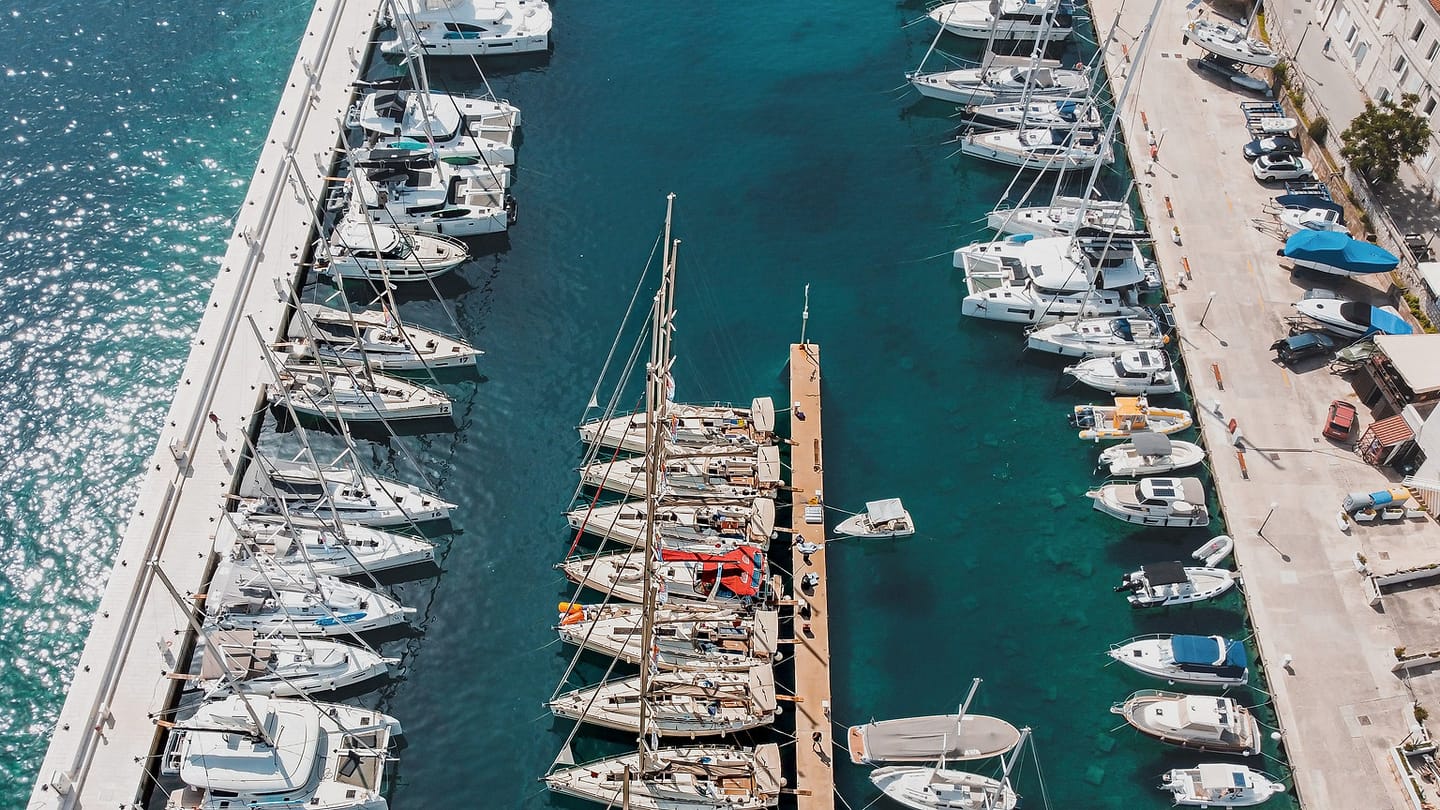
Place fenders for the actual docking side and height. Rig a bow line, stern line, and spring line as the plan requires, led outside rails and ready to pass. Avoid a deck covered in loose coils. Confirm which strong points will take each line.
Give each person one first job and one safe position. Explain whether the line should be passed, looped, or held, and whether it may be made fast. Crew should never leap for the dock or try to stop the boat with a limb.
Keep a boathook available when appropriate, but do not turn it into a pole vault or use it to fend off a heavy moving yacht. Engines and lines control the boat; people protect themselves.
Discuss what happens if a line misses. Usually the answer is to keep it aboard and abort, not to make a second throw while the gap closes. Clear priorities keep one small error from becoming several.

Approach with steerage and a clear abort point
Move slowly enough to limit impact, yet fast enough that the rudder can steer. The exact speed differs by boat and conditions. Use short power changes rather than carrying excess momentum, and remember that prop walk or delayed engine response may affect the turn.
Set an abort point before the berth. If the bow is outside the planned corridor, a line is not ready, or another boat enters, leave while open water remains ahead. Announce the abort so nobody jumps or makes a line fast.
Wind and current continue during reverse. A powered stop may also swing the stern. Practise that response away from the dock so you know what the boat does before relying on it.
Keep the final path clear of anchors, pulpits, and overhanging rigging on neighboring boats. The hull may fit while the mast or spreader does not. Look up as well as along the dock.
Use the first line to control the next motion
Choose the first line from the force
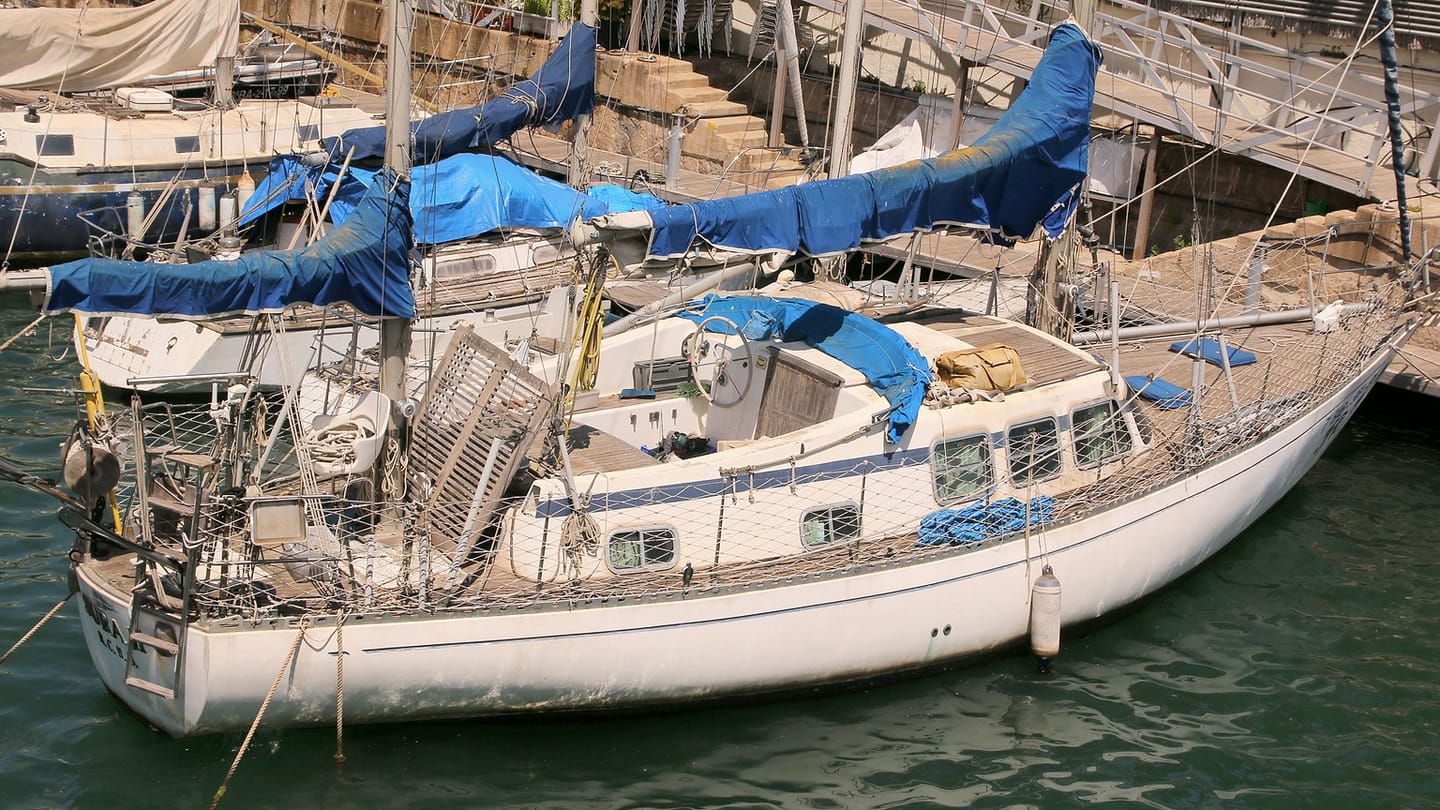
Decide what the boat will do in the few seconds after contact. If wind or current will carry the boat ahead, an after-leading spring can check that forward motion. If the force will push the boat astern, a forward-leading spring may be the useful first control. If the boat is being pressed away from the berth, a short line that can be placed reliably may matter more than the theoretically perfect line that crew cannot reach.
Brief one line by name, attachment point, destination, and purpose. “Take the midships spring to that cleat and hold us from moving ahead” is clearer than “get a line ashore.” The helm needs to know whether the crew will take a turn, hold by hand, or make fast. Crew should never wrap a line around a hand or place a limb between boat and dock.
Once the first line controls the unwanted motion, add the remaining lines in a planned order. Keep checking fender height as the boat settles. A line that solves one movement can create another if it is pulled hard from the wrong lead. Use small adjustments and watch the whole hull instead of focusing on the nearest cleat.
Rehearse the escape before committing
Name an abort point before the final turn. It may be a position, an angle, loss of steerage, excessive sideways set, a missed line, or another vessel entering the space. If that point is reached, say “abort,” power or sail back into clear water as planned, and reset. An early second approach is ordinary seamanship. A late attempt to rescue a poor angle is where speed and confusion build.
Keep reverse response, prop walk, current, and wind in the plan, but verify them on this boat. Use open water to test how quickly steerage appears, how the stern moves in reverse, and how much momentum remains at idle. The prop-walk guide explains one common reverse effect, and leaving a dock under power applies the same force-first thinking in the opposite direction.
After securing, review the approach while it is fresh. Which force dominated? Did the boat retain steerage? Was the first line ready and useful? Did the abort point leave enough room? One specific change is more useful than calling the whole landing good or bad.
On the next approach, change only that item. Keep the same crew calls and line names so the sequence becomes familiar. If wind or current differs, brief the new dominant force before entering. Consistency in language gives the crew more attention for the boat's actual motion.
Confirm the berth is still clear before the final turn. A moved tender, new line, open gate, or person on the dock can invalidate an otherwise sound approach. Abort for a changed berth just as readily as for a changed wind.
The first secured line should solve the movement most likely to spoil the berth. A spring line can limit forward or aft travel and help the engine hold the boat alongside when rigged and handled correctly. A bow or stern line may be first in another geometry.
Avoid pulling randomly on whichever line reaches the dock. A tight line creates a pivot, and wind, current, or propeller thrust can swing the opposite end of the boat. The helm and line handler should agree on the effect before loading it.
Once controlled, add the remaining lines and adjust fenders. Shut down only after the boat is secure. Debrief what the forces actually did so the departure plan starts with real observations.
Check that loaded lines lead cleanly and can be released without trapping a hand. A line under strain belongs on a suitable cleat or winch according to the boat's method, never wrapped around a person's wrist.
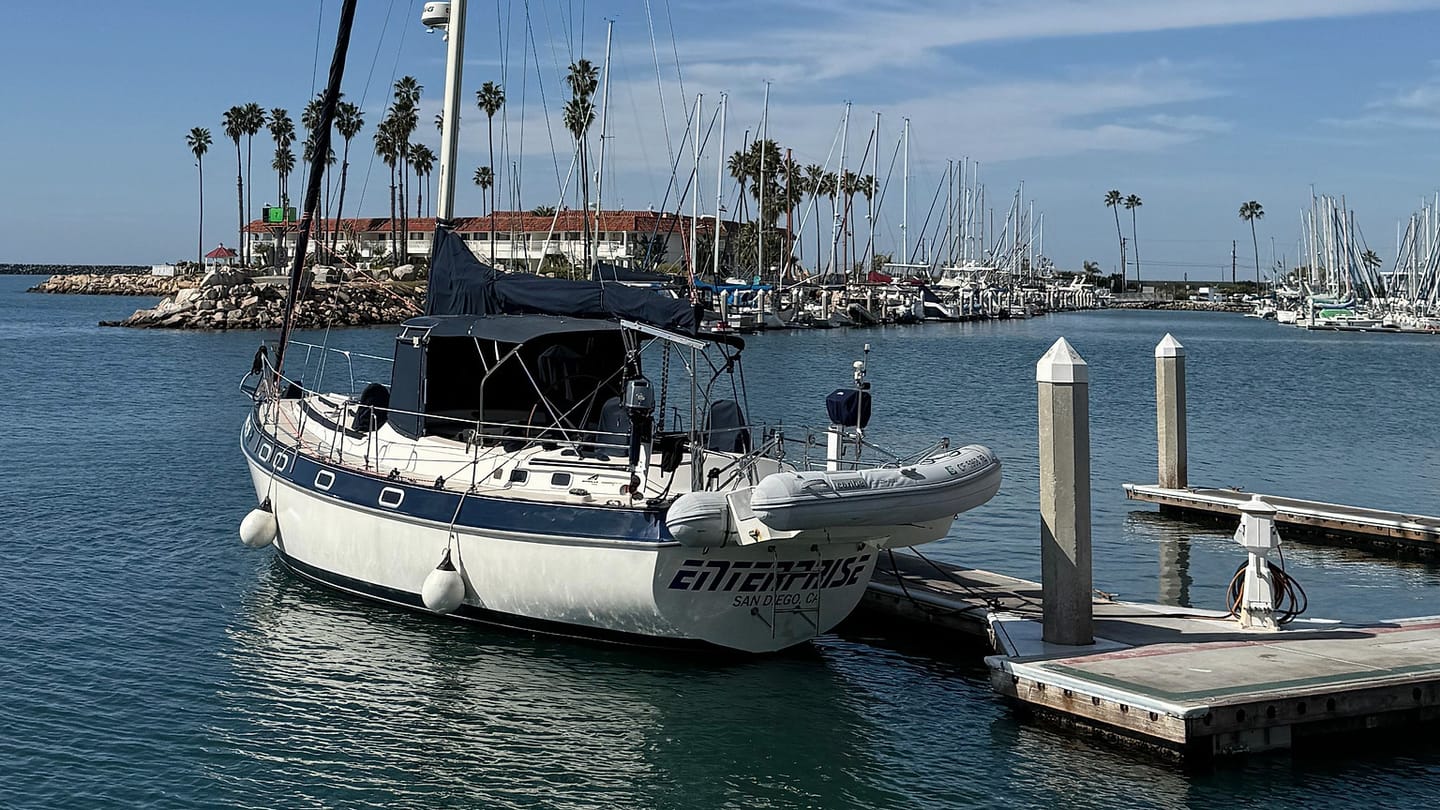
SailStarter's alongside-docking lesson gives you the line names and approach logic to turn this planning framework into action. Review it before practising with an instructor in low-consequence conditions. Start by stopping outside the berth and calling the force you think will dominate. Make one approach, abort deliberately, and compare your prediction with the boat's motion. That exercise removes the stigma from going around and teaches the part of docking that a fixed diagram cannot: the boat is always answering the wind, water, and line you load right now.
Try it from the lesson
Can you spot the next move?
You're heading into a berth you've never used before. What's worth doing before you commit to the approach?
Why you can trust this guide
. We build each guide from public seamanship and safety sources, then teach the universal principle before any local difference.