Chart your course
Sailboat Refit Costs: How to Build a Budget

Quick answer
The short version
A useful sailboat refit budget starts with a defined finish line, a current condition survey, and written scopes from the people who will do the work. Price the whole job, including haulout, access, labour, materials, tax, storage, disposal, commissioning, and a separate contingency. Then compare that total with the cost of buying a boat already fit for the same purpose. There is no honest universal “cost per foot.” Two similar boats can need completely different work, and local labour and yard rules matter.
The aim is not to predict every invoice to the last dollar. It is to decide whether the project is affordable before dismantling begins, protect the money needed for safety and seaworthiness, and keep optional upgrades from consuming the reserve. A spreadsheet helps, but only after the scope is grounded in evidence.
Define the Finish Line Before Pricing
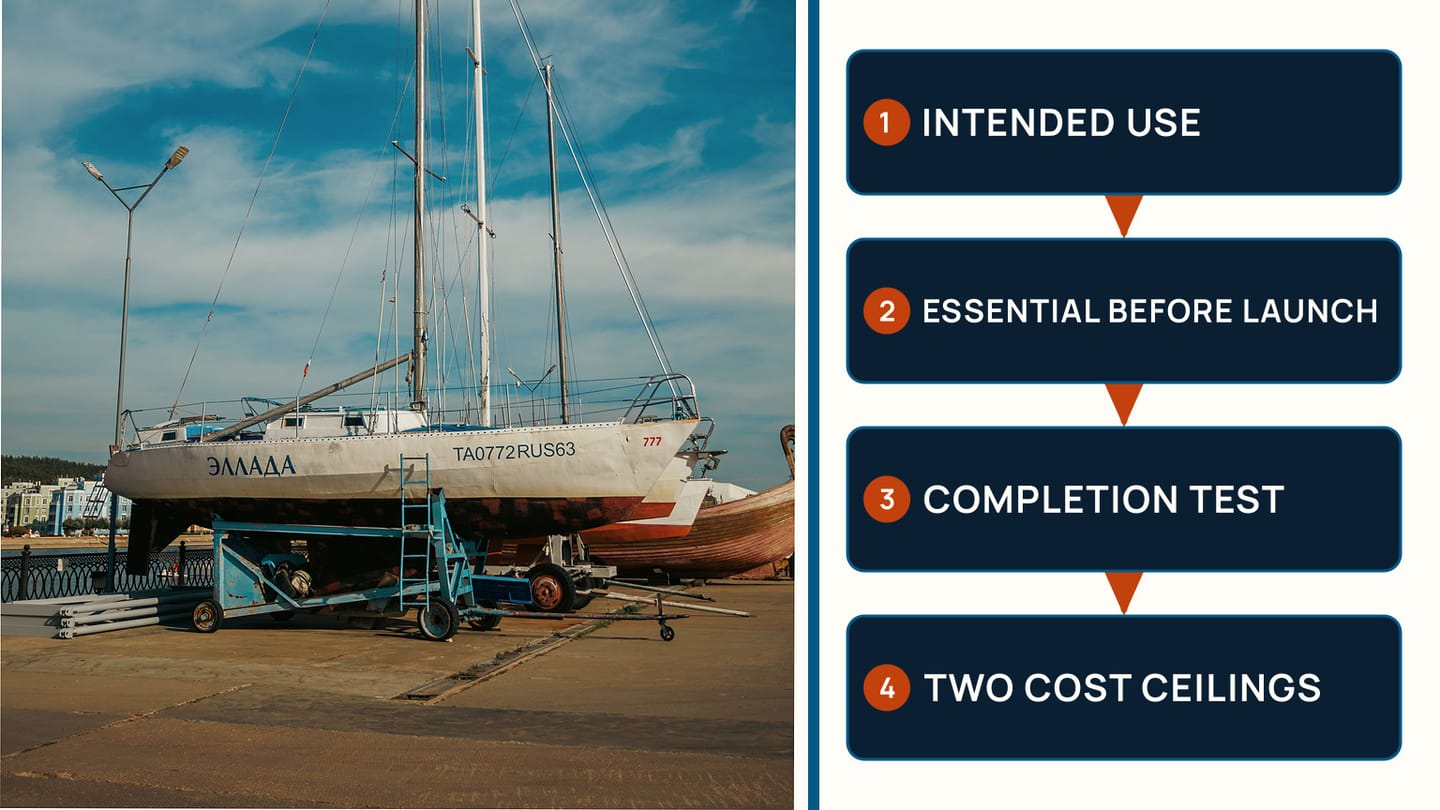
Start with what the boat must do when the refit is finished. A sheltered-water day boat, a family coastal cruiser, and an offshore passage boat do not have the same finish line. Write a short operating brief: sailing area, usual crew, season, expected nights aboard, shore-power access, and how soon the boat must launch. This gives every proposed job a reason.
Separate three ideas that are often mixed together:
- Safe and serviceable: structure, watertightness, steering, propulsion, rig, and required safety equipment are dependable for the intended use.
- Reliable and maintainable: aging hoses, inaccessible filters, weak charging, or worn running rigging are dealt with before they become trip-ending faults.
- Comfort and appearance: upholstery, electronics upgrades, brightwork, and cosmetic finishes improve the experience but may not determine whether the boat can sail safely.
That order is a decision tool, not a rule that every old fitting must be replaced. A sound, tested part may stay. A glossy new plotter does not compensate for suspect standing rigging or a leaking chainplate. If you are still choosing a boat, pair this exercise with the first-sailboat buying guide and compare candidates on finished condition, not asking price alone.
Write an acceptance test beside each important line. “Fix steering” is vague. “No binding through the full range, cable condition accepted by the surveyor, emergency tiller fitted and tried” is testable. “Improve charging” becomes a measured requirement based on actual loads and the installed system. Clear acceptance tests reduce arguments about whether work is complete and stop a project growing through casual “while we are here” additions.
Finally, set two ceilings before seeking quotes: the cash available for the refit and the highest finished investment that still makes sense compared with a ready-to-sail alternative. Include the purchase price in that comparison. Sentimental value can justify spending more, but name that choice honestly instead of disguising it as an investment return.
Survey, Inspect, and Turn Findings Into Scope
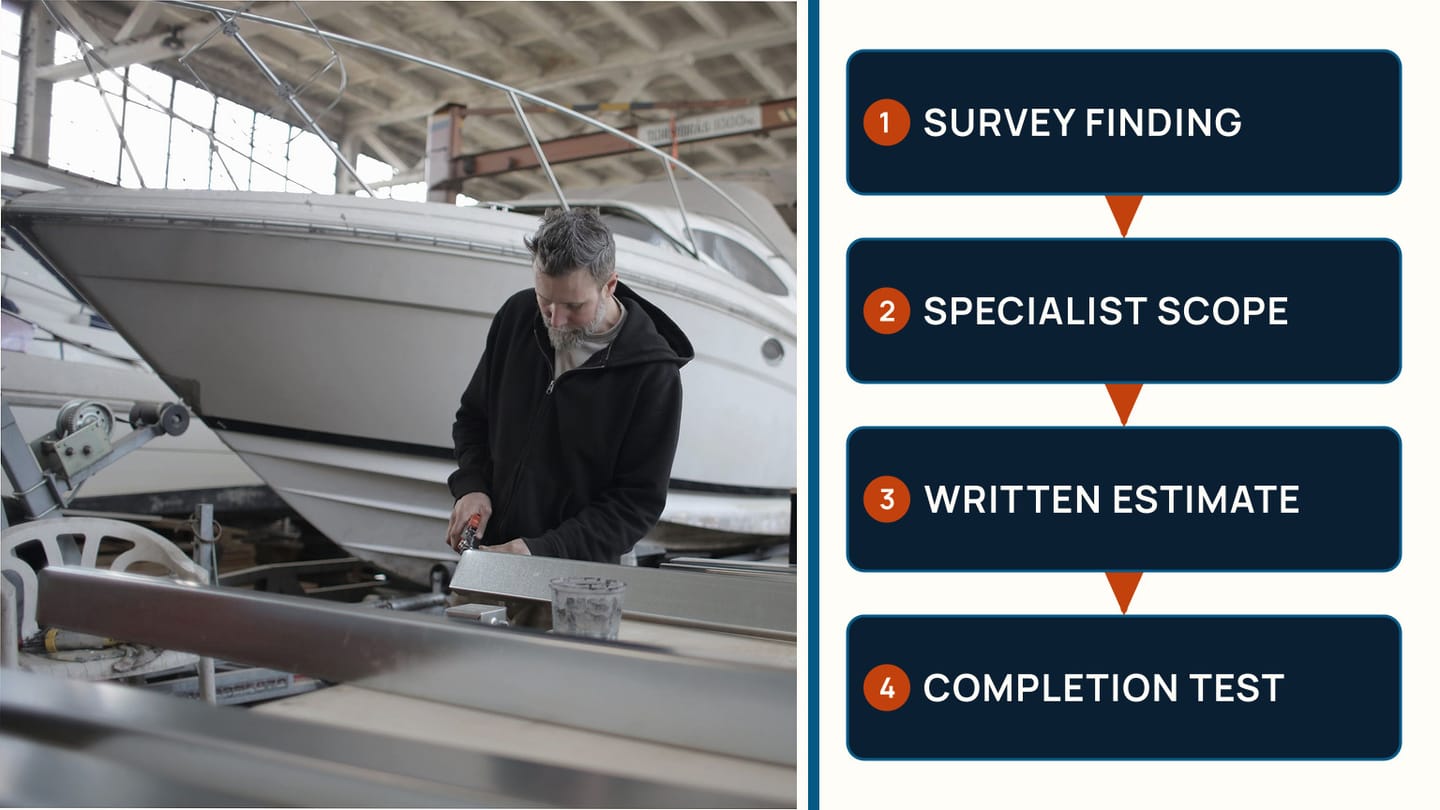
A pre-purchase or condition survey is the start of the budget, not the budget itself. Engage a surveyor appropriate to the boat and purpose. Arrange haulout and an operational trial where practical. A general survey may identify concern around an engine, rig, electrical installation, laminate, or timber without settling the repair method. Get the relevant specialist to inspect that system before assigning a number.
Convert every finding into one line in a scope register. Give it a system, priority, evidence, owner, next decision, price status, and completion test. “Moisture near port chainplate” needs investigation; it should not quietly become either a zero-cost note or a complete deck replacement. Record the next step, such as removing trim for access and obtaining a repair scope after inspection.
Photograph identification plates, installations, hose routes, access panels, and visible defects. Confirm exact models before pricing parts. On older boats, a nominally simple replacement can expand when the current item no longer fits the opening, wiring, control cable, shaft, exhaust, or mounting pattern. A quote for the box alone is not a quote for an installed working system.
Ask yards and trades what their quote includes and excludes. Useful questions are plain:
- Who removes and reinstalls surrounding joinery?
- Does the price include haulout, staging, shop supplies, disposal, and testing?
- Is tax included?
- What finding would cause a variation?
- Who authorises extra work, and at what threshold?
- What owner-supplied work is permitted under yard and insurance rules?
Do not treat a survey value or online example as a repair quote. A current written estimate tied to your hull, access, location, and finish standard is more useful than an impressive spreadsheet built from unrelated boats. The same discipline applies after purchase: the first 30 days as an owner are best spent confirming systems and records before ordering attractive upgrades.
Price the Whole Job
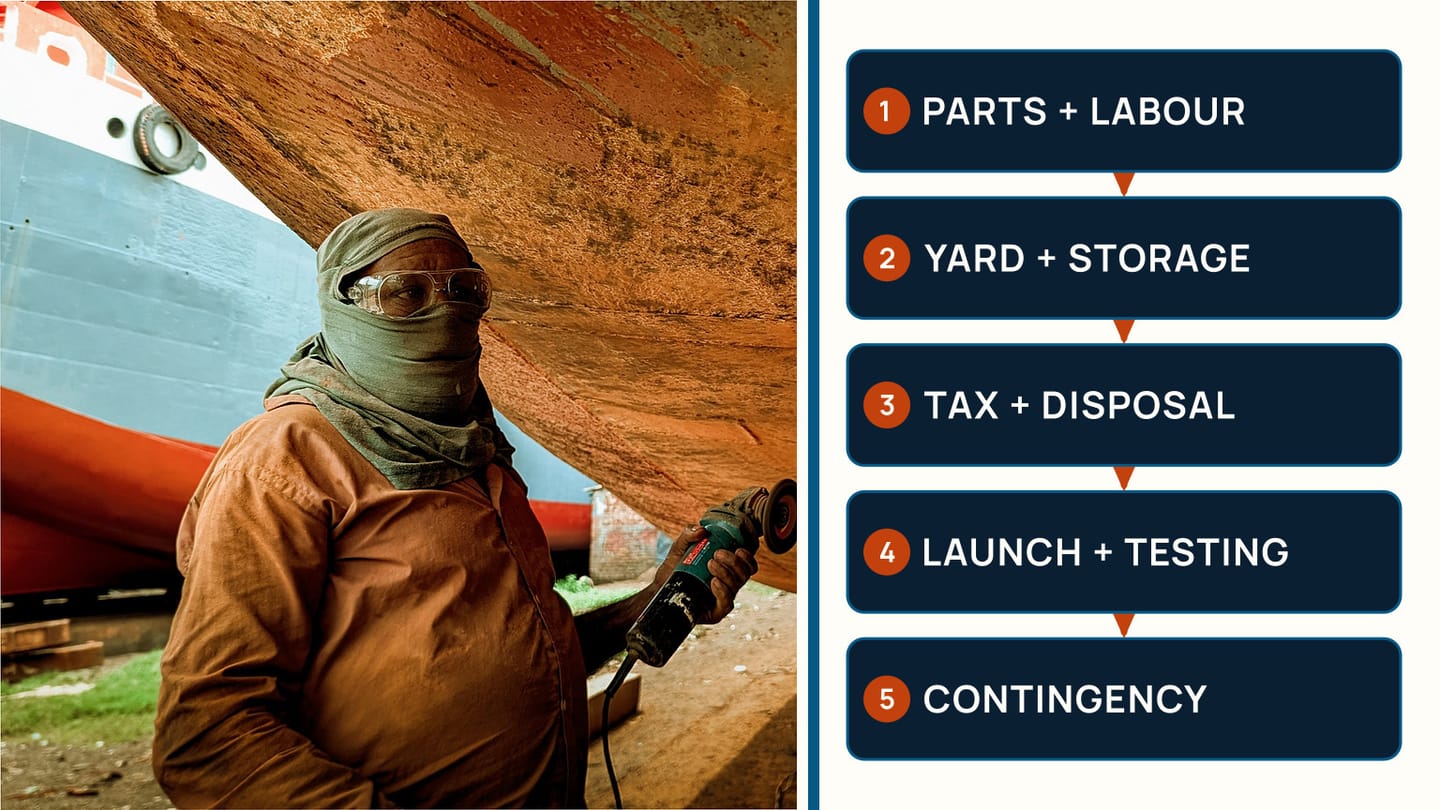
Build the budget by system, then show indirect costs separately. Common system groups include hull and deck, keel and rudder, rig and sails, steering, engine and fuel, electrical, plumbing, safety equipment, interior, and deck hardware. For every row, keep labour hours, labour rate, materials, subcontract work, and tax visible. A single lump sum hides where assumptions live.
Add the costs that occur because the boat is a project: survey and specialist reports, haulout and relaunch, pressure washing, mast handling, blocking or cradle, storage, shore power, environmental fees, transport, accommodation, insurance requirements, and commissioning. If the boat misses a launch window, another month of storage and a changed schedule may cost more than the delayed part.
Owner labour is not free simply because no wage changes hands. Estimate realistic hours and list tools, protective equipment, consumables, travel, and learning time. Decide which jobs the yard permits. Specialist work on gas, high-current electrical systems, standing rigging, structural repairs, fuel, or machinery may also affect safety, compliance, or insurance. A qualified trade can be the cheaper choice once rework and delay are counted.
Keep a contingency as its own line rather than inflating every estimate invisibly. Size it from uncertainty: inaccessible structure, incomplete records, long-idle machinery, obsolete components, or work that cannot be scoped until opening up all increase exposure. The contingency is not available for upgrades. When a hidden defect uses it, log the finding, decision, and revised forecast.
Use three totals: committed work with accepted quotes, likely work with credible estimates, and exposed work that still needs investigation. This makes uncertainty visible. A project with a moderate quoted total and a large unresolved structural question is not cheaper than one with a higher firm total. It is simply less known.
Before committing, compare purchase plus refit plus carrying cost with boats already meeting the finish line. Add a time comparison as well. If one lost season matters to you, give it weight. Check how insurers view the boat and proposed work early; the beginner’s sailboat insurance guide explains why survey recommendations and navigation plans may affect cover.
Phase the Work and Control Changes
Sequence the refit so later work does not damage earlier work. Investigate structure and stop water entry before new headlining. Finish dusty grinding before installing electronics. Complete through-hull work while the boat is ashore. Test hidden wiring and plumbing before closing panels. Leave decorative finishes until heavy access is over.
A practical phase plan often looks like this:
- Stabilise the boat and prevent further damage.
- Complete investigation and final scopes.
- Repair structure, watertightness, steering, propulsion, and rigging.
- Bring safety and essential services to the required standard.
- Commission and test under controlled conditions.
- Add deferred comfort or cosmetic work only if money and time remain.
Hold a short budget review at each phase boundary. Update actual cost, committed cost, remaining estimate, contingency used, and expected completion. Require written approval for a variation before work continues unless delay would create a safety or damage risk. A quick message that states finding, options, price, schedule effect, and chosen action is enough to preserve the decision trail.
Commissioning deserves its own time and money. Systems should be tested at the dock and under realistic load, leaks checked after launch, fasteners and rig tuning reviewed as specified, and defects corrected before a demanding passage. Keep invoices, manuals, part numbers, photographs, and test results with the boat. Those records make maintenance easier and give a future surveyor better evidence than a list of claimed upgrades.
Common budget failures are easy to name: buying parts before confirming models, pricing only materials, starting cosmetic work first, allowing several trades to change scope verbally, and spending contingency on optional equipment. The cure is not a more elaborate spreadsheet. It is a finish line, evidence, written scope, staged authority, and proof that completed work performs as intended.

Use SailStarter’s ownership lessons to turn your survey into a four-column first pass: essential before launch, essential this season, investigate and price, and optional later. Add a completion test to every essential item, seek written scopes, and compare the finished total with a ready-to-sail boat before authorising work.
Try it from the lesson
Can you spot the next move?
A wide sailboat glides past on two side-by-side hulls, barely leaning at all. What type is it?
Why you can trust this guide
. We build each guide from public seamanship and safety sources, then teach the universal principle before any local difference.