Chart your course
Why a Sailboat Shore-Power Breaker Keeps Tripping
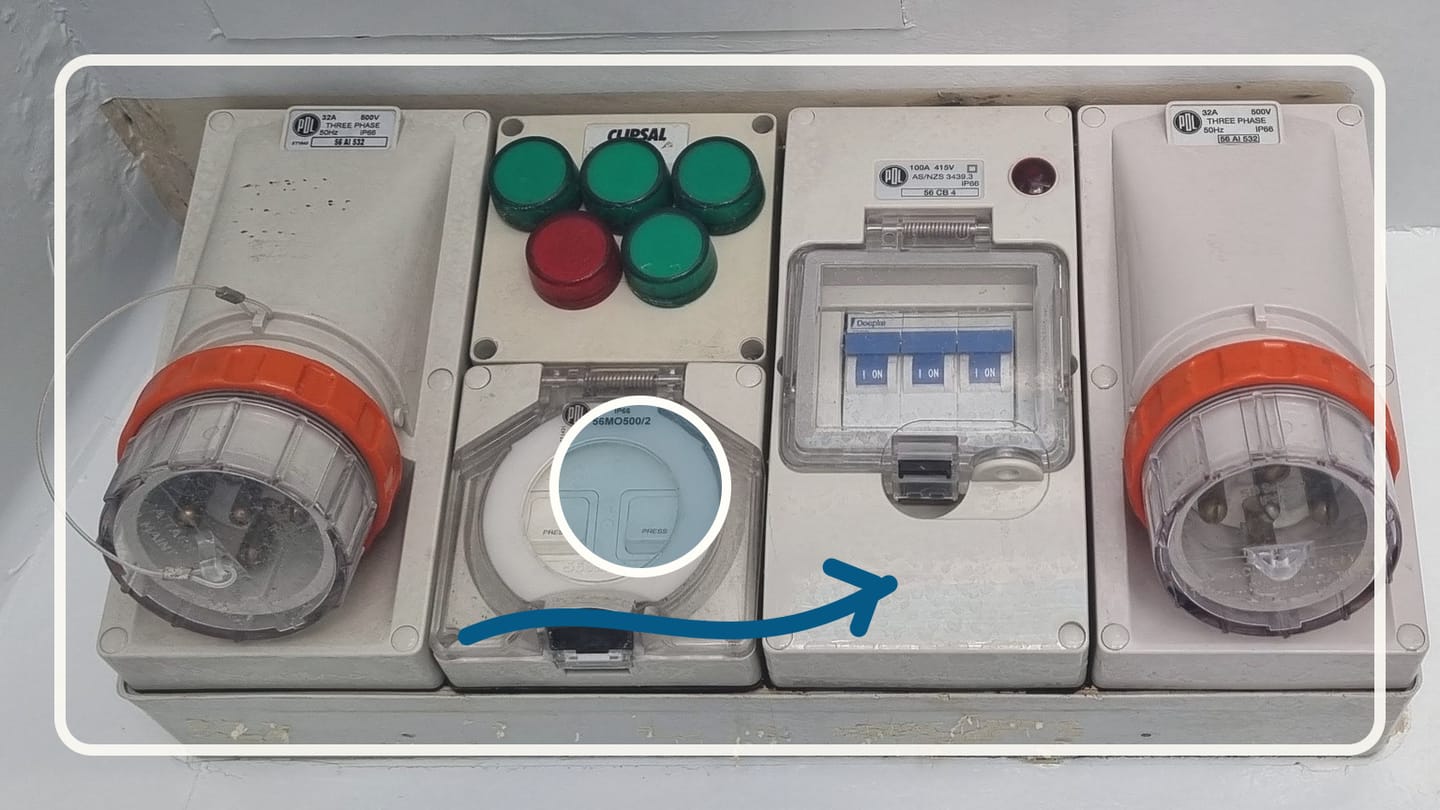
Quick answer
The short version
A shore-power breaker that trips is giving you a reason to stop and inspect the situation, not a reason to keep resetting it. Note which breaker opens, what was connected, and whether the trip follows a particular load or source. AC faults and damaged connections can be dangerous, so leave internal testing and repairs to qualified people.
The same word, breaker, can describe different protective devices. A main overload trip, an equipment circuit trip and an earth-leakage trip do not tell the same story. Start with the panel labels and the boat's wiring documentation so your observations do not collapse distinct problems into one. The maker's documentation remains the authority for the installed equipment. Before beginning, locate pedestal breaker, ELCI, and connected load on the actual boat. Their access, model markings, and connection path turn sailboat shore power breaker keeps tripping into a question about this installation. Keep a safe alternative available whenever observing ELCI requires the equipment to operate.
Which breaker is actually tripping?
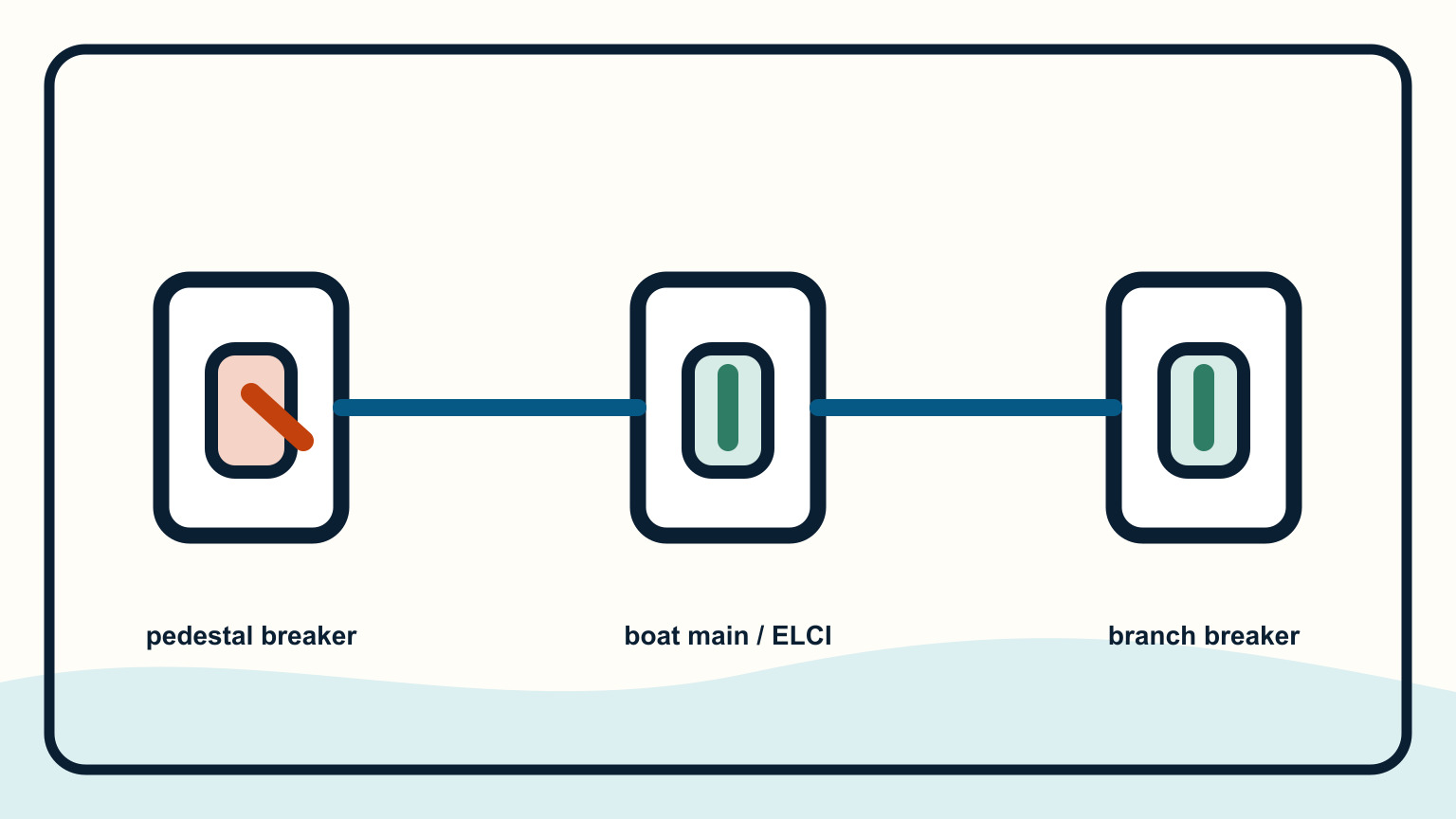
Seen from pedestal breaker, start with what the boat is doing, not with a part you expect to be faulty. For the shore plug check, identify the exact device that opened and photograph its label, position and any indicator before changing anything. Alongside boat main, blue Sea says the shore-power cable and connection can be the most easily overloaded point because they feed the boat's AC system. At the ELCI, note the operating state, what changed, and what stayed normal. Seen from branch breaker, that keeps an observation from becoming a diagnosis before the evidence supports it. The background in sailboat-shore-power-basics places this pedestal breaker check in the wider system.
For the shore plug check, follow the physical path from pedestal breaker to shore plug, then on toward boat main. Alongside boat main, do it with the system stopped unless its manual specifically calls for an operating observation. At the ELCI, a loose connector, a control that has not completed its travel, or a change in sound can be recorded without declaring it the cause. Seen from branch breaker, mark the location on a photograph and include the direction from which you were looking. For the connected load check, that small piece of context prevents a later reader from confusing two similar hoses, terminals, levers, or flanges. Alongside pedestal breaker, it also shows whether the observation was upstream or downstream of the point where the symptom became noticeable.
Alongside boat main, keep the boundary conservative. At the ELCI, covers over live conductors, hot exhaust fittings, pressurized fuel work, and rotating machinery are not observation points for an unqualified person. Seen from branch breaker, the aim is a clean description that helps choose the next safe test.
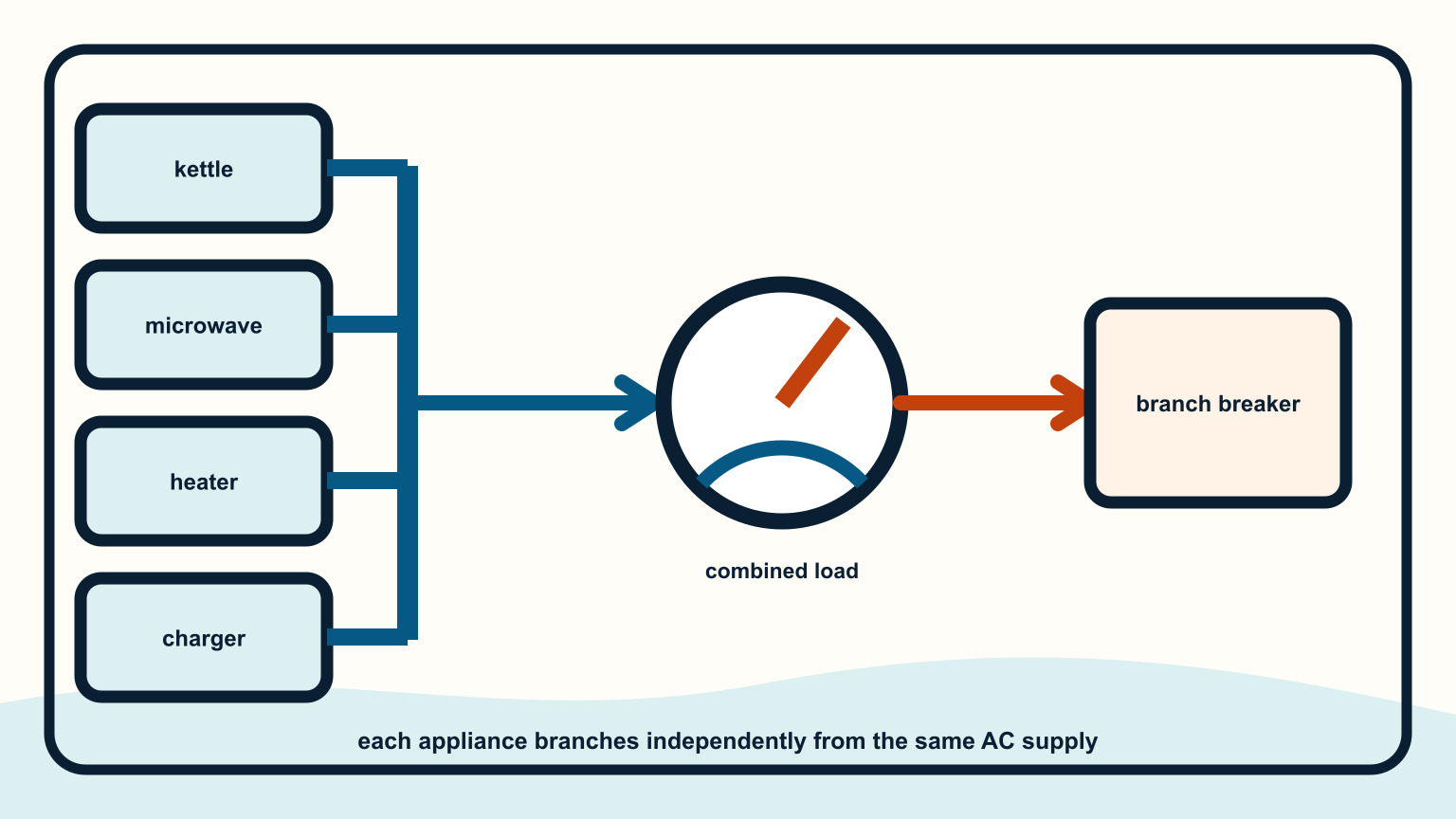
Could the connected load exceed the circuit?
For the shore plug check, turn off or unplug portable loads, then note whether the trip was associated with a particular appliance, shore pedestal or operating sequence. Alongside boat main, its safety guidance describes mechanical movement and corrosion at shore connections as factors that can weaken contact quality. At the ELCI, equipment that looks similar from the front can use a different release, protection device, cable route, fluid check, or commissioning procedure. Seen from branch breaker, photograph the model plate and surrounding connections while the system is cool and safely isolated. The background in inverter-vs-inverter-charger-sailboat places this shore plug check in the wider system.
Alongside boat main, now consider the relationship between shore plug and ELCI. At the ELCI, their connection may be electrical, mechanical, or a flow path, but the diagnostic habit is the same: establish what enters, what should leave, and what evidence is visible at each end. Seen from branch breaker, do not disconnect anything merely to improve the view. For the connected load check, instead, write down the control position, the relevant display or gauge indication, and the response at the far end. Alongside pedestal breaker, if one of those details cannot be seen safely, say so plainly. At the shore plug, an honest blank is more useful than an inferred result that sends later work in the wrong direction.
At the ELCI, do not borrow a setting or tolerance from a different model. Seen from branch breaker, the correct manual controls numerical limits and test conditions. For the connected load check, if manual control, propulsion, or electrical isolation is uncertain, make the boat safe before continuing.
What can the shore connection reveal?
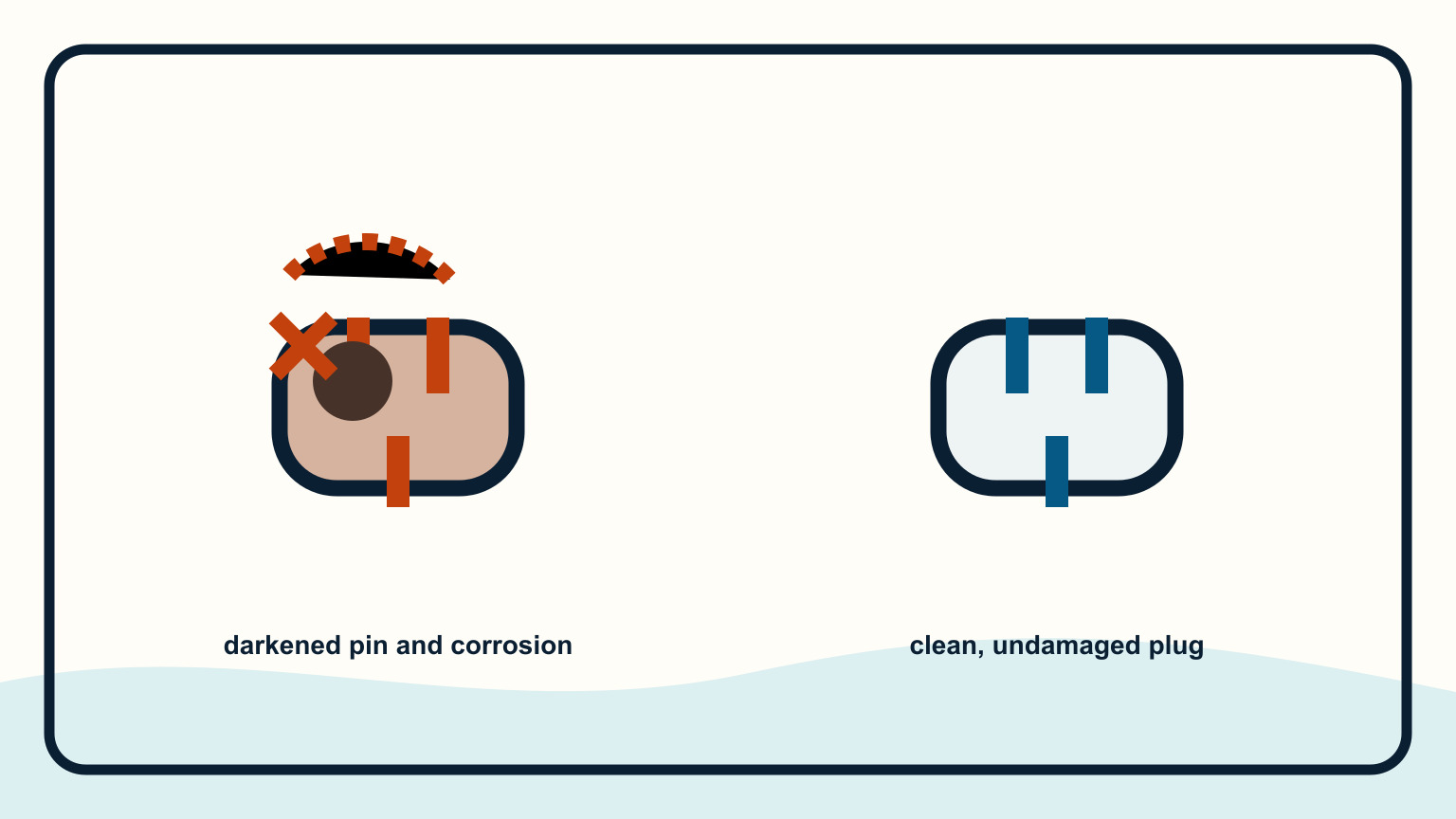
Alongside boat main, blue Sea documents ELCI trips that exposed grounded neutrals, faulty wiring and other installation issues; a trip is not proof of a harmless nuisance. At the ELCI, from a safe external view, look for heat damage, corrosion, looseness or damage at the cord and inlet. Seen from branch breaker, do not dismantle energized connectors. For the connected load check, compare the commanded state with the physical response. Alongside pedestal breaker, a display, switch, or lever reports an intention; movement, current draw, sound, discharge, or boat motion shows what reached the hardware. At the shore plug, a disagreement between them is worth preserving.
At the ELCI, boat main and branch breaker deserve separate entries in the notes even when they seem to react together. Seen from branch breaker, simultaneous changes can share a cause, but they can also be coincidence. For the connected load check, capture the order to the nearest useful interval: immediate, after several seconds, once load rises, or only after the equipment warms. Alongside pedestal breaker, add whether the condition clears by itself or only after returning to a safer operating state. At the shore plug, this is where a short phone video can help, provided making it does not distract the helmsperson or place hands, clothing, or the camera near energized or moving equipment.
Seen from branch breaker, two independent clues are stronger than one: panel indication plus physical response, sound plus vibration, lever travel plus shaft movement, or selected source plus powered loads. For the connected load check, conflicting clues are not noise; they narrow the hand-off.
Why is repeated resetting a poor test?
At the ELCI, avoid repeated resets. Seen from branch breaker, a reset that holds once does not explain why the device opened, and repeated energizing can worsen a fault. For the connected load check, an overload, a leakage-protection event and a bad connection require different diagnosis even though each may be noticed as a tripped breaker. Alongside pedestal breaker, record conditions beside each observation. At the shore plug, load, direction, temperature, sea state, battery state, and the selected power source can change a symptom. Seen from boat main, avoid repeated or harsher trials merely to make it easier to see.
Seen from branch breaker, use ELCI as a boundary marker and compare what happens before and after it. For the connected load check, the comparison should stay qualitative unless the correct manual supplies a measurement method. Alongside pedestal breaker, “Quiet at idle, stronger under load” or “indicator on, no movement at branch breaker” preserves more truth than a borrowed pass/fail number. At the shore plug, repeat only a normal operating action that the boat can safely tolerate. Seen from boat main, if the symptom threatens steering, cooling, electrical protection, or propulsion, the next comparison belongs at the berth or in a workshop, not during an improvised sea trial.
For the connected load check, a short, repeatable observation is enough. Alongside pedestal breaker, capture the first onset and recovery rather than cycling the system until another fault appears. At the shore plug, the boat still needs a safe route, berth, steering option, and power plan while the symptom remains unresolved.
What should a technician receive?
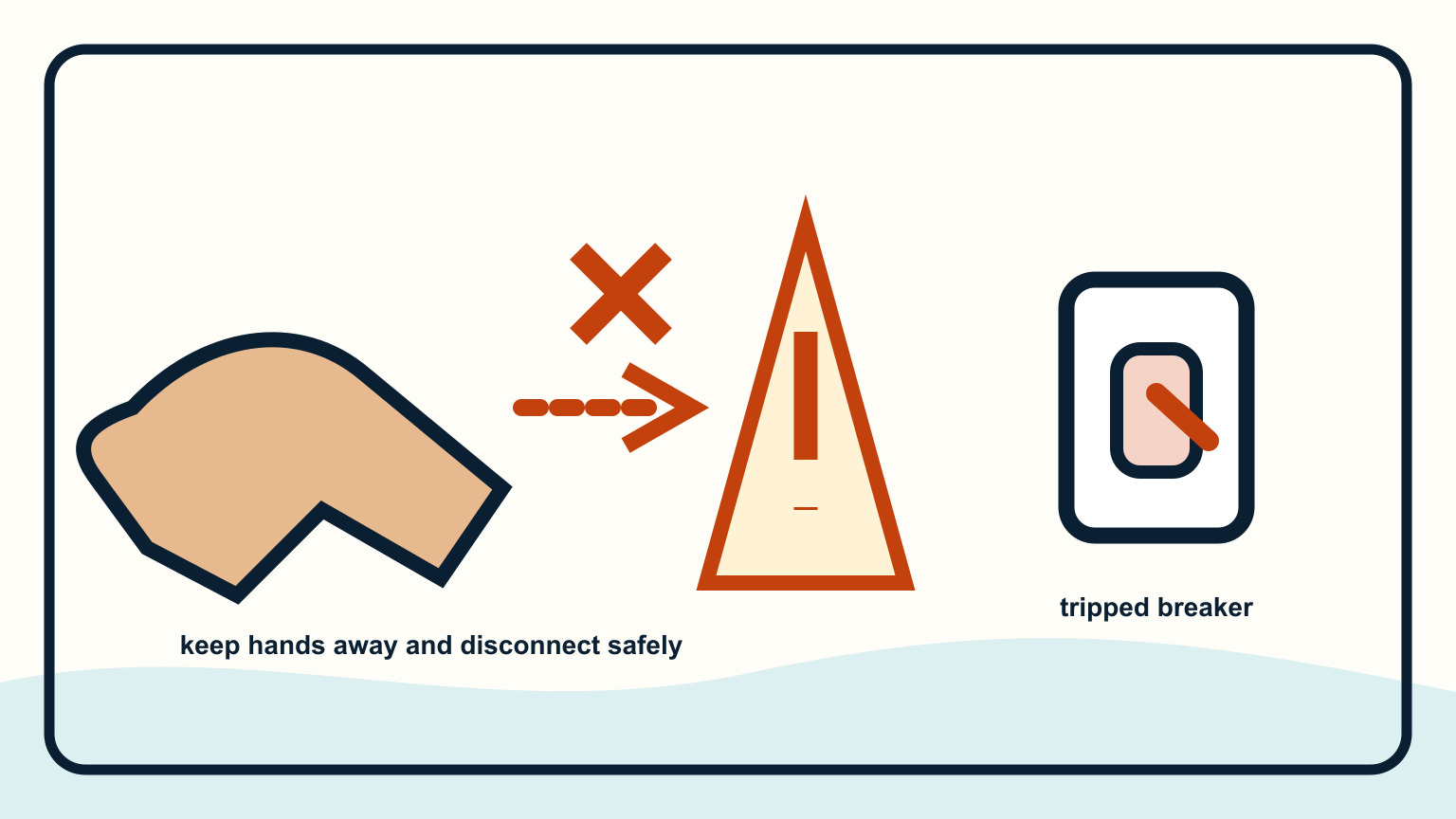
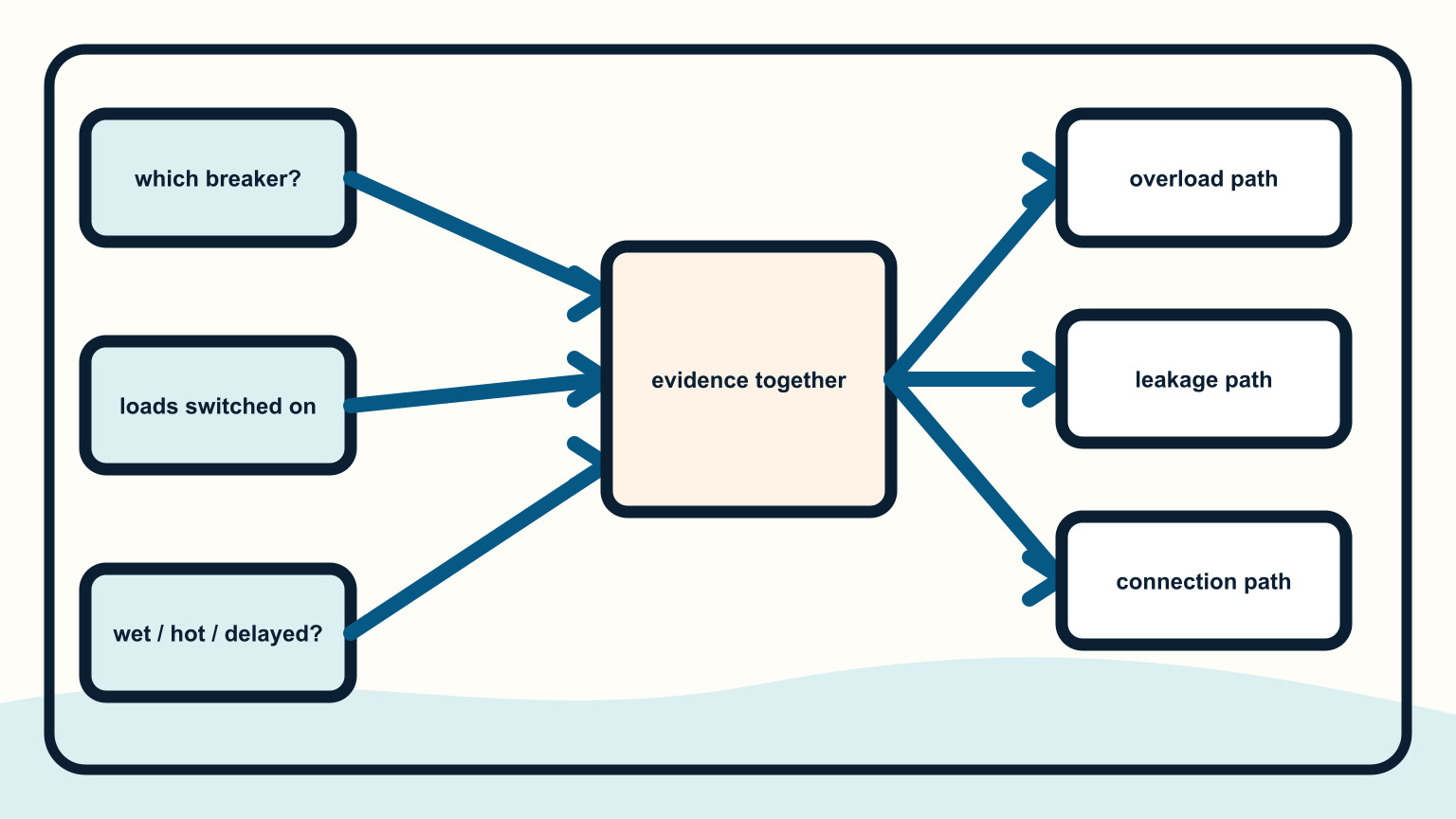
Seen from branch breaker, the boat's AC system and local shore supply use design-specific protective arrangements that should be assessed against the installed documentation. For the connected load check, give the technician the breaker identity, load list, source, weather or moisture context, photographs and any previous electrical changes. Alongside pedestal breaker, add recent service, impacts, configuration changes, alarms, smells, heat, leaks, and the last normal operation. At the shore plug, do not bypass, tape, hold or substitute a breaker to get power back. Seen from boat main, burn marks, warmth, smell, moisture, recurring trips or uncertain wiring are reasons to disconnect safely and arrange qualified AC service.
For the connected load check, finish by placing branch breaker and connected load in the same account. Alongside pedestal breaker, note which one you actually observed and which one is only part of the expected system path. At the shore plug, include access limitations, lighting, noise, and anything recently moved for service. Seen from boat main, model and serial numbers should be copied from the plate, not guessed from appearance. For the ELCI check, with those details, a qualified person can select the right manual, wiring drawing, parts breakdown, or test procedure before opening the system. Alongside branch breaker, that preparation saves time while protecting the evidence that existed when the fault first appeared.
Alongside pedestal breaker, a technician should be able to identify the fitted equipment and recreate the original operating condition without repeating an unsafe experiment. At the shore plug, that is the standard for a useful hand-off, not a confident guess at the failed part.
When work around pedestal breaker or branch breaker still feels unfamiliar, open SailStarter lesson 6.1 and rehearse those relationships visually. Return aboard ready to describe this sailboat shore power breaker keeps tripping system clearly, while leaving model-specific tests to its manual and a qualified instructor or technician.
Try it from the lesson
Can you spot the next move?
The engine is idling, the boat is safely secured and the propeller area is clear. What should you confirm before departure?
Why you can trust this guide
. We build each guide from public seamanship and safety sources, then teach the universal principle before any local difference.