Chart your course
How to Buy a Sailboat Remotely
Quick answer
The short version
You can investigate and close on a sailboat from another place, but distance removes many casual checks that happen during an in-person purchase. Build a dated evidence file before making a serious commitment. Choose and pay the surveyor yourself, and use the normal inspection stages rather than treating video as a survey. Put acceptable survey, trial, finance, and insurance results into the agreement where relevant. Release final funds only through a closing process you understand, then arrange keys, papers, insurance, berth, and delivery before the boat becomes your responsibility.
Remote buying works best as a series of gates. Each gate should answer one narrow question: is this the advertised boat, is its condition acceptable, can you insure and finance it, and can you take possession safely? A seller's photographs can help you decide whether to keep looking. They cannot settle hidden condition or replace buyer-selected inspection. Be willing to stop when records conflict, access is refused, or a condition cannot be completed within the agreed window.
Build An Evidence File
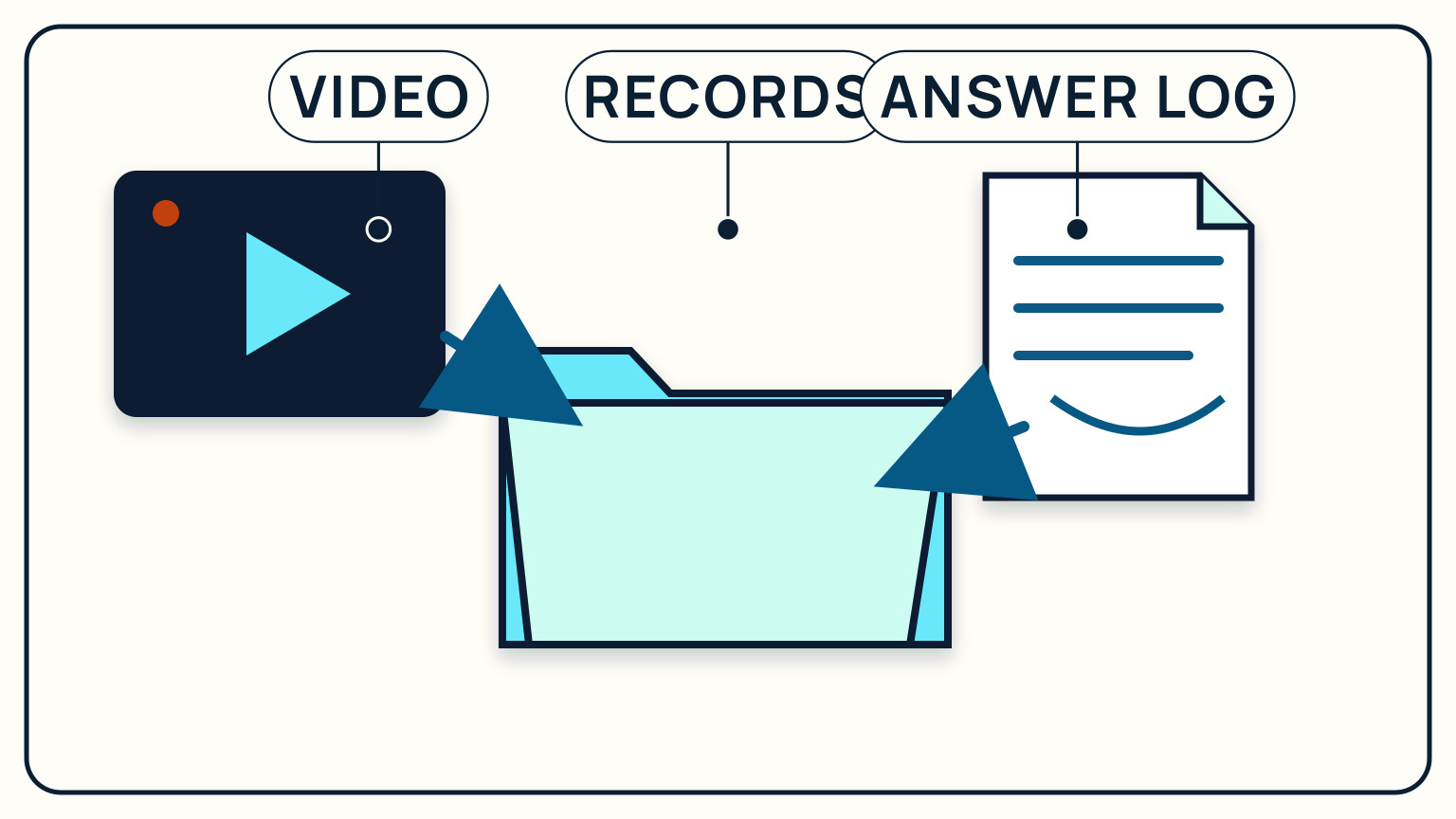
Ask for a current continuous video call rather than a collection of attractive clips. Have the camera begin with identifying information and then move through the boat in a sensible order. Request clear views of the bilge, lockers, deck fittings, rig, sails, engine area, and electrical panels, along with every defect already mentioned. The purpose is not to diagnose the boat through a screen. It is to confirm what is present, expose missing access, and prepare precise questions for inspection.
Collect registration or documentation evidence, inventory, service records, invoices, manuals, and any earlier survey the seller offers. Treat an old survey as history. Its date, exclusions, and later use of the boat limit what it can say about present condition. Keep original files and note who supplied each item. If two records disagree about equipment, ownership, repairs, or dates, flag the conflict instead of choosing the version you prefer.
Maintain one question list. Date every answer and link it to the photograph, record, or person that supports it. Mark unanswered items plainly. A useful file lets your surveyor see why you are concerned about a particular fitting or system before attending. It also keeps a polished sales conversation from replacing evidence. By the time you consider an offer, the file should show both what you know and what still depends on independent inspection.
Check continuity across the file. A repair invoice should refer to equipment that appears in the inventory and current video. A claimed replacement should have a plausible date and should not be contradicted by later photographs. Missing paperwork does not automatically prove a defect, but it changes what can be relied upon without inspection. Put conflicting items at the top of the survey brief so the person with direct access can resolve them rather than inheriting the seller's explanation.
Use Independent Inspections
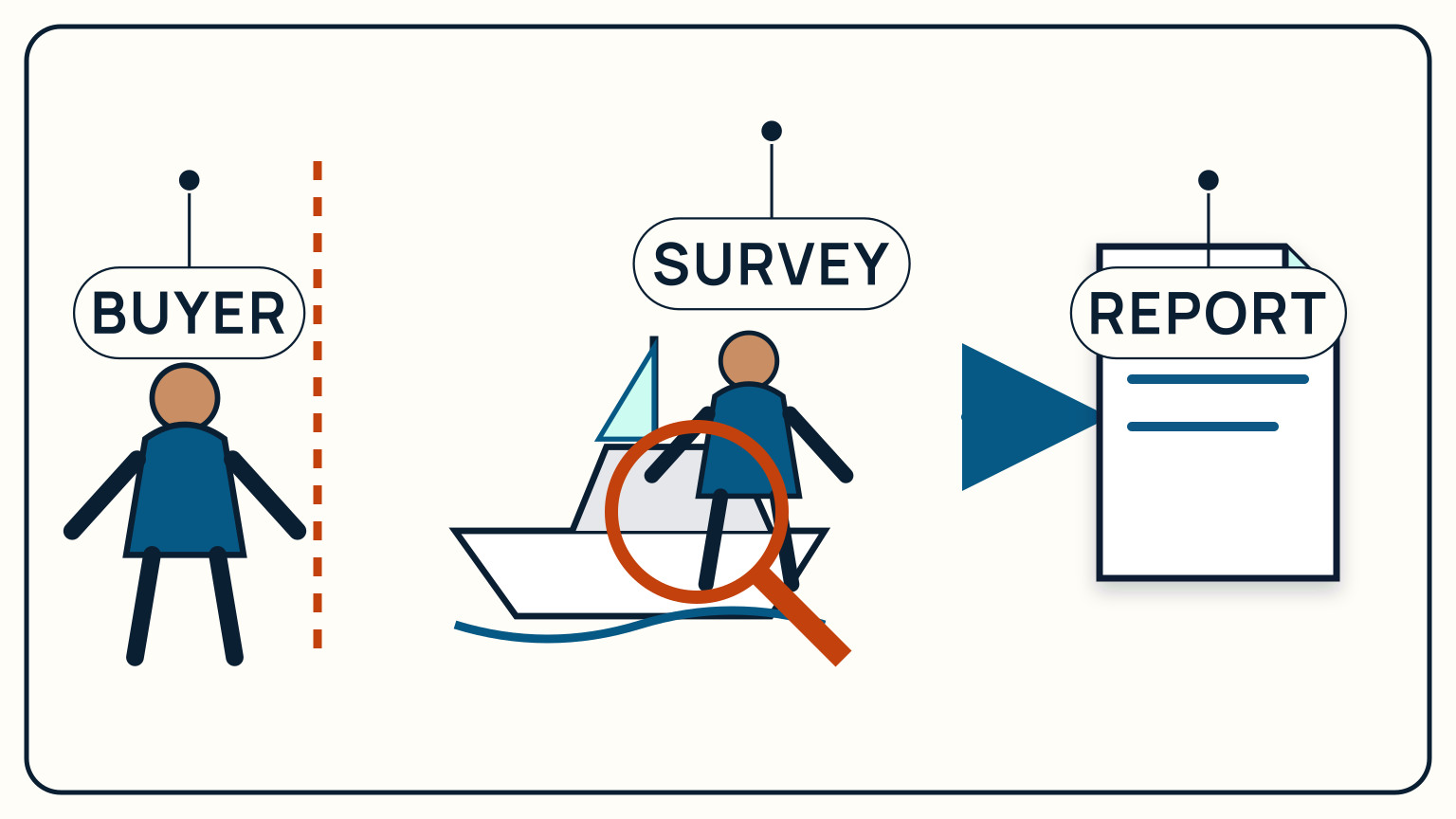
Select the surveyor without relying on the seller to define the relationship. A normal pre-purchase process can include an afloat inspection, haulout, and trial run. Engine, rig, electrical, or structural questions may need separate specialist attention. Agree in advance on the scope, the parts that will not be inspected, and how findings will be delivered to you.
You do not have to attend for the survey and trial run, although attendance is recommended. When travel is impossible, arrange a call at an appropriate point and ask the surveyor to photograph exact findings. Request a clear distinction between observed condition, inaccessible areas, and recommendations for further work. A live seller video remains useful background, but the seller or broker does not become your inspector by holding the camera.
Read the report as a decision document, not a repair shopping list. Compare findings with the purchase conditions and intended use. If a specialist is recommended, decide whether that work must happen inside the inspection window. Obtain a scoped quote when a cost could change the purchase decision. A haulout photograph proves the boat came ashore; it does not by itself prove that every underwater fitting, hull area, or system received an adequate inspection.
Hold a report call after you have read the document once. Ask the surveyor to separate findings that prevent the intended use, findings that need specialist diagnosis, routine future work, and areas that remained inaccessible. This grouping helps you avoid negotiating over every line while missing the few that change safety, insurance, finance, or delivery. Record the answers in your own words and ask for written clarification where the distinction affects a contract condition.
Write The Conditions
Use a written purchase agreement that identifies the boat and included equipment. Where they apply to your transaction, make the sale conditional on acceptable survey, trial, financing, and insurance. Define the inspection period, closing date, deposit handling, and the result that allows either party to proceed or stop. Local contract and escrow practice varies, so use a suitable local professional when you need help with documents or controlled funds.
Avoid conditions that sound protective but cannot be applied. State which evidence must arrive, who selects the inspector, and when notice must be given. If specialist access or a haulout is essential, arrange it before accepting a deadline that makes it impossible. Keep messages about agreed changes with the contract rather than assuming a phone conversation altered the signed terms.
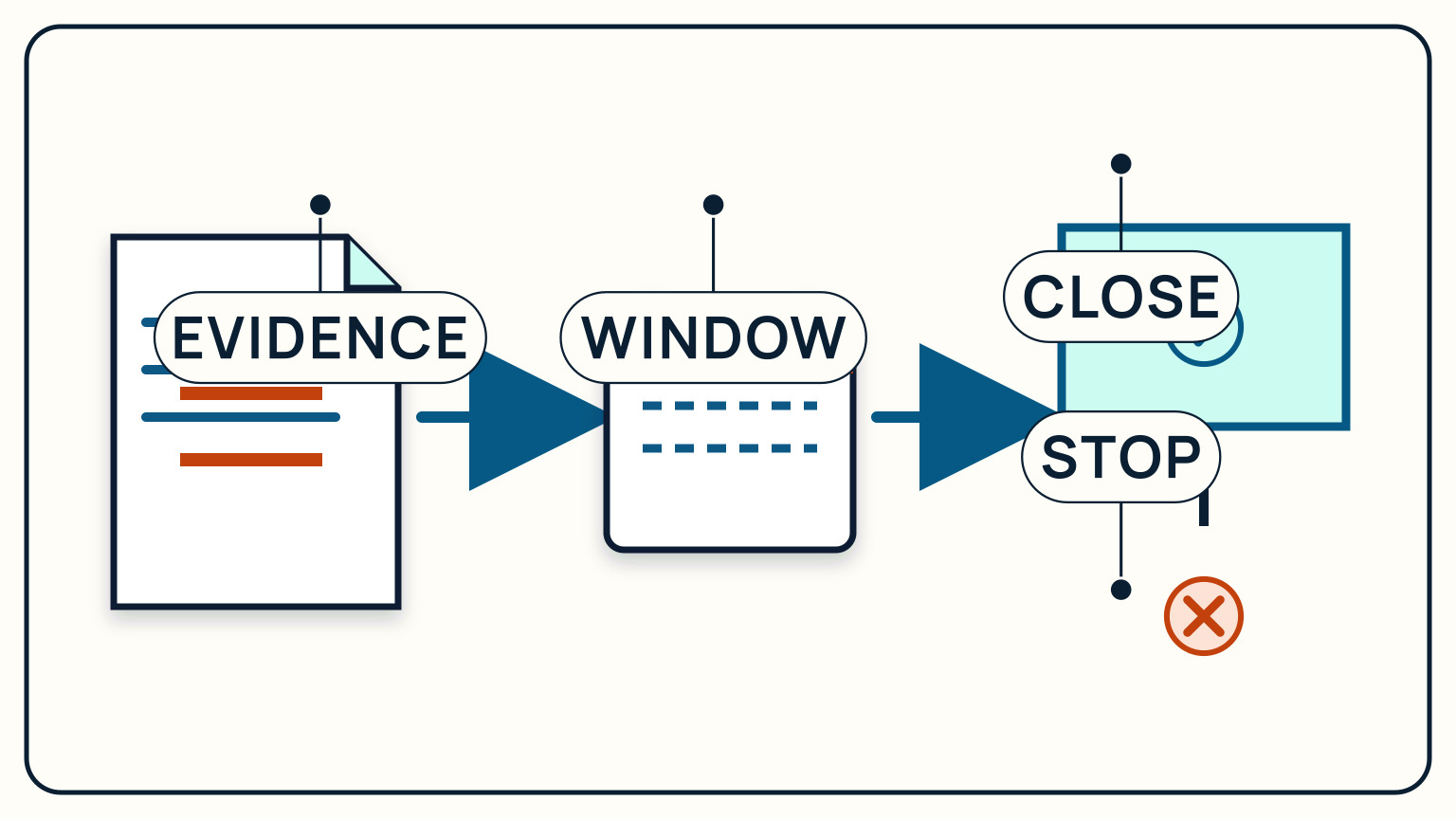
Before a deposit moves, trace the decision path shown in the figure: required evidence, a defined window, then a close or stop outcome. Do not let travel bookings, survey fees, or enthusiasm turn a failed condition into an acceptable boat. Those costs are part of investigating the purchase. They do not oblige you to complete it. If a condition changes, record the new wording and obtain the required agreement instead of relying on memory.
Test each condition with a simple question: could a third party tell whether it was met? "Subject to survey" may leave too much room if the agreement never states who selects the surveyor, the deadline, or the consequence of an unacceptable result. The local professional can shape enforceable language, while you supply the practical outcome needed. Clear conditions reduce the chance that a disagreement about process becomes a rushed purchase decision.
Plan Closing And Handover
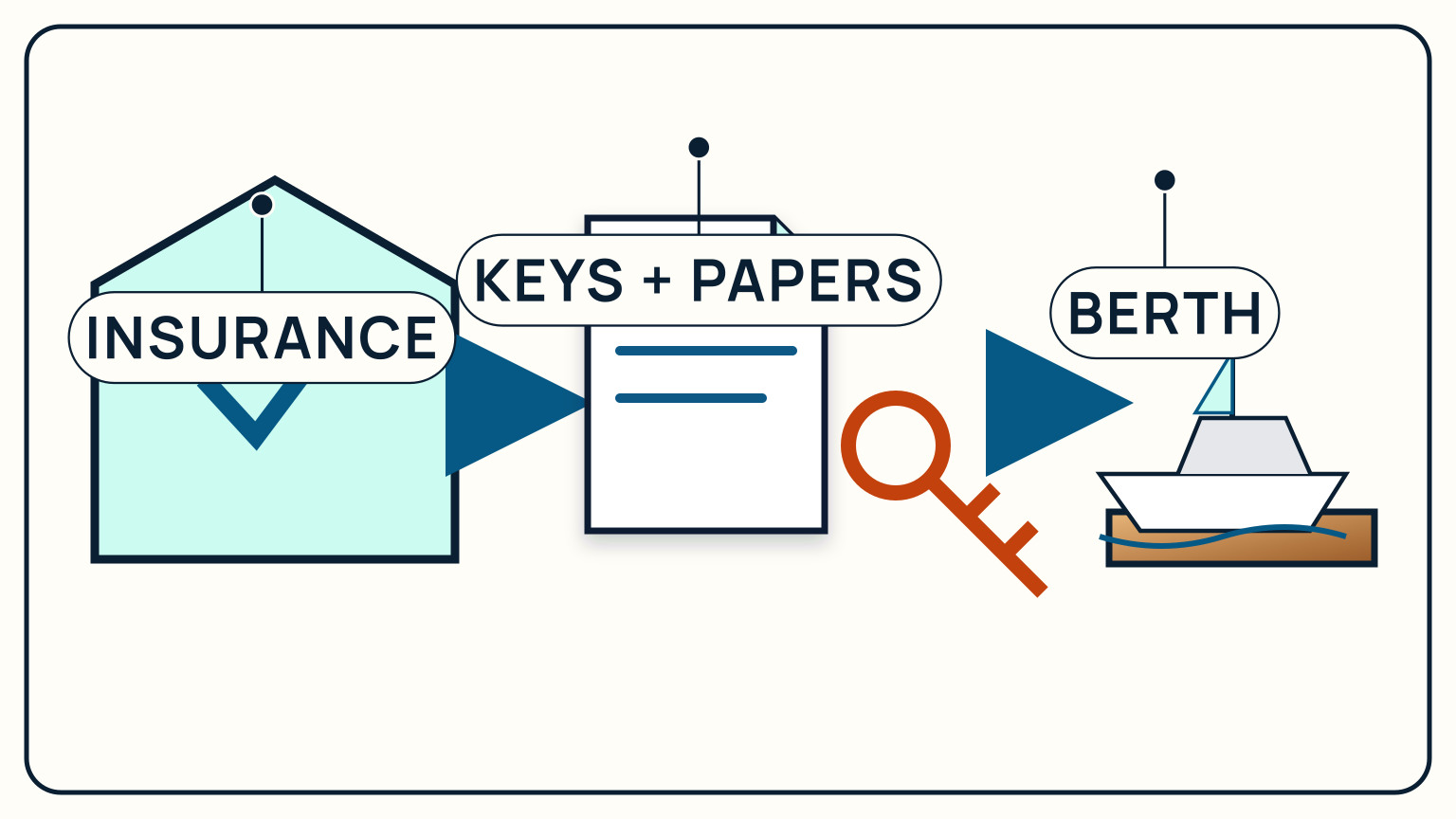
Plan possession before sending final funds. Confirm when insurance begins, where the boat can remain, and who will hold keys and original papers. List manuals, spare parts, safety equipment, and inventory that should be aboard at handover. If the current berth will not continue, secure temporary storage or another berth before the closing date.
Choose a secure closing method you understand. Verify payment instructions through a trusted channel, especially if they change. Signed documents and secure funds are still necessary in a remote closing. Keep copies of the final agreement, ownership papers, payment record, insurance confirmation, and handover inventory together. The transaction is not operationally complete if you own the boat but cannot access, insure, store, or move it.
Decide how the boat will reach you. You may travel to take possession, leave it temporarily under an agreed arrangement, or employ a qualified delivery skipper. Match that choice to the boat's condition and the survey findings. Do not schedule a demanding delivery on the assumption that unfinished work will be minor. The final handover call should confirm location, keys, papers, onboard items, known limitations, and the person responsible until physical control changes.
Prepare a first-access checklist for whoever reaches the boat. It should confirm that the boat is where expected, secured, free of obvious new damage, and carrying the agreed keys and papers. Compare the handover inventory with the contract before equipment is moved. If weather or condition makes immediate delivery unsuitable, use the storage plan rather than turning closing day into an unplanned voyage. Ownership can transfer on schedule without requiring unsafe physical movement.
A distant boat is not automatically a poor purchase, and a nearby one is not automatically well understood. The safe advantage comes from maintaining separation between sales material, independent findings, contract conditions, and the closing process. Keep the evidence dated and give each unresolved issue an owner. SailStarter's buying lessons can help you organize the inspection questions, while your surveyor and local closing professional handle the judgments that require direct access or local expertise.
Archive the final evidence file rather than discarding the rejected material after closing. It becomes the starting history for maintenance, insurance questions, and a later sale, while the list of inaccessible areas becomes a useful first-season inspection plan.
Try it from the lesson
Can you spot the next move?
A wide sailboat glides past on two side-by-side hulls, barely leaning at all. What type is it?
Why you can trust this guide
. We build each guide from public seamanship and safety sources, then teach the universal principle before any local difference.