Chart your course
Set and Drift: Reading Current So It Doesn't Push You Off Course
Quick answer
The short version
Set is the true direction a current is flowing TOWARD; drift is how fast it's moving, usually in knots (the reverse of how wind gets named, since a wind is labeled for the direction it blows FROM). Tidal streams reverse with the tide (flooding in, slacking, then ebbing back out) and run strongest at headlands, narrows, and estuary mouths, especially rough where wind opposes them. You can spot current by a buoy's wake, a transit opening up behind you, or your chartplotter's heading and COG (course over ground) lines drifting apart. The fix is to aim upstream of your destination so your track over the ground runs straight, and to time passages with a fair tide rather than against one.
Point straight at a mark with current running across your course, and you won't end up at the mark. You'll end up downstream of it, however carefully you steered. That sideways push has a name, set and drift, and once you can read it, it stops being a mystery and starts being something you plan around like wind or depth.
This isn't about memorizing tide tables to the minute. It's a handful of habits: knowing what set and drift mean, recognizing where and when a stream runs hardest, spotting it before it's carried you off line, and correcting your heading so your track stays where you meant it to go. Seeing the geometry once is most of the battle, which is exactly what the rest of this article walks through.
Set and Drift, the Opposite Way From Wind
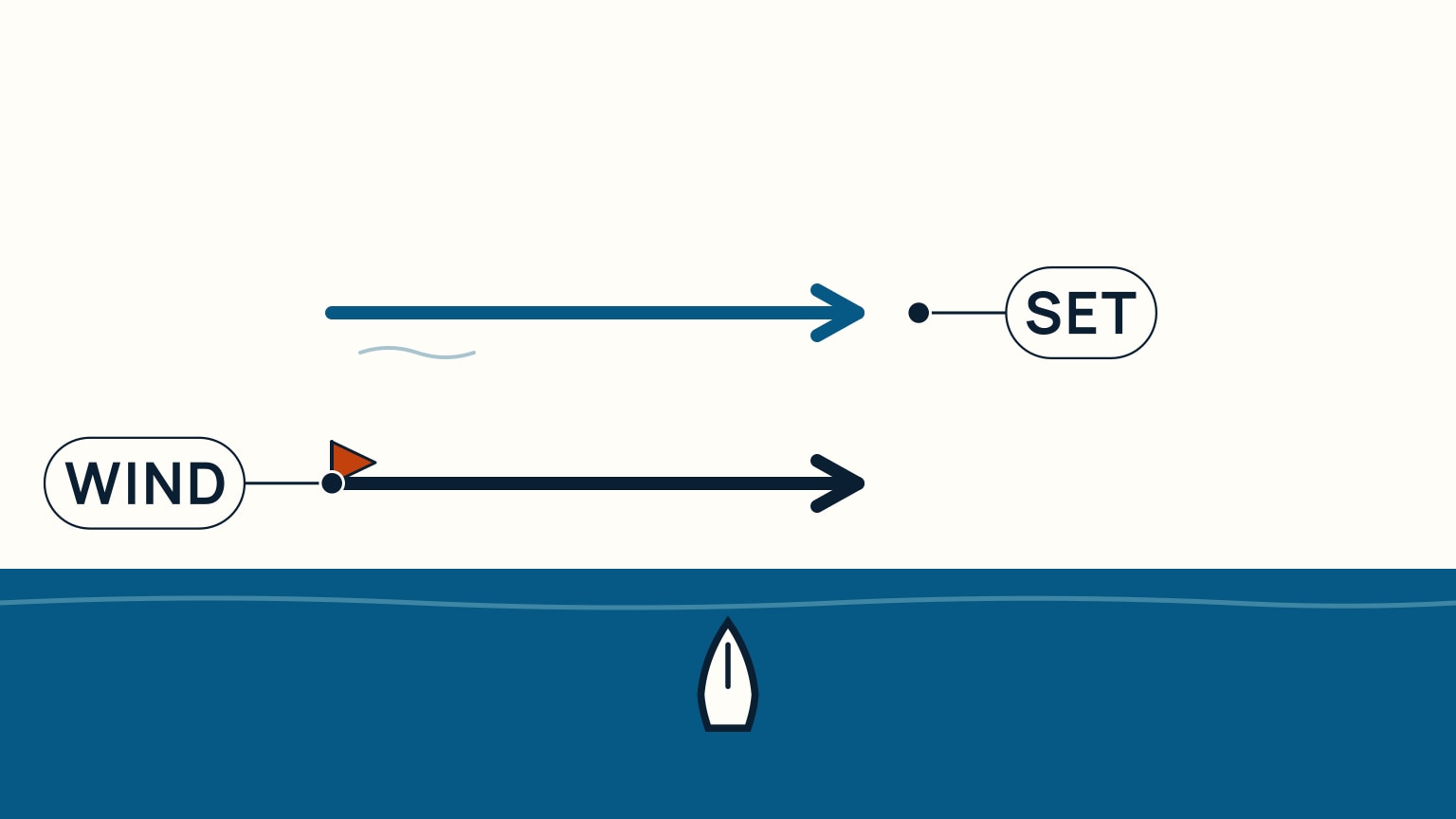
Every current has two numbers worth knowing: its set and its drift. Set is the true direction the current is flowing TOWARD, not where it comes from. Drift is how fast it's moving, usually given in knots. A current with a set of 090° and a drift of 2 knots is simply pushing due east at two knots.
Here's the trap: wind uses the opposite convention. A "northerly" wind blows FROM the north, TOWARD the south. Say "the current sets north" and you mean the water is heading north; say "the wind is northerly" and you mean the exact opposite direction of travel. Both are correct, standard usage. They just point different ways for the same-sounding compass word. Get in the habit of asking "toward, or from?" before you act on either one, and the two stop being confusable.
Tidal Streams Reverse; Ocean Currents Don't
A tidal stream is current driven by the rise and fall of the tide, and it reverses on a schedule: it floods in toward the shore as the tide rises, slacks to a near-standstill at the turn, then ebbs back out to sea as the tide falls. A big, wind-driven or deep, density-driven ocean current doesn't run on that clock; it keeps flowing broadly the same way for long stretches, which is exactly why a tidal stream is the one kind of current you can predict years ahead, and a persistent one isn't.
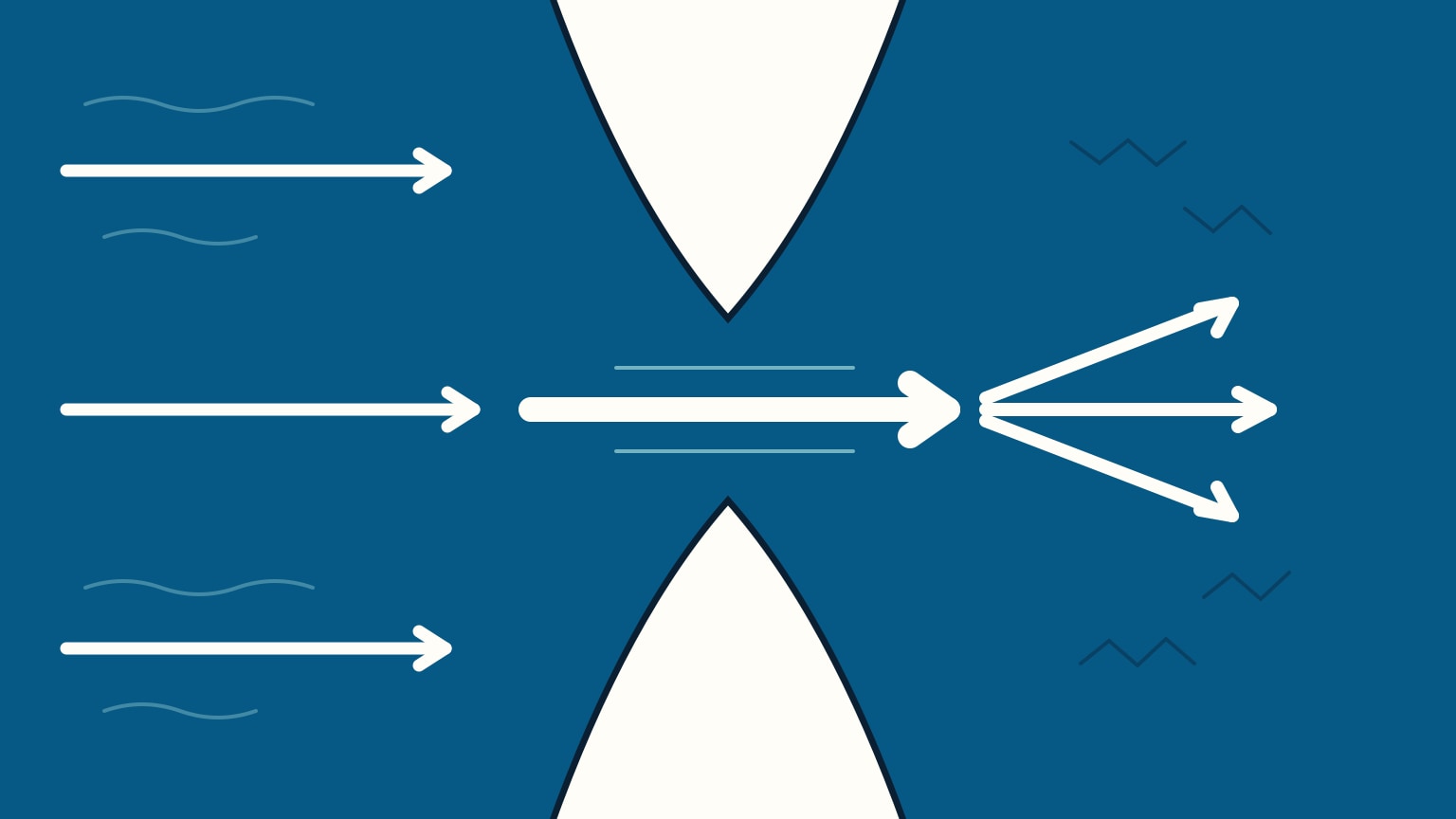
Tidal streams also aren't evenly strong everywhere. Squeeze the same volume of moving water through less space (at a headland, through a narrow strait, or through a funnel-shaped estuary mouth) and it accelerates: real narrows have run past 15 knots, and ordinary bays and estuaries can reach 8 knots or more. When wind blows against that accelerated water, the waves stand up steep and close together into an uncomfortable slop; wind blowing the same way the stream runs flattens the sea out instead.
Streams also vary with the moon, on top of their own daily flood-ebb-slack cycle. Around full and new moon they run at their strongest (spring currents); around the moon's first and third quarters they ease off (neap currents). Neither term has anything to do with the season; both describe how hard the water is moving that particular week.
How Current Shows Itself
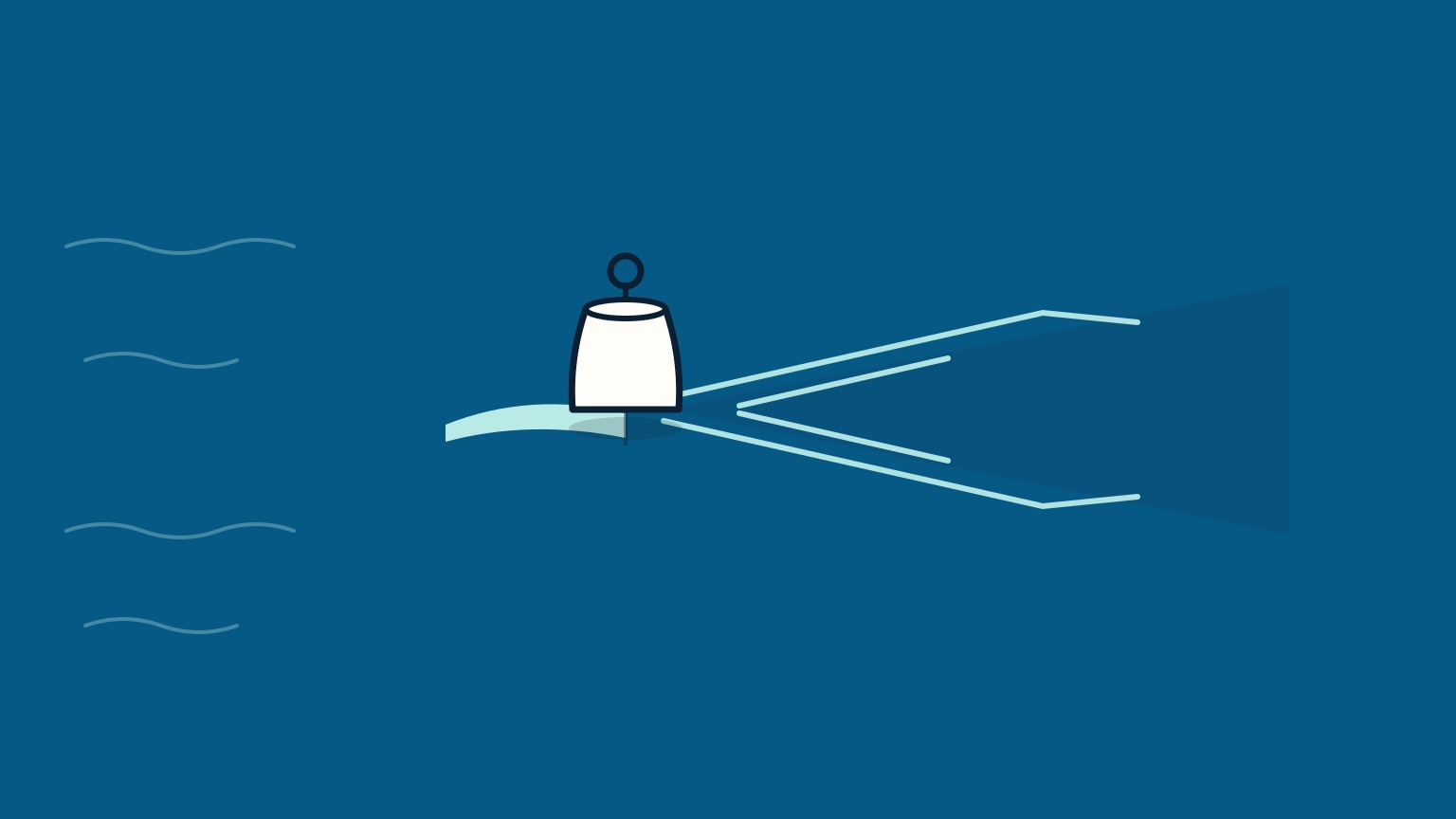
Current doesn't announce itself, but it leaves signs if you know where to look. A buoy or beacon standing against a stream shows a bulge of piled-up water on its upstream side and a flattened, V-shaped wake trailing downstream, the same shape a rock makes sitting in a river.
A transit, two objects lined up as you look astern, is one of the fastest tells: watch one over your shoulder as you go, and if it starts to open up instead of staying in line, the stream is carrying you sideways off your intended track.
If you're running a GPS or chartplotter, compare its heading line (the direction your bow actually points) against its COG line, course over ground (the direction you're actually travelling). A basic plotter aimed at a waypoint recalculates the bearing to it without ever accounting for the stream pushing you sideways, so the two lines drifting apart is the current announcing itself on screen. The same chart you've already learned to read for its title block and symbols is worth a glance too: plenty print tidal-stream data of their own.
Wind adds its own visual tell on top of all this. A patch where wind blows against the flow ripples up with small, closely packed waves, while water moving the same way the wind is blowing can look comparatively flat right next to it. A line of seaweed or other floating debris often marks the boundary between two water masses on the move in different directions, which is worth a glance even when nothing else gives current away.
The Aim-Off Correction: Point Upstream of the Mark
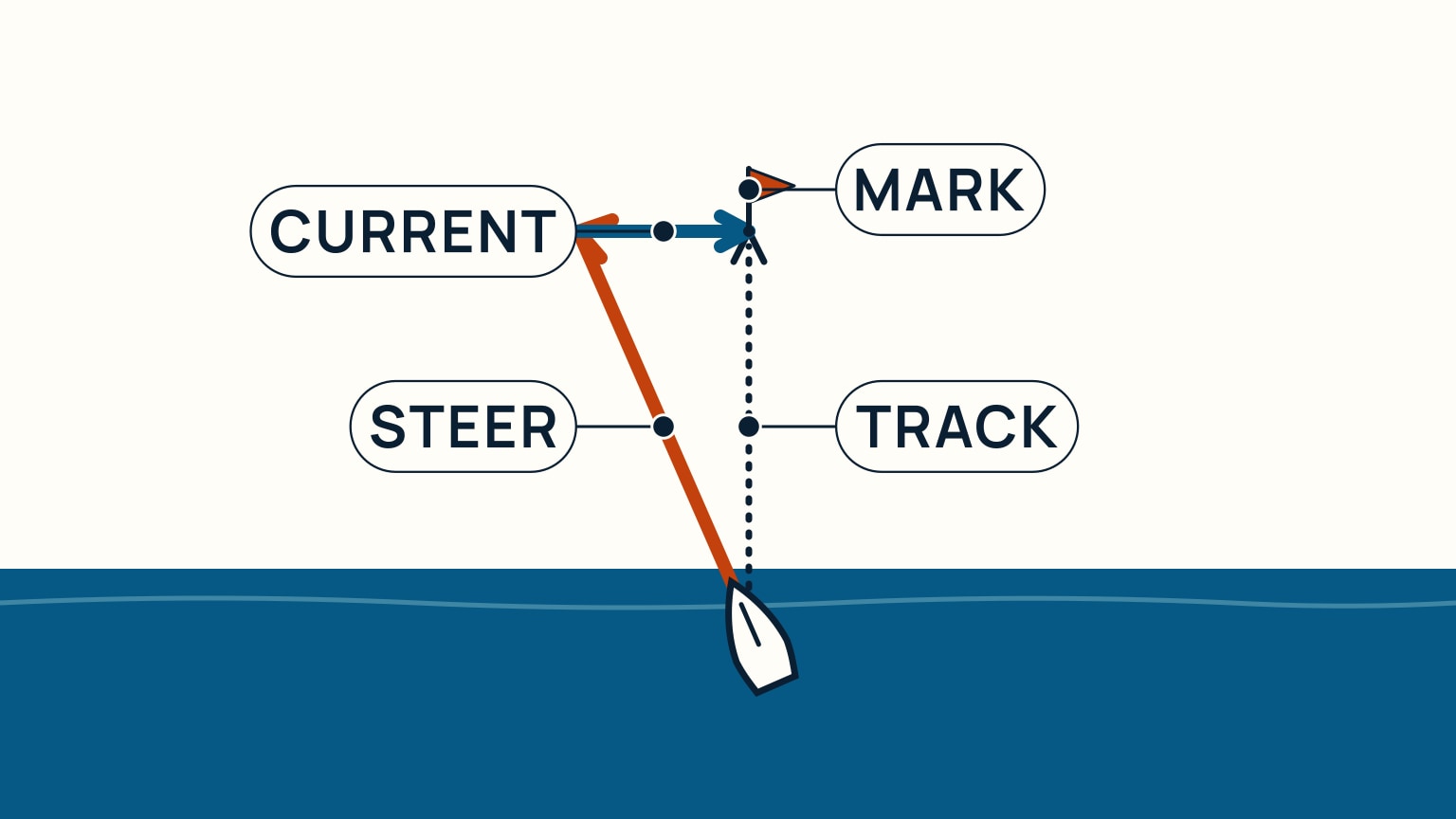
Once you know current is pushing sideways, the fix is simple in idea, if not always in the numbers: aim upstream of where you want to end up. Point the bow enough into the current that its sideways push and your own sideways component cancel, and your track over the ground runs straight to the mark instead of drifting off with the stream. Paddlers call the same trick a ferry glide: angle upstream of your landing spot, and the current does the sideways work for you.
Here's an illustrative example: round numbers, not a real place. Say you're making 5 knots through the water, steering straight at a mark, while a current sets across your course at 2 knots. Steered straight at the mark, you'd travel a diagonal line and end up well off it. Angle the bow upstream instead, enough to cancel that 2-knot push, and the resultant track runs straight to the mark, at a little under your boat speed, about 4.6 knots made good instead of 5. The angle changes with the current's strength and your own speed; the aim-off idea stays the same.
When You Want More Than a Guess
Eyeballing the aim-off angle works fine once you've practiced it, but there's also a formal way to work it out, called the course-to-steer method. You draw your intended track over the ground, add the current's own vector (its set and drift over however long you expect to be under way), and find the heading that closes that triangle back to your own boat speed. It's the same triangle whether you're doing it on paper with parallel rules or letting a plotter's course-to-steer function do it for you, so the idea is worth knowing even if you never draw it by hand.
Time the Stream, and Watch Your Speed Over Ground
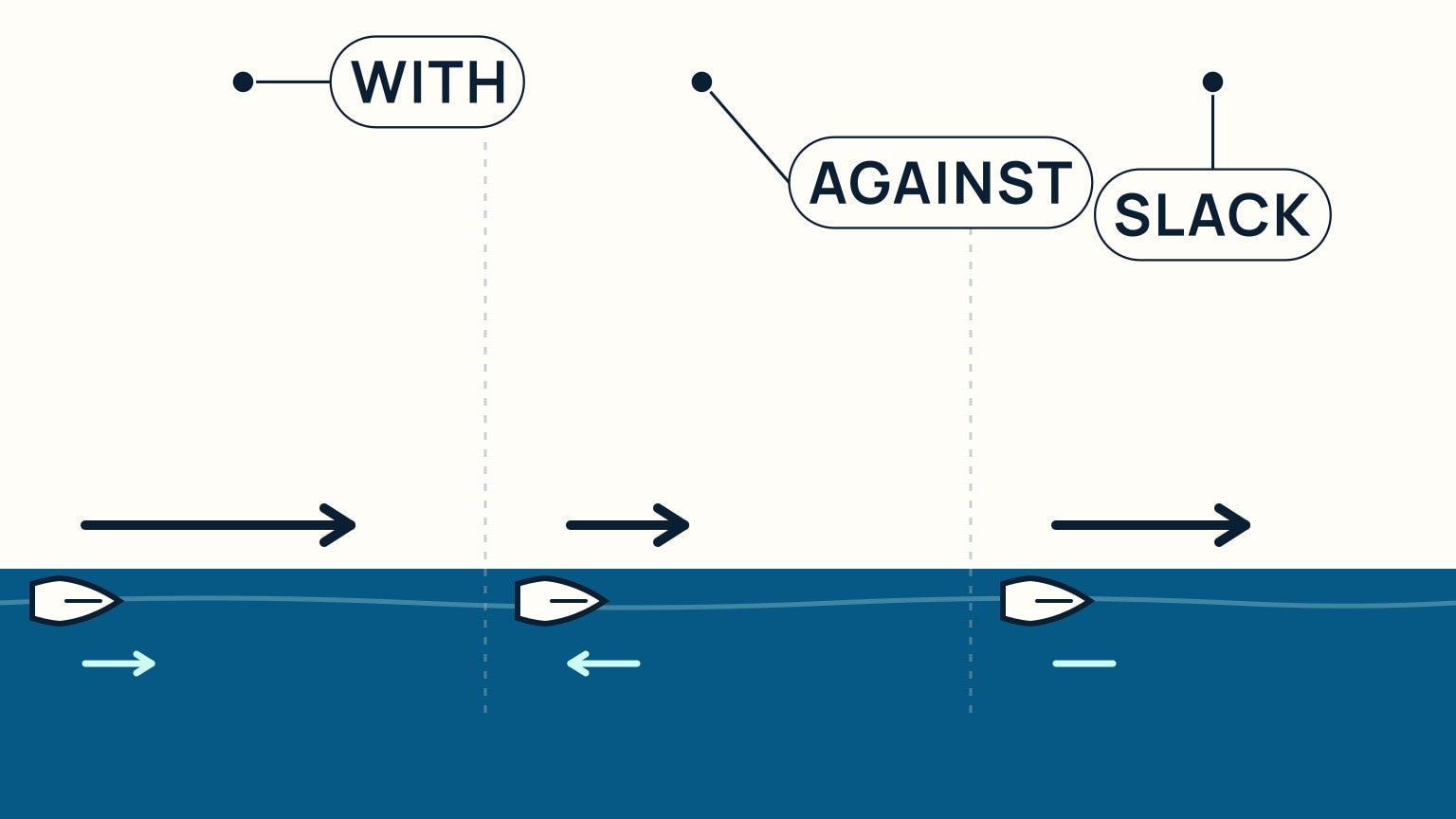
Current changes more than direction: it changes how fast you get there. Run with a favourable stream and its speed adds to your own, so your speed over the ground beats your boat speed alone; run against it and the current's speed comes off instead, sometimes leaving you barely gaining on the shore even at a healthy boat speed. Slack water, the brief lull as a stream turns, is neither: boat speed and speed over the ground match.
That's worth timing around, not just reacting to. Leaving right as a tidal gate opens, the moment a favourable stream sets in, makes for a faster, more comfortable passage, and time spent waiting for it is often made up once you're moving with the stream instead of against it. Through a genuinely narrow, current-squeezed passage, the safest time to go through is slack water (the pause tide tables predict down to the minute), ideally with the wind not fighting the stream either. None of it needs to be exact; it just needs to run the right direction.
Tide tables and tidal current tables aren't quite the same publication, and it's worth knowing both exist. Tide tables predict water height and the times it rises and falls; dedicated tidal current tables, published separately under the same government or hydrographic authority, predict when a stream itself turns and roughly how fast it's likely to be running. Checking both before a passage through a narrow or tide-exposed stretch beats checking either one alone.
Reading set and drift is one of those skills that feels abstract right up until the first time you watch your own boat slide sideways off a line you were sure you were holding; and then it clicks for good. The habits are simple: name the current correctly, notice where and when it runs hardest, watch for its signs, and aim off enough to hold your line.
SailStarter's lessons work through exactly this kind of thing step by step, current vectors included, at a pace that leaves room for it to sink in rather than just being read once and forgotten. If a stream setting you off course has ever felt like bad luck rather than something you could see coming, that's worth a look.
Try it from the lesson
Can you spot the next move?
You steer a heading straight for a can buoy dead ahead, with a 2-knot stream pushing across your port beam. After an hour holding that heading, are you at the buoy?
Why you can trust this guide
. We build each guide from public seamanship and safety sources, then teach the universal principle before any local difference.