Chart your course
Leeway Explained
Quick answer
The short version
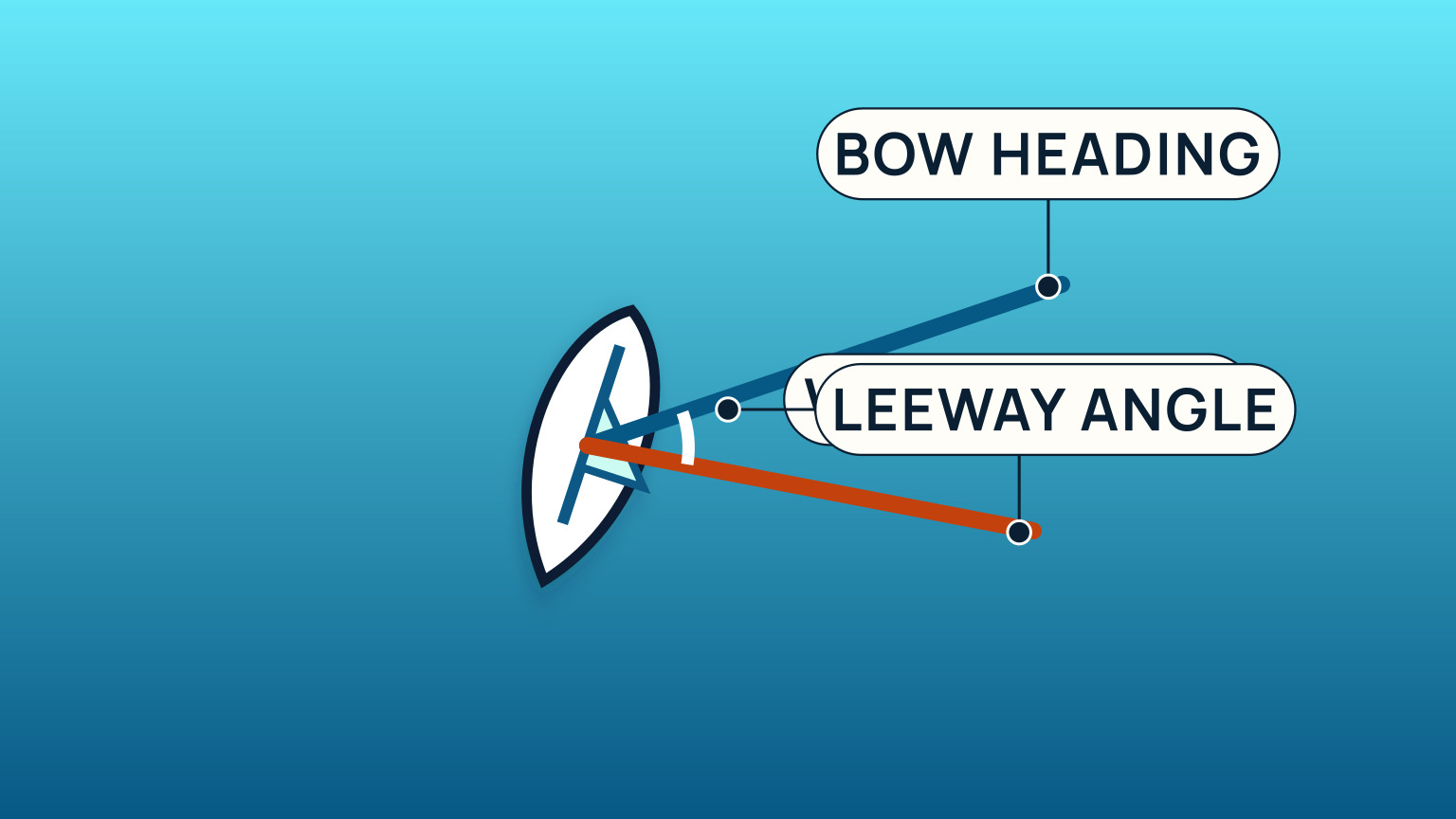
Leeway is the sideways slip a sailboat makes through the water because wind pushes on the hull and rig at an angle. Point the bow at a destination and the boat will actually travel slightly downwind of where it's pointed, and the gap between the two is the leeway angle. It's largest sailing close-hauled, where a well-handled cruising boat commonly makes something like 5 to 10 degrees in moderate wind, and it shrinks toward nothing running dead downwind. You estimate your own boat's leeway by comparing its wake to the reciprocal of its heading, and you allow for it by steering a little closer to the wind than your plotted course so the boat actually tracks where you intended.
Every sailor eventually notices the gap between where the bow points and where the boat is going, usually the first time a planned course misses its mark by more than a little. That gap has two possible causes, current in the water or leeway from the wind, and mixing them up leads to the wrong correction. Current moves the whole body of water you're sailing in; leeway is the boat itself slipping sideways relative to that water. Learning to separate the two, and to estimate leeway specifically, turns a mysterious drift into a number you can plan around.
Why a boat slides instead of tracking straight
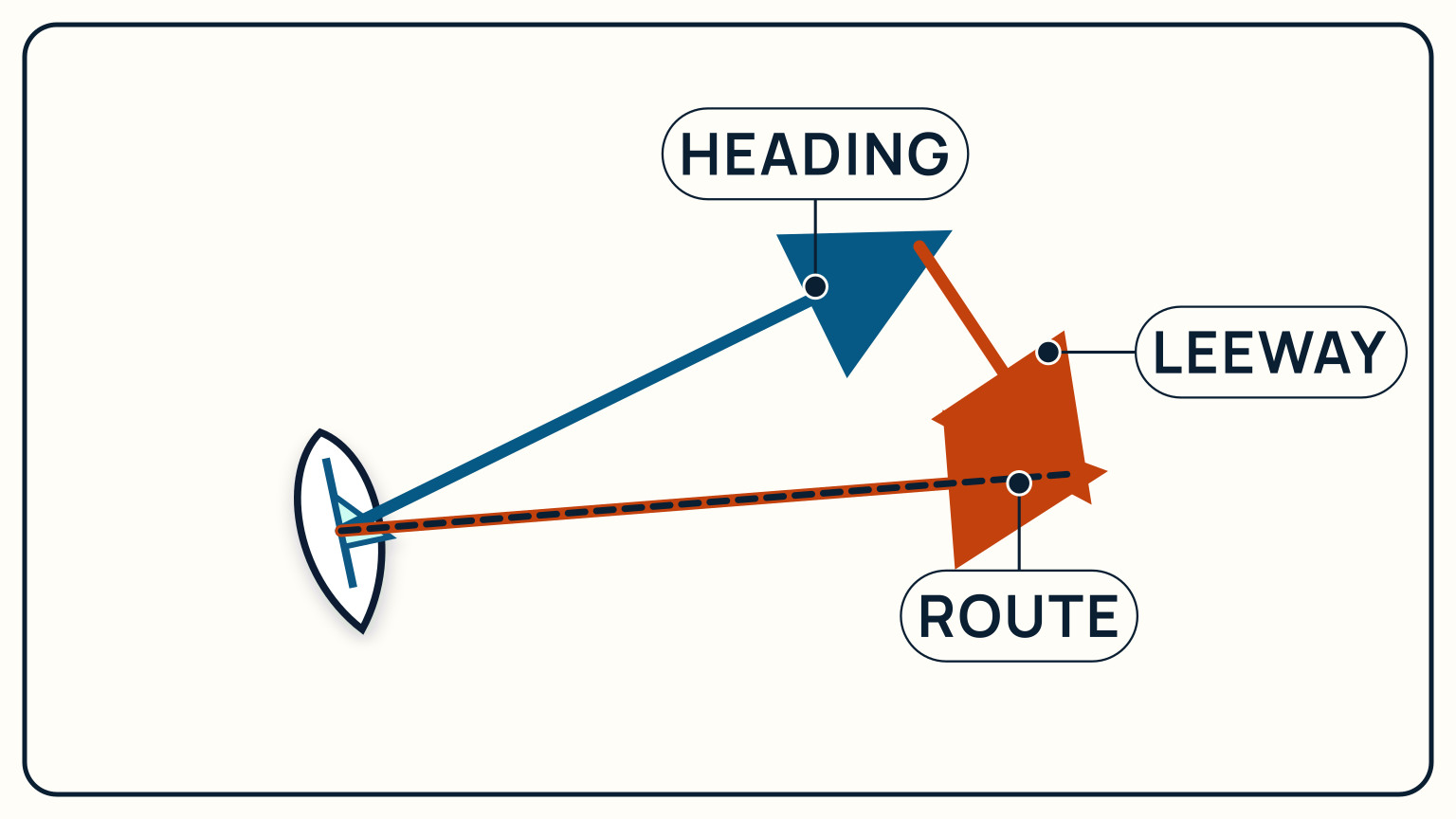
A sailboat generates forward drive by using its sails as an airfoil, and that same process creates a sideways force alongside the useful forward one, especially when sailing upwind. The keel or centreboard is shaped to resist that sideways force and convert most of it into forward motion, but it can only do that by moving through the water at a small angle to the boat's intended track, not dead straight ahead. That small angle between the boat's heading and its actual path through the water is leeway. A boat pointing 45 degrees off the true wind while actually tracking 50 degrees off it has 5 degrees of leeway, and the keel is what's making the rest of the sideways push usable at all.
This is normal sailing physics, not a sign anything is wrong with the boat or the sailing. Every sailboat under sail makes some leeway, and a beginner does not need to eliminate it, only to know it's there and account for it when plotting a course. Heel plays a part too: a boat pressed flatter by too much sail for the wind strength tends to slip sideways more than the same boat sailed upright and balanced, which is one more reason easing the mainsheet or reefing early in a building breeze pays off in course-keeping, not just comfort.
How much leeway to expect, and when
Leeway isn't constant. It's largest close-hauled, where the boat is fighting hardest to make progress toward the wind and the sideways component of wind force is at its biggest share of the total. It decreases as you bear away onto a reach, and it drops close to zero running dead downwind, where the sideways force on the sails largely disappears. Sea state and sail trim matter too: an overcanvased boat in a strong breeze and rough water can make significantly more leeway than the same boat properly reefed in flat water, sometimes enough that upwind progress stalls almost entirely.
The type of keel matters as well. A deeper, more efficient keel resists sideways slip better and makes less leeway; a shallow-draft or twin-keel boat typically makes more in the same conditions. On a dinghy or small keelboat with a centreboard, raising the board increases leeway noticeably, which is why boards go down for upwind work and can come up once you're reaching or running. None of these are numbers to memorise precisely. They're a sense of direction: expect more leeway upwind, in strong wind, and with reduced lateral resistance, and less everywhere else.
Two boats built almost identically can still make noticeably different leeway on the same afternoon, because trim, crew weight placement, and how well the sails are set all shift how much sideways force the rig is generating relative to forward drive. A boat sailed with slack sheets and a poorly shaped sail can make more leeway than a well-trimmed one in the same wind, simply because more of the wind's energy is going sideways instead of forward. That's one more reason to treat your own observed leeway as specific to your boat, your trim, and the day, rather than borrowing a number from a book or another sailor's boat.
Reading your own leeway from the wake
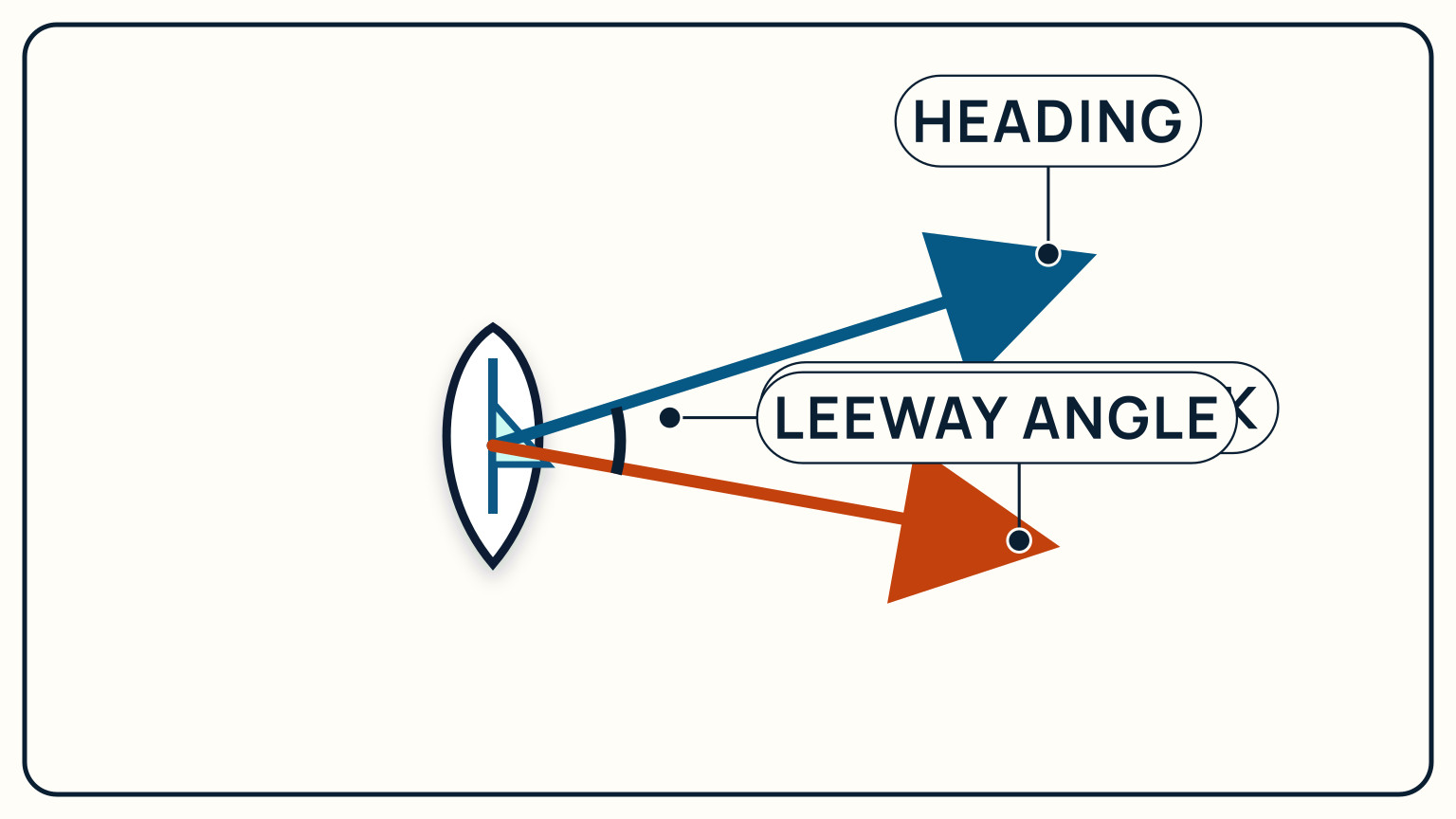
The most direct way to estimate leeway on your own boat is to look behind you. Take a bearing on your wake and compare it to the reciprocal of your current heading, the direction exactly opposite the way the bow is pointed. If there were no leeway at all, the wake would run straight along that reciprocal line. In practice it trails slightly to windward of it, and the angle between the wake and the reciprocal heading is your leeway angle for that moment, in those conditions.
Do this a few times across a range of points of sail and wind strengths, and you'll start to build a real feel for what your specific boat does close-hauled in 10 knots versus 20, or reaching versus beating. Take the bearing on the calmest, steadiest moment you can find rather than mid-tack or in a confused chop, since a wandering heading or a bouncing stern makes the wake itself harder to read accurately. A GPS adds a second, independent check: with no current running, the difference between your compass heading and the GPS course over ground is leeway alone, so comparing the two on a still day is a useful way to sanity-check what the wake told you.
Telling leeway apart from current
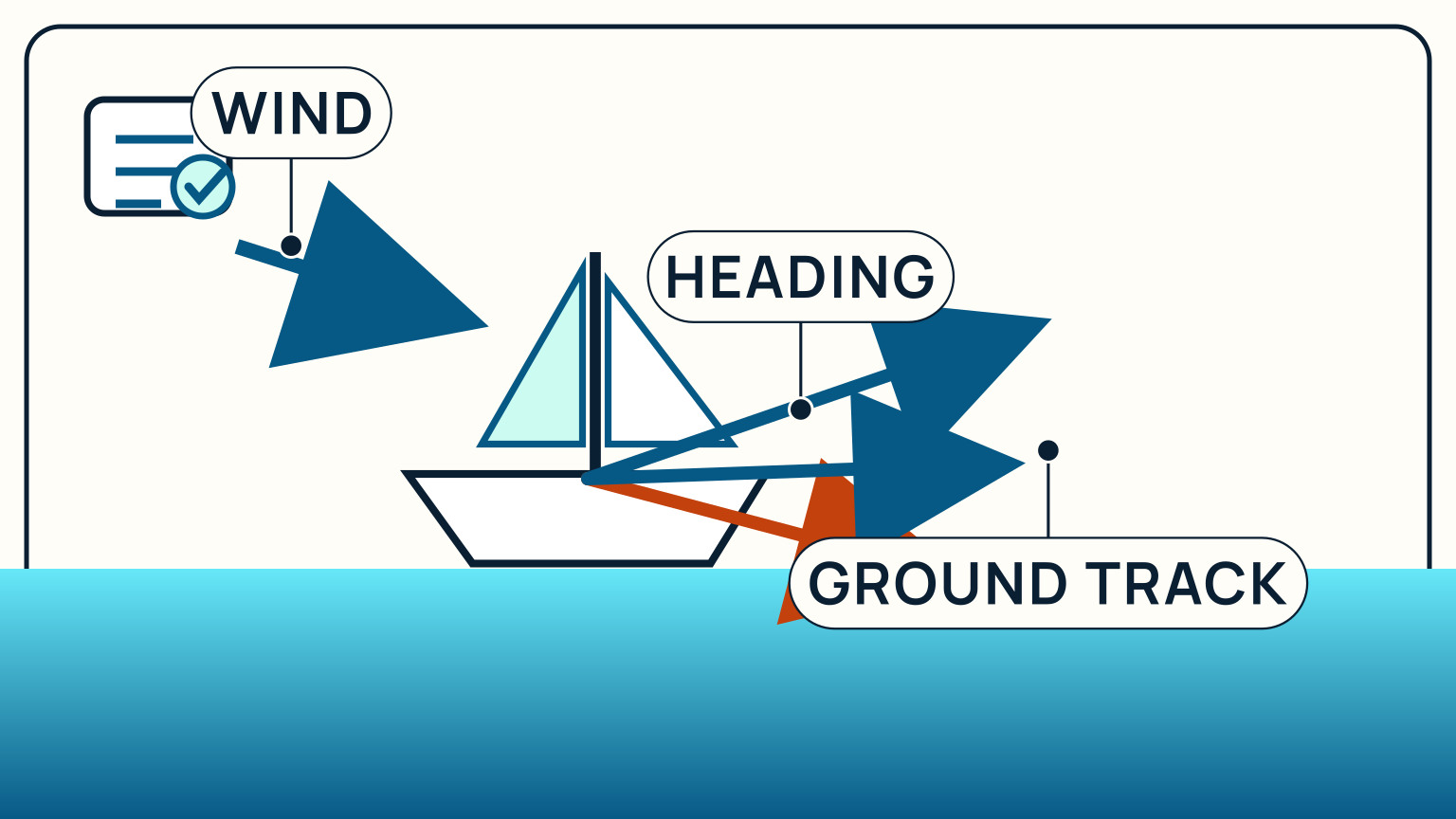
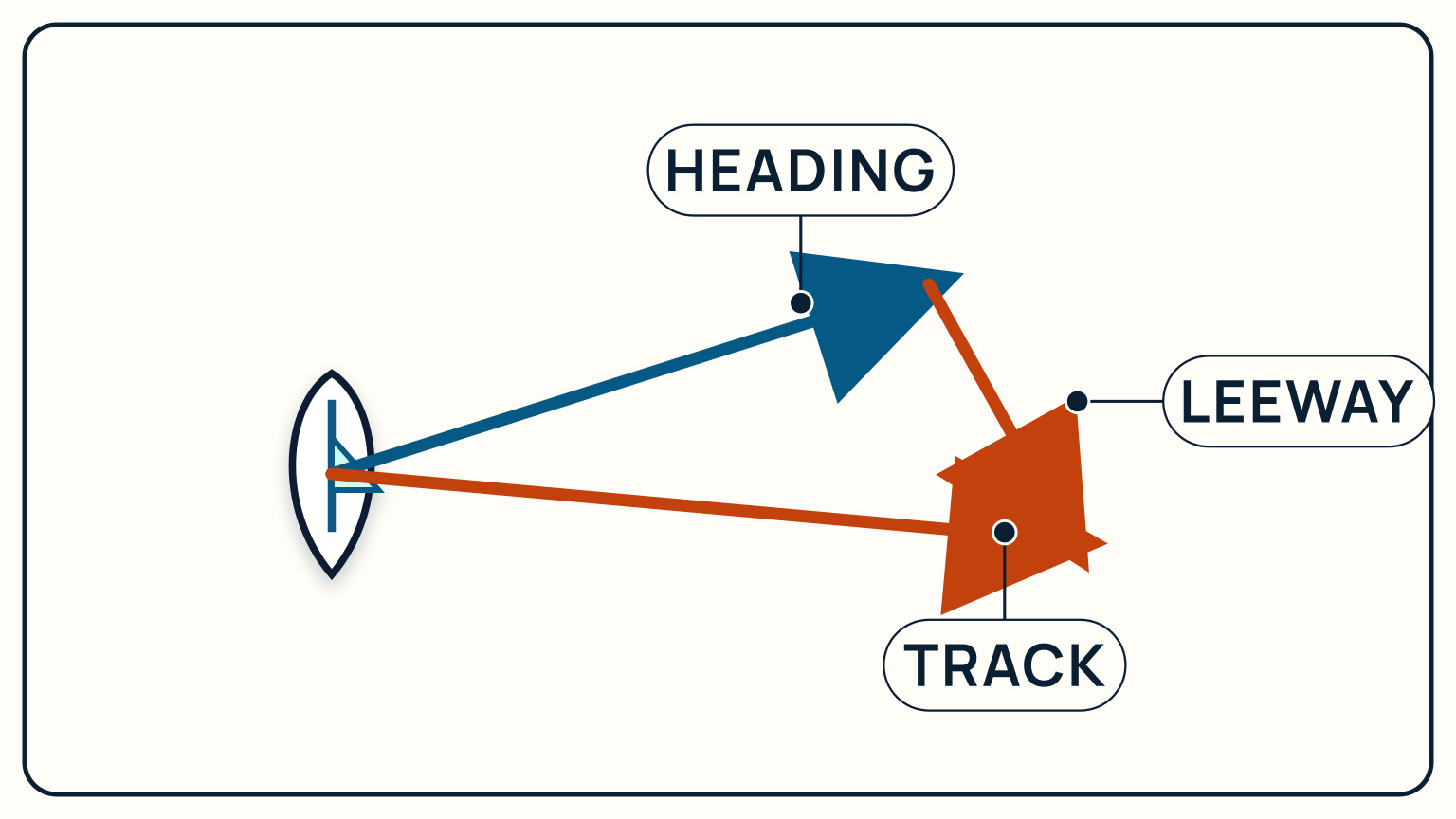
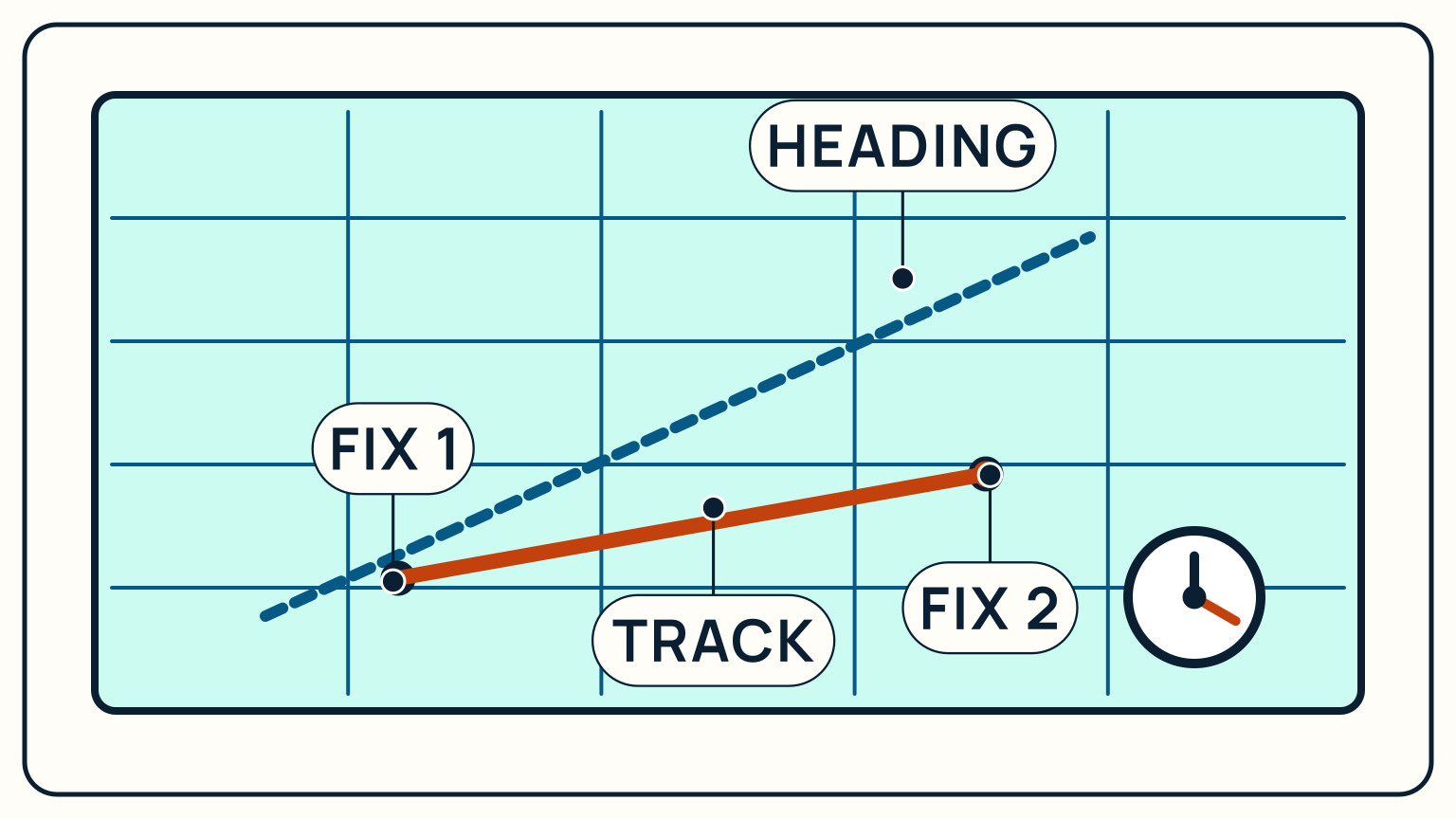
Course over ground, the path a GPS actually records, is the combined result of your heading, your leeway, and any current, all added together. That means the total gap between where you're pointed and where you're actually going is not necessarily all leeway. Current is water moving as a mass, carrying the boat with it regardless of point of sail; leeway is the boat itself slipping through that water because of wind on the sails. A day with no current running isolates leeway cleanly. A day with both current and leeway working on you at once requires accounting for each separately, because they don't always push the same direction and won't always add up simply.
The practical habit worth building is to check for current first, from a tide table, a chart's current arrows, or local knowledge, before attributing the whole gap between heading and track to leeway. Get that split wrong and you'll end up correcting for a current that barely exists while genuinely ignoring the leeway that's actually pushing you off your line.
Steering to account for it
Once you have an estimate for your leeway angle, using it is straightforward. Working out a course to steer from a course you want to make good, you steer that many degrees closer to the wind than the plotted course, so the sideways slip brings you back onto the line you actually want. Working the other direction, figuring out where you've actually ended up from the heading you've been steering, you shift the assumed track away from the wind by the same angle before you plot your estimated position. Get the direction backwards in either case and the correction pushes you further off course rather than back onto it, so it's worth double-checking which way you're applying it the first few times.
None of this needs to be precise to the degree. A rough, honestly estimated leeway allowance, checked and adjusted as conditions change through a passage, beats an exact-looking number carried over from a different day in different wind. Revisit the wake, or the GPS-versus-compass comparison, every time the wind shifts meaningfully or you change point of sail, and treat a leeway figure from a light-wind afternoon as a starting guess rather than a fixed constant once the breeze builds.
Leeway is one of the quieter parts of coastal navigation, easy to overlook until a course consistently misses its mark. Once you know to expect it, watch for it in your own wake, and separate it honestly from current, it stops being a mystery and becomes one more number you fold into ordinary course-keeping. SailStarter's Module 10 lessons cover leeway alongside the rest of coastal piloting in short visual steps, each ending in a quiz that checks the idea actually stuck before you rely on it under way.
Try it from the lesson
Can you spot the next move?
You steer a heading straight for a can buoy dead ahead, with a 2-knot stream pushing across your port beam. After an hour holding that heading, are you at the buoy?
Why you can trust this guide
. We build each guide from public seamanship and safety sources, then teach the universal principle before any local difference.